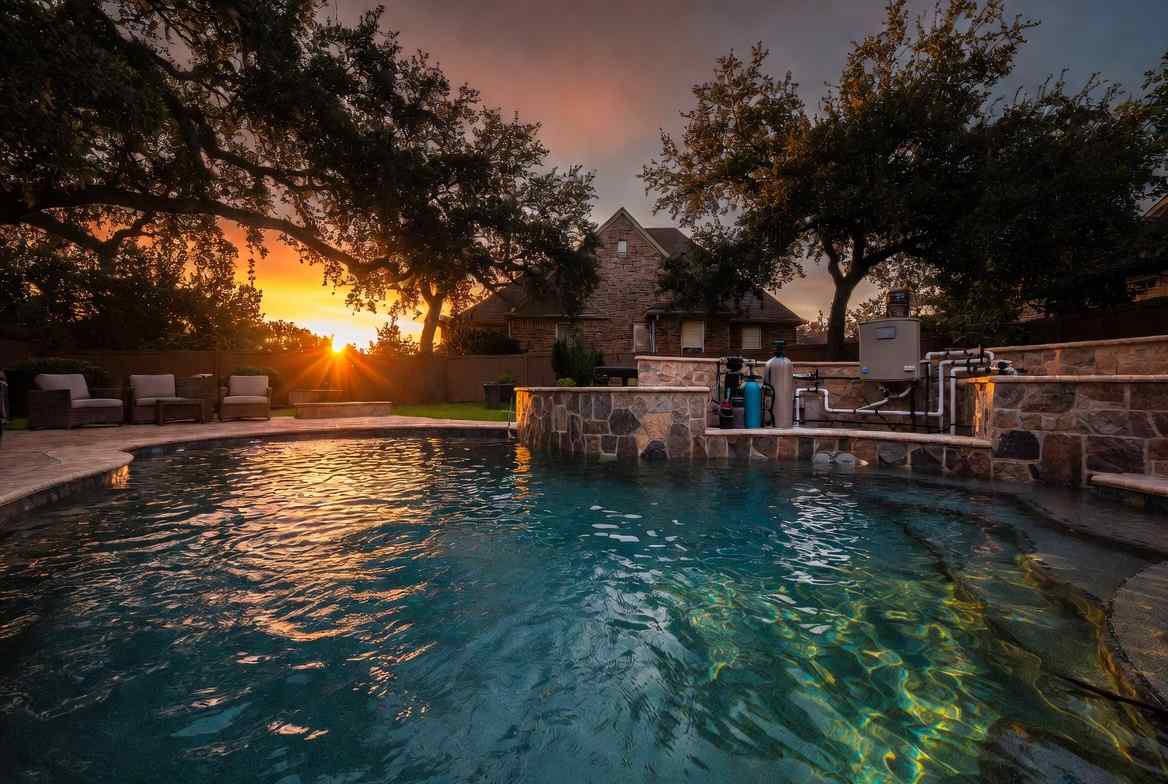
Your backyard pool is a full-body gym that’s already paid for — most DFW homeowners just don’t use it that way. Swimming pool exercise is one of the highest-calorie-burning, lowest-impact workouts available, and you’ve got one sitting in your backyard 8+ months of the year. Water provides natural resistance on every movement, keeps your body cool when it’s 105°F outside, and protects your joints from the pounding that running and gym workouts deliver. Whether you want to swim laps, do water aerobics, or build a full pool exercise routine, your DFW pool is ready. Here’s how to use your pool for exercise the right way.
Lap Swimming in Your Backyard Pool
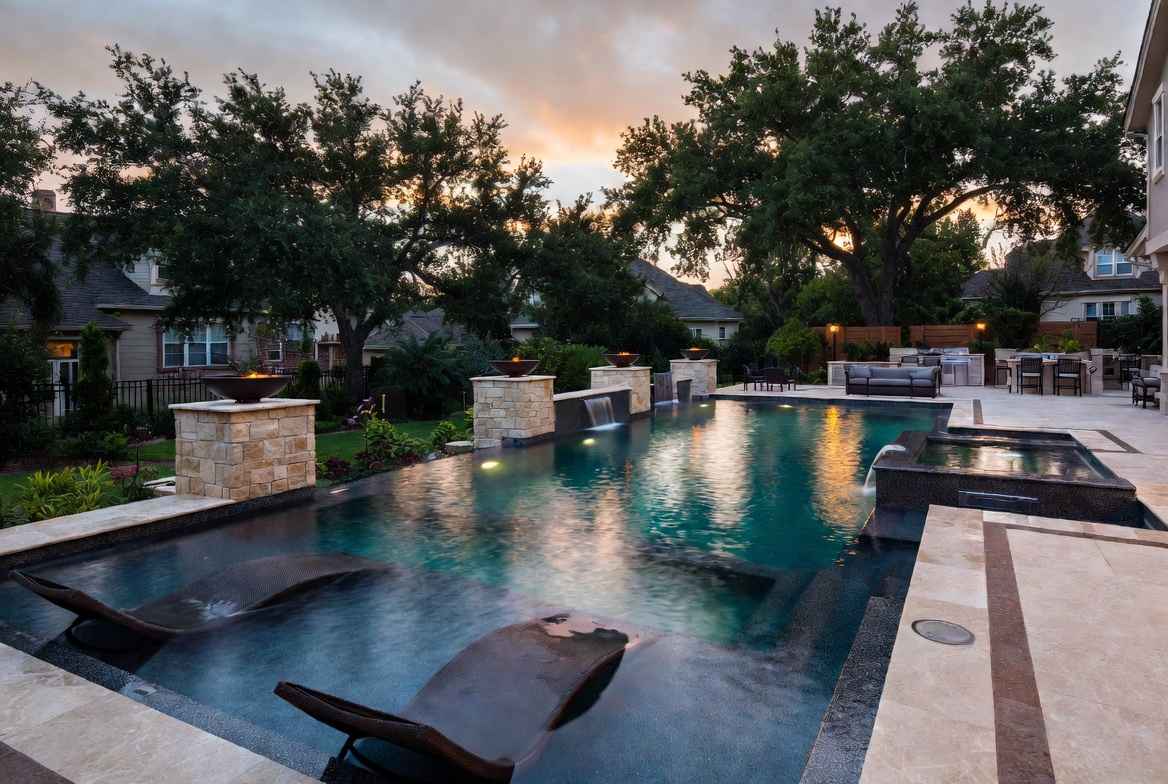
Most DFW backyard pools are 12 to 16 feet wide and 24 to 36 feet long. Not Olympic-sized, but absolutely usable for swimming pool exercise. Even a 24-foot pool allows meaningful laps — just adjust your technique with shorter strokes and more turns. Focus on form over distance and you’ll get a serious workout. The CDC’s physical activity guidelines confirm that swimming is one of the most effective aerobic exercises available, burning 400 to 700 calories per hour depending on intensity.
If your pool is too small for traditional laps, a swim tether changes everything. It’s a resistance band that attaches to your waist and anchors to the pool — you swim in place against constant resistance. Cost: $30 to $80 for a quality setup, and it turns any size pool into an endless lap pool. For serious swimmers, counter-current systems like the Endless Pools Fastlane or Badu SwimJet create a current you swim against. These can be added to existing pools for $3,000 to $10,000+ installed.
Dedicated lap pools are a growing trend in DFW too — narrow and long, typically 8 to 10 feet wide and 40 to 60 feet, popular with fitness-focused homeowners in Southlake and Frisco. According to the Pool & Hot Tub Alliance, fitness-oriented pool features are among the fastest-growing categories in new residential pool construction.
Pool Exercise Routine Ideas for Any Fitness Level
You don’t need to be a swimmer to get a great swimming pool exercise workout. Water walking or jogging at waist to chest depth gives you natural resistance with every step. Pool planks using a noodle work your core. Water squats and lunges build leg strength without joint stress. Arm circles and resistance movements in water tone upper body faster than you’d expect. Flutter kicks holding the pool wall are killer for legs and cardio. And treading water intervals — 30 seconds hard, 30 seconds easy — are one of the most effective pool exercise routine options for cardiovascular fitness.
The Arthritis Foundation recommends water exercise as one of the best fitness options for people of all ages and ability levels because it reduces impact stress by up to 90%.
Basic equipment makes your pool exercise routine even better. Pool noodles ($3 to $10) are incredibly versatile. Foam dumbbells ($15 to $30) add water resistance training. A kickboard ($10 to $20) and pull buoy ($10 to $20) let you isolate legs or arms. Swim fins ($20 to $50) increase leg resistance. An aqua jogger belt ($25 to $50) keeps you buoyant for deep water running — one of the best calorie-burning pool for exercise options available. The U.S. Department of Energy notes that using a pool cover between swim sessions reduces heat loss, making early morning exercise swimming more comfortable without running the heater all night.
Why Swimming Pool Exercise Makes More Sense in DFW Than a Gym
Texas heat makes outdoor running miserable and dangerous from June through September. A pool keeps your body temperature regulated while you work out at full intensity. There’s no overheating risk, no pavement impact, and no gym membership fee — your pool is right there. DFW’s 8+ month swim season means you can maintain a consistent pool exercise routine nearly year-round. With a pool heater, you can swim comfortably 10 to 11 months per year. Most exercise swimmers prefer water at 78 to 84°F — cooler than recreational preference but warmer than competitive pools. Program your heater to pre-warm before your morning routine and you’re set.
Pool Maintenance for Regular Exercise Swimmers
If someone is swimming daily for exercise, that’s added bather load on your chemistry. Sunscreen, body oils, and sweat hit the water at every session. Increase chlorine attention and consider a post-workout surface skim to remove the oil film that accumulates. Proper chemistry matters even more for regular swimmers because of increased skin and eye exposure — balanced pH at 7.2 to 7.6 prevents irritation, and adequate chlorine prevents ear and respiratory infections. Our water chemistry guide covers target ranges, and our water testing guide explains how to monitor the parameters that matter most for swimmer comfort.
According to HomeAdvisor’s pool data, pools used for regular exercise benefit significantly from professional weekly service because the increased bather load demands more precise chemistry management than casual-use pools.
People Also Ask
Can I do laps in my backyard pool?
Yes. Even a 24-foot pool works for lap swimming with technique adjustments. A swim tether ($30 to $80) lets you swim in place in any size pool. Counter-current systems turn small pools into serious training facilities.
What is the best pool exercise for fitness?
Lap swimming burns the most calories — 400 to 700 per hour. Water jogging and treading water intervals are close behind. For strength, water squats, foam dumbbell exercises, and flutter kicks are highly effective. A mixed swimming pool exercise routine combining cardio and resistance gives the best overall results.
Is swimming good exercise in hot weather?
It’s the ideal hot weather workout. Water keeps your body temperature regulated so you can exercise at full intensity without overheating. In DFW summers when outdoor running is dangerous, your pool is the safest high-intensity exercise option available.
Does swimming laps affect pool chemistry?
Yes. Regular exercise swimming adds sunscreen, body oils, and sweat that increase chlorine demand. Daily swimmers should expect slightly higher chemical maintenance needs. Professional service handles this adjustment automatically. Our maintenance services account for higher bather loads.
What temperature should a pool be for exercise?
78 to 84°F for most exercise swimmers. Cooler than typical recreational preference but warm enough for comfort during sustained activity. A heat pump keeps your pool in this range efficiently through most of the DFW season. Our heating cost guide covers the most efficient options.
Using Your Pool for Fitness? PoolBurg Keeps It Swimmer-Ready
Swimming pool exercise demands clean, balanced, comfortable water at every session. Contact PoolBurg for swimmer-optimized weekly service that handles the extra chemistry demands of regular exercise use. Your pool is a gym — we keep it in peak condition so you can focus on your workout.