Figuring out where to drain pool water sounds like it should be simple, but in DFW it’s one of those things where doing it wrong gets expensive fast. You can’t just dump 20,000 gallons of chlorinated water wherever you want. Pool draining laws Texas cities enforce carry real fines, and the wrong discharge location can harm the environment and your neighbors. Whether you’re draining for high CYA, high TDS, resurfacing, or contamination cleanup, understanding pool water discharge DFW rules protects you from penalties and protects your pool from damage during the process.
The General Rules for Where to Drain Pool Water in DFW

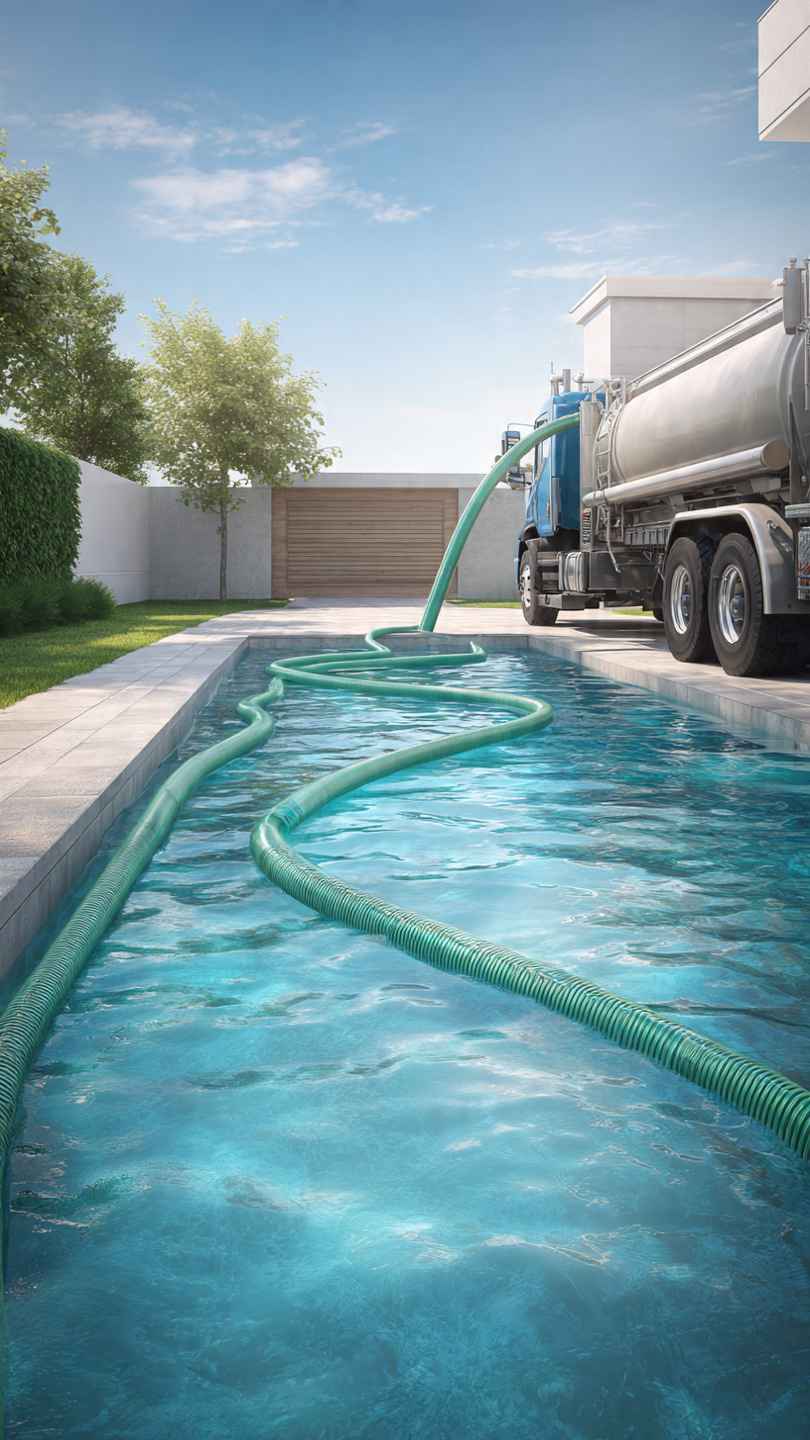
Allowed: sanitary sewer system. Most DFW cities permit pool water discharge into the sanitary sewer via a cleanout. Sanitary sewer water goes to the wastewater treatment plant, which is designed to handle chlorinated water. Locate your sanitary sewer cleanout — it’s usually a capped pipe near your house foundation. Connect a hose from your pump to the cleanout for controlled drainage. The North Texas Municipal Water District manages regional wastewater treatment and confirms that residential pool water discharge to sanitary sewer is the standard approved method.
Not allowed: storm drains. This is where most people get it wrong. Storm drains flow directly to creeks, rivers, and lakes with zero treatment. Chlorinated, chemically treated pool water harms aquatic ecosystems. Dumping pool water into a storm drain violates city ordinances in every DFW city. Fines range from $100 to $2,000+ depending on the city and severity. The North Central Texas Council of Governments manages regional stormwater quality programs and is clear that pool water discharge DFW residents attempt through storm drains is prohibited.
Not allowed: the street. Street gutters typically flow to storm drains, so the same rules apply. Some cities make very limited exceptions for small amounts of dechlorinated water, but don’t assume. If you’re wondering where to drain pool water, the street is almost never the answer. Not allowed: your neighbor’s property. Self-explanatory but worth saying.
Gray area: your own yard. Very small amounts of heavily dechlorinated water may be acceptable for yard irrigation in some cities. Chlorine must be neutralized first — let water sit in the sun for 24 to 48 hours or use a dechlorinating agent. Large volumes oversaturate soil and potentially flow onto neighboring property or into storm drains. Not recommended for full drain events. Pool draining laws Texas wide generally follow this same framework, but always verify locally.
City-Specific Pool Water Discharge DFW Guidelines
Frisco: sanitary sewer discharge permitted via cleanout. Storm drain discharge prohibited. Plano: sanitary sewer via cleanout permitted. Must dechlorinate if discharging to any surface. McKinney: sanitary sewer permitted, storm drain prohibited. Allen, Prosper, and The Colony follow similar rules. Southlake falls under Tarrant County jurisdiction — sanitary sewer permitted, storm drain prohibited.
All other DFW service cities generally follow the same pattern, but always verify with your specific city’s water utility or code enforcement before draining. Call your city’s public works department or check their website under “stormwater” or “water quality” ordinances. When in doubt, hire a professional who knows where to drain pool water in your area.
How to Properly Drain Your Pool in DFW
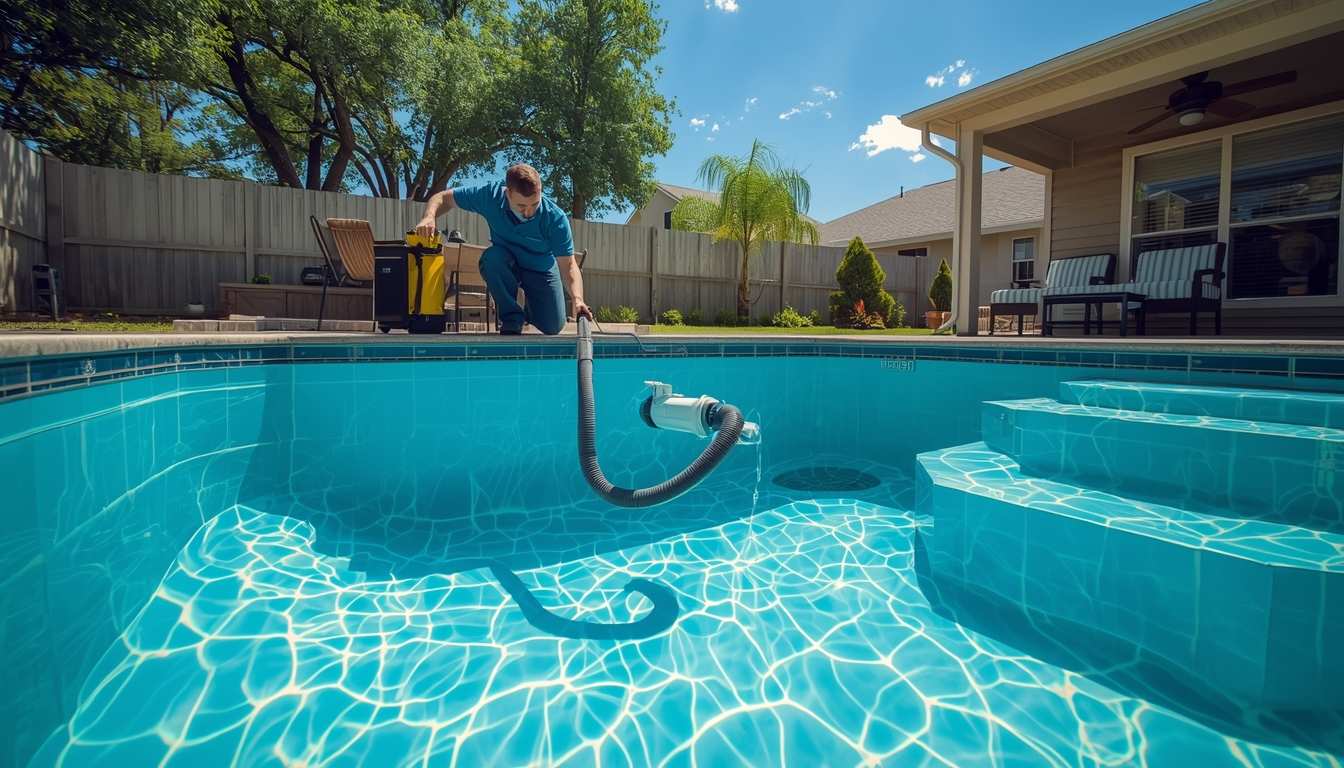
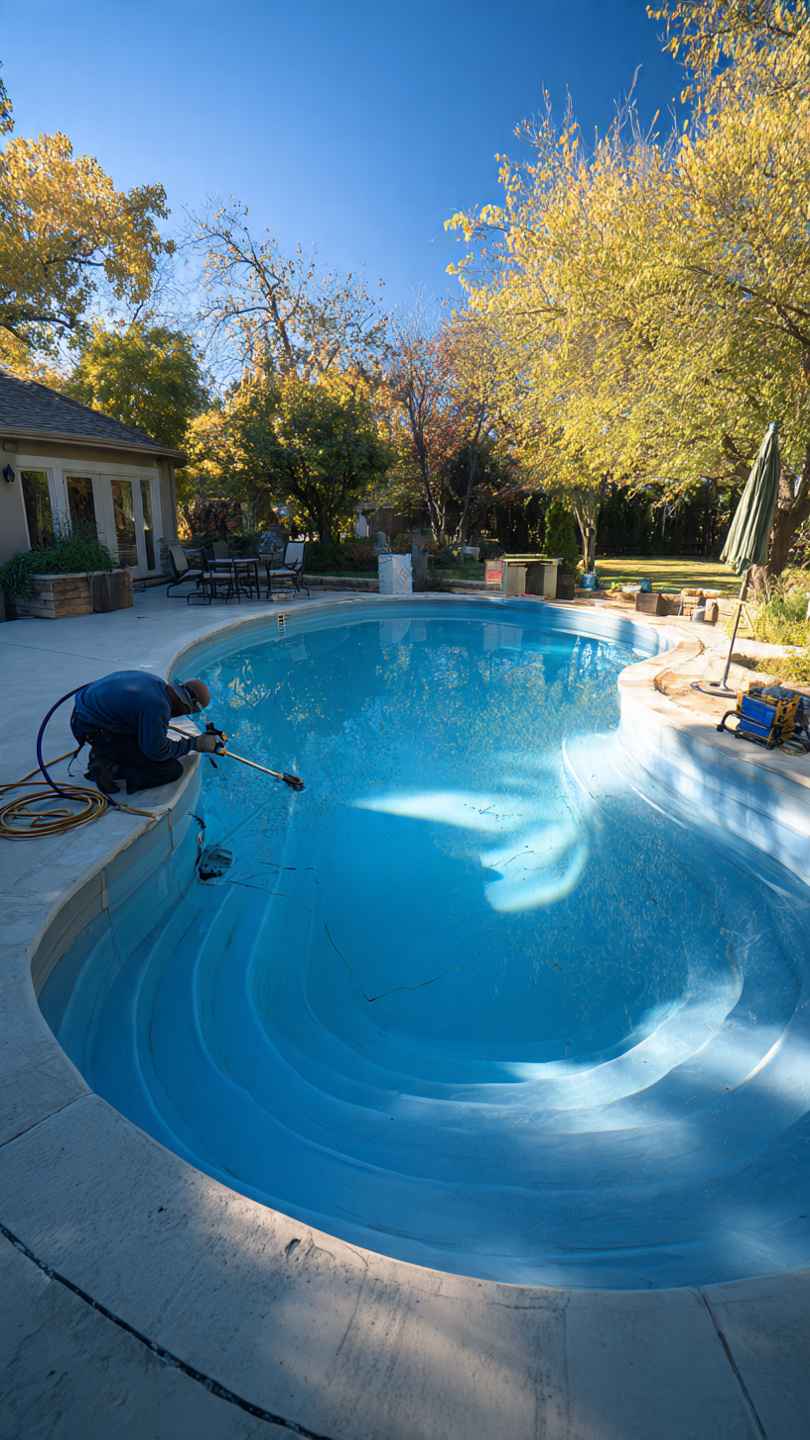
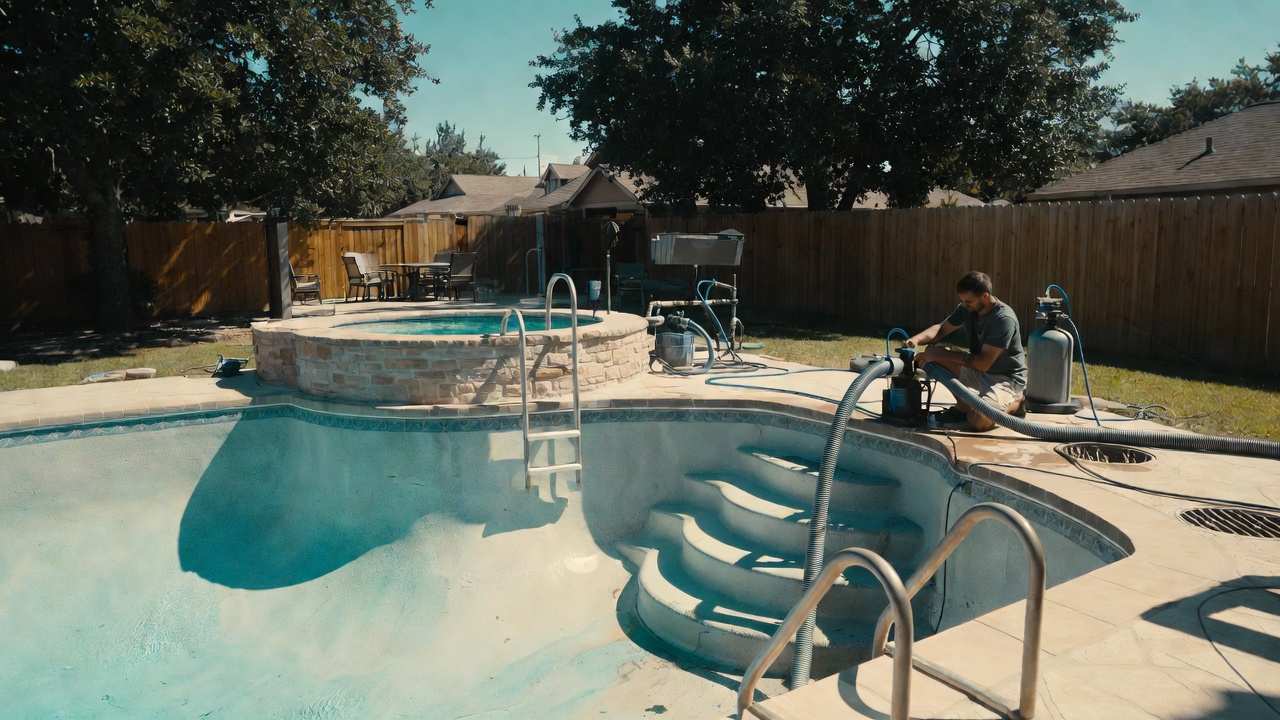
Option 1: submersible pump to sanitary sewer cleanout. Place a submersible pump in the pool and connect the discharge hose to the cleanout. Monitor throughout — don’t walk away because a disconnected hose means flooding. Full drain takes 8 to 16 hours depending on pump size. According to HomeAdvisor’s pool data, professional drain services are recommended for full drains because of the shell damage risk.
Option 2: pool pump on waste setting. Set the multiport valve to “waste” so water bypasses the filter and exits through the backwash line. Direct that line to the sanitary sewer cleanout. Faster than a submersible pump for partial drains. Stop before water drops below the skimmer — don’t run the pump dry.
Option 3: professional drain service. PoolBurg handles everything — proper discharge, monitoring, refill, and chemistry startup. Cost: $200 to $600 depending on pool size and scope. Strongly recommended for full drains. Our drain and refill guide covers the complete process including post-fill chemistry.
Safety Warnings You Cannot Ignore
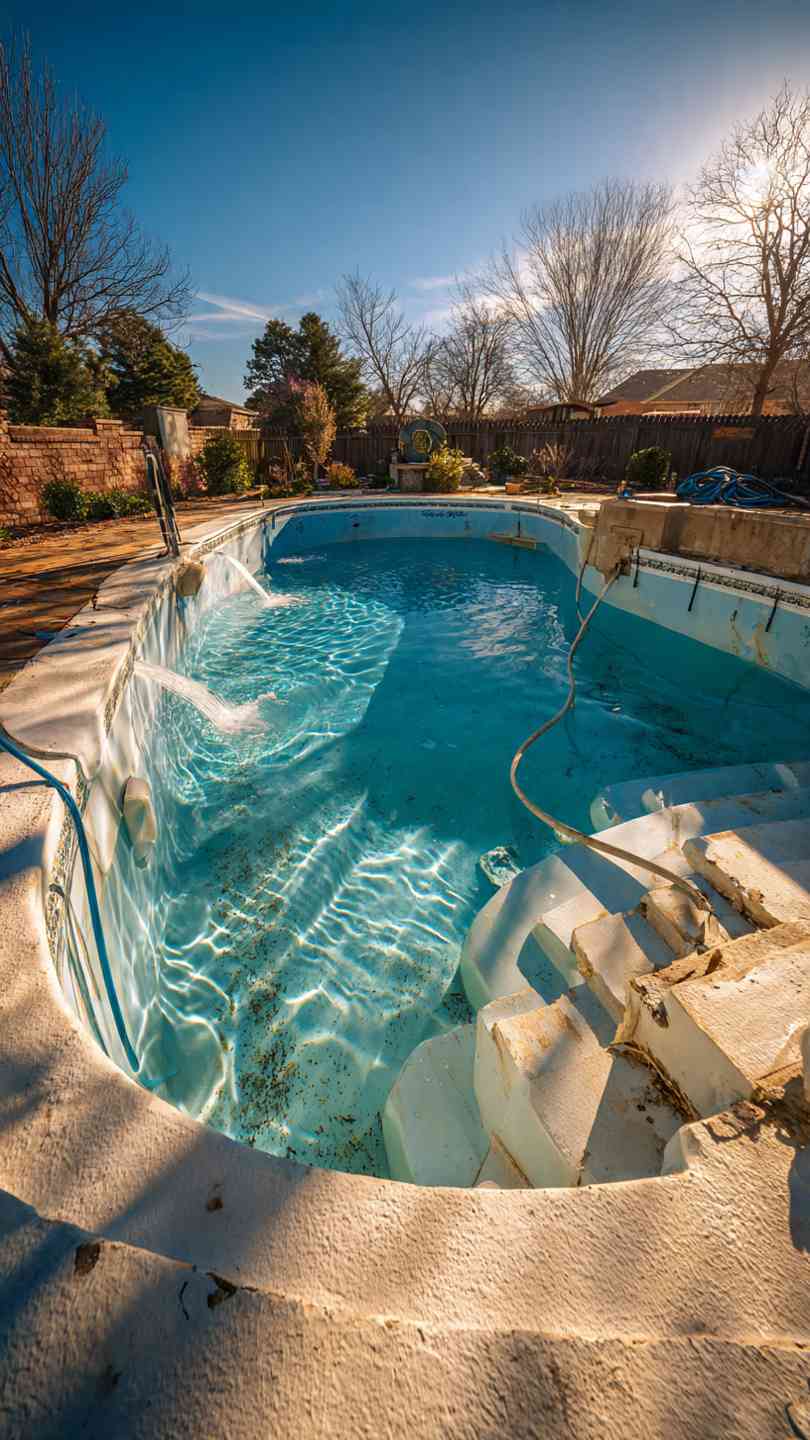
Never fully drain a gunite pool without professional supervision. Hydrostatic pressure from groundwater can push an empty pool shell out of the ground — this is called hydrostatic uplift and the risk is highest in DFW after heavy rain when soil is saturated. If you must fully drain, open the hydrostatic relief valve in the main drain if your pool has one. The Pool & Hot Tub Alliance warns that improper pool draining is a leading cause of structural pool damage in residential settings.
Never leave a draining pool unattended for extended periods. Monitor the water level to prevent dry-running the pump and monitor the discharge point to ensure proper flow. Minimize drain time — an empty pool exposed to Texas sun and heat degrades rapidly. Refill as quickly as possible. For plaster pools, don’t leave the surface dry for more than 24 to 48 hours or cracking can occur. The U.S. Department of Energy recommends minimizing water replacement events as part of overall pool water conservation.
People Also Ask
Where do I drain my pool water in DFW?
Into the sanitary sewer system via your sewer cleanout. This is the approved discharge method in virtually every DFW city. Never discharge to storm drains, streets, or neighboring property.
Can I drain my pool into the street?
No. Street gutters flow to storm drains, which empty untreated into waterways. Pool draining laws Texas cities enforce prohibit this. Fines range from $100 to $2,000+.
Is it legal to drain pool water into the storm drain?
No. Storm drain discharge of pool water is illegal in every DFW city. Storm drains are for rainwater only — chemically treated pool water harms aquatic ecosystems.
How do I find my sanitary sewer cleanout?
Look for a capped pipe (usually 3 to 4 inches in diameter) near your house foundation, often near a bathroom or kitchen wall. Some are in the front yard, some in the back. If you can’t find it, a plumber can locate it for you.
Can an empty pool pop out of the ground?
Yes. Hydrostatic uplift from groundwater pressure can push an empty pool shell upward, especially after heavy rain in DFW’s saturated clay soil. This is why full drains should always be supervised by a professional. Our deck repair guide covers soil-related pool damage in DFW.
Need to Drain Your Pool? PoolBurg Does It Safely and Legally
Proper discharge, continuous monitoring, fast refill, and post-fill chemistry startup — all compliant with DFW city regulations. If you need to know where to drain pool water or just want the job done right, contact PoolBurg and we’ll handle everything.