Crystal clear pool water is what every DFW pool owner wants but most struggle to maintain consistently. That resort-quality sparkling pool water look isn’t magic and it’s not luck — it’s a specific set of habits applied to North Texas conditions. The problem is that DFW makes it harder than most places. Our hard water, extreme heat, heavy pollen, and intense UV all work against clarity. If you’ve been searching how to get clear pool water and nothing seems to stick, you’re probably missing one or more of these steps. Here are the 10 things our technicians do every week to deliver crystal clear pool water across DFW.
10 Steps to Crystal Clear Pool Water in DFW
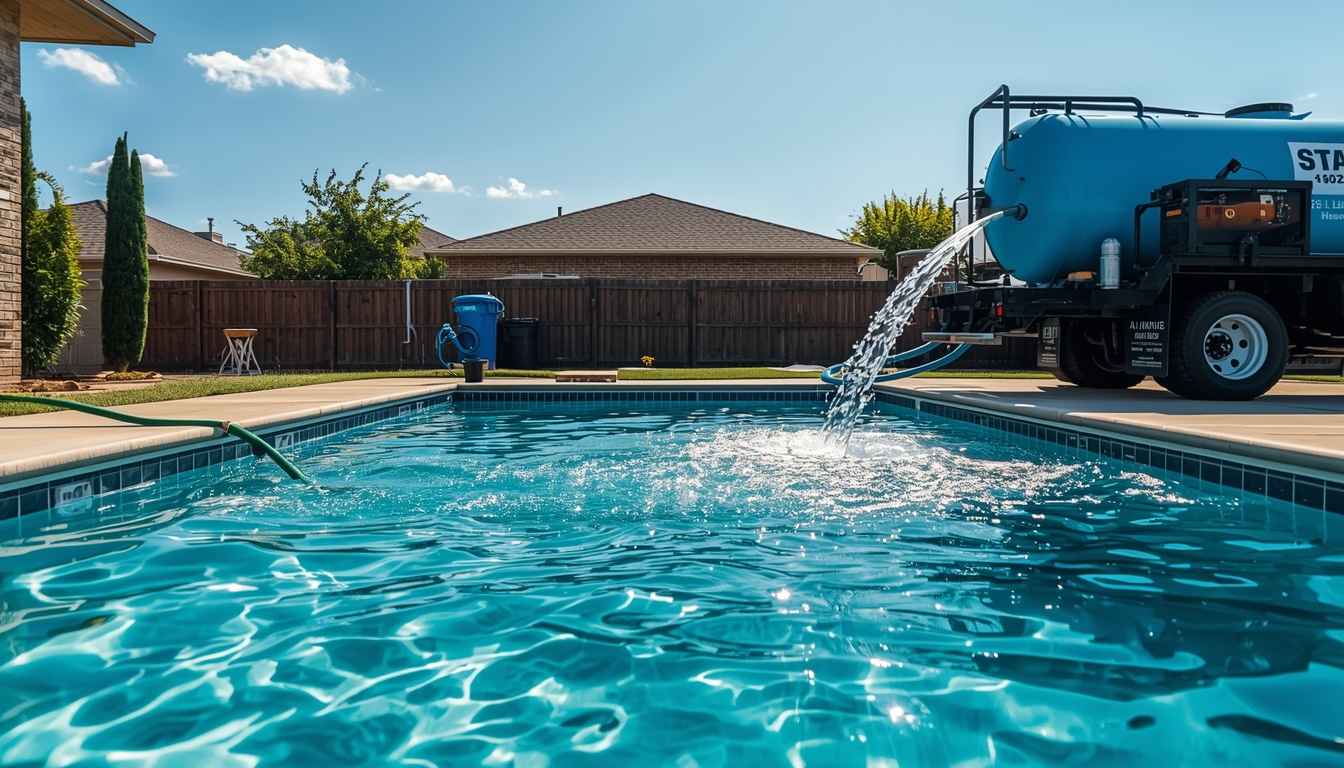
1. Keep pH at 7.2 to 7.4 — not just “in range.” This is the single biggest crystal clear pool water secret for DFW. At pH 7.2, calcium stays dissolved, chlorine works at peak effectiveness, and water sparkles. At pH 7.8, calcium precipitates out of solution creating milkiness, chlorine effectiveness drops by 75%, and the water looks flat and dull. DFW pH always drifts high, so you’ll use muriatic acid frequently. Our water chemistry guide covers the balancing protocol.
2. Run the filter longer than you think. A variable speed pump at low RPM for 12 to 16 hours gives you finer filtration than a single-speed blasting for 8 hours. Lower speed means water passes through the media more slowly, catching smaller particles. More run time means more passes through the filter per day. The U.S. Department of Energy confirms that longer runs at lower speed improve both filtration quality and energy efficiency.
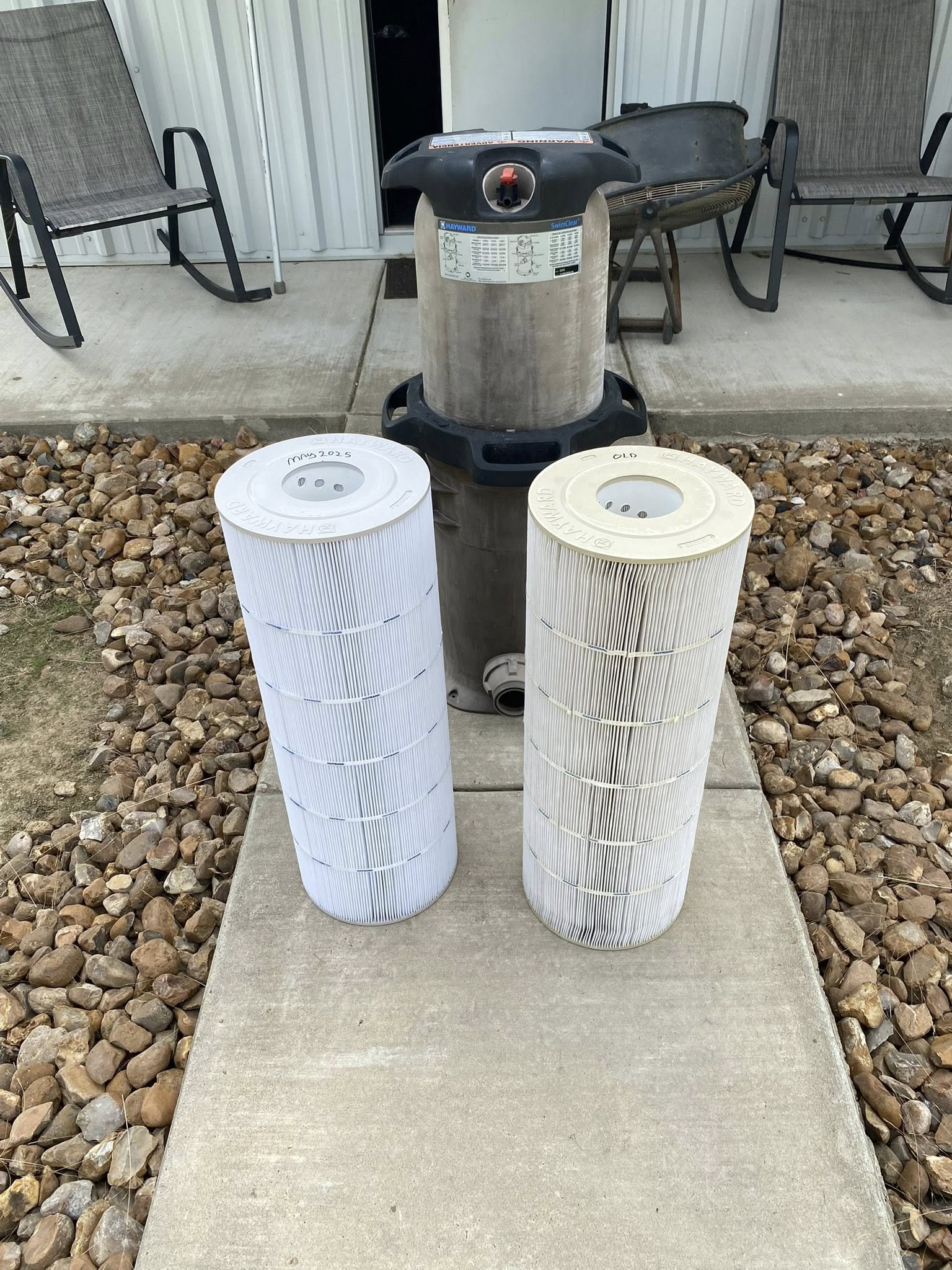
3. Clean the filter before it tells you to. Don’t wait for 10 PSI above baseline. Clean at 5 to 6 PSI rise. A partially dirty filter lets micro-particles pass through that a freshly cleaned filter would catch. Those micro-particles are what make the difference between clear and sparkling pool water. Our filter maintenance guide covers cleaning schedules for every filter type.
4. Brush the pool weekly. Brushing loosens particles, biofilm, and early-stage algae from surfaces so the filter can capture them. Without brushing, invisible biofilm builds up on walls and creates a subtle haze that chemistry alone can’t fix. Gunite pools with their porous plaster surfaces especially need weekly brushing. The Pool & Hot Tub Alliance lists brushing as a core weekly maintenance task for residential pools.
5. Use a clarifier strategically. Pool clarifiers bind tiny particles together into larger clumps the filter can catch. Use them after heavy bather loads, storms, pollen events, and algae treatments. But don’t rely on clarifiers as a substitute for proper filtration and chemistry — they’re a tool, not a crutch.
6. Keep phosphates below 300 ppb. Phosphates feed microscopic organic growth that creates haze even without visible algae. You can have perfect chlorine and still have dull water because phosphates are feeding micro-organisms too small to see but collectively enough to affect clarity. Test quarterly and treat when levels climb.
7. Use an enzymatic cleaner weekly. Enzymatic products break down organic oils, lotions, sunscreen residue, and biological matter that creates a surface film and dulls water. Cost: $15 to $25 per month. It’s one of the most underrated how to get clear pool water tools available. According to HomeAdvisor’s pool data, pools using weekly enzymatic treatments maintain noticeably better water clarity than those relying on chlorine and filtration alone.
8. Manage calcium hardness aggressively. DFW hard water above 400 ppm creates permanent milkiness that no amount of chlorine or clarifier will fix. The only solution is keeping pH low to prevent calcium from precipitating, using monthly scale inhibitors, and doing a periodic partial drain and refill to reset calcium levels.
9. Don’t neglect the waterline. A crusty, scaled waterline makes even perfect water look dirty. Clean the waterline tile or surface weekly with an appropriate cleaner and brush. Crystal clear pool water gets judged visually, and the waterline is the frame around the picture.
10. Shock at the right time with the right product. Always shock at night — UV destroys chlorine during the day. Use liquid chlorine because it leaves no residue, adds no calcium, and adds no CYA. Shocking oxidizes invisible organic compounds that dull clarity even when you can’t see them. Our shock treatment guide covers the full process and DFW-specific product recommendations.
What Makes DFW Pool Water Dull Instead of Sparkling
The enemies of crystal clear pool water in North Texas: high pH causing calcium precipitation, micro-particles too small for a dirty filter to catch, dissolved calcium above 400 ppm creating permanent haze, organic surface film from body oils and sunscreen, early-stage algae that’s invisible but affects light transmission, and insufficient filtration time leaving particles suspended.
Our cloudy water troubleshooting guide breaks down each cause and fix. The CDC notes that water clarity is also a safety indicator — if you can’t clearly see the bottom of the pool, the water isn’t safe regardless of what the test kit says.
People Also Ask
How do I make my pool water crystal clear?
Keep pH at 7.2 to 7.4, run your filter 12 to 16 hours daily, clean the filter proactively, brush weekly, manage phosphates, use an enzymatic cleaner, control calcium hardness, and shock at night with liquid chlorine. These 10 steps together produce crystal clear pool water consistently.
Why is my pool water dull even though chemicals are balanced?
Most likely: pH is at the high end of “acceptable” (7.6 to 7.8) causing micro-calcium precipitation, the filter needs cleaning, or organic film from body oils is dulling the surface. A clarifier and enzymatic cleaner usually restore the sparkle within 24 to 48 hours.
Does hard water cause cloudy pool water?
Yes. When calcium hardness exceeds 400 ppm and pH drifts above 7.6, calcium precipitates out of solution and creates a milky haze. DFW’s hard water makes this one of the most common causes of dull water in North Texas pools.
Do pool clarifiers really work?
Yes — when used strategically. Clarifiers bind micro-particles into larger clumps the filter can capture. They work best after storms, parties, and pollen events. They don’t work as a substitute for proper pH management and filtration.
What makes pool water sparkle?
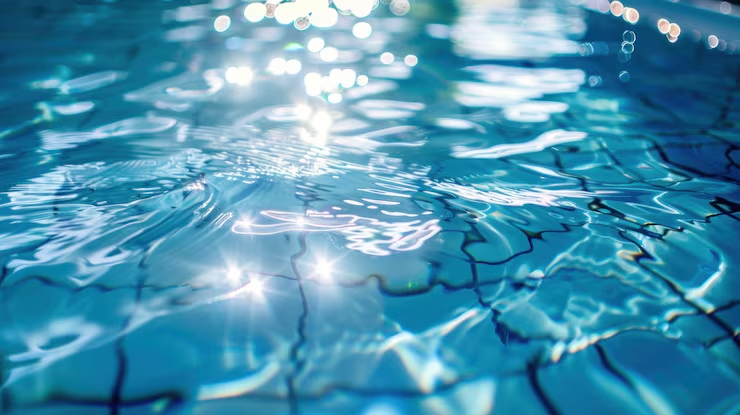
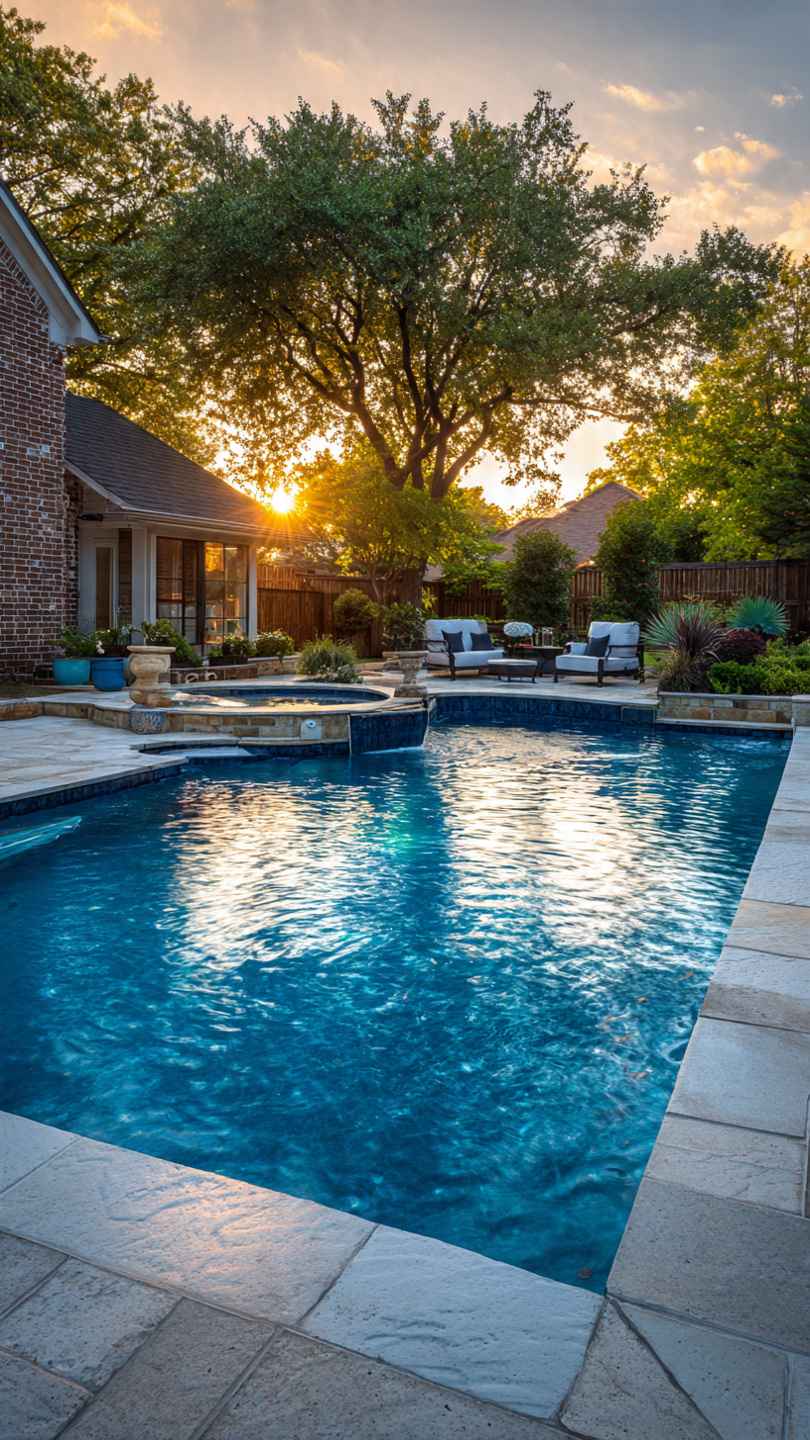
Low pH (7.2 to 7.4), clean filter media, absence of dissolved calcium haze, no organic surface film, proper chlorine levels, and adequate filtration time. When all of these align, light passes through the water cleanly and reflects off the pool surface — that’s the sparkling pool water effect.
PoolBurg Delivers Crystal Clear Pool Water Every Single Week
These 10 steps aren’t our premium package — they’re our standard protocol. Every visit, every pool. Contact PoolBurg and see what resort-quality crystal clear pool water looks like in your own backyard.