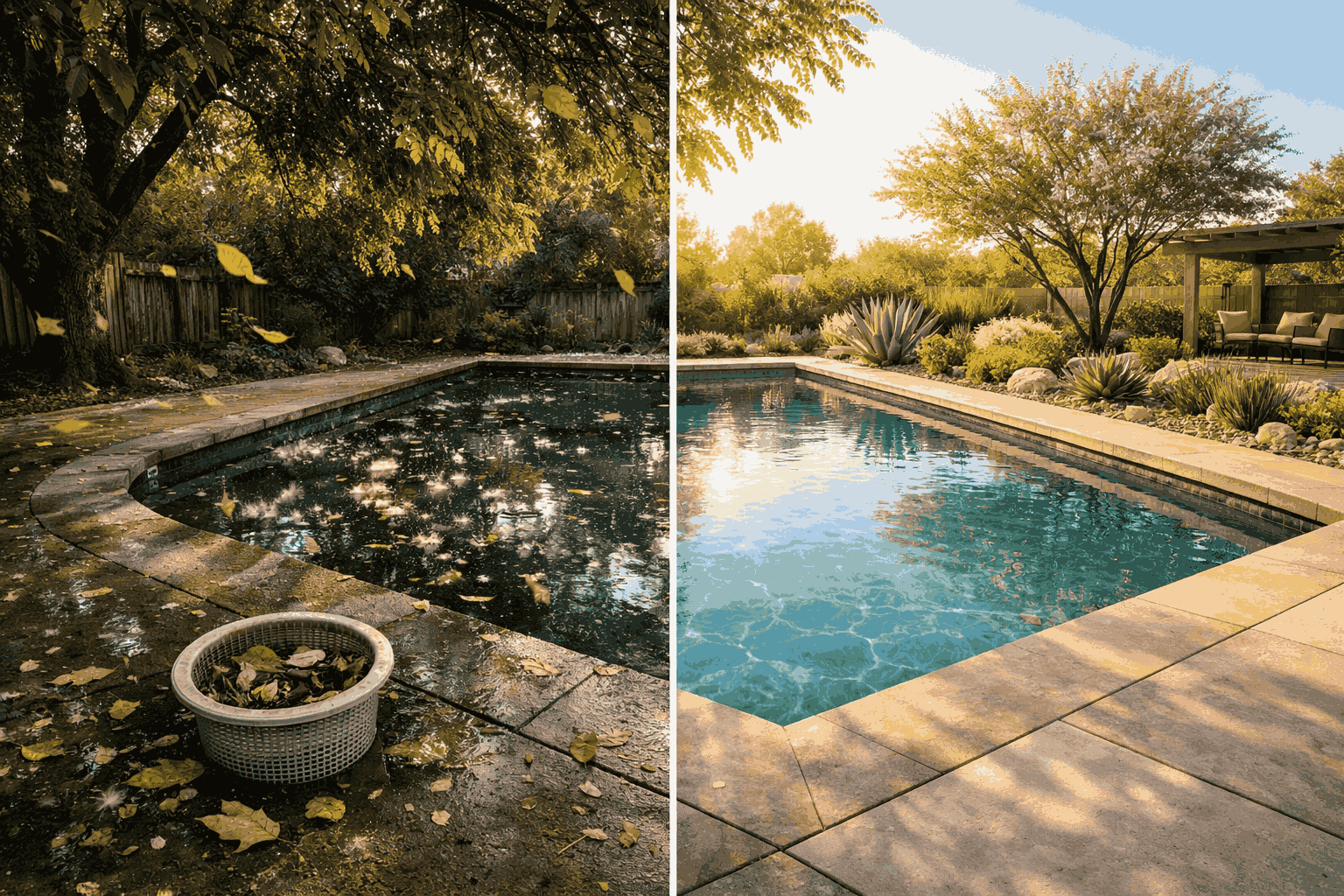
Landscaping around pool areas is one of those decisions that affects your maintenance costs for decades. Beautiful plants enhance your pool’s appearance and boost property value, but the wrong pool landscaping DFW choices create debris nightmares that drive up chemical costs, clog filters, and keep your service technician busy cleaning instead of optimizing. Every tree, shrub, and ground cover within 15 feet of your pool affects debris load, chemistry, and equipment. Here are the best plants around pool Texas homeowners should choose — and the ones to avoid at all costs.
Plants to Avoid Near Your DFW Pool
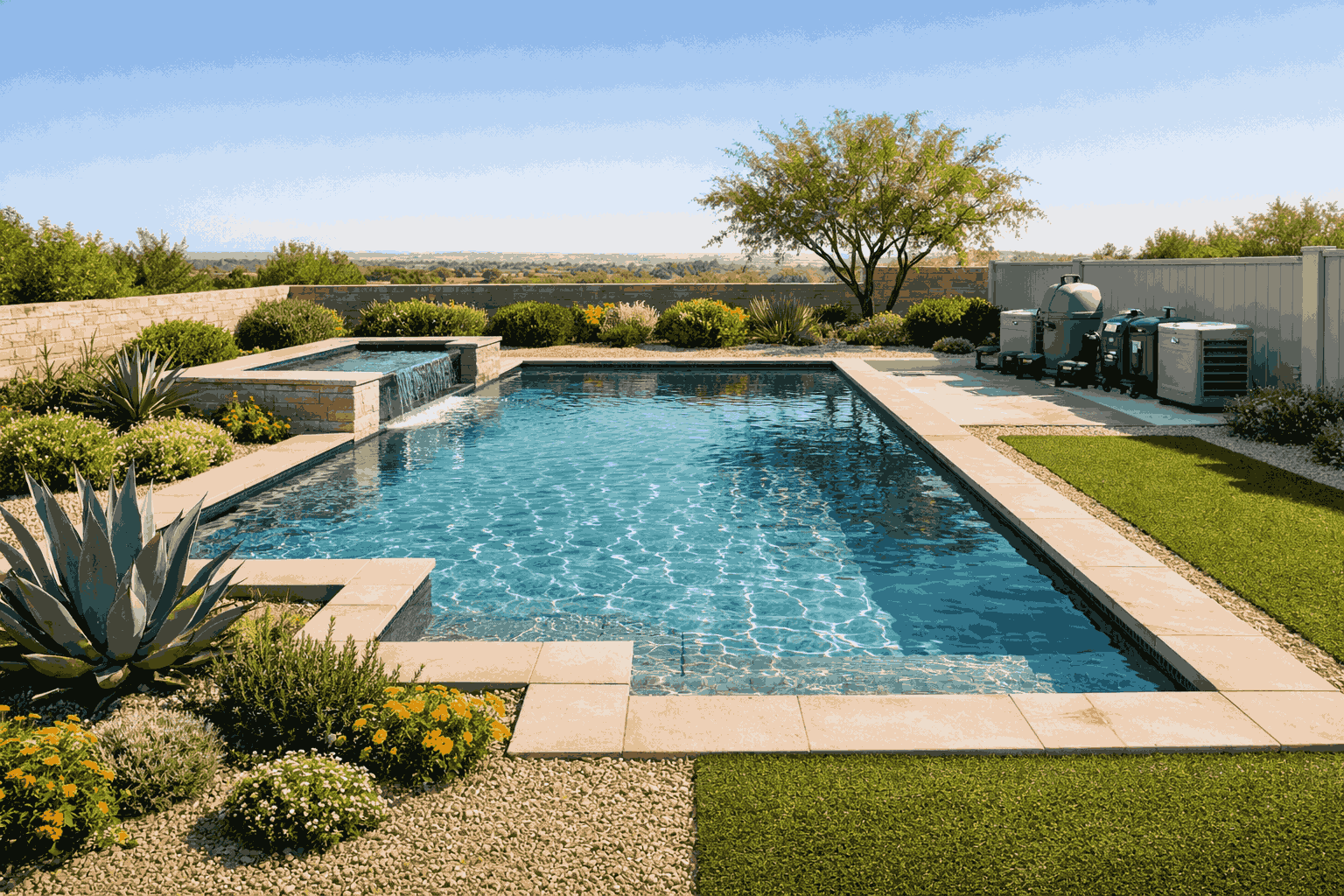
Pecan trees are the worst offenders — massive leaf drop in fall, catkins in spring, and nuts that stain surfaces. Bradford pear trees drop heavy leaves and fruit that stain, and their weak branches break in every DFW storm. Cottonwood seeds clog filters for weeks in spring. Mulberry berries stain pool surfaces permanently. Sweetgum drops spiky gumballs that jam equipment. Chinese tallow is invasive with seeds and leaves creating constant organic load. Even live oaks, while less messy than other oaks, dump catkins that clog skimmers for weeks every spring. The Texas Department of Agriculture maintains a native plants database that helps identify low-debris alternatives to these common DFW landscape trees.
On the shrub side, avoid any flowering plant that drops petals directly into the water — bougainvillea and crape myrtle placed directly over the pool are constant debris generators. Ornamental grasses with seed heads blow into the water with every DFW breeze. Bamboo sends invasive root systems that can damage pool plumbing and decking. And any plant requiring heavy fertilization near the pool introduces phosphate runoff that feeds algae. DFW winds carry debris farther than you’d expect — plants 20+ feet away still contribute to your pool’s debris load.
Best Plants Around Pool Texas Homeowners Should Choose
Trees that work well. Desert willow is a top choice — minimal leaf drop, drought-tolerant, beautiful blooms, and virtually no pool debris. Mexican plum is a DFW native with small manageable leaves. Crape myrtle works well when placed 10+ feet from the pool edge so blooms fall on the deck, not the water. Vitex produces attractive purple blooms with minimal debris and handles DFW heat. Cedar elm has small leaves and less debris than other elms. Bur oak works at 20+ feet distance — strong, long-lived, and manageable debris at that range. The Pool & Hot Tub Alliance recommends choosing pool-adjacent trees based on debris production rather than shade coverage alone.
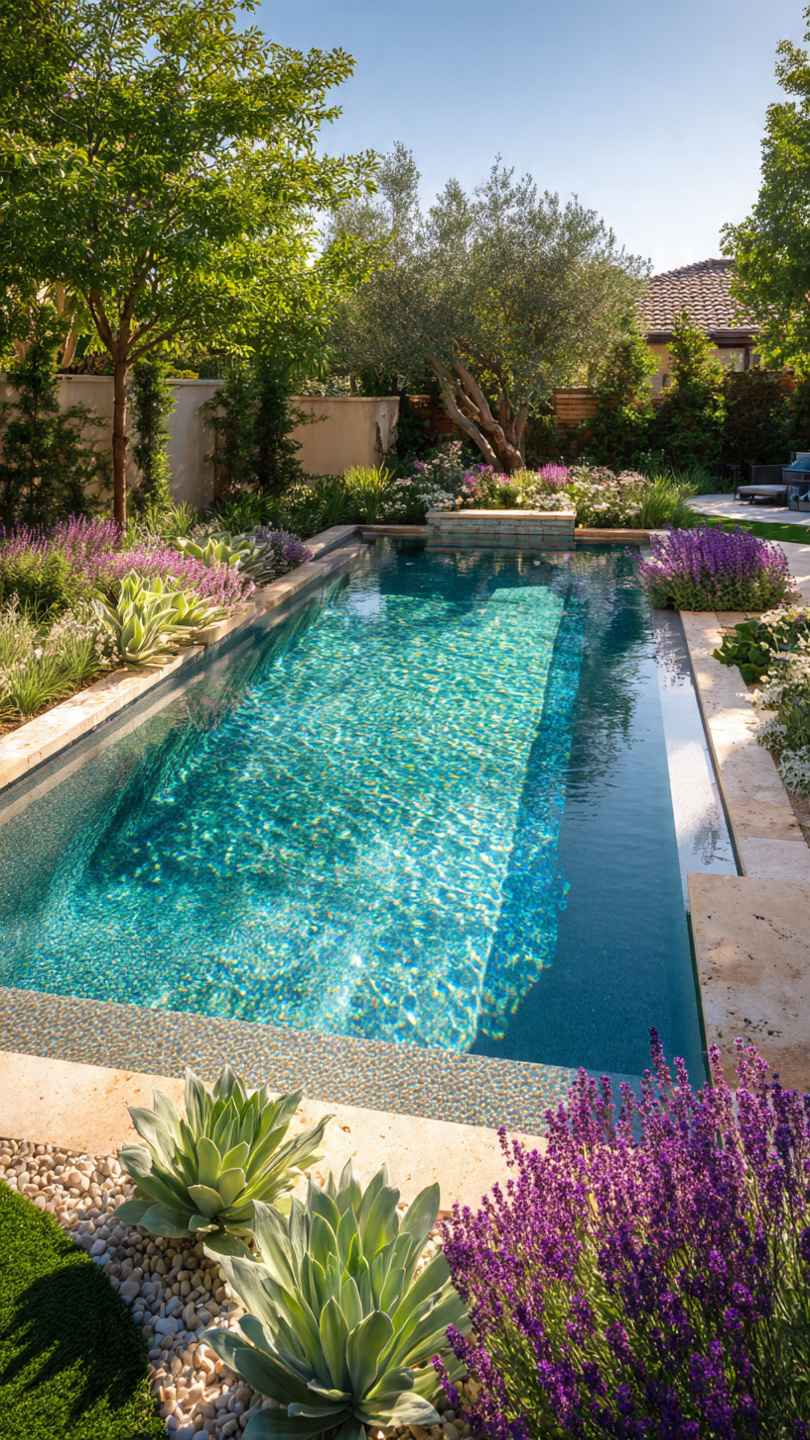
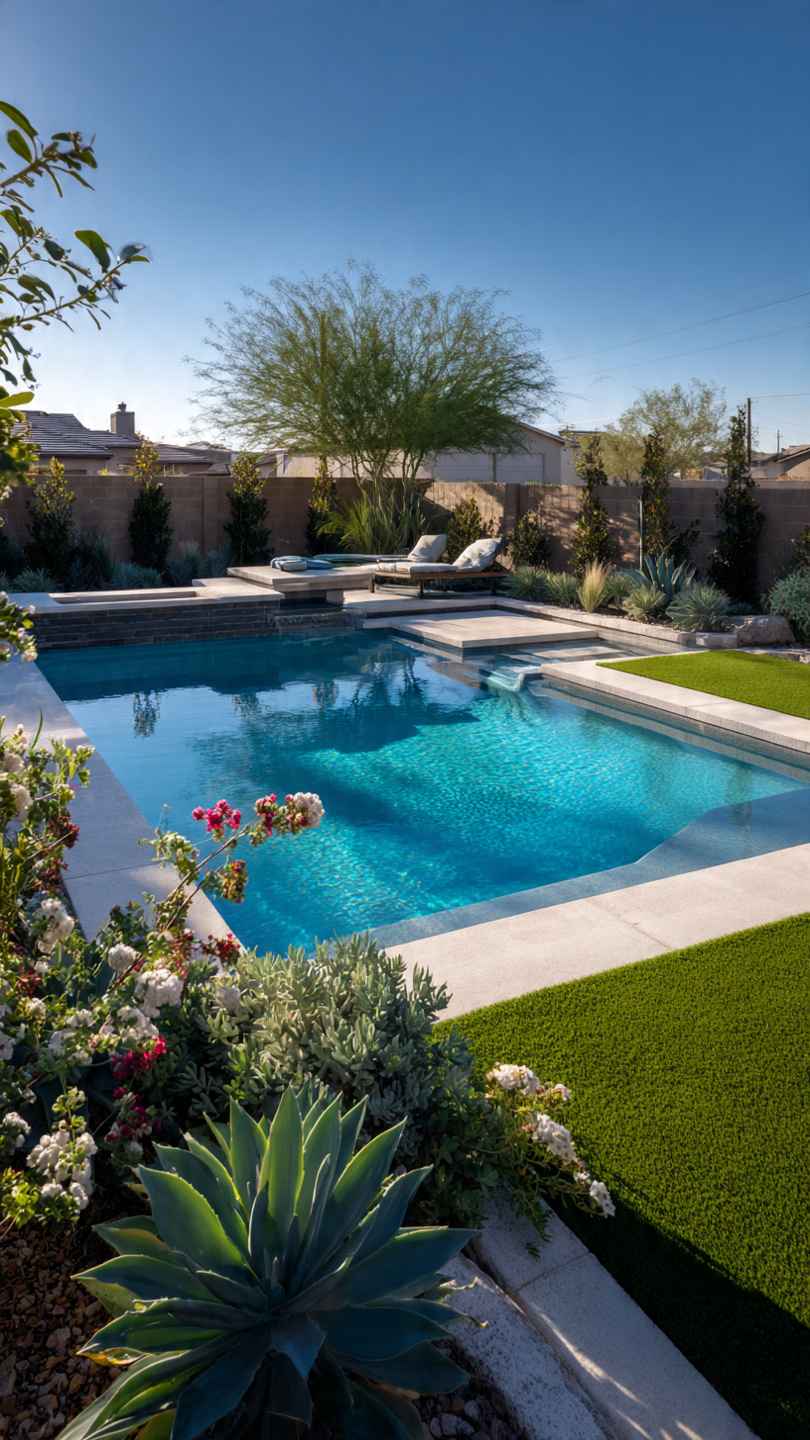
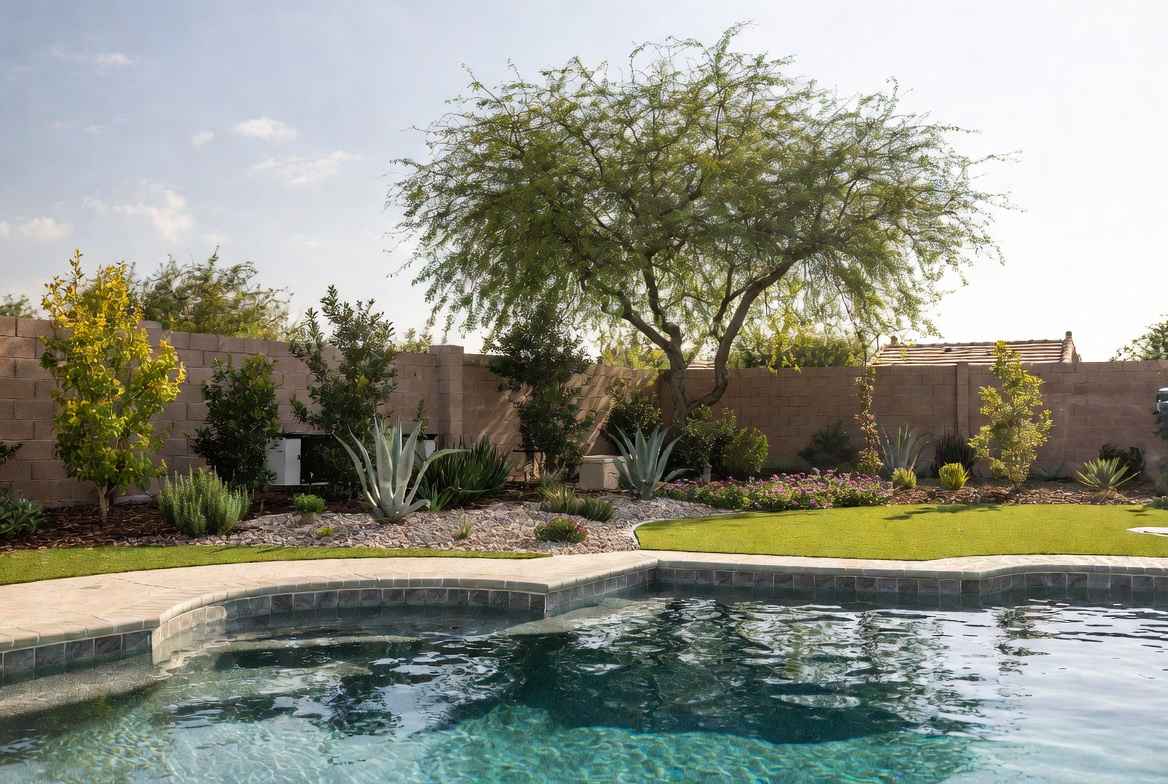
Shrubs and plants that work well. Rosemary is drought-tolerant, aromatic, and repels some mosquitoes. Dwarf yaupon holly stays evergreen and compact with minimal debris. Salvia species are DFW natives with colorful blooms and zero pool debris. Lantana loves Texas heat, attracts butterflies, and drops nothing into the water. Agave and succulents produce zero debris with a modern pool aesthetic that’s completely DFW heat-proof. Dwarf Indian hawthorn stays evergreen, compact, and clean. Smart landscaping around pool areas means choosing plants that look great without creating work.
Ground covers for pool surrounds. Asian jasmine is dense, evergreen, and low-debris. Mondo grass is clean and compact. Artificial turf is increasingly popular in DFW — zero debris, zero water, zero maintenance. Decomposed granite gives a clean modern look with zero organic debris. Avoid Bermuda grass directly adjacent to the pool — clippings constantly blow in. According to HomeAdvisor’s pool data, pool landscaping DFW homeowners choose increasingly favors low-debris and drought-tolerant options that reduce both maintenance and water consumption.
Landscaping Around Pool Design Principles for DFW
Follow the 15-foot rule — keep heavy-debris trees at least 15 feet from the pool edge. Plant windbreaks upwind of the prevailing south and southwest DFW winds. Install root barriers between large trees and pool plumbing to prevent root damage. Landscape should slope away from the pool so rainwater carries fertilizer and dirt away from the water, not into it. Some shade reduces UV chemical degradation, but too much creates algae-prone zones with poor circulation. Keep 3+ feet of clearance around equipment — heat pumps especially need airflow.
And check your HOA pool rules because many DFW communities dictate approved landscaping materials. Our deck repair guide covers how tree roots and soil movement affect pool structures. The U.S. Department of Energy notes that strategic shade placement can reduce water evaporation by up to 50%, balancing debris concerns with water conservation.
How Landscaping Affects Your Pool Maintenance Cost
Heavy-debris landscaping around pool areas adds $20 to $50 per month in extra maintenance — more frequent basket cleaning, filter cleaning, chemical treatment for organic loads, and phosphate management. Smart plant choices reduce maintenance by decreasing organic debris, phosphate runoff, and filter strain. Over 10 to 20 years of pool ownership, the right pool landscaping DFW decisions save thousands compared to the wrong ones.
Our DFW maintenance cost breakdown covers how environmental factors like landscaping affect your annual pool budget. The CDC also notes that reducing organic debris entering pool water lowers overall sanitizer demand and improves water quality with less chemical intervention.
People Also Ask
What trees should I avoid near my pool?
Pecan, Bradford pear, cottonwood, mulberry, sweetgum, and Chinese tallow are the worst for DFW pools. Live oaks are manageable but produce catkins in spring. Any tree with heavy leaf drop, fruit, or seed production creates constant debris.
What is the best landscaping around a pool in Texas?
Desert willow, vitex, crape myrtle (10+ feet from edge), rosemary, lantana, salvia, dwarf yaupon holly, agave, and succulents. All are drought-tolerant, heat-proof, and produce minimal to zero pool debris. The best plants around pool Texas conditions demand are native or adapted species.
Do tree roots damage pool plumbing?
Yes. Aggressive root systems from trees like bamboo, willows, and large oaks can crack pool plumbing, shift decking, and damage the pool shell over time. Install root barriers when planting within 20 feet of pool infrastructure.
How far should trees be from a pool?
Minimum 15 feet for heavy-debris trees. Low-debris trees like desert willow and vitex can be closer at 8 to 10 feet. Consider mature canopy size — a tree planted 10 feet away may hang over the pool in 5 years.
Does landscaping affect pool maintenance cost?
Significantly. Wrong plant choices add $20 to $50 per month in extra debris management, filter cleaning, and chemical costs. Smart landscaping around pool areas reduces these costs and saves thousands over the life of the pool. Our maintenance services account for your specific landscaping when building your service plan.
Landscaping Driving Up Your Pool Maintenance?
PoolBurg sees the impact of landscaping around pool areas at every visit. We advise which plants are causing your specific debris and chemical challenges. Contact PoolBurg and let us help you make the smart landscaping choices that save time and money.