An accessible pool isn’t just about compliance — it’s about keeping your pool usable and enjoyable for every member of your family for years to come. DFW’s aging population means more pool owners are dealing with mobility changes, and pool accessibility modifications are one of the smartest investments you can make whether you’re planning ahead, accommodating a family member, or aging in place yourself. The good news? Making your pool a pool for elderly or mobility-limited swimmers doesn’t require a complete renovation. Some of the most effective modifications cost a few hundred dollars, not thousands.
Common Pool Accessibility Challenges in DFW
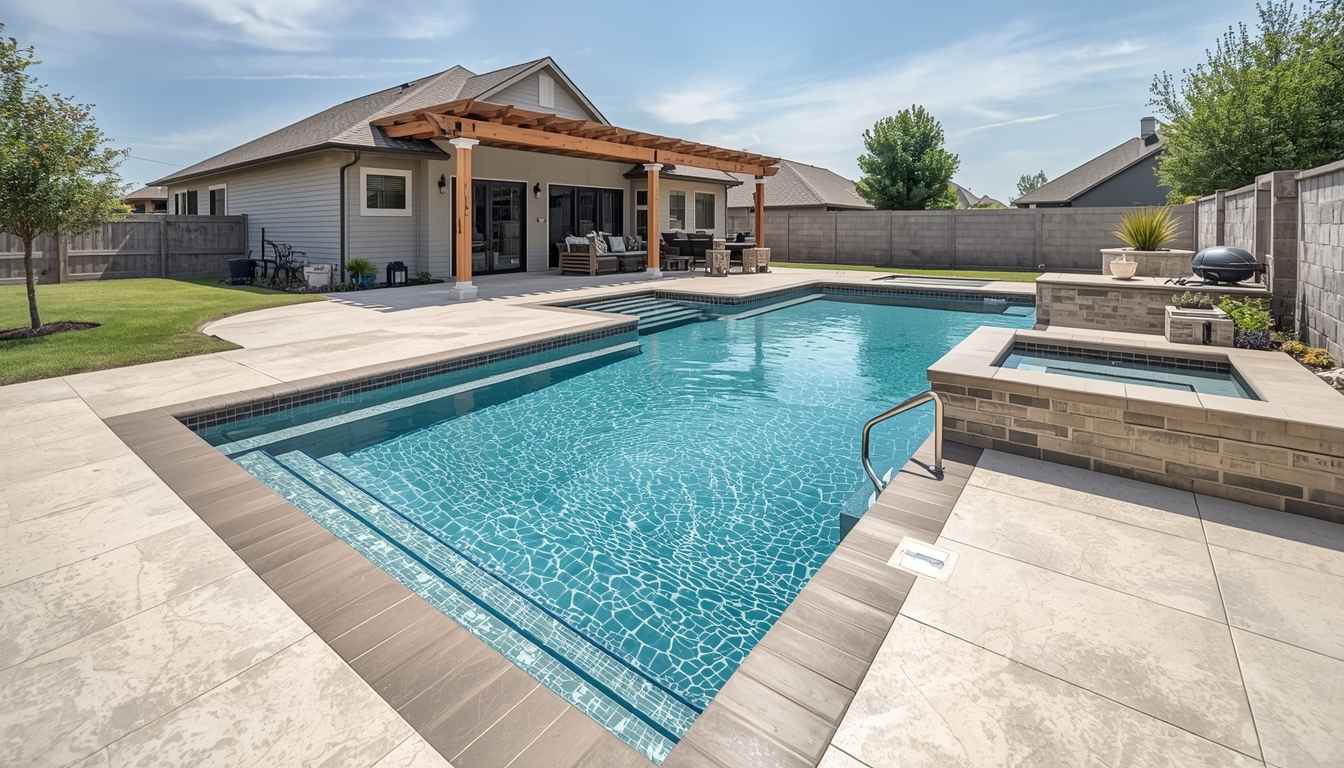
Getting in and out is the biggest barrier. Standard pool ladders are difficult for anyone with reduced grip strength or balance issues. Steep steps without handrails are fall risks. Once in the water, the pool is therapeutic and freeing — but the transition in and out is where injuries happen. The Consumer Product Safety Commission reports that entry and exit falls are among the most common pool injuries for adults over 60.
Navigating the deck adds another challenge. Wet surfaces are slippery. DFW’s clay soil causes deck settling and heaving that creates uneven surfaces and trip hazards — our deck repair guide covers these soil-related issues. And in 100°F+ Texas summers, the distance from the house to the pool across a sun-baked deck is genuinely uncomfortable for anyone with mobility limitations or heat sensitivity.
Accessible Pool Modifications That Work
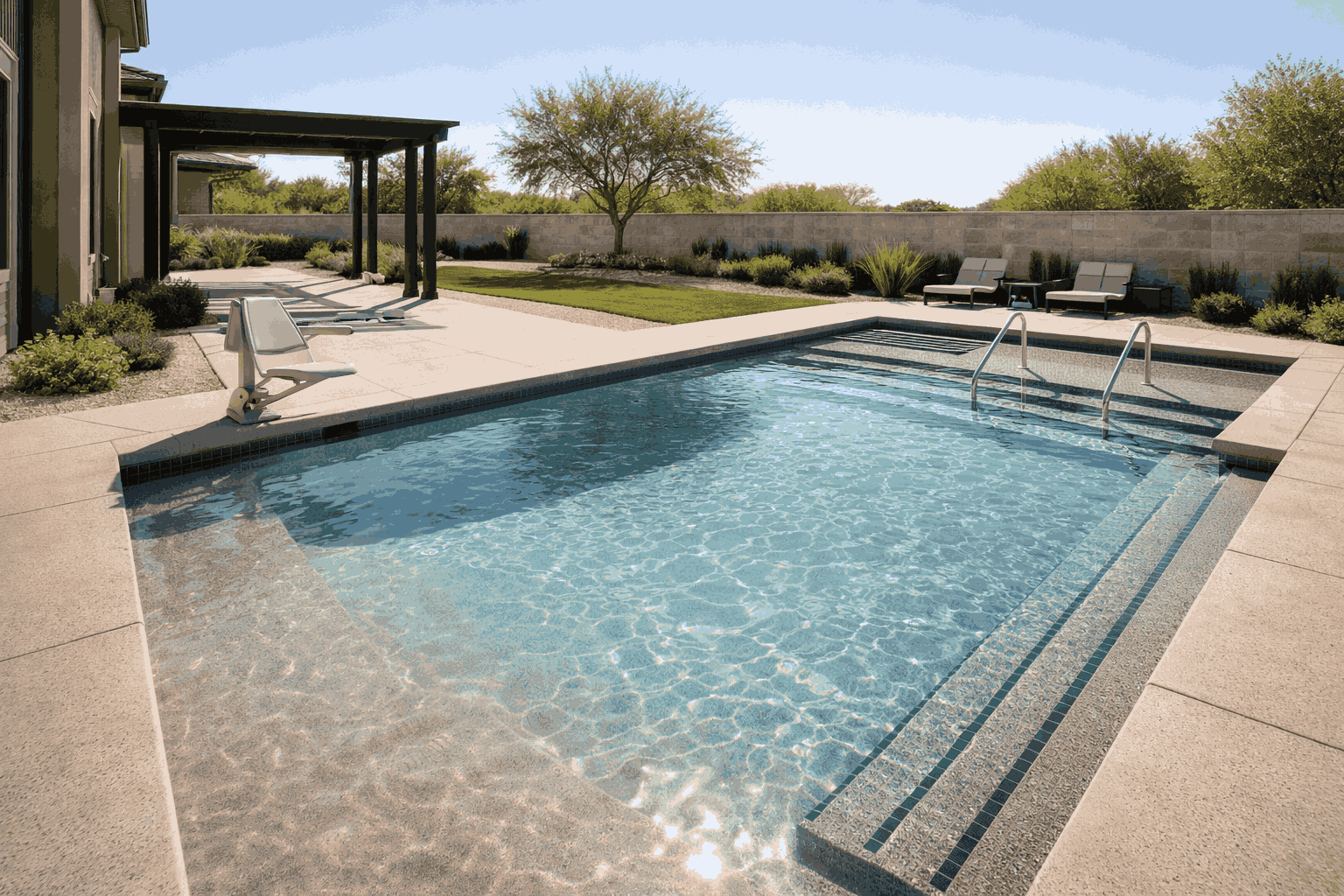
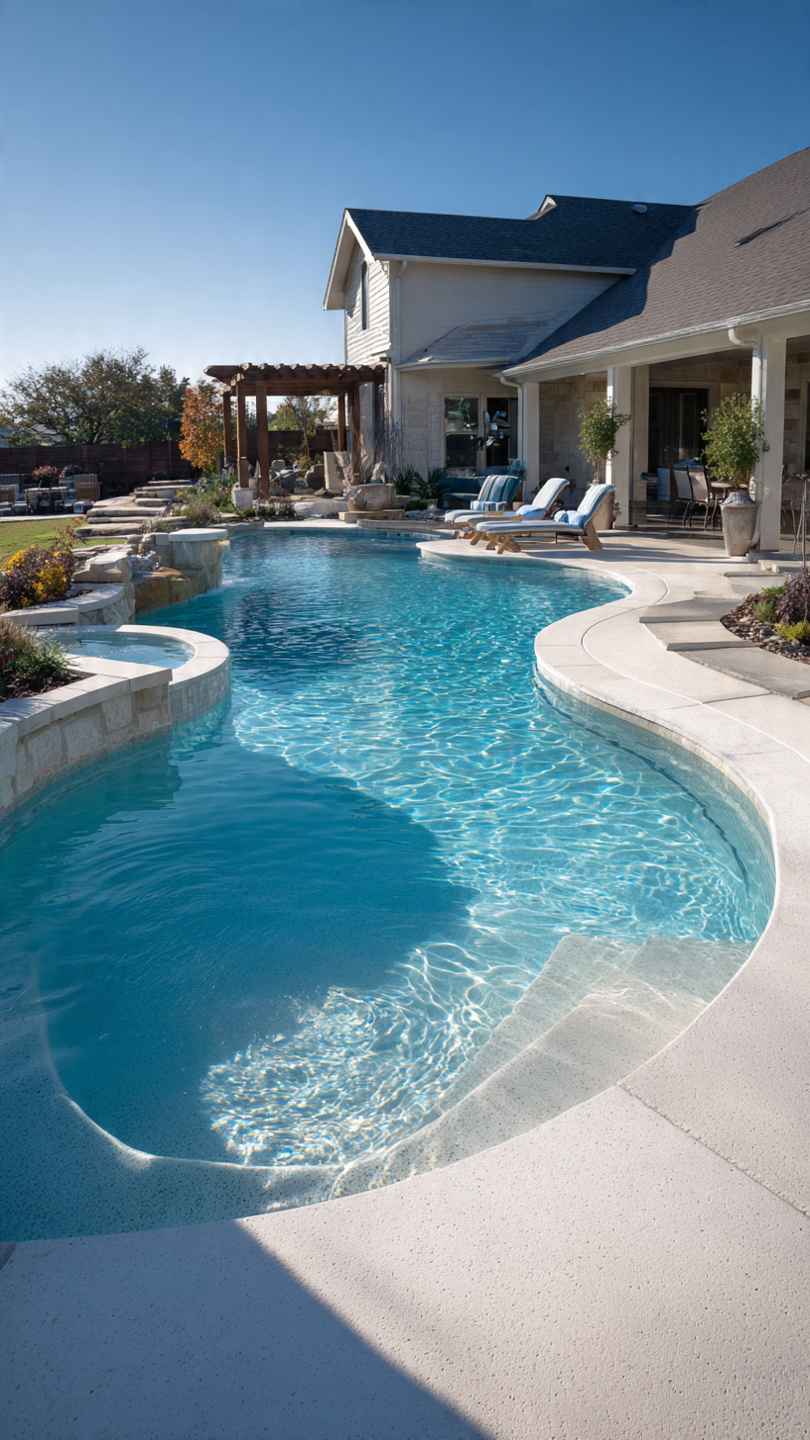
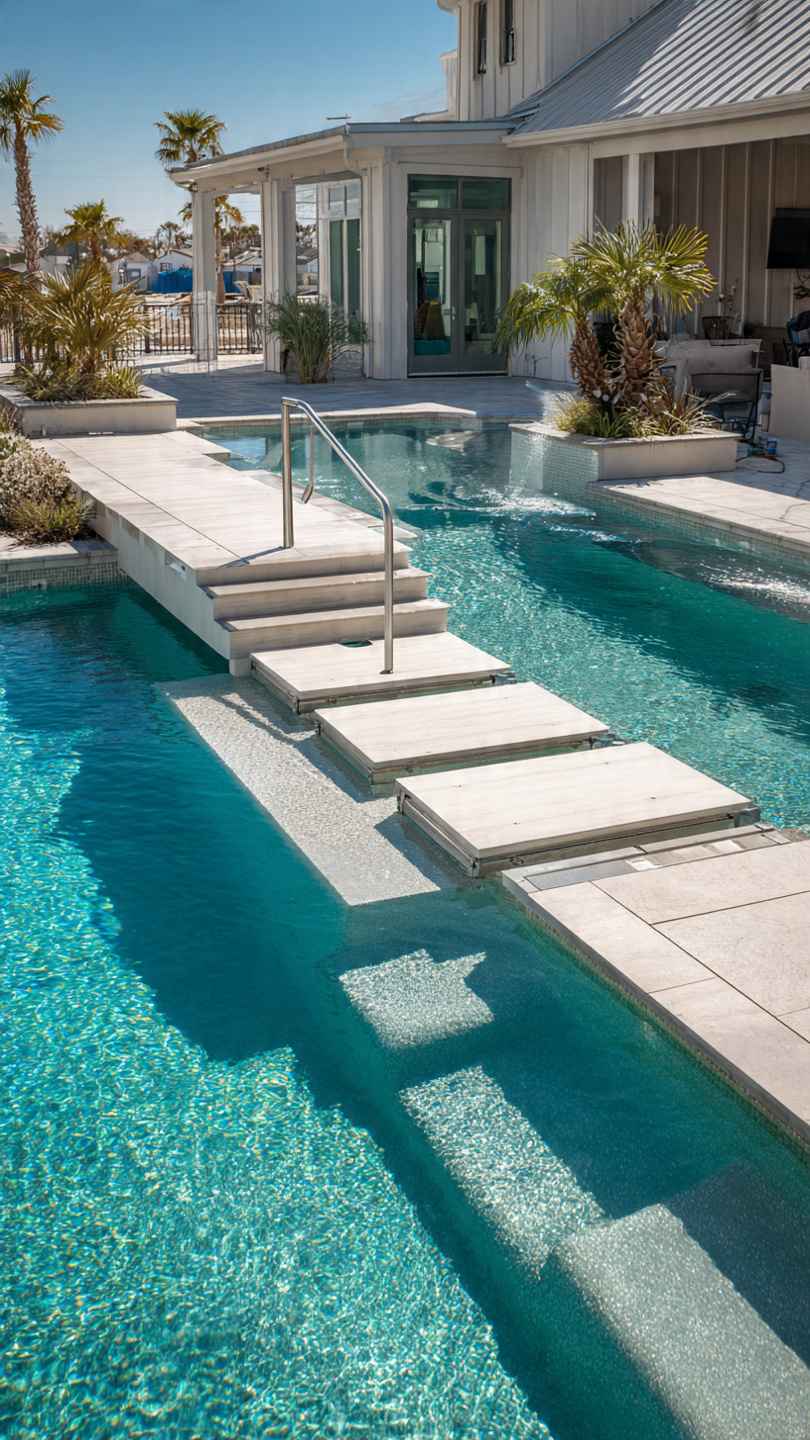
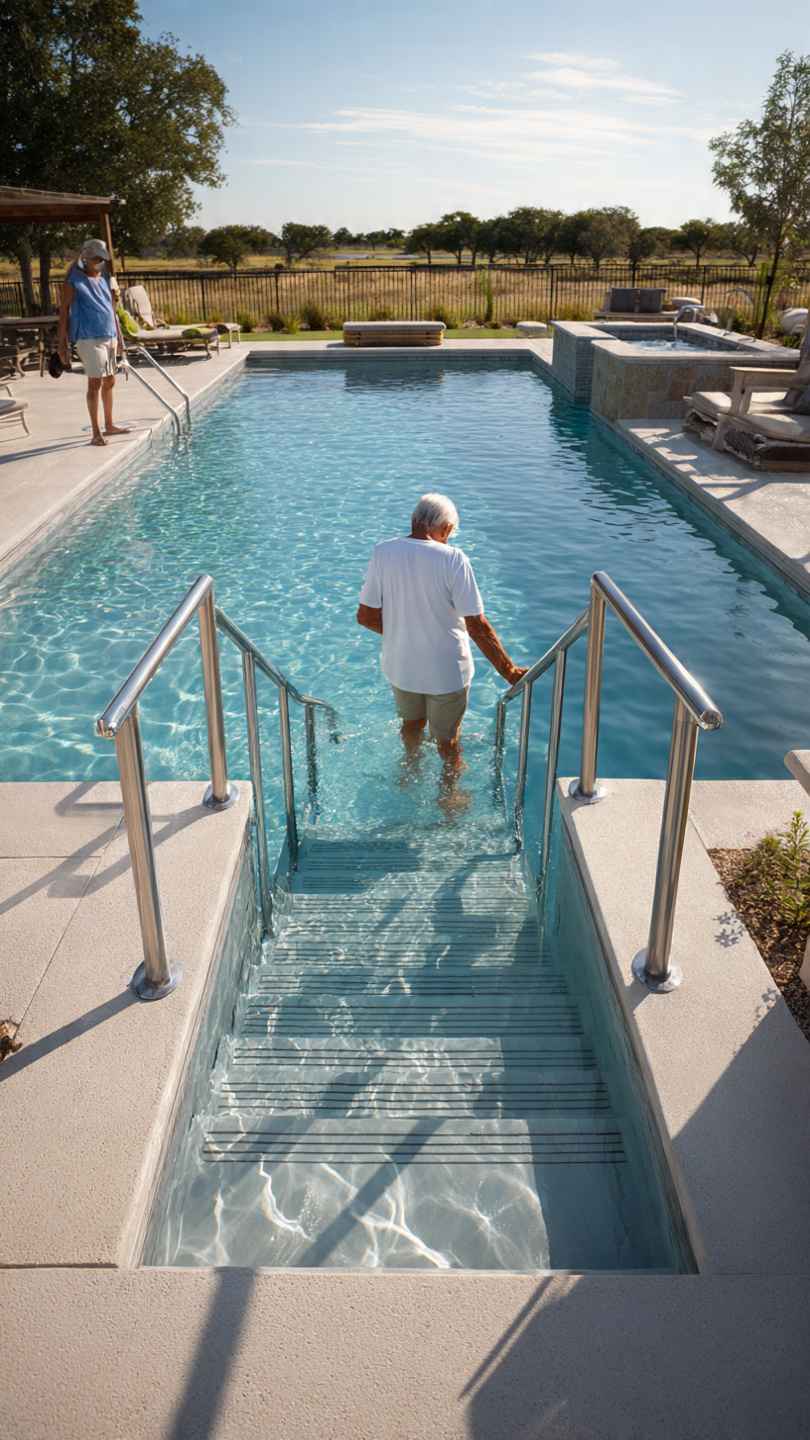
Entry and exit solutions. Zero-depth beach entries are the gold standard for an accessible pool — a gradual slope into the water that requires no steps at all. Tanning ledges serve double duty as shallow relaxation areas and gentle entry points. Wide steps with textured non-slip surfaces and handrails on both sides are the most common retrofit — adding handrails to existing steps costs $200 to $800. Pool lifts mechanically lower and raise a person into the water and are the most accessible option for wheelchair users at $2,000 to $5,000 installed. Transfer walls let a person sit on a low wall and swing their legs over into the water.
In-pool seating and benches at varying depths provide rest points. According to the Pool & Hot Tub Alliance, accessible pool entry features are among the fastest-growing categories in residential pool renovation across warm-climate markets.
Deck improvements. Non-slip deck coatings and cool-deck textures reduce both fall risk and surface temperature — critical in DFW summers. Deck leveling removes trip hazards from soil settlement. Shade structures between the house and pool make the walk comfortable even on the hottest days. Wider pathways accommodate walkers and wheelchairs. Handrails along walkways with grade changes add security. Our deck repair guide covers leveling and resurfacing options specific to DFW soil conditions.
Pool heating for therapeutic use. Many elderly and mobility-limited swimmers need warmer water — 84 to 88°F for arthritis relief, joint therapy, and general comfort. A heat pump is the most cost-effective way to maintain consistent warm water in DFW. The Arthritis Foundation recommends warm water exercise as one of the most effective treatments for joint pain and mobility improvement. Our heating cost guide covers the most efficient options for maintaining therapeutic temperatures.
Safety features. Pool alarms alert you to unsupervised access — important when elderly family members may enter the pool area without others knowing. Clear depth markers visible from the deck prevent surprises. Contrasting tile at step edges improves visibility for anyone with reduced eyesight. Non-glare lighting makes evening use safer and more comfortable.
Why an Accessible Pool Is Perfect for Exercise
Water provides natural buoyancy that reduces body weight impact by up to 90%. For anyone with arthritis, joint replacements, chronic pain, or balance issues, pool exercise is one of the safest and most effective fitness options available. DFW’s 8 to 10 month swim season makes a pool for elderly exercise available nearly year-round. Many DFW physical therapists actively recommend home pool exercise programs. Our pool exercise guide covers routines for all fitness levels including low-impact options.
According to HomeAdvisor’s pool data, homes with accessible pool features retain higher resale value because they appeal to a broader range of buyers including aging-in-place purchasers — a growing segment of the DFW market.
Commercial and HOA Pool Accessibility Requirements
ADA requirements apply to commercial and HOA community pools — they must have at least one accessible entry such as a lift, zero-depth entry, or transfer wall. DFW HOA community pools must comply, and non-compliance creates significant liability. Our HOA pool rules guide covers compliance requirements for community pools. Private residential pools aren’t legally required to meet ADA standards, but accessible pool features benefit everyone and add property value. The U.S. Department of Energy notes that accessible features like shallow entries and wider steps also improve overall pool efficiency by simplifying water circulation patterns.
People Also Ask
How can I make my pool accessible for elderly family members?
Start with handrails on existing steps ($200 to $800). Add non-slip deck coatings. Consider a tanning ledge or beach entry for gradual access. For maximum pool accessibility, install a pool lift ($2,000 to $5,000). Heat the pool to 84 to 88°F for comfort and therapy.
What is a zero-depth pool entry?
A gradual slope from deck level into the water with no steps required — like walking into the ocean on a beach. The most intuitive accessible pool entry design. Can be added to existing pools as a retrofit for $5,000 to $15,000.
How much does a pool lift cost?
$2,000 to $5,000 installed for residential use. ADA-compliant models are available for both residential and commercial applications. They mechanically lower and raise a person into and out of the water using a swivel seat.
Is swimming good exercise for seniors?
It’s one of the best. Water buoyancy reduces impact by 90%, protecting joints while providing resistance for strength and cardiovascular fitness. Warm water at 84 to 88°F adds therapeutic benefit for arthritis and chronic pain. A pool for elderly exercise is recommended by physicians and physical therapists alike.
Can I add handrails to my existing pool?
Yes. Handrails can be added to most existing pool steps and entries. They anchor into the deck or pool shell. Cost: $200 to $800 per pair depending on material and installation complexity. It’s the simplest and most affordable accessible pool modification available. Our maintenance services include safety feature inspection at every visit.
Making Your Pool More Accessible? PoolBurg Ensures Therapy-Ready Water
An accessible pool needs consistent water quality, comfortable temperature, and safe conditions at every visit. Contact PoolBurg for professional service that maintains therapy-ready water so your pool stays usable and enjoyable for every member of your family.