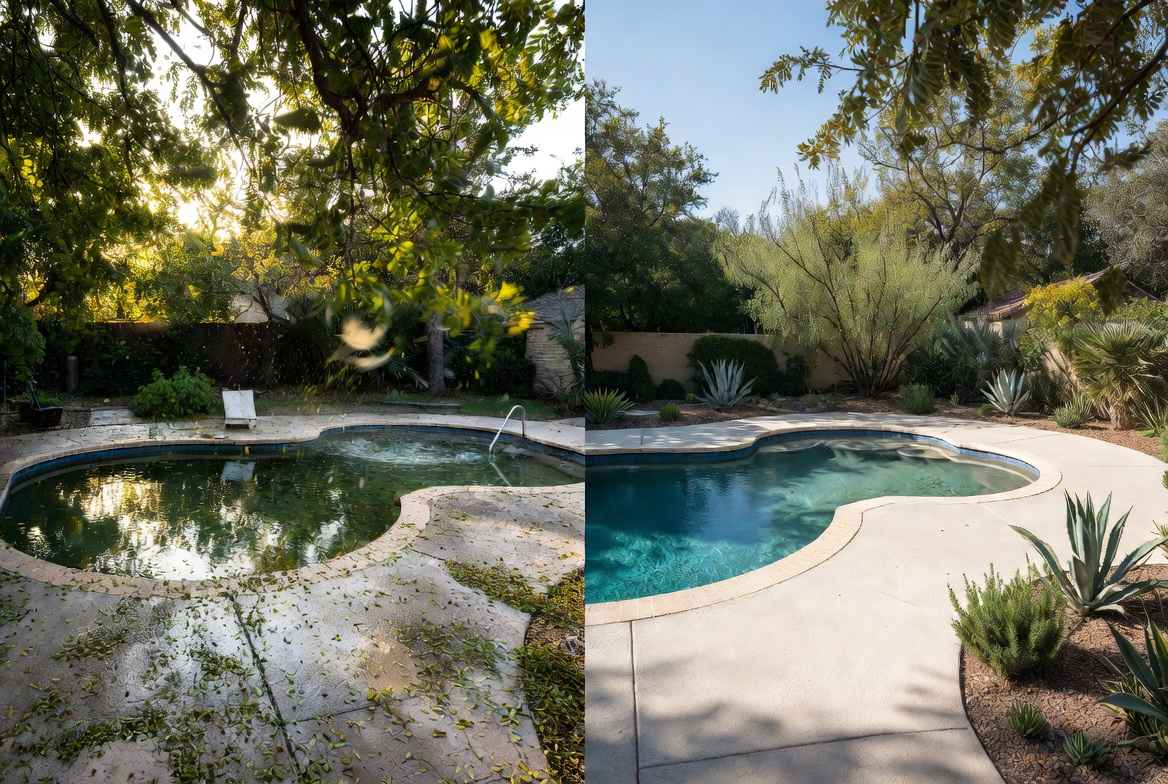
Every North Texas pool owner expects to walk outside and see crystal-clear, inviting blue water. So when your pool water changed color out of nowhere, it is completely normal to panic a little bit. But here is a secret from a local pool technician: that color is actually trying to tell you something highly specific. Think of your pool as a giant, backyard mood ring. Whether the water turned green, brown, or milky white, this guide serves as your color-by-color diagnostic chart. And don’t stress out — most of these color changes are totally fixable within 24 to 72 hours if you apply the correct treatment.
Your Pool Water Changed Color — Here’s What It Means
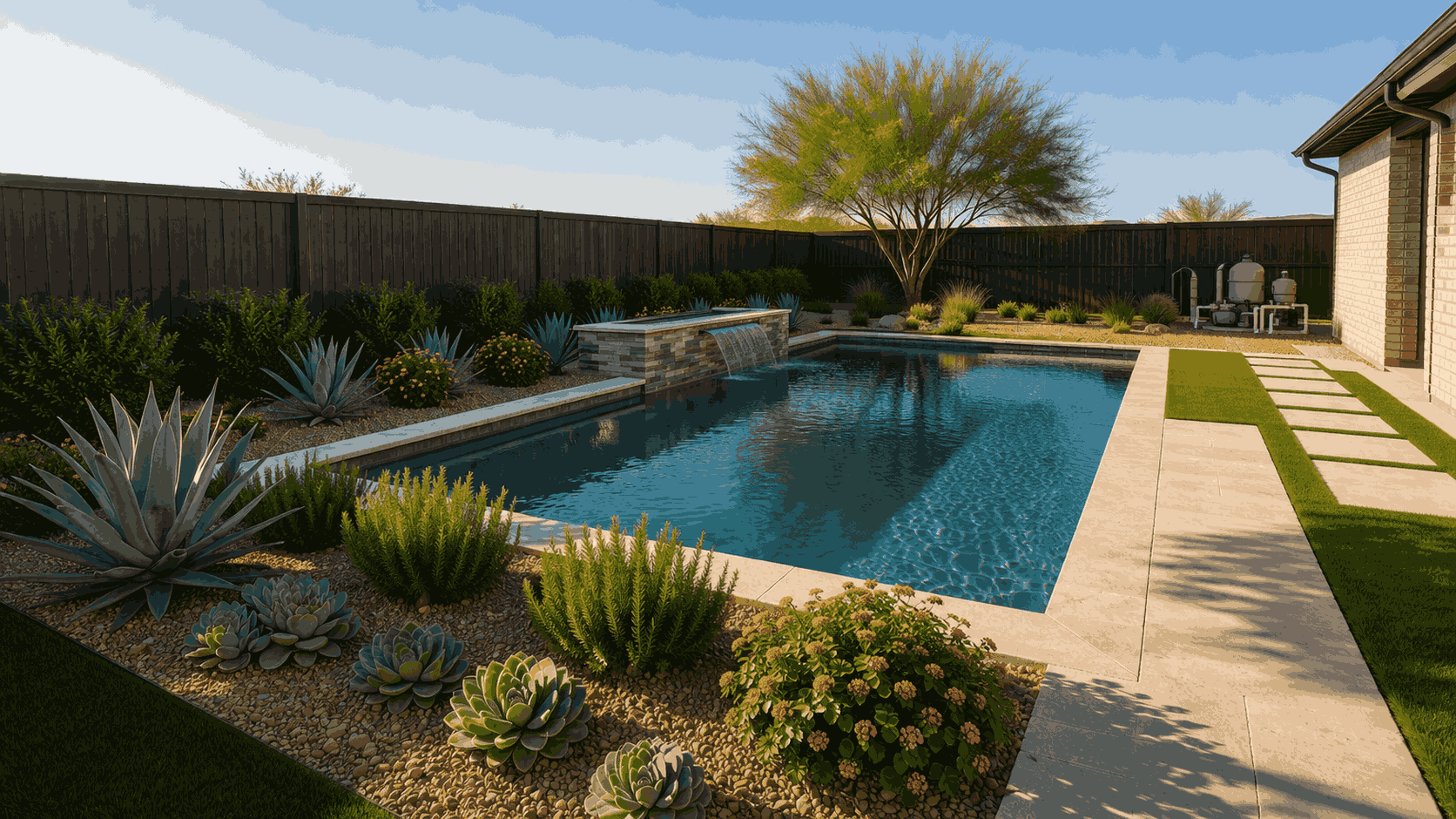
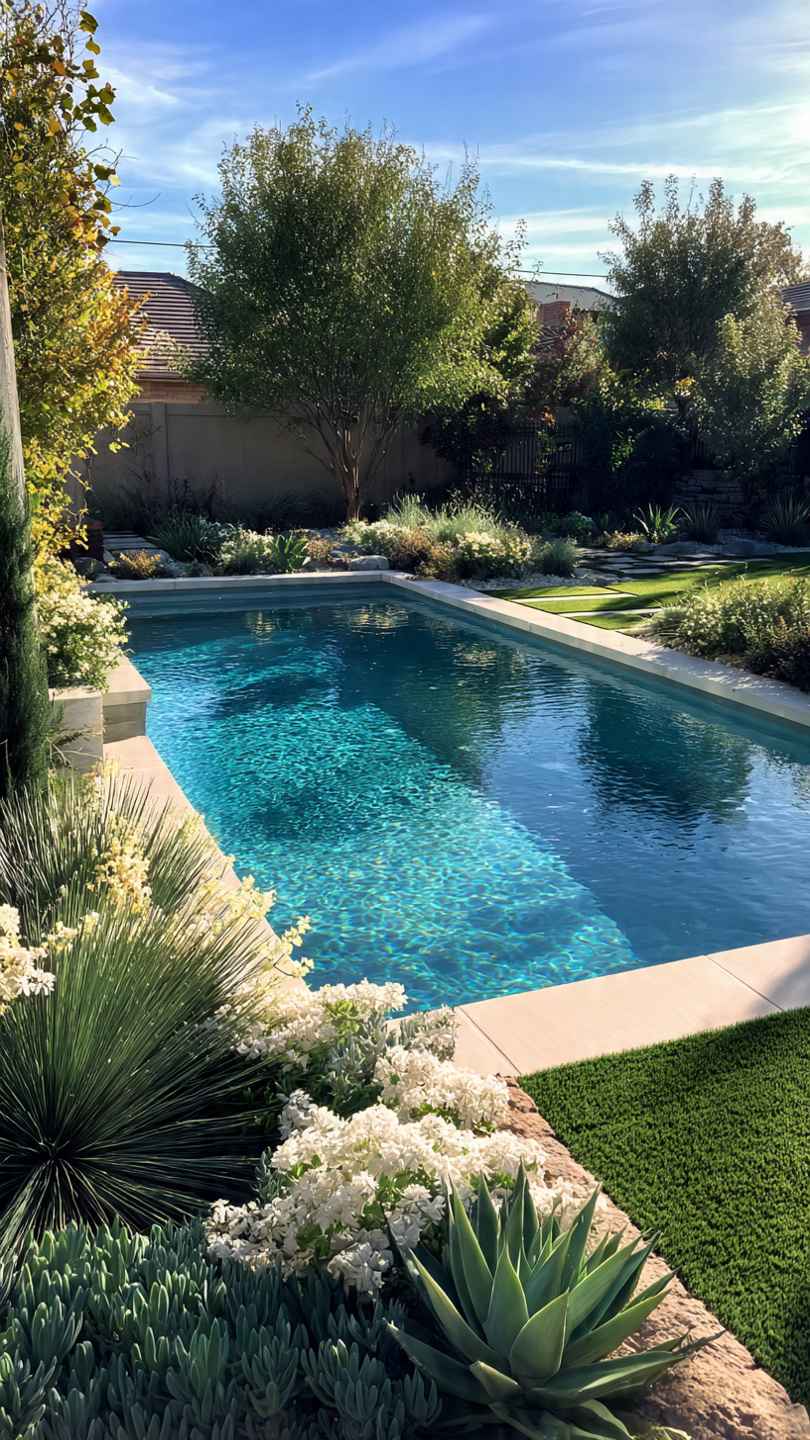
Your pool water should always be clear and blue, or at least clear with a slight tint matching your plaster’s surface color. When it shifts, a specific chemical or biological reaction is happening beneath the surface. The actual color you see tells you exactly what is wrong and how to treat it.
GREEN Pool Water
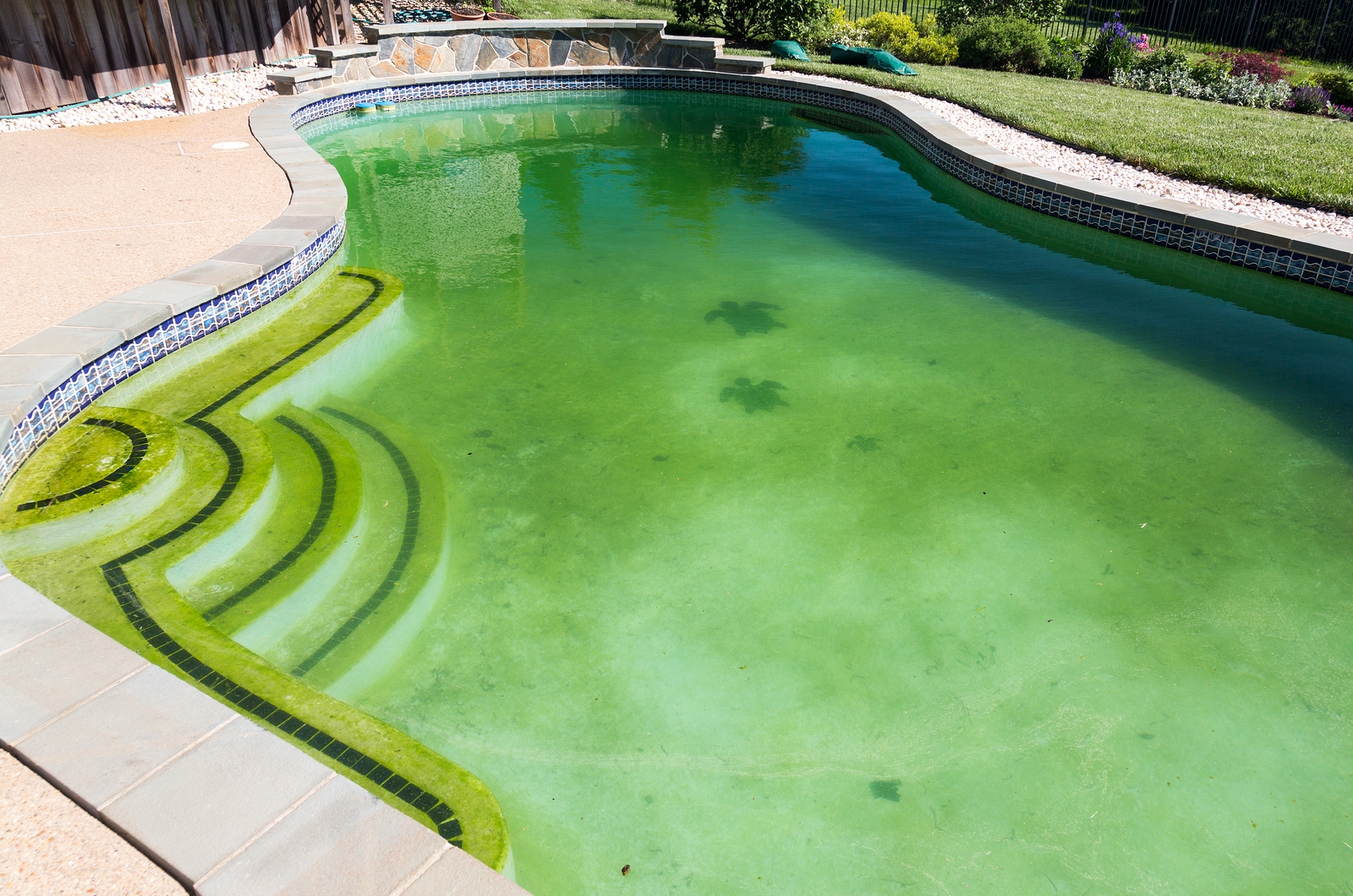
Light green / green tint
Cause number one is usually early-stage algae. Your free chlorine level dropped too low, and the algae is just starting to establish a foothold in the warm water. Cause number two is copper in the water. This copper usually comes from using cheap copper-based algaecides, a heavily corroded copper heat exchanger, or old underground copper plumbing. How do you tell the difference? You do the Vitamin C test. Just grab a cheap vitamin C tablet and rub it directly on a green spot on your pool wall. If the green stain lightens or vanishes instantly, you have a copper problem.
If nothing happens at all, you are dealing with algae. If it is algae, you need to shock the pool heavily, brush the walls, and run your filter 24/7. If it is copper, DO NOT shock the pool. Shocking will rapidly oxidize the copper and create permanent stains. Instead, use a quality metal sequestrant, adjust your pH down to 7.2, and let the circulation system run.
Dark green / swamp green
This means you have a severe algae bloom because the chlorine has been sitting at absolute zero for days. The fix is a full, aggressive green-to-clean recovery protocol. Professional recovery for a swampy pool usually takes about 3 to 7 days. Depending on the severity, expect this cleanup to cost between $300 and $800 in the Texas market.
Green only on walls/floor (water itself is clear)
This is either algae growing directly on the surfaces, or it is localized copper staining. Algae clinging to walls is super common on older gunite pools where the microscopic roots can embed deeply into the porous plaster. You need to brush the surfaces aggressively, then follow up with shock if it’s algae, or a sequestrant if it’s copper.
BROWN / RUST-COLORED Pool Water
Light brown / tea-colored
Cause number one is iron in the water. This iron usually comes from your fill water, heavily corroding metal components, or structural rebar bleeding through old gunite. Cause number two is organic tannins. Tannins are released when organic matter like leaves (especially oak and pecan leaves during the DFW fall) decay and decompose in the water, turning it a tea color as noted by the(https://www.waterboards.ca.gov/water_issues/programs/swamp/docs/cwt/guidance/3159.pdf). To test for iron, safely add some liquid chlorine to a sample. If the water turns darker brown or orange immediately, it is iron being oxidized.
To fix the iron, add a metal sequestrant, wait a full 24 hours while it circulates, and then shock the pool to clear the water. To fix organic tannins, shock the pool, aggressively skim and net out all the rotting leaves, and use an enzymatic cleaner.
Dark brown / rusty
This points to a severe iron concentration. We usually see this when homeowners fill their pool with rural well water, or when a heater manifold is completely rusted out. You will need a heavy metal sequestrant treatment, and you might even need a partial drain and refill. Always use a specialized hose-end pre-filter when topping off your pool water!
MILKY / CLOUDY WHITE Pool Water
Slightly hazy / dull
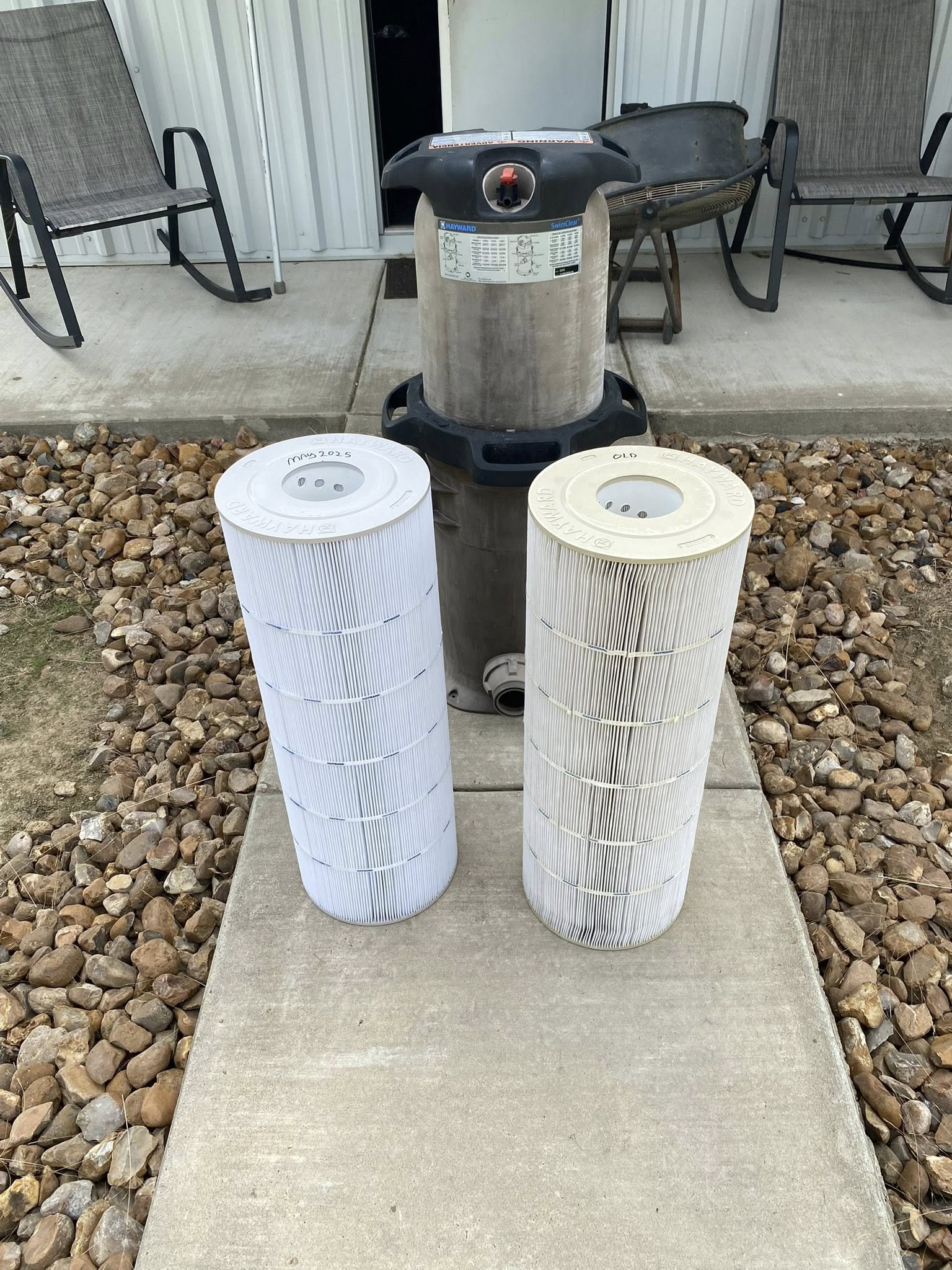
This is hands-down the number one clarity issue in DFW. It is almost always caused by a high pH level, which causes the naturally high calcium in our tap water to begin precipitating out of solution. It could also be insufficient filtration where fine particles simply aren’t being captured, or very high Total Dissolved Solids (TDS) meaning the water is just old and overloaded. The fix is straightforward: lower your pH to 7.2, run the filter longer, and clean your filter media.
Milky white / can’t see the bottom
This is severe calcium precipitation. It happens when very high pH meets very high calcium levels — a classic North Texas hard water nightmare. It can also happen if you just dumped in a bunch of calcium hypochlorite (cal-hypo) shock that hasn’t fully dissolved yet, or if your filter elements have physically torn and bypassed the dirt. Lower the pH aggressively to 7.0 temporarily, add a commercial scale inhibitor, run the filter 24/7, and clean the filter every 12 hours until it finally clears.
YELLOW / MUSTARD-COLORED Pool Water or Surfaces
Yellow film on walls and floor (especially shaded areas)
This is mustard algae, also known as yellow algae. It is an incredibly stubborn variety that easily resists normal, everyday chlorine levels. We see this constantly in shady, tree-heavy DFW neighborhoods like Keller, Southlake, and Plano. The fix requires a massive triple shock, a specialty yellow algae treatment, and furious brushing. You must also brush and soak all of your pool toys, floats, and cleaning equipment in the shallow end, because mustard algae spores will live on EVERYTHING. Expect a 3 to 7-day battle to fully eradicate it.
Yellow/tan water (not on surfaces)
If the water is yellow-green but the walls are perfectly clean, it is just pollen. Massive amounts of pollen drop during the DFW oak season (usually March through May), totally tinting the water. Keep an eye on the(https://www.weather.gov/fwd/) local forecasts to know when the wind will make pollen counts spike. Skim daily, run the filter continuously, clean the filter often, and add a good clarifier.
BLACK Spots or Dark Patches
Black spots embedded in pool surface
If you see these, you have black algae. It is not actually a water color change, but it is a surface problem that really alarms homeowners. Black algae is the absolute worst type to get because it grows deep roots right into porous gunite and plaster. You must brush it aggressively with a stainless steel wire brush (only on gunite!), hit it with a triple shock, and apply a professional-grade black algae treatment. This takes 7 to 14 days and often requires professional intervention.
Black/dark debris floating or settling
This could be manganese from your fill water that got oxidized by the chlorine, or it is just completely decomposed organic matter like old leaves. Use a sequestrant if it is manganese, or shock and vacuum the debris straight to waste if it’s organic.
PURPLE / BLUE-GREEN Staining
Purple or dark patches on surfaces
This is manganese staining. It is less common in DFW, but it absolutely occurs in certain municipal water sources. Fix it with an ascorbic acid (vitamin C) treatment and a heavy dose of metal sequestrant.
Blue-green staining
This points directly to copper. Whether from an algaecide, a failing heat exchanger, or old plumbing, you need to add a metal sequestrant, keep your pH locked at 7.2, and find out exactly where the copper is coming from.
When to Call a Professional vs. DIY
If you are dealing with a light green tint (early algae), a slight cloudiness, or yellow pollen water, those are usually safe for DIY troubleshooting. However, you should immediately call PoolBurg if the water is dark swamp green, if you see any brown or rust colors, if you have persistent milky water, or if you spot black algae. Metals and severe algae require professional-grade treatments, and guessing with chemicals usually just wastes your money.
People Also Ask
Why is my pool water green even though I add chlorine?
Your chlorine might be locked up due to high cyanuric acid levels, or your pH is too high, making the chlorine totally ineffective against the algae. Alternatively, you might have excess copper in the water turning it green, not algae.
What causes brown pool water?
Brown pool water is almost always caused by oxidized iron or organic tannins leaching from decaying leaves.
Why is my pool water cloudy white?
In DFW, cloudy white water is usually caused by a high pH level forcing calcium to precipitate out of our naturally hard water.
What is the yellow stuff on my pool walls?
If it feels slimy and easily brushes away in a cloud (but comes back quickly), it is mustard algae. If it is mostly floating on the water’s surface, it is heavy spring pollen.
Is it safe to swim in discolored pool water?
No, it is not. According to the CDC guidelines, swimming in cloudy or green water means the water lacks the proper sanitizer levels to kill dangerous bacteria and pathogens. Plus, if you cannot see the bottom drain, it is a severe drowning hazard.
How do I fix pool water that changed color overnight?
Stop and test your water first. Using a reliable test kit recommended by the PHTA, check your pH and chlorine levels. Balance your pH, brush the walls, shock the pool heavily, and run the filter continuously until it clears.
PoolBurg Diagnoses Water Color Changes at Every Visit
We know exactly how frustrating it is when your pool water changed color right before the weekend. We identify the exact cause, apply the right treatment, and restore that crystal-clear blue you actually want to swim in. Pool water looking weird? Don’t guess with expensive chemicals. PoolBurg diagnoses the cause and fixes it right the first time.