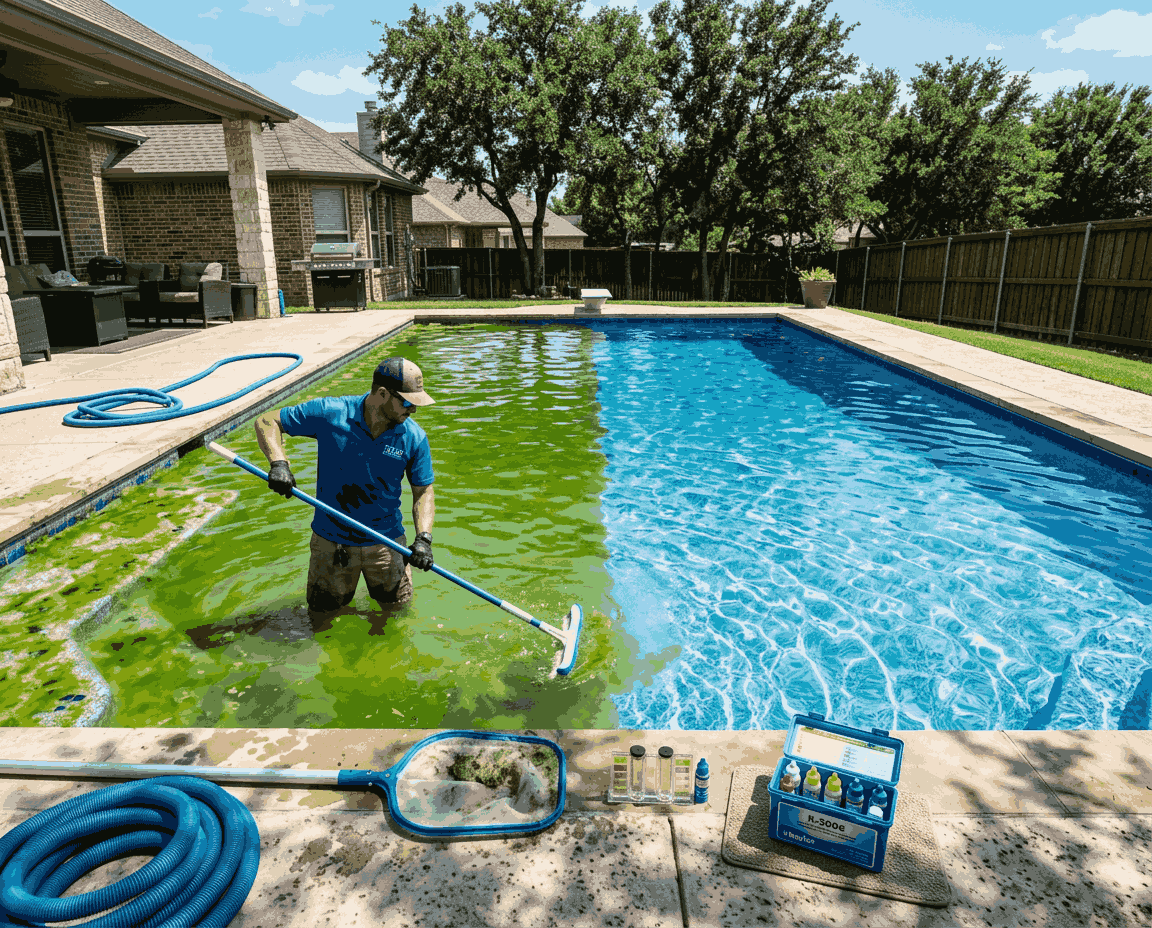
Seeing a thick layer of suds floating in your backyard oasis is incredibly frustrating. Foam parties might be fun at a nightclub, but foamy pool water is a completely different story. If you are standing on your deck wondering, “why does my pool have foam?”, you are definitely not alone. We see this constantly during the intense North Texas summer swimming season. The good news is that most of these foaming issues are highly fixable once you understand the root cause.
Foam on Your Pool Is Not Normal — Here’s What’s Causing It
A properly maintained swimming pool should have clear, crisp water with absolutely zero persistent foam or bubbles in pool lines. When you see a thick layer of suds that refuses to pop, it indicates a specific chemistry imbalance or a severe contamination issue. Pool foam essentially means the surface tension of your water has been altered. Instead of popping instantly, the bubbles stick together and stack up to create foamy pool water. Let’s break down exactly what is causing your pool water foaming and how to clear it up quickly.
Common Causes of Foam in DFW Pools
1. Body care products (THE most common cause)
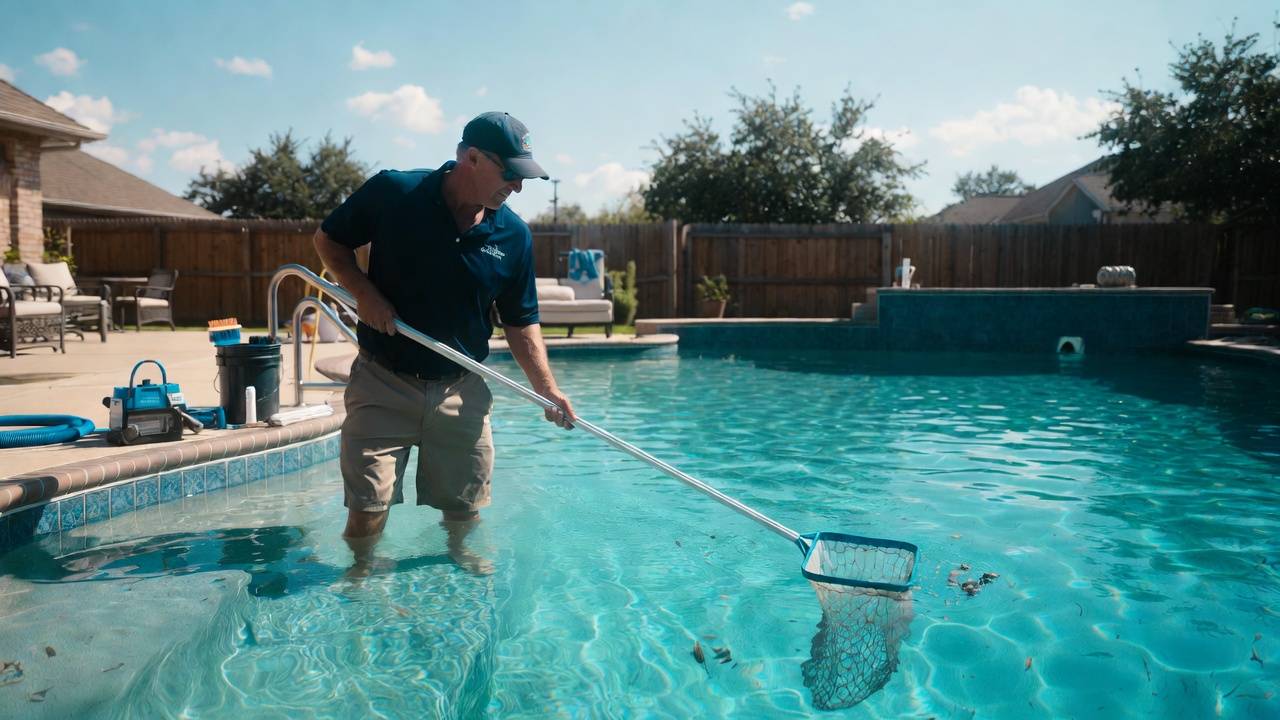
This is usually the biggest culprit right after a massive weekend pool party. The buildup of body oils, lotions or cosmetics acts as a surfactant in your water. Sunscreens, hair products, deodorants, and natural body oils drastically reduce the surface tension of the water. When your return jets agitate that water, it whips those oils into a thick, soapy froth, resulting in heavily foamy pool water. To fix it, shock the pool heavily to oxidize the organic waste, add a high-quality enzymatic cleaner to break down the residual oils, and run your filter continuously. To prevent pool water foaming, try to get your family and guests to quickly rinse off before jumping in.
2. Cheap or low-quality algaecide
Did you just dump a jug of bargain-bin algaecide into the water yesterday? Many cheap treatments are made from quaternary ammonium compounds (often called “quats”). These chemicals are highly effective at killing algae, but they are also known foaming agents. If you overdose the pool with a cheap quat algaecide, you will almost guarantee persistent pool foam. The fix here is simply time; the foam will naturally dissipate as the algaecide gets consumed. Next time, spend a few extra dollars on a non-foaming polyquat or a copper-based algaecide instead.
3. High TDS (total dissolved solids)
When pool water gets “old” and hasn’t been partially drained in several years, the Total Dissolved Solids (TDS) level skyrockets. High TDS water is incredibly thick with dissolved minerals, making it foam much easier when agitated by water features or swimmers. In DFW, our notoriously hard water accelerates this TDS buildup dramatically. If your TDS is over 2,000 ppm, the only real fix is a partial drain and refill to dilute the old water with fresh water.
4. High bather load + low sanitizer
When you combine a bunch of sweating swimmers with an incredibly low chlorine level, bad things happen. There is simply too much organic “stuff” in the water, and not enough sanitizer to oxidize it. You need to test your water immediately, shock it heavily to burn off the contaminants, and restore your proper chlorine levels to prevent swimming-related illnesses.
5. Laundry detergent residue on swimwear
If your family washes their swimsuits in the washing machine with standard laundry detergent, that soap residue stays in the fabric. When multiple people jump into the pool wearing freshly washed suits, that leftover detergent washes right out into your water. This creates literal soap suds and extremely foamy pool water. Shock the pool to oxidize the detergent, and start rinsing your swimwear in plain water instead of running it through the washing machine.
6. Calcium hypochlorite (cal-hypo) shock in hard water
Cal-hypo is a highly popular powdered shock, but it physically adds calcium to your water every single time you use it. In our notoriously hard North Texas water, dumping in cal-hypo can create a temporary, cloudy, foamy reaction on the surface. We highly recommend skipping the cal-hypo and using liquid chlorine instead, which adds zero calcium to your pool.
7. Air leak in suction plumbing (bubbles, not foam)
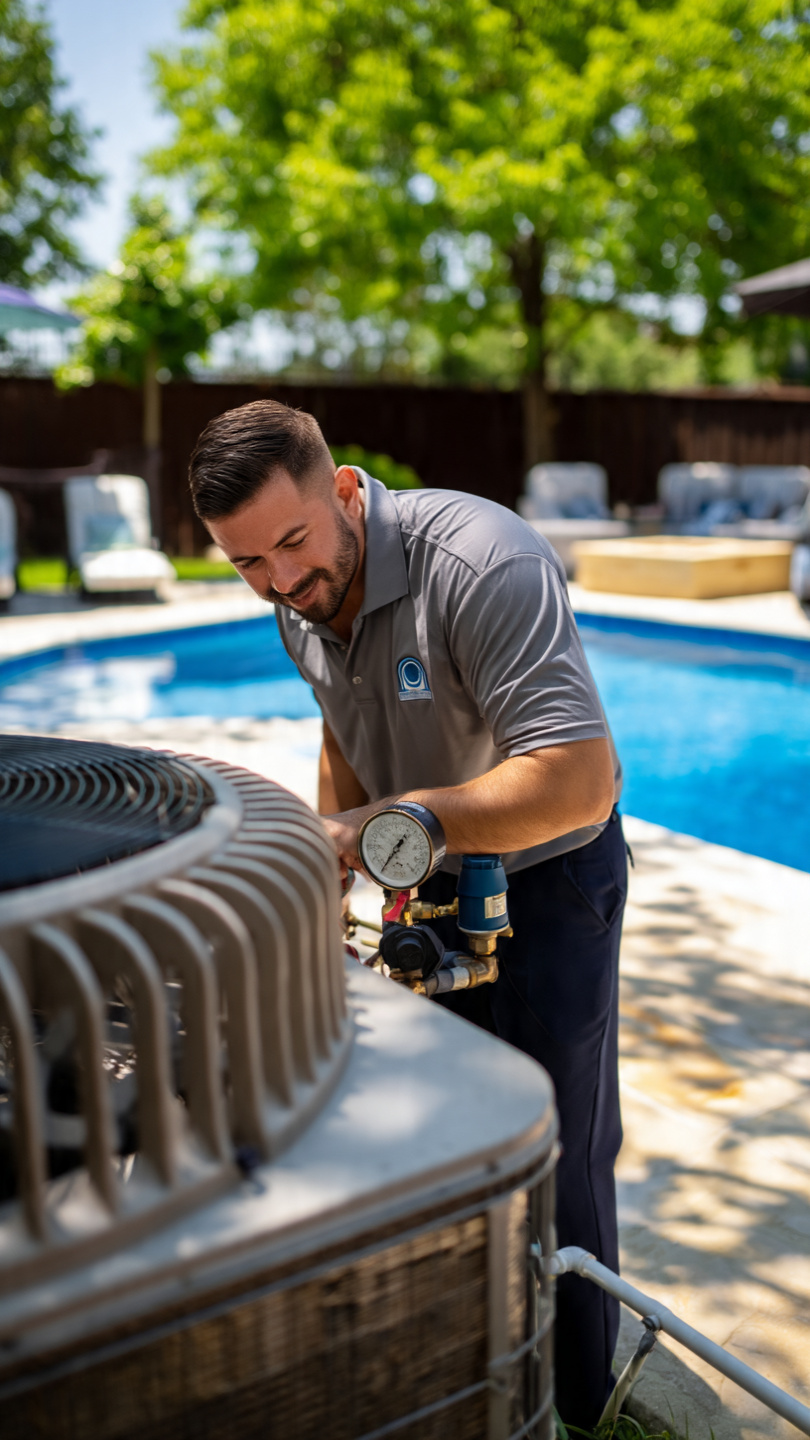
If you see a steady stream of bubbles coming from the return jets, you do not have a chemistry problem. You have a mechanical air leak on the suction side of your plumbing. This usually happens at the pump lid O-ring, a cracked PVC pipe at ground level, or a failing valve stem seal. This requires a professional diagnosis and proper pool leak detection and repair to properly seal the leak before your pump runs dry and overheats.


How to Get Rid of Pool Foam
Step 1 — Test your water chemistry, specifically checking your free chlorine, pH, and TDS levels.
Step 2 — Shock the pool heavily with liquid chlorine to quickly oxidize the organic contaminants causing the foamy pool water.
Step 3 — Run the filter continuously for 24 to 48 hours to clear the water.
Step 4 — Add a professional enzymatic cleaner to aggressively break down body oils and organic surfactants.
Step 5 — Clean your filter media after 24 hours, because it just captured all of those foam-causing contaminants.
Step 6 — If the pool foam still persists after 48 hours, test your TDS. If it is too high, a partial drain and refill is required.
Step 7 — If you realize you have bubbles in pool lines rather than surface foam, stop adding chemicals and check for a suction-side air leak before you need a total pool pump repair.
Foam vs. Bubbles — How to Tell the Difference
FOAM sits heavily on the water’s surface and persists long after the pump and jets are turned off. It looks exactly like soap suds and is almost always caused by poor water chemistry or outside contamination. BUBBLES shoot out directly from the return jets and immediately disappear when you turn the pool pump off. This is entirely a mechanical issue caused by an air leak in your plumbing or equipment pad. Knowing the difference saves you from dumping expensive chemicals into a pool that actually just needs a new pump lid O-ring.
People Also Ask

Why is my pool water foamy?
Foamy pool water is typically caused by a high concentration of organic contaminants like sweat, body oils, and sunscreen. It can also be triggered by using cheap algaecides or having excessively high Total Dissolved Solids in the water.
Is foamy pool water safe to swim in?
Generally, no. While the pool foam itself might just be soap or lotion, its presence usually indicates that your sanitizer levels are completely depleted and the water is heavily contaminated.
How do I get rid of foam in my pool?
The fastest method is to skim the surface, shock the pool heavily with liquid chlorine, add an enzyme treatment to break down the oils, and run your pump continuously until the pool water foaming stops.
Does sunscreen cause pool foam?
Yes, absolutely. Sunscreens and body lotions act as surfactants. When they wash off swimmers and get agitated by the pool jets, they reduce the water’s surface tension and create a thick, soapy froth.
Why are there bubbles coming from my pool jets?
If you see bubbles in pool return lines, you likely have a suction-side air leak. Air is being sucked into the system somewhere before the pump, getting chopped up by the impeller, and getting blown back into the pool.
Can too much algaecide cause pool foam?
Yes. Many inexpensive, quaternary ammonium-based algaecides are known foaming agents. Overdosing the pool with these chemicals will almost guarantee a layer of foam on the surface.
PoolBurg Identifies and Eliminates Foam at Every Visit
Managing organic contamination, selecting the right non-foaming chemicals, and hunting down elusive air leaks can be incredibly frustrating. According to the PHTA, maintaining precise water balance is critical for extending the life of your equipment and keeping your family safe. Got a foamy pool? Don’t stress. PoolBurg expertly diagnoses whether it’s a messy chemistry issue or a mechanical equipment failure — and we fix both right the first time. If you need a reliable weekly pool service to handle this for you, Contact Us today.