Heat pump pool heating time is one of those topics where homeowners hear a simple sales promise, then stare at the thermometer wondering why the water is only a few degrees warmer. That does not always mean the unit is bad. In Frisco, Plano, McKinney, Keller, Southlake and Prosper, a pool heat pump is usually best at extending the season steadily, not blasting cold water to spa temperature overnight.
So, how long to heat a pool with a heat pump? For many Texas backyards, a first warm-up can take one to three days, depending on pool size, starting temperature, weather, wind, equipment size and whether you use a cover. Once the pool is near the target temperature, the same system usually performs much better at holding comfort.
What heat pump pool heating time really means
Starting temperature versus target temperature
Heating from 65 degrees to 85 degrees is a very different job than nudging the pool from 80 to 84. Heat pump pool heating time is really the gap between where the water is now and where you want it, multiplied by how much heat the pool is losing while the heater is working.
Holding temperature versus first-time warm-up
A heat pump may feel slow during the first climb because every gallon has to be warmed. After that, heat pump runtime becomes more about replacing overnight loss. That is why many owners get better results by setting a realistic temperature and maintaining it instead of starting from cold every weekend.
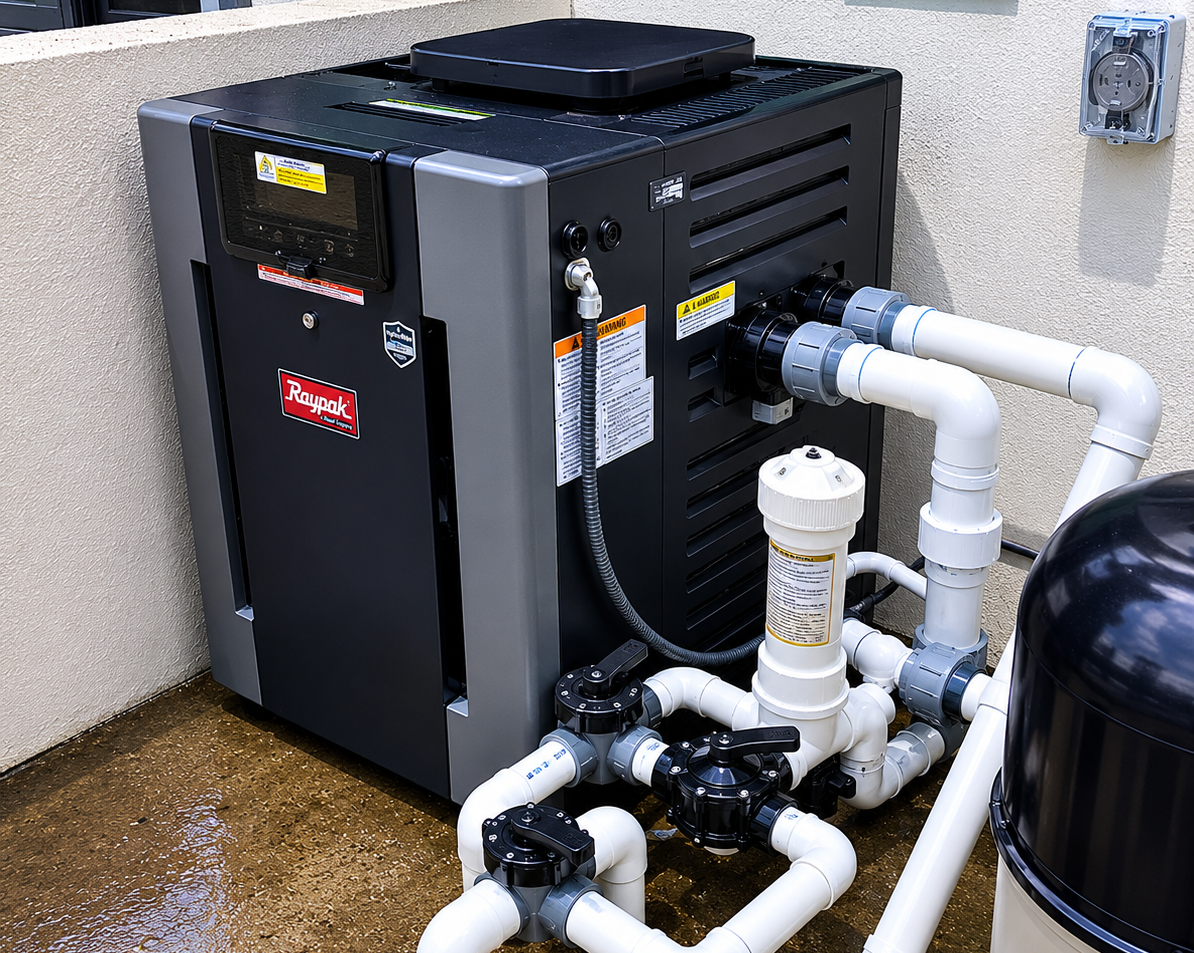
The variables that control heat-up speed
Pool size, surface area and air temperature
A 5,000-gallon above-ground pool and a 20,000-gallon in-ground pool will not behave the same. Bigger pools need more heat, and wide surface areas lose more heat to evaporation. Heat pumps also pull warmth from the surrounding air, so pool heat pump heating speed improves during warm days and slows when air temperatures drop.
Wind, night loss and whether a cover is used
This is where homeowners get caught. The unit may add heat all day, then wind and cool nighttime air steal a chunk of it back. A pool cover is often the cheapest performance upgrade because it reduces evaporation, the biggest heat-loss problem. If heat pump pool heating time feels painfully long, cover use is one of the first things to check.
Realistic heat pump timing expectations
| Situation | What to Expect | Smart Move |
|---|---|---|
| Cold first warm-up | Often 24-72 hours, sometimes longer in poor conditions | Start early and keep the pump running |
| Weekend use only | Can feel slow if the pool cools down all week | Preheat before guests arrive |
| Shoulder-season swimming | Best when air is mild and the pool is covered | Maintain a steady set point |
| Heat pump not heating enough | May be weather, flow, sizing or equipment related | Check cover, filter, flow and diagnostics |
The table is a planning guide, not a promise. The right answer still depends on gallons, heater output, plumbing flow, air temperature and heat loss.
Why a heat pump feels slower than gas
Fast-heat expectations
Gas heaters create heat by burning fuel, so they usually win when someone wants a quick weekend swim or fast spa heat. A heat pump moves heat from the air into the pool water. That is efficient, but it is not the same type of instant punch.
Steady-efficiency reality
For North Texas homeowners, the better question is not always “how fast can it heat?” It is “how do I want to use the pool?” Heat pump pool heating time makes more sense when you plan for regular shoulder-season swimming instead of surprise same-day heating.
How to reduce heating time without wasting money
Use a cover and size the system correctly
If you want shorter heat pump pool heating time, start with the boring answer: use a cover. Then make sure the unit is correctly sized for the pool, not just chosen by a quick guess. Undersized equipment may run constantly and still disappoint. Oversized equipment may cost more than needed.
Avoid huge overnight temperature jumps
Trying to jump from cold water to perfect water overnight is where expectations go sideways. Heat pump runtime should be planned around the weather forecast, not the party start time. For a Saturday swim, start warming earlier in the week, especially if nights are cool or windy.
When slow heating points to a fault
Heat pump not heating enough
Slow heating is normal sometimes. No heating is not. If the fan runs but discharge air does not feel cooler, the filter is dirty, flow is weak, the bypass is wrong, the coil is blocked, or the unit cycles on and off, the issue may be more than normal heat pump pool heating time.
Low flow, sizing and cold-air limitations
Low flow can keep the heater from transferring heat properly. Cold air can reduce output. A poor installation or wrong bypass position can also send too little water through the unit. If the pool heat pump heating speed suddenly changes, compare filter pressure, water flow, air temperature and recent service history before blaming the whole heater.
PoolBurg helps Texas homeowners heat with realistic expectations
PoolBurg helps DFW pool owners understand heat pump runtime, sizing, cover use and heater performance before they spend money in the wrong place. If your heat pump is not heating enough, or if you are trying to figure out whether the system is undersized, inefficient or simply fighting the weather, ask PoolBurg for a heat-loss and sizing assessment. We will look at the pool, the equipment, the plumbing, the cover situation and the way you actually swim, then explain the best next step without the sales fog.
People Also Ask
How long does it take to heat a pool with a heat pump?
Most heat pumps need one to three days for a noticeable first warm-up, depending on pool size, starting temperature, air temperature, cover use and equipment size.
How quickly can a heat pump heat a pool?
A heat pump is usually gradual. A few degrees per day can be normal, especially if nights are cool, the pool is uncovered, or the water starts cold.
Why is my heat pump not heating enough?
Common causes include cold air, dirty filters, low water flow, dirty coils, wrong bypass settings, undersizing, short runtime or a repair issue.
How many hours a day should a pool heat pump run?
During a first warm-up, it may need long continuous runtime. Once at temperature, runtime depends on heat loss, weather and the thermostat setting.
What is the 20 degree rule for heat pumps?
Homeowners often use this phrase to describe the idea that asking for a big temperature jump can take a long time. It is not a fixed rule, but large temperature rises require planning.
How long does it take to heat a pool from 65 to 85?
A 20-degree rise can take several days with a heat pump, especially on a large or uncovered pool. Gas heat is usually faster for big one-time jumps.
Does a pool cover reduce heat-up time?
Yes. A cover reduces evaporation and overnight heat loss, which helps the heat pump keep more of the heat it already added.
When is slow heating normal and when is it a problem?
Slow heating is normal in cool, windy or uncovered conditions. It becomes a problem when the unit runs continuously with almost no temperature gain in good weather.