Chlorine vs salt water pool is the question every DFW pool owner eventually asks. Whether you’re building new, buying a home with a pool, or thinking about converting, the debate comes up fast. Here’s the thing most comparisons online get wrong: there’s no universally better option. But DFW’s specific conditions — particularly the hard water — tilt the conversation in ways that national articles completely ignore. This is the honest, no-bias breakdown for salt water pool vs chlorine in North Texas.
How Each System Actually Works
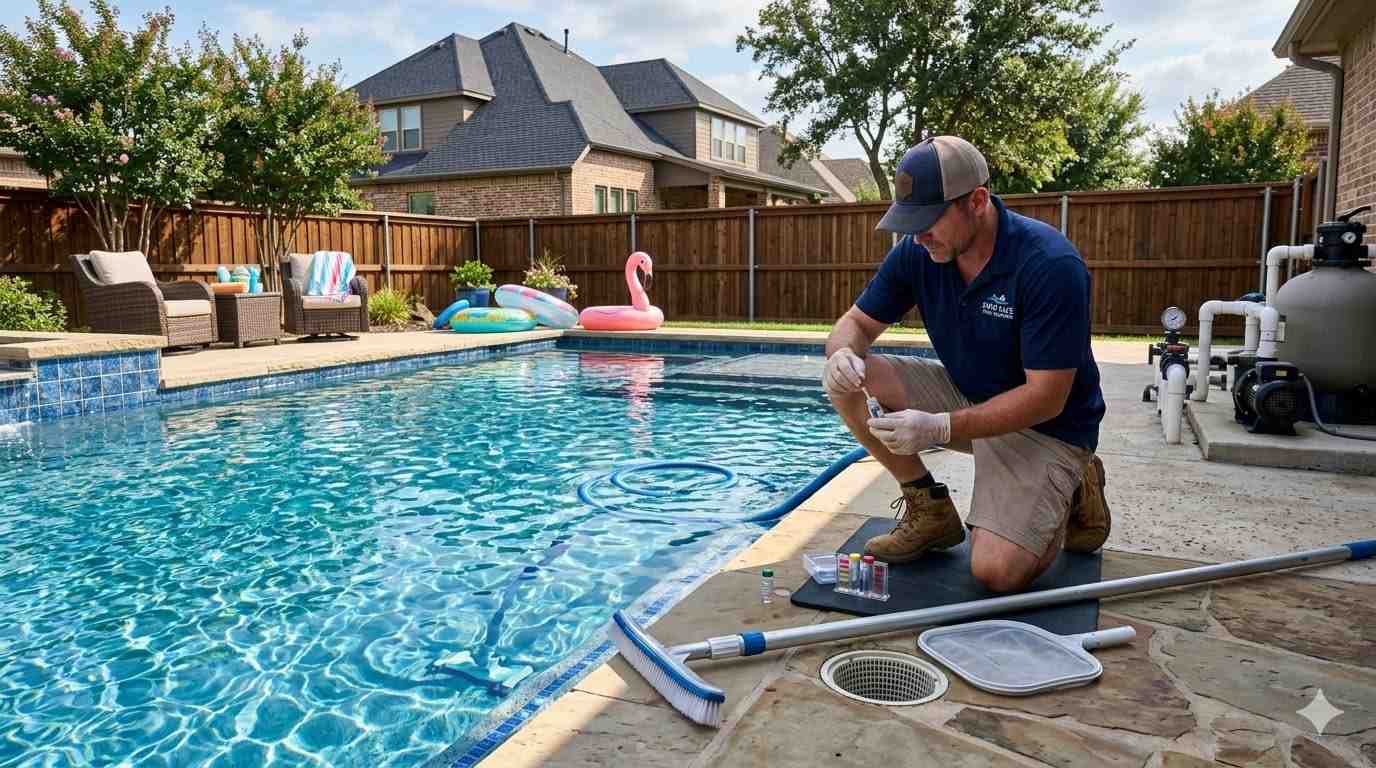
With a traditional chlorine pool, you add chlorine directly — liquid, tablets, or granular. It sanitizes the water, gets used up, and you add more. Simple, proven, reliable. With a salt water pool, you add pool-grade salt to the water and a salt chlorine generator converts that salt into chlorine through electrolysis. Here’s the misconception that trips people up: salt water pools are still chlorine pools. The chlorine is just made on-site instead of added by hand. The CDC confirms that salt-generated chlorine sanitizes the same way manually added chlorine does.
The Real Comparison — Chlorine vs Salt Water Pool in DFW
Water feel. Salt water wins here and it’s not really close. Most people describe it as softer and silkier on skin and hair. Traditional chlorine can feel harsher, especially when levels run high or pH drifts low. If water feel is your priority, salt is the way to go.
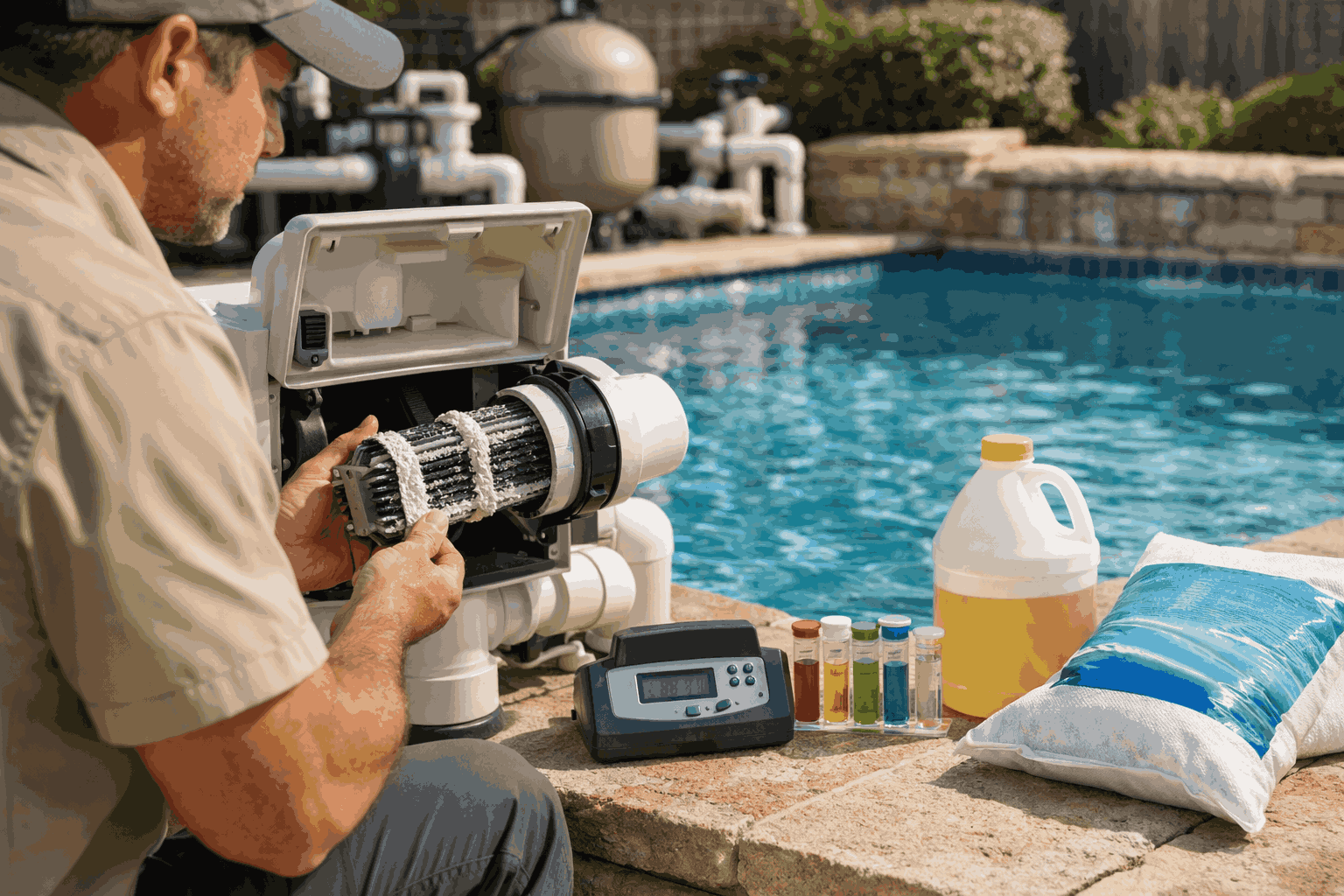
Maintenance effort. This is where it gets tricky. Salt water pools need slightly less hands-on chemical work because the generator makes chlorine automatically. But they add complexity — salt cell monitoring, periodic cleaning, and system troubleshooting. Chlorine pools need regular manual additions but the equipment is simpler with fewer failure points. In DFW specifically, salt cells scale faster because of our hard water, so salt pool maintenance demands more attention here than national averages suggest. Verdict: different maintenance, not necessarily less.
Cost. Installing a salt system adds $1,500 to $3,500 upfront. Monthly, salt pools save about $30 to $60 on chlorine purchases. But salt cell replacement runs $300 to $800 every 3 to 5 years — and DFW hard water tends to shorten that lifespan. Professional service for salt pools also typically costs $20 to $50 more per month. According to HomeAdvisor’s pool cost data, the net annual difference between the two systems is roughly equal once you factor in cell replacement and the service premium. Different spending pattern, similar total.
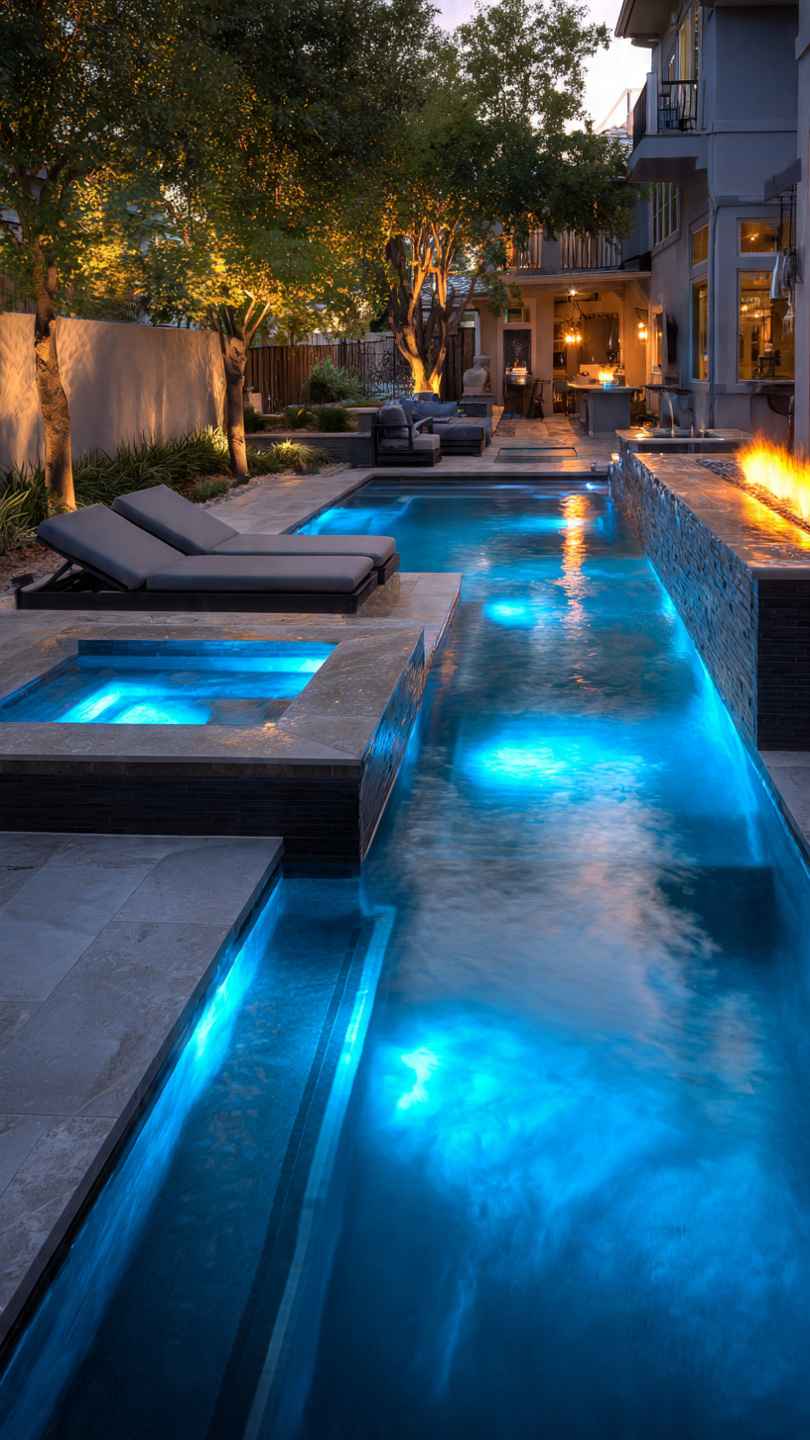


Equipment impact. Salt water can accelerate corrosion on metal components — ladders, rails, heater headers, light fixtures — if chemistry isn’t managed carefully. Salt cell scaling from hard water is a constant concern across DFW. Chlorine systems carry less corrosion risk to metal parts overall. The Pool & Hot Tub Alliance notes that proper water balance is critical for both systems, but salt adds an extra layer of equipment vigilance. Our salt water pool filter guide and equipment damage guide cover what to watch for. Slight edge to chlorine for equipment longevity in DFW.
Convenience. Salt water takes this one. The generator runs automatically — you’re not adding chlorine every week. But “set it and forget it” only works if the system is running properly. A dead cell, bad flow sensor, or tripped control board means zero chlorine production and you won’t notice until the water turns. Chlorine pools might be more hands-on, but you can always dump chlorine in manually even if equipment has issues. So salt wins on daily convenience, chlorine wins on reliability.
PoolBurg’s Honest Take for DFW Owners
If water feel and daily convenience matter most, go salt — but commit to the extra maintenance layer. If you want simplicity and reliability, chlorine is hard to beat. If you’re on professional weekly service, either system works great because we handle the complexity for you. And here’s the real answer to which is better salt water or chlorine: the best system is whichever one gets properly maintained. Both produce safe, clean, beautiful pool water when the chemistry stays right.
Converting Between Systems
Going chlorine to salt? A generator install runs $1,500 to $3,500, plus $50 to $100 in initial salt. It’s a one-day job with minor plumbing and an electrical circuit. Going salt to chlorine? Remove or bypass the generator and start manual chlorine additions — lower cost, mostly just a chemical approach change. The salt already in the water dissipates gradually.
Our water chemistry guide covers how to manage the transition smoothly. The Department of Energy also notes that salt systems and traditional chlorine systems have comparable energy costs when paired with a variable speed pump.
People Also Ask

Is a salt water pool better than chlorine in Texas?
It depends on your priorities. Salt water feels better and is more convenient daily, but DFW’s hard water makes salt systems more maintenance-intensive. Chlorine is simpler and more reliable. Cost-wise, they’re roughly equal annually.
Is a salt water pool actually chlorine-free?
No. Salt water pools generate chlorine from salt through electrolysis. The water is still chlorinated — the chlorine is just produced on-site instead of added manually.
Which is cheaper to maintain — salt water or chlorine?
Similar total cost. Salt saves $30 to $60 per month on chemicals but spends $300 to $800 every few years on cell replacement, plus a higher monthly service premium. Different spending pattern, similar bottom line.
Does hard water make salt pools harder to maintain?
Yes. DFW’s calcium-heavy water causes scaling on salt cells, shortening their lifespan and requiring more frequent cleaning. Our salt cell maintenance guide covers how to manage this.
Do salt water pools damage equipment faster?
They can if chemistry isn’t managed properly. Salt accelerates corrosion on metal components like ladders, rails, and heater headers. Proper water balance and regular professional maintenance prevent most salt-related damage.
PoolBurg Services Both Systems Across DFW
Salt or chlorine — we maintain both with the same expertise. Not sure which system fits your pool? Contact PoolBurg for a free, honest consultation. No pressure, just real answers based on your pool, your water, and how you actually use it.