Knowing how to backwash pool filter equipment properly is one of those basic skills every DFW pool owner should have. Backwashing reverses the water flow through your sand or DE filter, flushing trapped debris and contaminants out through the waste line. Without regular pool backwash cycles, filter pressure rises, flow decreases, and your water quality drops. In DFW, you’ll need to backwash pool sand filter systems more often than national guides suggest because of our hard water, heavy pollen loads, and constant debris. Here’s the full process done right.
When to Backwash Pool Filter in DFW
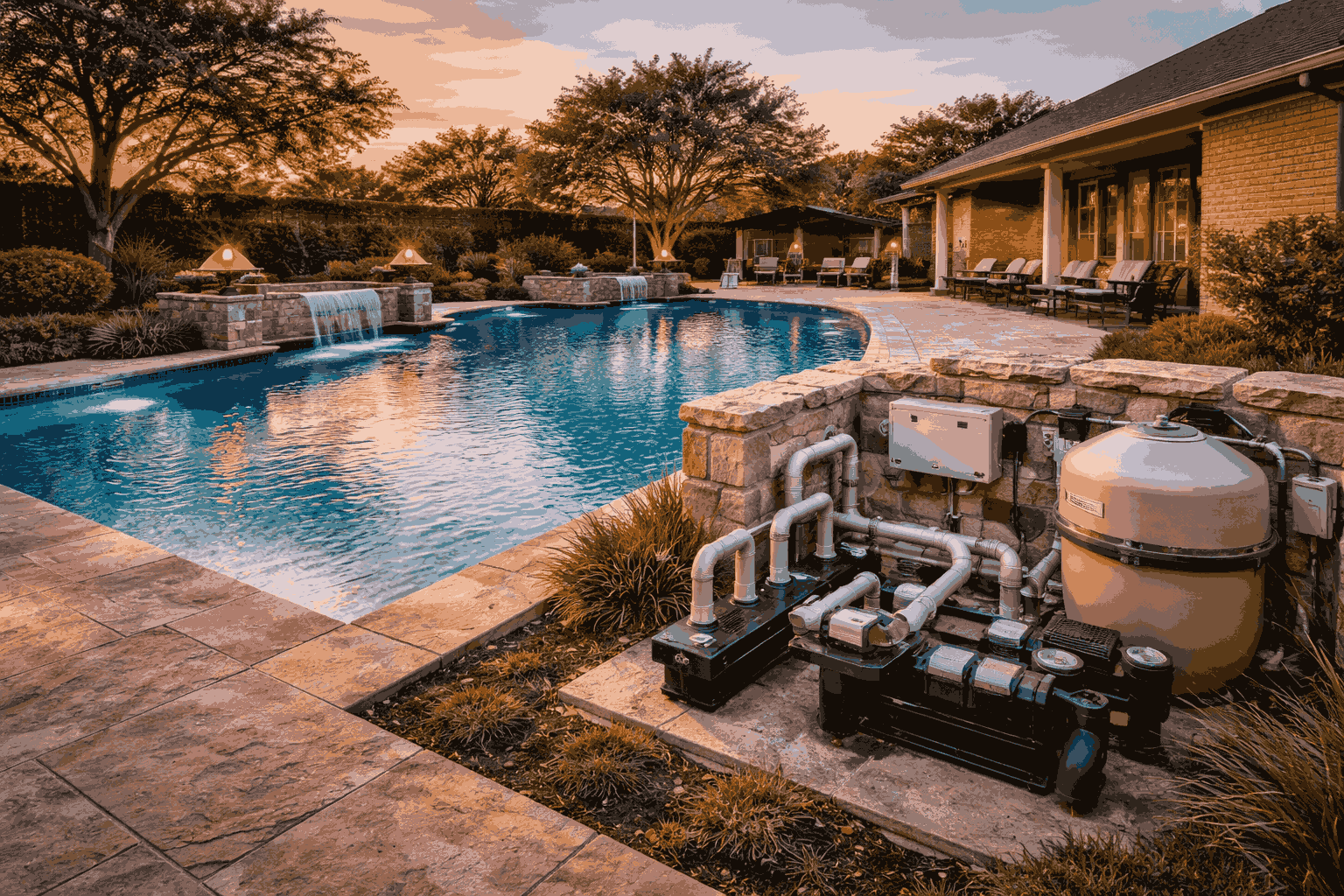
The pressure gauge is your guide. Note your “clean” starting pressure right after a sand change or thorough cleaning. When pressure rises 8 to 10 PSI above that baseline, it’s time to backwash pool filter media. Example: clean baseline is 12 PSI, so you backwash when the gauge reads 20 to 22 PSI. The Pool & Hot Tub Alliance recommends pressure-based backwashing over calendar-based because it prevents both under-cleaning and unnecessary water waste.
In DFW, normal conditions call for a pool backwash every 1 to 2 weeks. During pollen season — cedar from December through February, oak from March through May — expect every 3 to 7 days. After a storm with heavy debris, backwash immediately. After shocking and killing algae, backwash daily until the water clears because the filter is catching all that dead algae. If pressure doesn’t rise between backwashes at all, your sand may be channeled or calcified from DFW hard water and needs full replacement. Our sand replacement guide covers that process.
How to Backwash Pool Sand Filter — Step by Step
Step 1: Turn off the pump. Never move the multiport valve handle while the pump is running. Changing positions under pressure damages the internal diverter — that’s a $200 to $500 repair.
Step 2: Deploy the backwash hose. Unroll it to a safe drainage area. Most DFW cities allow discharge to the sanitary sewer via a cleanout — never to storm drains, the street, or a neighbor’s property. Backwash water contains chlorine and debris. The North Texas Municipal Water District has regional water discharge guidance if you’re unsure about local rules.
Step 3: Turn the valve to “Backwash.” Rotate firmly until it clicks into position.
Step 4: Turn on the pump. Water reverses through the sand, flushing trapped debris out the waste line. If your valve has a sight glass, watch it — the water starts dirty and gradually clears.
Step 5: Run for 2 to 3 minutes. Until the sight glass shows clear water or roughly 2 to 3 minutes without one. Don’t over-backwash — you’re wasting water and disturbing the sand bed. According to the U.S. Department of Energy, efficient pool backwash practices reduce overall water consumption significantly over a season.
Step 6: Turn off the pump.


Step 7: Turn the valve to “Rinse.”
Step 8: Turn on the pump for 30 to 60 seconds. The rinse step resettles the sand bed and flushes any remaining dirty water out the waste line instead of back into your pool. Skipping this step is one of the most common pool backwash mistakes — dirty water goes straight into the pool on the next filter cycle.
Step 9: Turn off the pump. Turn the valve back to “Filter.” Turn the pump on. Note the new pressure gauge reading — that’s your fresh baseline.
Step 10: Top off the pool water. Backwashing uses 200 to 500 gallons. Check the water level and add water if needed — if it drops below the skimmer, the pump sucks air. During DFW water restrictions, be mindful of backwash frequency and water loss.
How to Backwash a DE Filter
Same valve procedure as sand, with one critical addition: after every pool backwash on a DE filter, you must recharge with fresh diatomaceous earth powder. Add DE through the skimmer with the pump running — it coats the grids inside the filter. Check your filter manual for the exact amount, typically 1 scoop per 5 square feet of filter area. Without DE powder, the grids have no filtering media and water passes through unfiltered. Skipping DE recharging after backwash is one of the biggest DE filter mistakes we see across DFW. Our filter maintenance guide covers DE filter care in full.
Common Pool Backwash Mistakes
Moving the valve handle with the pump running — damages the valve. Forgetting to rinse after backwashing — sends dirty water back into the pool. Over-backwashing on a calendar instead of using the pressure gauge — wastes water without improving filtration. Not recharging DE after backwashing a DE filter — zero filtration. Not topping off pool water after backwash — water drops below the skimmer and the pump sucks air. And in DFW specifically, assuming that backwashing fixes hard water calcification in the sand — it doesn’t.
Only full sand replacement fixes calcified media. According to HomeAdvisor’s pool data, improper backwashing technique is a leading cause of premature filter media replacement and valve damage in residential pools.
People Also Ask
People Also Ask
How often should I backwash my pool filter in Texas?
Every 1 to 2 weeks during normal conditions. Every 3 to 7 days during pollen season. Daily after an algae kill until water clears. Always use the pressure gauge — backwash pool filter media when pressure rises 8 to 10 PSI above your clean baseline.
How long should I run the backwash cycle?
2 to 3 minutes, or until the sight glass shows clear water. Don’t over-backwash. Follow with a 30 to 60 second rinse cycle before returning to filter mode.
Where does pool backwash water go?
Most DFW cities allow discharge to the sanitary sewer via a cleanout. Never discharge to storm drains, streets, or neighboring property. Backwash water contains chlorine and debris.
Can I backwash too much?
Yes. Over-backwashing wastes water, disturbs the sand bed, and doesn’t improve filtration beyond what pressure-based backwashing achieves. Use the gauge, not the calendar.
Why is my pool still dirty after backwashing?
The sand may be calcified from DFW hard water and no longer filtering effectively. The sand may be channeled, allowing water to bypass the media. Or you may have a cracked lateral allowing sand back into the pool. Our sand replacement guide covers when it’s time for new media.
Do cartridge filters need backwashing?
No. Cartridge filters are manually cleaned by removing the cartridge and hosing it off. They don’t have a backwash function. Our cartridge cleaning guide covers the process. The sand vs cartridge comparison explains the differences between filter types.
PoolBurg Handles Filter Cleaning at Every Visit
Backwashing, DE recharging, cartridge cleaning — all part of our standard service. If your filter pressure is running high or you’re not sure how to backwash pool filter equipment properly, contact PoolBurg. Filter maintenance is included in all service plans.