Choosing the best pool deck material Texas conditions demand isn’t just about looks — it’s about surviving 140°F surface temperatures and DFW’s relentless clay soil movement. Your pool deck is the largest visual element of the pool area and the surface you walk on barefoot in brutal summer heat. The pool deck options DFW homeowners choose from all handle heat, UV, freeze cycles, and soil stress differently. If you’re debating concrete vs pavers pool deck or considering premium stone, here’s how every material performs in real North Texas conditions.
Pool Deck Options DFW Homeowners Choose From
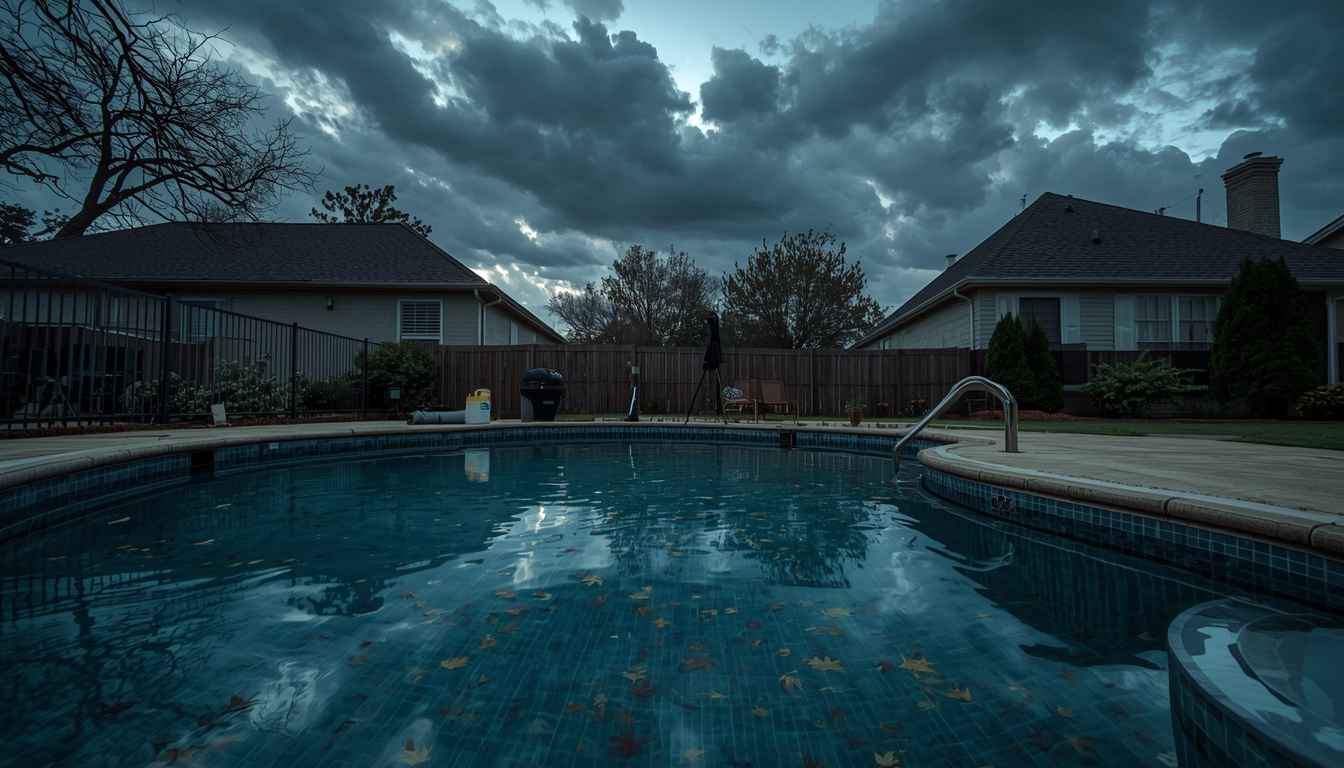
Poured brushed concrete. The DFW standard. Functional, can be stained or stamped, and the most affordable option at $8 to $15 per square foot. It lasts 15 to 25 years but cracking from DFW clay soil is guaranteed — not a question of if, but when. Heat runs moderate to high. Seal every 2 to 3 years. Best for budget builds. Our deck repair guide covers crack management for concrete decks in DFW soil. The Pool & Hot Tub Alliance notes that poured concrete remains the most common residential pool deck material nationwide despite its soil movement limitations.
Stamped decorative concrete. Much more attractive with many pattern options that mimic stone or tile. Cost: $12 to $25 per square foot. Lasts 10 to 20 years but the decorative sealer requires more upkeep, and cracks are more visible against the pattern — a hairline crack through a stamped flagstone pattern is impossible to ignore. Heat is still moderate to high. Best for mid-range aesthetic upgrades.
Concrete pavers (interlocking). This is where the concrete vs pavers pool deck debate gets interesting for DFW. Pavers cost $15 to $30 per square foot but last 25 to 50+ years. The critical DFW advantage: pavers handle soil movement dramatically better than poured concrete because the flexible base allows expansion and contraction without cracking. Individual pavers are replaceable if one settles or chips. Maintenance involves occasional releveling and joint sand replenishment.
According to HomeAdvisor’s pool data, interlocking pavers are the fastest-growing pool deck material in DFW new construction specifically because of their soil movement performance. PoolBurg’s recommendation: excellent choice for DFW — best long-term value when you factor in soil reality.
Travertine. Premium, elegant natural stone — the standard in Southlake and upscale Frisco neighborhoods. Cost: $20 to $40 per square foot. Naturally stays cooler than concrete — low to moderate heat. Lasts 20 to 30+ years but requires sealing every 1 to 2 years, and acid splashes from pool chemicals can etch the surface. Best pool deck material Texas premium homeowners choose for the best combination of aesthetics and heat management.
Flagstone. Rustic, natural, organic aesthetic. Cost: $18 to $35 per square foot. Low to moderate heat. Lasts 25 to 40+ years, but mortar joints between stones crack from DFW soil movement — the stones survive but the grout doesn’t. Best for naturalistic pool designs where some character wear is expected.
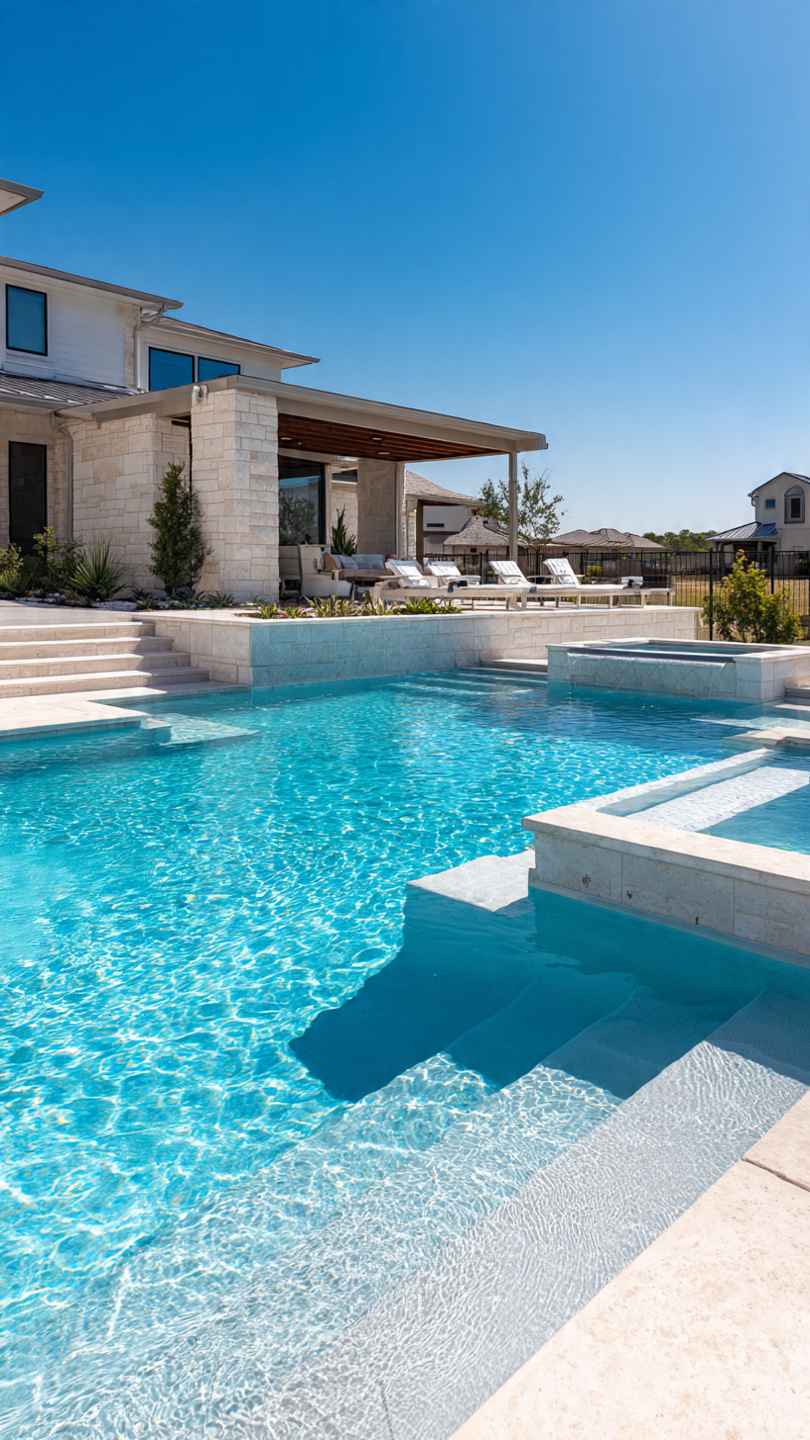
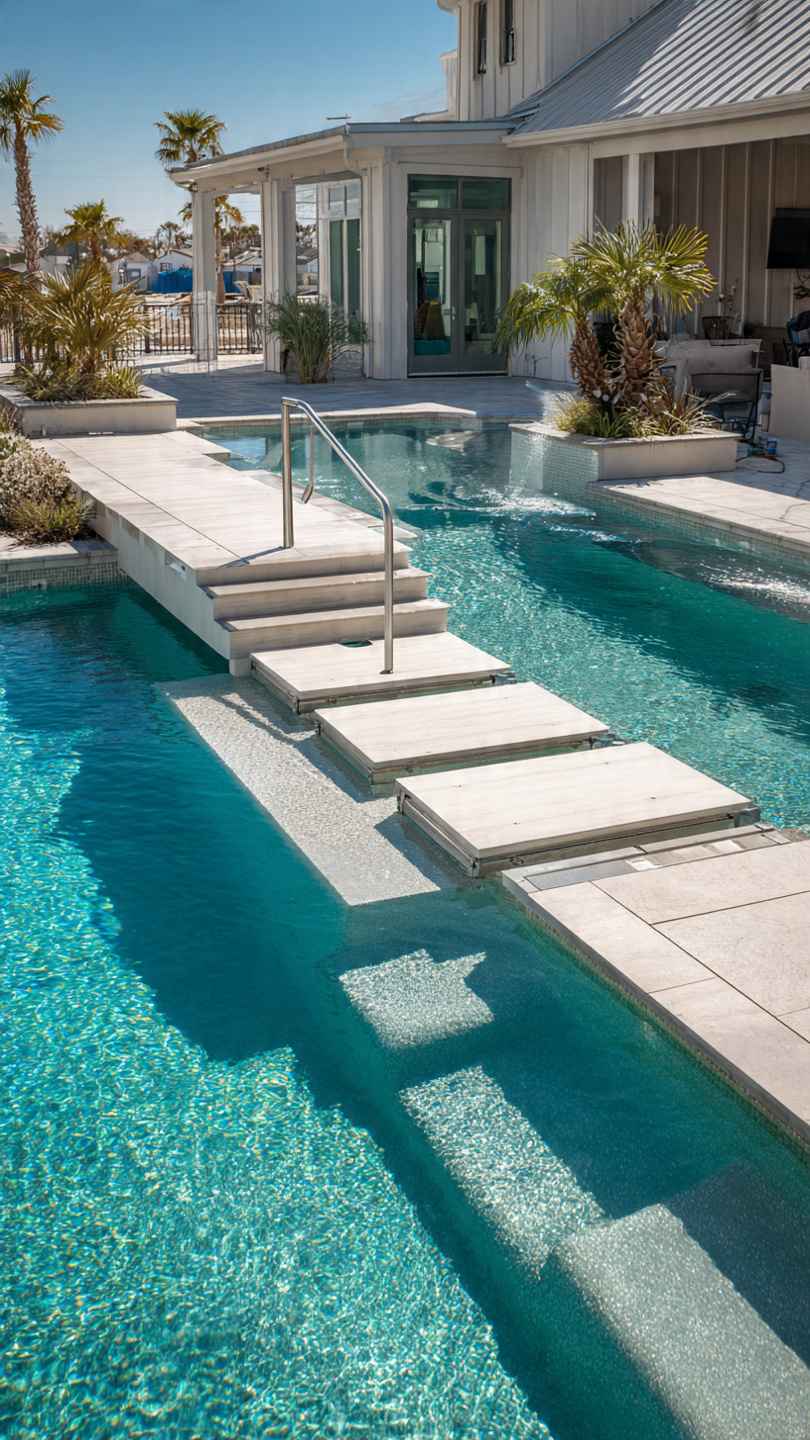
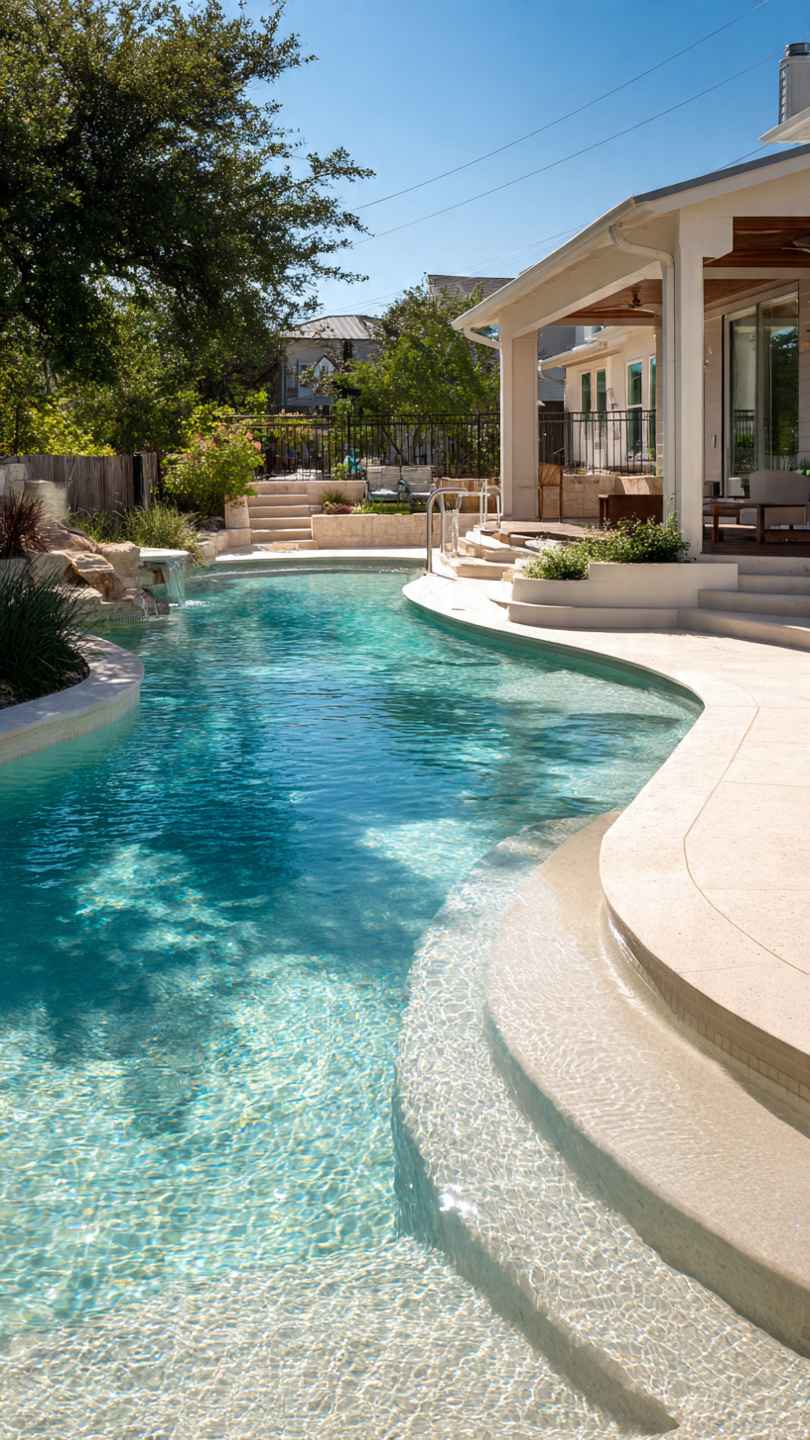
Cool deck / Kool Deck (acrylic coating). An acrylic overlay applied over existing concrete that reduces surface temperature 30 to 40%. Cost: $6 to $12 per square foot over existing concrete. The coolest affordable option. Lasts 8 to 15 years before UV degrades the coating and reapplication is needed. Best for retrofitting hot concrete decks without full replacement. The U.S. Department of Energy recommends reflective or cool-surface deck coatings as an effective heat management strategy for residential pools in high-temperature climates.
Artificial turf. Lush green year-round with zero water required. Cost: $10 to $20 per square foot. Looks great but gets very hot in direct sun — limiting its use as a full pool deck options DFW choice. Best as an accent area or section away from the pool’s edge rather than the primary walking surface. Lasts 8 to 15 years.
Heat Management — The DFW Priority
Surface temperatures in 105°F Texas sun tell the real story. Dark concrete reaches 150 to 170°F and will burn bare feet. Light concrete runs 120 to 140°F. Travertine and flagstone stay at 110 to 130°F. Cool deck coatings bring surfaces down to 100 to 120°F. Lighter colors always run cooler. Shade structures along the path from house to pool make every material more comfortable. Keep a towel or mat at the pool entry on the hottest days. Heat performance should weigh as heavily as appearance when choosing the best pool deck material Texas summers demand.
DFW Soil Movement and Your Concrete vs Pavers Pool Deck Decision
Poured concrete will crack in DFW clay soil. Every single time. It’s not a defect — it’s physics. Clay swells when wet, shrinks when dry, and poured slabs can’t flex with it. Pavers handle soil movement best because the interlocking system and flexible sand base accommodate expansion and contraction without visible damage. Natural stone on mortar cracks at the joints but individual stones survive. Whatever material you choose, plan for maintenance.
The Consumer Product Safety Commission notes that uneven deck surfaces from soil movement create trip hazards that should be addressed promptly for pool area safety. Our foundation and pool guide covers how DFW clay affects the entire pool structure.
People Also Ask
What is the best pool deck material for Texas heat?
Travertine, flagstone, and cool deck coatings stay coolest. Travertine offers the best combination of premium appearance and heat management. Cool deck is the most affordable heat reduction option as a retrofit over existing concrete.
Are pavers better than concrete around a pool?
In DFW, yes — for longevity and soil movement performance. Concrete vs pavers pool deck decisions in clay soil almost always favor pavers because they flex with soil movement instead of cracking. Pavers cost more upfront but last 25 to 50+ years with lower long-term repair costs.
How much does a pool deck cost in DFW?
Brushed concrete: $8 to $15 per square foot. Stamped concrete: $12 to $25. Pavers: $15 to $30. Travertine: $20 to $40. Flagstone: $18 to $35. Cool deck coating: $6 to $12 over existing concrete. A typical 800 to 1,200 square foot DFW pool deck runs $6,000 to $48,000 depending on material.
Will my pool deck crack in DFW?
If it’s poured concrete, yes — DFW clay soil guarantees it. Pavers resist cracking by flexing with soil movement. Natural stone survives but mortar joints crack. No material is immune to DFW soil stress, but some handle it dramatically better than others. Our deck repair guide covers maintenance for every material.
Does travertine get hot around pools?
Less than concrete. Travertine’s natural composition stays 20 to 40°F cooler than poured concrete in direct sun. It’s one of the best pool deck material Texas premium homeowners choose specifically for heat management and aesthetics combined. Our maintenance services include deck condition monitoring at every visit.
Pool Deck Showing Its Age? PoolBurg Spots It First
We notice cracking, settling, and safety hazards during every service visit. Contact PoolBurg and ask what we’re seeing on your deck — we’ll point you in the right direction for repair or replacement.