Are you constantly battling chlorine sensitivity? If you experience coughing or itching after a swim, blaming your discomfort on chlorine sensitivity is an incredibly common reaction. However, true chlorine sensitivity is extremely rare. If you suffer from relentless pool irritation, you might just be dealing with poorly managed water chemistry. Let’s dive into the real causes behind your chlorine sensitivity symptoms and learn how to fix them for good.
Is It Really chlorine sensitivity Making You Miserable?
Many DFW swimmers blame their coughing and itching on chlorine sensitivity. But our local environment adds annoying factors that mimic chlorine sensitivity perfectly. What most people experience isn’t chlorine sensitivity, but rather severe chloramine irritation. Chloramines rapidly form when your free sanitizer reacts with organic matter like sweat, urine, and body oils. A well-maintained backyard causes significantly less irritation than a neglected one. The ultimate fix for your perceived chlorine sensitivity is usually better maintenance, not reducing your sanitizer.
What Actually Causes Your Pool Irritation
Chloramines (combined chlorine)
Chloramines are the real culprit behind your chlorine sensitivity complaints. They cause brutal red eyes pool issues, aggressive skin itching, and that awful “indoor waterpark” smell. Counterintuitively, a stronger chemical smell equals worse water quality. Shocking the water breaks down chloramines and instantly stops your chlorine sensitivity symptoms.
Improper pH
A pH below 7.0 is highly acidic, causing eye burning that feels exactly like chlorine sensitivity. A pH above 7.8 creates dry, flaky skin irritation pool conditions. The ideal range is 7.4, but DFW backyards often run much higher due to our alkaline local tap water.
High total chlorine with low free chlorine
When these numbers drift apart, chloramines build up and trigger your chlorine sensitivity reactions. You must shock the water to convert the combined chlorine.

Actual chlorine sensitivity (rare)
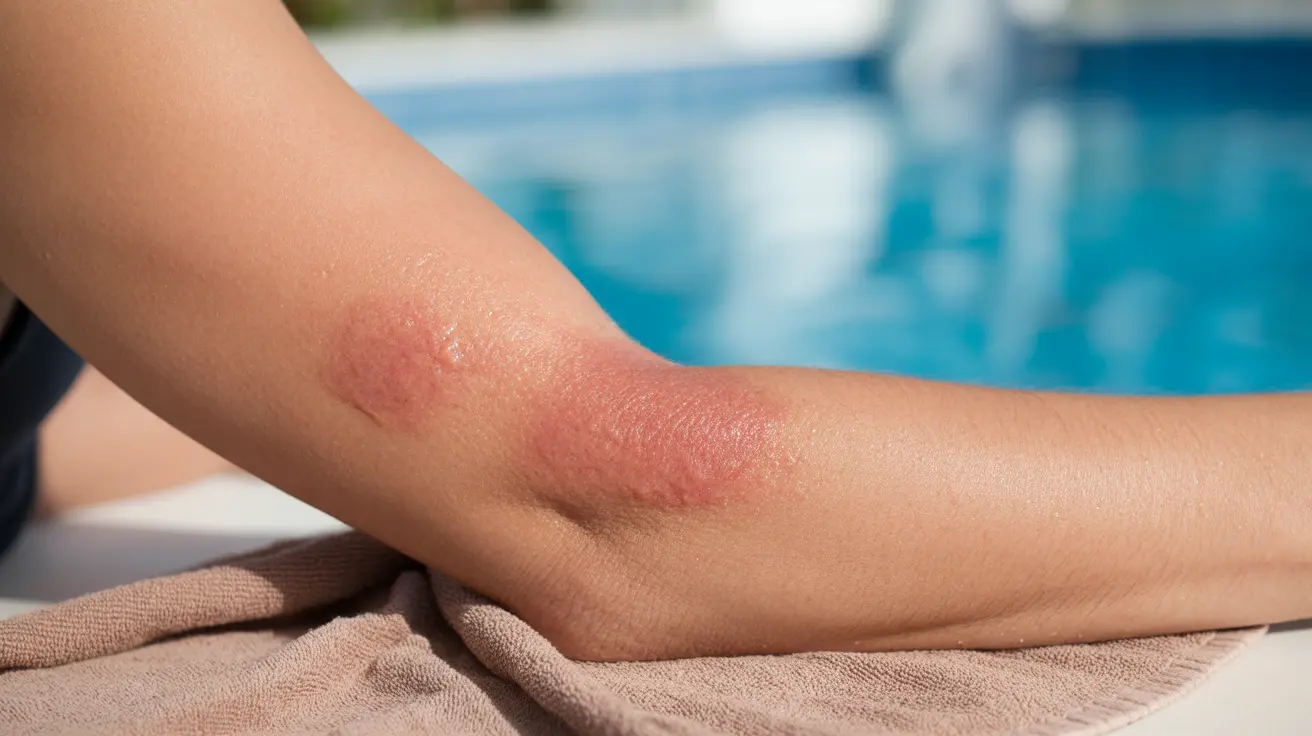
A genuine case of chlorine sensitivity involves hives, severe redness, and breathing difficulty. If symptoms persist in beautifully maintained water, consult a dermatologist. For confirmed chlorine sensitivity, installing low-chlorine AOP systems provides excellent relief by vastly reducing your chemical demand.
Dry skin from hard water
The experts at the WQA note that extremely hard water strips your skin’s natural oils, creating a double-drying effect that homeowners often mistake for chlorine sensitivity.
Contact dermatitis from chemical handling
Direct physical contact with concentrated acid causes severe rashes. The EPA safe chemical guidelines strictly warn against handling concentrated liquids without proper gloves. This is a severe chemical burn, not a standard swimming allergy.
How to Reduce Pool Irritation for DFW Swimmers
- Maintain proper free chlorine: Paradoxically, shocking your water regularly actually fixes that “too much chemical” feel that triggers your chlorine sensitivity.
- Keep pH at 7.2-7.6: Staying perfectly balanced prevents acidic eye burns.
- Shower before swimming: A quick 60-second rinse washes off sweat, dramatically reducing the chloramines that spark chlorine sensitivity. The CDC explicitly mandate pre-swim showers for this exact reason.
- Shower after swimming: Rinse off the drying minerals and apply a heavy moisturizer.
- Use swim goggles: This completely eliminates the dreaded red-eye effect.
- Consider supplemental UV, ozone, or AOP: Advanced tech reduces your chemical requirement down to 0.5 ppm, offering massive relief for chlorine sensitivity. Check our sanitation alternatives guide.
- Use hair protection products: Applying a leave-in conditioner barrier protects color-treated hair from harsh drying.
- Professional pool maintenance: The(https://www.phta.org/) emphasizes that consistent professional balancing guarantees optimal swimmer comfort and defeats chlorine sensitivity.
Children and chlorine sensitivity
Children have much thinner skin, making them highly prone to chlorine sensitivity. However, proper chemistry heavily mitigates this. Red eyes usually mean chloramines, not an allergy—so shock the water immediately! Ear infections are bacterial, so maintain proper sanitizer levels to prevent them. If your child consistently reacts to well-maintained water, consult a pediatric dermatologist about their chlorine sensitivity. Do not avoid swimming due to an assumed allergy; most cases are totally solvable with better chemistry.
People Also Ask
Can you be allergic to chlorine?
True chlorine sensitivity and severe allergies are incredibly rare; usually, it is just a harsh reaction to high chloramine levels in dirty water.
Why do my eyes burn after swimming?
Chloramines and highly improper pH levels burn your corneas, mimicking chlorine sensitivity.
Why does my skin itch after the pool?
High pH and DFW’s notoriously hard tap water actively strip your skin’s natural protective oils.
Is salt water pool better for sensitive skin?
Yes, salt water feels much silkier and is absolutely fantastic for managing chlorine sensitivity.
How do I reduce chlorine irritation in my pool?
Balance your pH to 7.4 and shower before jumping in to prevent the organic sweat reactions that cause chlorine sensitivity.
Does hard water make pool irritation worse?
Absolutely. High calcium content dries out your skin tremendously. To protect your property from these harsh minerals, refer to the(https://www.tceq.texas.gov/) guidelines on proper water management and drainage.
PoolBurg Maintains Swimmer-Comfort Water Chemistry
Are you constantly battling chlorine sensitivity? At PoolBurg, we specialize in complete chloramine elimination, precise pH management, and irritation-minimizing protocols. If your backyard is making your skin and eyes itch, it’s almost certainly the chemistry. Visit our Contact Us page today, and let us cure your chlorine sensitivity with our expert weekly pool service!