Diagnose common pool pump issues early and you can prevent most expensive pool equipment failures. When a pump begins to struggle, the warning signs usually appear long before the system stops completely. Learning how to diagnose common pool pump problems helps homeowners catch issues quickly and avoid costly repairs.
The pool pump is the heart of your pool’s circulation system. According to the U.S. Department of Energy pool pump efficiency guide, pumps control water movement, filtration, and chemical distribution. When circulation stops, water quality declines quickly and algae can begin forming within days.
Why Diagnosing Pool Pump Problems Early Matters
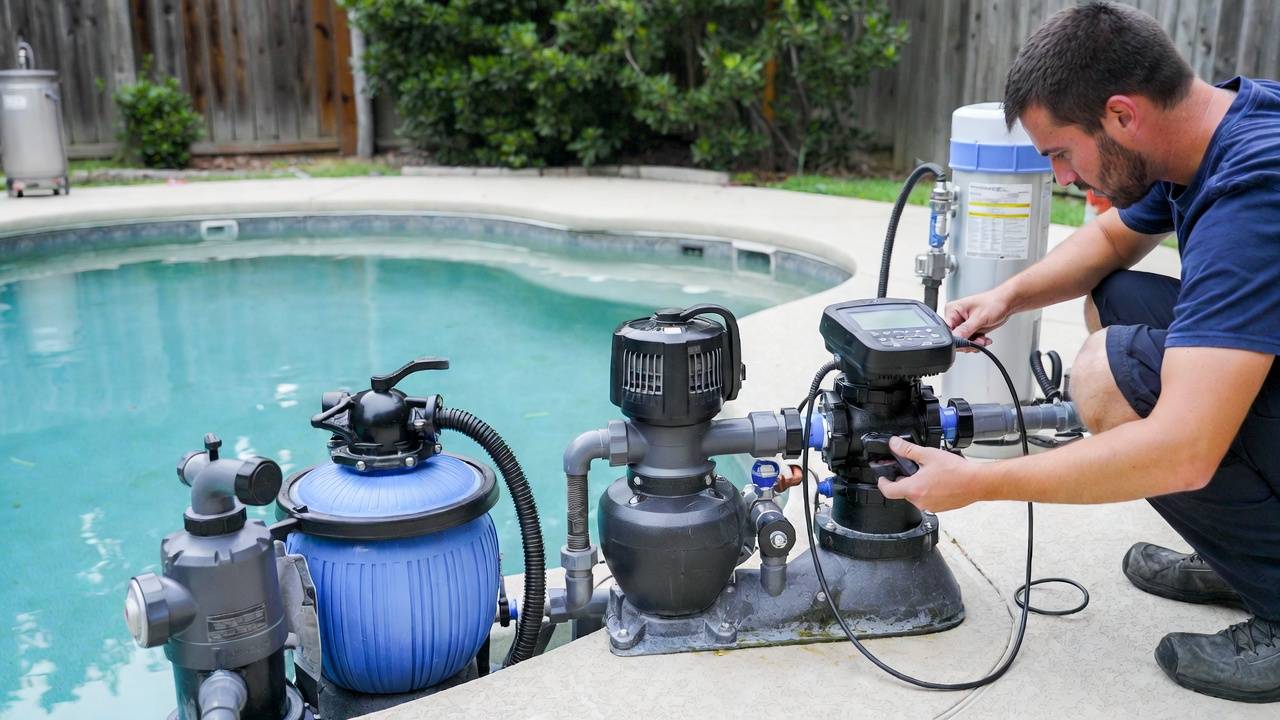
Knowing how to diagnose common pool pump issues early can save hundreds or even thousands of dollars. In hot climates, pool pumps work harder and longer hours to maintain proper water circulation.
When pumps fail, water stops moving through the filter and sanitizer levels drop quickly. According to the CDC Healthy Swimming water quality guidance, proper circulation is essential for maintaining safe swimming water.
Ignoring early warning signs can lead to severe equipment damage such as burned-out motors, cracked seals, or clogged plumbing lines. Many pump failures begin with small symptoms like reduced flow or unusual noise.
Early troubleshooting keeps small problems from turning into major repairs.
The Most Common Pool Pump Problems Homeowners Encounter
Pump will not turn on
One of the first steps to diagnose common pool pump issues is checking the power supply. Tripped breakers, timer malfunctions, or wiring problems are common causes.
If the motor hums but does not start, the capacitor may be failing. Capacitors provide the initial energy needed for motors to start properly.
Pump running but not moving water
A pump may run normally but still fail to circulate water. This usually happens when skimmer baskets, pump baskets, or pipes are clogged.
Air leaks in suction lines can also prevent proper water movement. According to Pool & Hot Tub Alliance circulation standards, unrestricted water flow is critical for filtration performance.
Pump losing prime
Another common problem when trying to diagnose common pool pump issues is losing prime. When a pump loses prime, air enters the system and interrupts water flow.
Low pool water levels or suction-side plumbing leaks are typical causes.
Pump making loud noises
Grinding or screeching noises often indicate worn bearings inside the motor. Rattling sounds can also occur if debris enters the impeller.
Ignoring these sounds almost always leads to motor failure.
Pump leaking water
Leaks typically occur around pump seals, lid gaskets, or plumbing connections. Even small leaks can allow air into the system, affecting circulation.
According to National Swimming Pool Foundation equipment maintenance guidance, pump seal wear is one of the most frequent repair issues.
Quick Troubleshooting Steps Before Calling a Professional
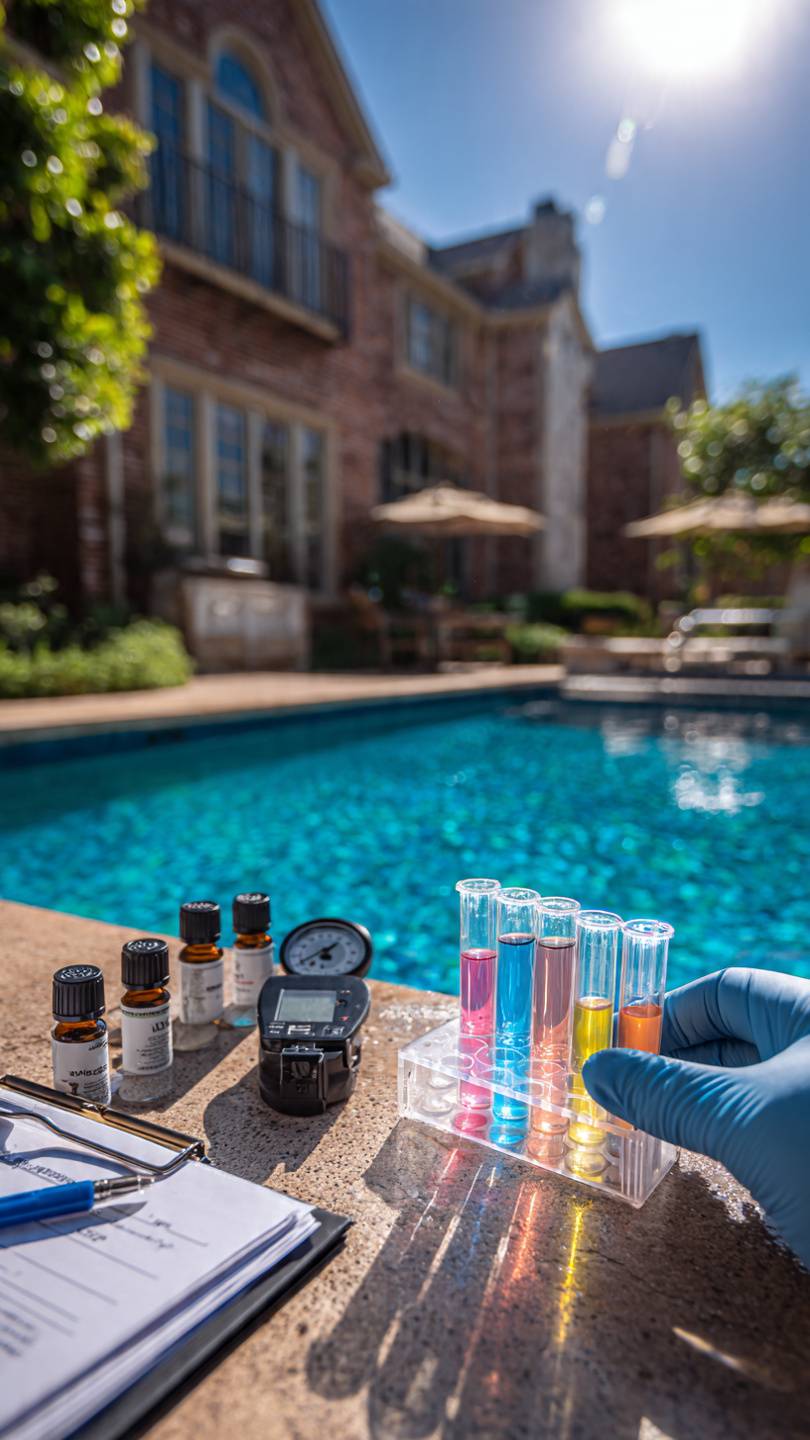


Check the pool water level
Water should sit roughly halfway up the skimmer opening. Low water allows air into the system and disrupts pump operation.
Inspect the pump and skimmer baskets
Clogged baskets reduce water flow and place unnecessary strain on the pump. Cleaning them regularly improves circulation and protects the motor.
Check for clogged filters
A dirty filter restricts water movement and can make the pump appear weak or malfunctioning.
Look for air bubbles
Air bubbles inside the pump basket are a strong sign of suction-side leaks.
Signs Your Pool Pump Motor May Be Failing
Pump frequently shuts off
Motors sometimes shut down when internal thermal protection systems detect overheating.
Burning smell from the motor
Electrical components inside the motor may be failing.
Pump starts slowly
Difficulty starting is often caused by a weak capacitor or aging motor components.
When a Pool Pump Needs Repair vs Replacement
Minor repairs
Many issues discovered while trying to diagnose common pool pump problems are simple to fix. Replacing lid gaskets, seals, or capacitors is relatively inexpensive and can extend pump life.
Major repairs
Motor replacement or severe internal damage can make repairs more costly.
Pump replacement considerations
According to the Department of Energy variable speed pump energy report, modern variable-speed pumps use significantly less electricity than older single-speed pumps.
Upgrading an outdated pump can lower operating costs while improving circulation efficiency.
Common Pool Pump Diagnosis Mistakes Homeowners Make
Assuming the pump is broken when the filter is clogged
Ignoring air leaks in suction lines
Running the pump dry after losing prime
Continuing to run a noisy pump until the motor fails
Attempting electrical repairs without proper knowledge
People Also Ask
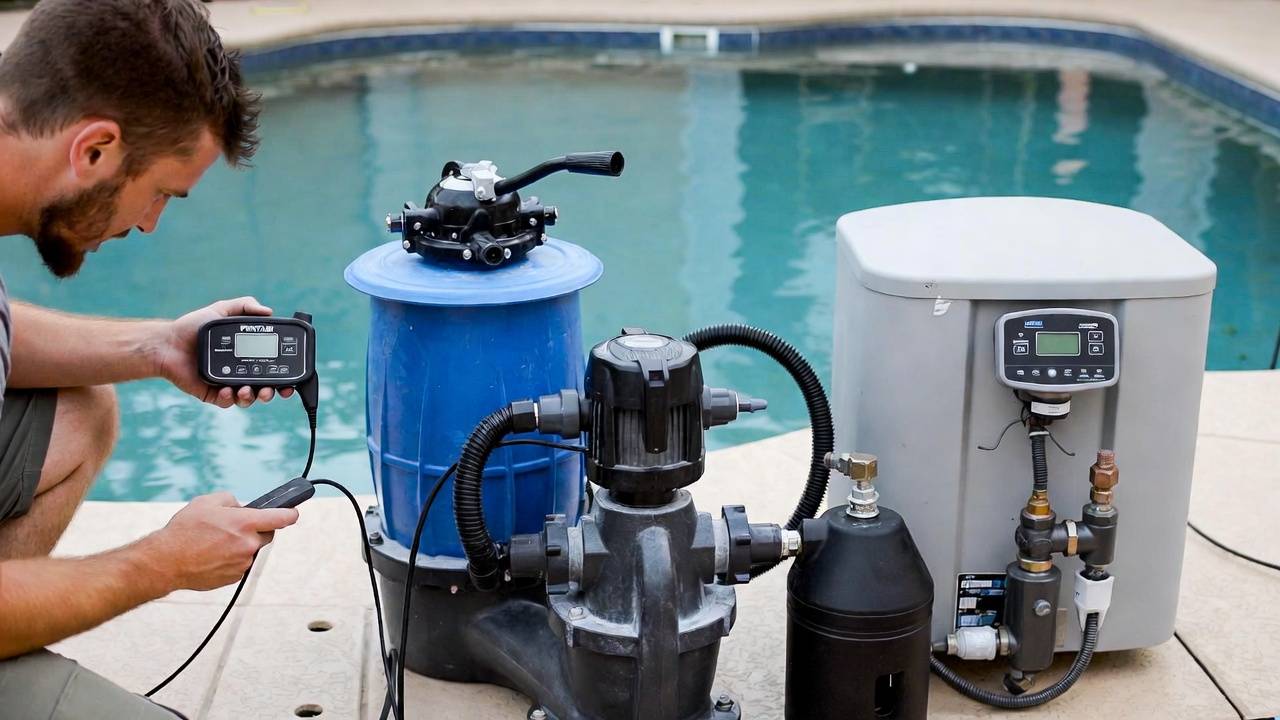
How do I know if my pool pump is bad?
Common warning signs include loud noises, weak water flow, or the pump frequently shutting off.
Why is my pool pump running but not circulating water?
Clogged baskets, air leaks, or blocked plumbing lines are common causes.
What causes a pool pump to lose prime?
Low water levels, suction leaks, or damaged pump seals.
Why is my pool pump making loud noise?
Worn motor bearings or debris in the impeller can create grinding or rattling sounds.
How long do pool pumps typically last?
Most pool pumps last between 8 and 12 years with proper maintenance.
Can a pool pump be repaired?
Many pumps can be repaired depending on the issue. However, older pumps may be better replaced.
PoolBurg Diagnoses and Repairs Pool Pump Problems Quickly
When homeowners try to diagnose common pool pump issues themselves, the symptoms are often misleading. A circulation problem might actually be caused by plumbing restrictions, clogged filters, or electrical faults.
PoolBurg technicians inspect the entire system including pumps, motors, plumbing, and filtration equipment. By identifying the root cause of circulation problems, repairs are faster and more effective.
If your pool pump isn’t working properly, PoolBurg technicians can diagnose the problem and get your pool circulating again quickly.