

Do you close a pool in Texas? If you moved to DFW from Ohio, Michigan, New York, or anywhere up north, this is probably one of the first questions you asked. The answer is no — and the distinction between pool closing vs winterizing Texas is critical. Closing a pool the northern way in North Texas can cost you thousands in spring recovery, equipment damage, and algae disasters. Understanding winterize vs close pool protocols for our climate saves money, protects equipment, and makes spring startup painless.
What “Closing” a Pool Means and Why It Doesn’t Work Here

In northern states, closing a pool means draining all plumbing lines, blowing them out with compressed air, adding antifreeze, plugging every return and skimmer, installing a heavy winter cover, and shutting down all equipment for 4 to 6 months. The pool sits completely dormant until spring. That works up north because temperatures stay below freezing for months straight — consistent and predictable. The Pool & Hot Tub Alliance confirms that full winter closure is the standard practice in regions with sustained sub-freezing winters.
DFW doesn’t work that way. Our winters bounce between freeze nights and 60 to 70°F days. A fully closed pool with drained plumbing warms up enough for algae growth on those warm stretches. Leave a stagnant, unfiltered pool sitting for 3 to 4 months and you’re guaranteed a green swamp by March. Stagnant water breeds mosquitoes during the warm windows. And completely draining a gunite pool risks hydrostatic uplift — heavy rain can literally push an empty pool shell out of the ground. DFW’s expansive clay soil makes this even worse. If someone asks do you close a pool in Texas, the answer is always no.
What Winterizing Actually Means in DFW
Keep the pool running year-round. Reduce pump run time to 4 to 6 hours per day during mild winter weather. Increase to continuous during freeze events — moving water resists freezing. Never fully shut down the system for the season. Our pump run time guide covers seasonal scheduling adjustments. The U.S. Department of Energy notes that reduced-speed pump operation during low-demand months saves energy while maintaining necessary circulation.
Reduce chemical treatment proportionally. Lower water temperatures mean lower chlorine demand. Test weekly instead of twice weekly. Maintain minimum chlorine at 1 to 2 ppm even in winter. Continue managing pH and alkalinity — DFW’s hard water doesn’t take a winter break. Our water chemistry guide covers winter target ranges.
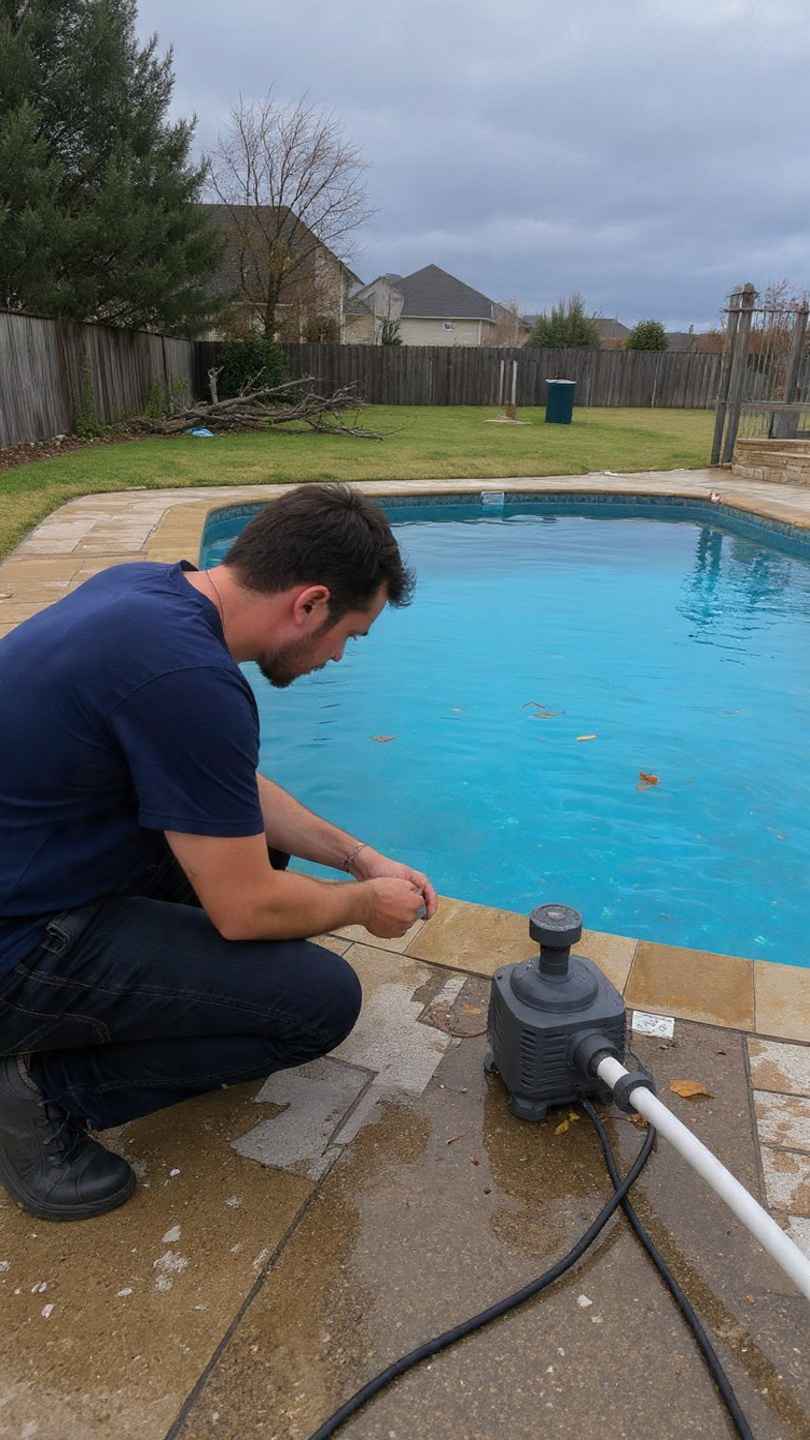

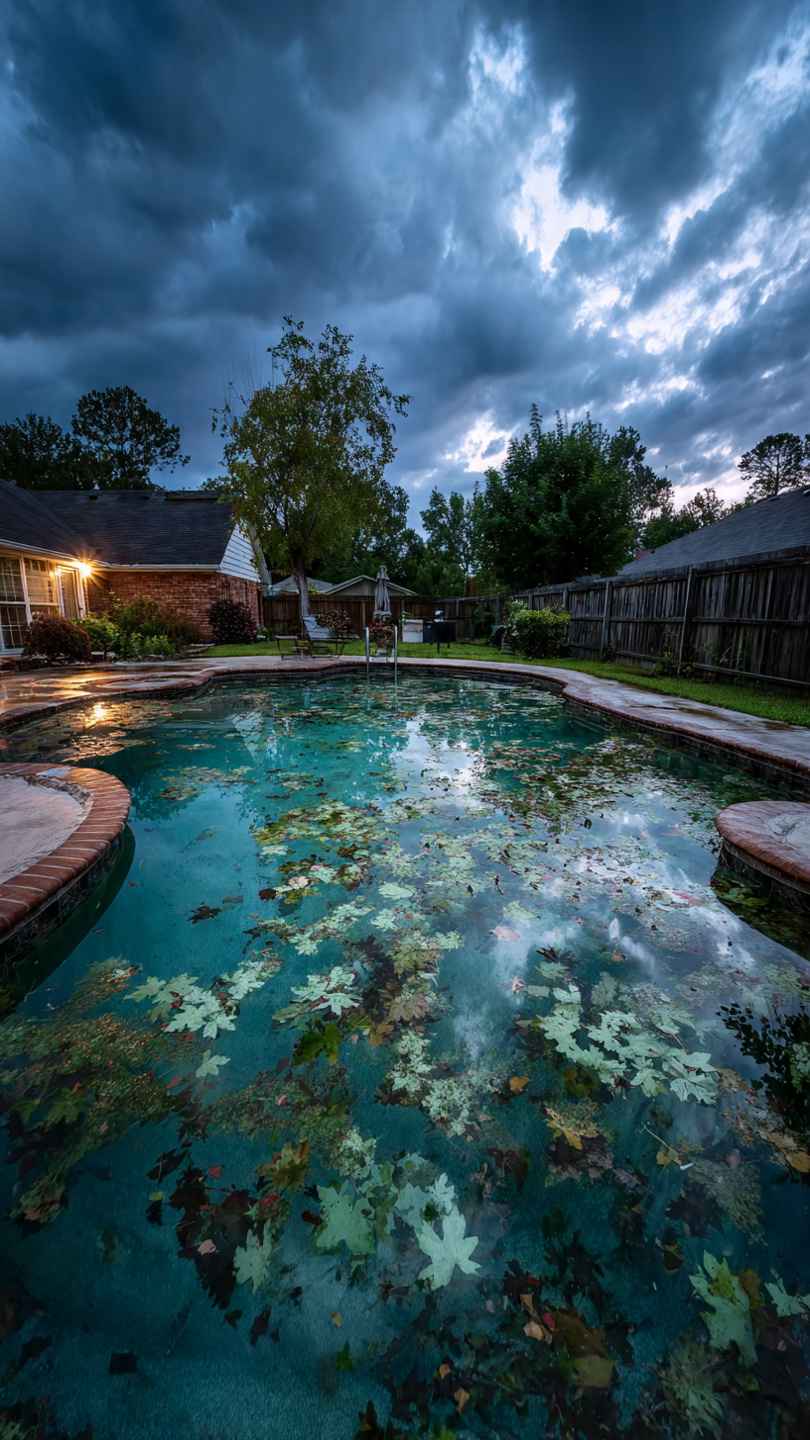
Prepare a freeze action plan. Know when to run the pump continuously — below 35°F. Know what to drain if power goes out during a freeze. Keep pool antifreeze on hand. Our freeze protection guide and winterization guide have the complete protocol. The National Weather Service posts freeze warnings and timing for DFW that you should monitor weekly from November through February.
Maintain minimum filtration. Even in winter, DFW pools collect cedar pollen, falling leaves, and wind-blown dirt. The filter keeps water clear and circulation prevents stagnation.
Schedule reduced professional service. Drop from weekly to bi-weekly or monthly during December through February. Maintain professional oversight even at reduced frequency. Spring startup is seamless when the pool was cared for through winter. Our service plans page covers seasonal adjustment options.
The Cost of Getting Pool Closing vs Winterizing Texas Wrong
Fully closing a pool northern-style in DFW leads to a $500 to $3,000 green pool recovery every spring. Ignoring the pool entirely all winter risks equipment damage, algae, and potential freeze damage. Proper DFW winterization costs $100 to $250 per year for freeze protection service plus reduced winter maintenance. The math is obvious: $100 to $250 in prevention versus $500 to $3,000+ in recovery. Every year. According to HomeAdvisor’s pool data, pools maintained through winter in warm-climate markets sell for higher prices and pass inspections cleaner than pools left dormant.
Month-by-Month Winter Pool Care in DFW
November: reduce pump to 6 to 8 hours, verify freeze guard is functional, do a final deep clean, check the heater for any late-season swims.
December: reduce to 4 to 6 hours unless a freeze hits. Cedar pollen starts — clean baskets frequently. Monitor weather forecasts. Run pump continuously during any freeze event.
January: highest freeze risk month. Maintain minimum chemical levels. Cedar pollen peaks. Stay vigilant on weather.
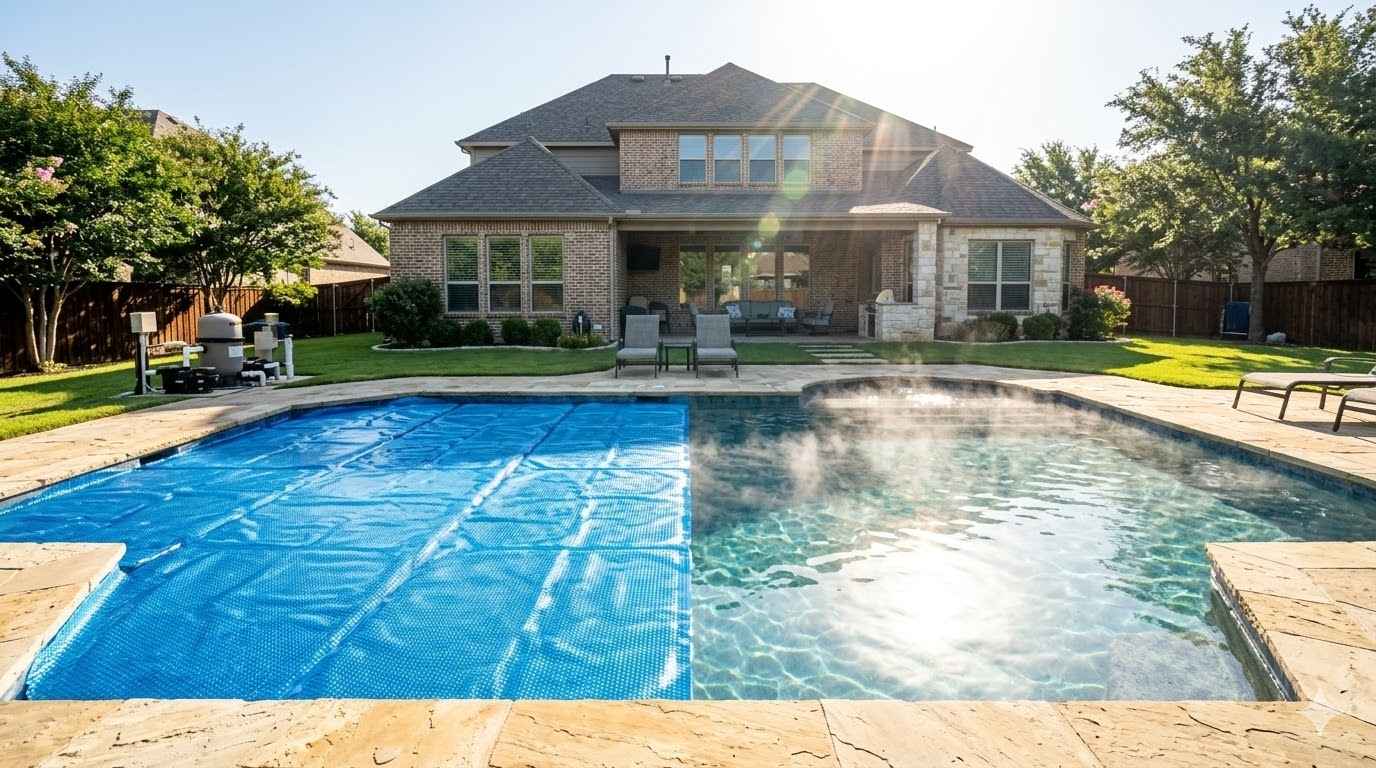
February: freeze risk continues but warms toward month’s end. Begin planning spring startup. Test all equipment.March: spring startup. Increase pump run time, shock the pool, full equipment inspection, resume weekly service. Swim-ready by mid-March most years. Our pool opening service handles the full spring startup if you want it done professionally.
People Also Ask
Do you close a pool in Texas?
No. Texas winters aren’t cold enough or consistent enough for a full northern-style pool closure. You winterize instead — reduced service, reduced pump time, freeze protection, but never a full shutdown.
What’s the difference between closing and winterizing a pool?
Closing means draining plumbing, plugging everything, and shutting down for months. Winterizing means reducing service intensity while keeping the pool running at a lower level. In DFW, you winterize. You never close.
Should I drain my pool in winter in DFW?
No. Draining a gunite pool risks hydrostatic uplift, especially after heavy rain. DFW clay soil movement can also damage an empty shell. Keep the pool filled and the pump running year-round.
Do I need pool service in winter in Texas?
Yes, at reduced frequency. Monthly or bi-weekly service through December to February maintains chemistry, catches problems, and makes spring startup seamless. Skipping winter service entirely leads to expensive spring recoveries. Our maintenance services page covers winter options.
When can I start swimming in spring in DFW?
Mid-March most years if the pool was maintained through winter. Water temperature usually reaches comfortable levels by late March or early April, earlier with a heater.
Don’t Make the Northern Mistake — PoolBurg Winterizes the Texas Way
Reduced-frequency winter maintenance, freeze event response, and seamless spring startup. Contact PoolBurg to set up winter service that protects your pool the right way — no full closure, no spring disaster, no wasted money.