Fiberglass pool maintenance gets sold as practically nonexistent when you’re buying the pool. And compared to gunite, fiberglass genuinely is easier to care for — the smooth gel coat resists algae, cleaning takes less time, and you’ll never need acid washing or replastering. But “lower maintenance” and “no maintenance” are two very different things, and North Texas water conditions make that gap wider than the brochure suggests. DFW’s hard water, extreme UV, and expansive clay soil create fiberglass-specific problems that owners in milder climates never deal with. Here’s what proper fiberglass pool maintenance actually looks like in this market.
Why Fiberglass Pools Are Booming in North Texas
Fiberglass pools have exploded in popularity across Prosper, Frisco, Southlake, and the northern growth corridor because they install in days instead of months, cost less to operate long-term, and the smooth surface looks gorgeous with minimal effort.
Builders love them because the timeline is predictable. Homeowners love them because they heard the magic words “low maintenance.” And that’s true — fiberglass is genuinely easier than gunite. But DFW’s water chemistry challenges don’t care what your pool is made of. NTMWD water quality data shows 150 to 300-plus ppm calcium coming straight from the tap, and that calcium will stain and scale a fiberglass gel coat just as aggressively as it scales plaster if your fiberglass pool maintenance isn’t dialed in.
Fiberglass Pool Maintenance Essentials for DFW
Water Chemistry Is Critical for Fiberglass
Fiberglass gel coats are more sensitive to chemical imbalance than gunite plaster. Keep pH between 7.2 and 7.6 — high pH combined with DFW’s high calcium creates a scaling nightmare that clouds the gel coat and leaves white mineral deposits. Manage calcium hardness aggressively, aiming for 200 to 250 ppm rather than letting it climb to the 400 ppm levels that our tap water naturally pushes toward.
Avoid using calcium hypochlorite as your primary sanitizer — it adds calcium with every dose. The combination of high calcium and high pH is the single biggest threat to a fiberglass gel coat and the most important thing fiberglass pool maintenance in DFW prevents.
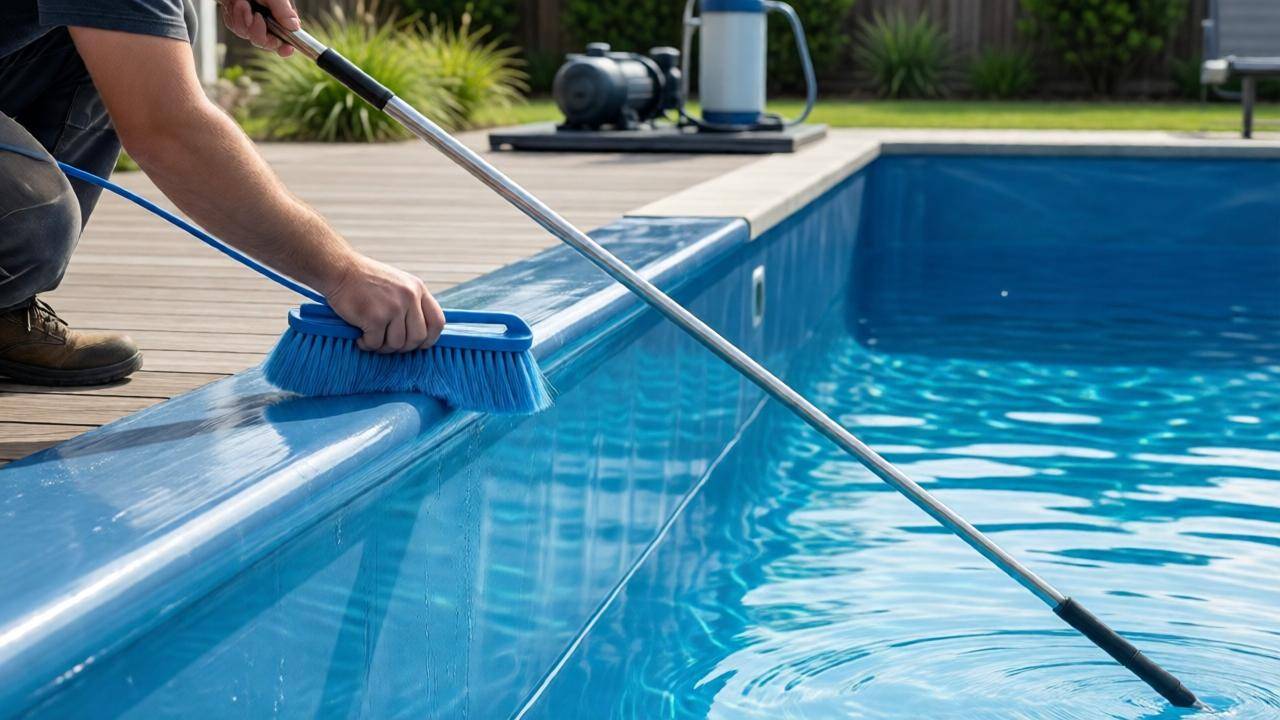
Brushing With Soft Brushes Only
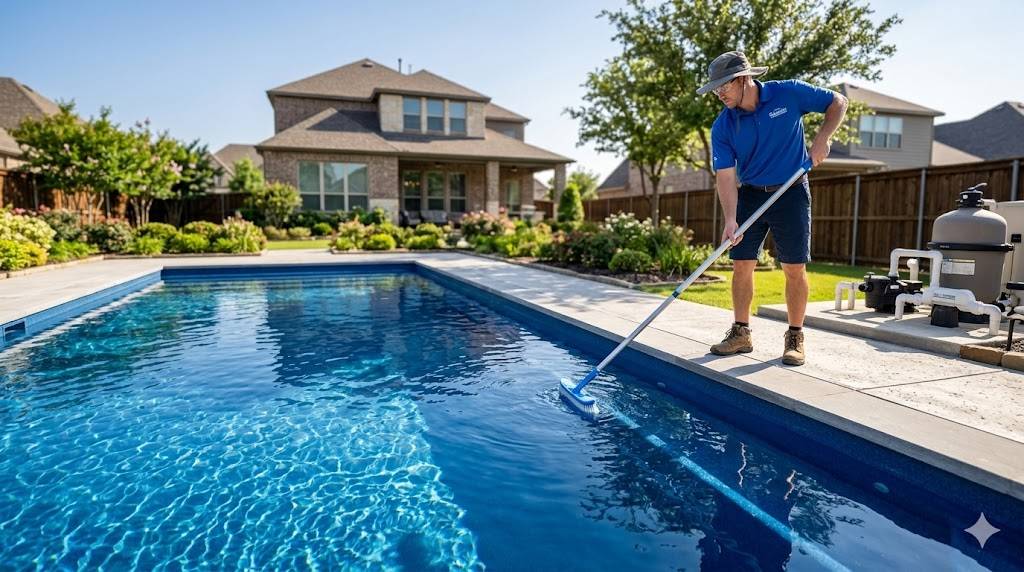
Never use steel, stainless, or abrasive brushes on a fiberglass surface. They scratch and damage the gel coat permanently. Use soft nylon brushes for weekly brushing. The smooth surface doesn’t harbor algae the way gunite does, so a soft brush is all you need to keep things clean.
Reconnect and Prime the Pump
Drain plugs go back in, the pump basket gets seated, and the pump is primed and started. Running a pump dry even briefly can damage the mechanical seal and overheat the motor.
Stain Prevention and Removal
Three types of staining affect fiberglass in North Texas. Metal staining from iron and copper in fill water leaves brown or blue-green marks — use a sequestering agent when adding fresh water. Organic staining from leaves and debris left sitting on the surface creates tannin marks — skim promptly and shock regularly.
Mineral staining from hard water deposits white scale at the waterline — keep calcium low and pH in range. Fiberglass pool maintenance that addresses all three prevents the discoloration that makes a beautiful pool look neglected.
Filter and Pump Maintenance
Filter and pump care is the same regardless of surface type. Backwash or clean the filter when pressure rises 8 to 10 PSI above baseline. Run the pump 10 to 12 hours daily in summer per Department of Energy efficiency standards. Inspect equipment weekly for leaks and unusual sounds.
Salt Water System Considerations
Many new fiberglass pools in DFW come with salt chlorine generators. Salt systems are compatible with fiberglass, but the pH tends to drift higher with salt generators, which accelerates scaling on the gel coat. Check pH twice weekly during summer and keep it at the low end of the 7.2 to 7.6 range. This is one of the most overlooked aspects of fiberglass pool maintenance with salt systems.
Common Fiberglass Pool Problems in North Texas

Gel Coat Fading From UV Exposure
Texas UV is relentless. Over years, the gel coat fades and loses its luster, especially on darker-colored shells. There’s no way to completely prevent UV fading, but proper water chemistry slows it significantly. Gel coat waxing every few years helps restore the shine.
Osmotic Blistering
Spider cracks and small blisters on the gel coat surface result from water penetrating the outer layer and reacting with the resin underneath. This happens more often when pH stays too low for extended periods or when water chemistry is consistently out of balance. Proper fiberglass pool maintenance prevents the conditions that cause blistering.
Waterline Staining and Scale
The number one cosmetic complaint from fiberglass pool owners in DFW. Hard water deposits a white calcium ring at the waterline that gets worse the longer it’s ignored. Weekly waterline brushing and tight calcium management are the only real prevention.
Fitting and Return Jet Seal Failures
The gaskets and seals around return jets, skimmers, and light niches deteriorate over time. Because fiberglass flexes slightly with temperature changes and soil pressure, seals can loosen faster than in rigid gunite shells. Check fittings annually during fiberglass pool maintenance inspections.
Coping Separation and Deck Settling
DFW’s expansive clay soil shifts seasonally. The pool shell moves independently from the surrounding deck, which can cause coping to separate, grout to crack, and deck sections to settle unevenly. This is a structural and cosmetic issue that needs professional assessment — it’s not unique to fiberglass, but the flexibility of the shell makes coping alignment more sensitive.
Fiberglass Pool Repair Services and Costs in DFW
Gel coat repair and refinishing for fading, scratches, or discoloration runs $500 to $3,000 depending on the area and severity. Blister repair costs $200 to $800 for isolated spots and $1,500 to $5,000 for extensive blistering that requires stripping and recoating. Structural crack repair is rare in fiberglass but costs $500 to $2,000 when needed. Coping and tile replacement runs $1,000 to $4,000 depending on linear footage.
Equipment repair and replacement follows the same pricing as any pool — pumps $600 to $1,500, heaters $1,500 to $4,500, salt cells $400 to $700. Consistent fiberglass pool maintenance dramatically reduces the likelihood of needing most of these repairs.
Fiberglass vs. Gunite Maintenance: Honest Comparison for DFW
Chemical costs are roughly the same — both pool types need the same water chemistry. Cleaning effort is where fiberglass wins clearly — algae doesn’t grip the smooth surface the way it embeds in porous plaster, so brushing takes less time and elbow grease. Resurfacing is the biggest long-term difference. Gunite needs replastering every 10 to 15 years at $5,000 to $15,000. Fiberglass gel coats last 15 to 25 years before refinishing is needed, and the cost is typically lower.
Acid washing is never needed for fiberglass. Total long-term cost of ownership favors fiberglass by $10,000 to $20,000 over 20 years as recommended by the Pool and Hot Tub Alliance for lifecycle cost comparisons. But fiberglass pool maintenance still requires weekly professional attention — just less physical labor per visit.
People Also Ask About Fiberglass Pool Maintenance
Are fiberglass pools really low maintenance?
Lower maintenance than gunite, yes. No maintenance, no. Fiberglass still needs weekly chemical management, brushing, filter care, and equipment inspection. In DFW, hard water and UV exposure add challenges that require consistent fiberglass pool maintenance to manage.
How long does the gel coat last on a fiberglass pool?
15 to 25 years with proper water chemistry and care. In Texas, UV exposure accelerates fading, and hard water staining can make the surface look older than it is. Keeping pH and calcium in range is the single best way to extend gel coat life.
Can you resurface a fiberglass pool?
Yes. The gel coat can be stripped and recoated, or a new gel coat can be applied over the existing surface in some cases. Cost runs $3,000 to $10,000 depending on pool size and condition. It’s less frequent and typically less expensive than gunite replastering.
Do fiberglass pools crack in Texas heat?
Structural cracking from heat alone is extremely rare. Fiberglass is designed to flex. What does happen is gel coat spider cracking from chemical imbalance, osmotic blistering, or ground movement in expansive clay soil. These are surface issues, not structural failures, and proper fiberglass pool maintenance prevents most of them.
What chemicals should I avoid with a fiberglass pool?
Avoid calcium hypochlorite as your primary sanitizer — it adds calcium to already-hard DFW water. Never use abrasive cleaning products or copper-based algaecides that can stain the gel coat. Don’t let pH climb above 7.8 or drop below 7.0 for extended periods. Use trichlor tablets or a salt system for ongoing sanitation.
PoolBurg: Fiberglass Pool Specialists in North Texas
PoolBurg provides fiberglass-specific maintenance plans across all 17 North Texas cities we serve. We understand the gel coat, the chemistry requirements, and the DFW water conditions that make fiberglass pool maintenance different from gunite care. Soft-brush cleaning protocols, tight pH and calcium management, stain prevention, and equipment service tailored to your system. Your fiberglass pool was a smart investment — our job is to keep it looking and performing like one.
Own a fiberglass pool? Get a maintenance plan built for your pool’s surface.
Tell us about your pool and we’ll build a fiberglass-specific plan that protects your gel coat and your budget.
Visit poolburg.com or call us today.