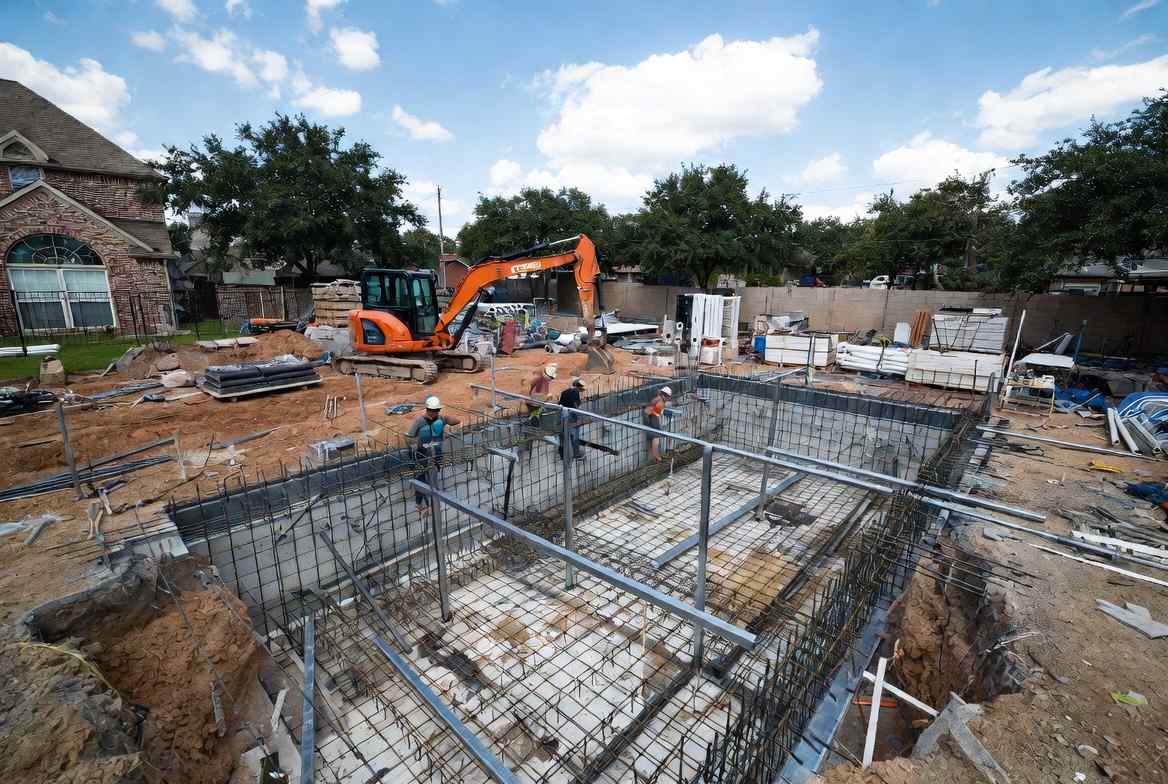
Gunite pool vs fiberglass pool is the first big decision every DFW homeowner faces when they decide to build. Both are solid options. Both will give you a beautiful pool that lasts decades. But they’re built differently, they cost differently, they maintain differently, and they age differently — especially in North Texas conditions. If you’re trying to figure out the best pool type for Texas, this gunite vs fiberglass comparison covers the 7 differences that actually matter when you’re writing the check.
The 7 Key Differences — Gunite Pool vs Fiberglass Pool
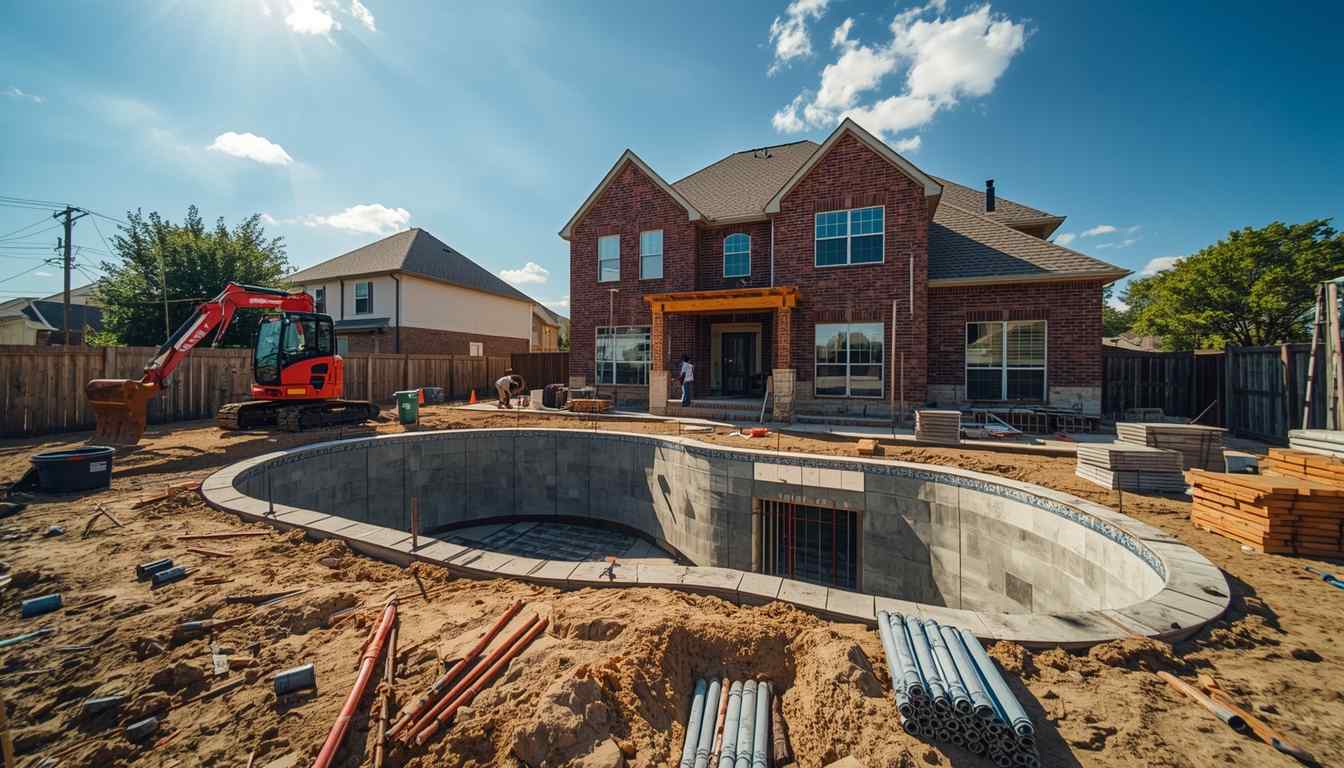
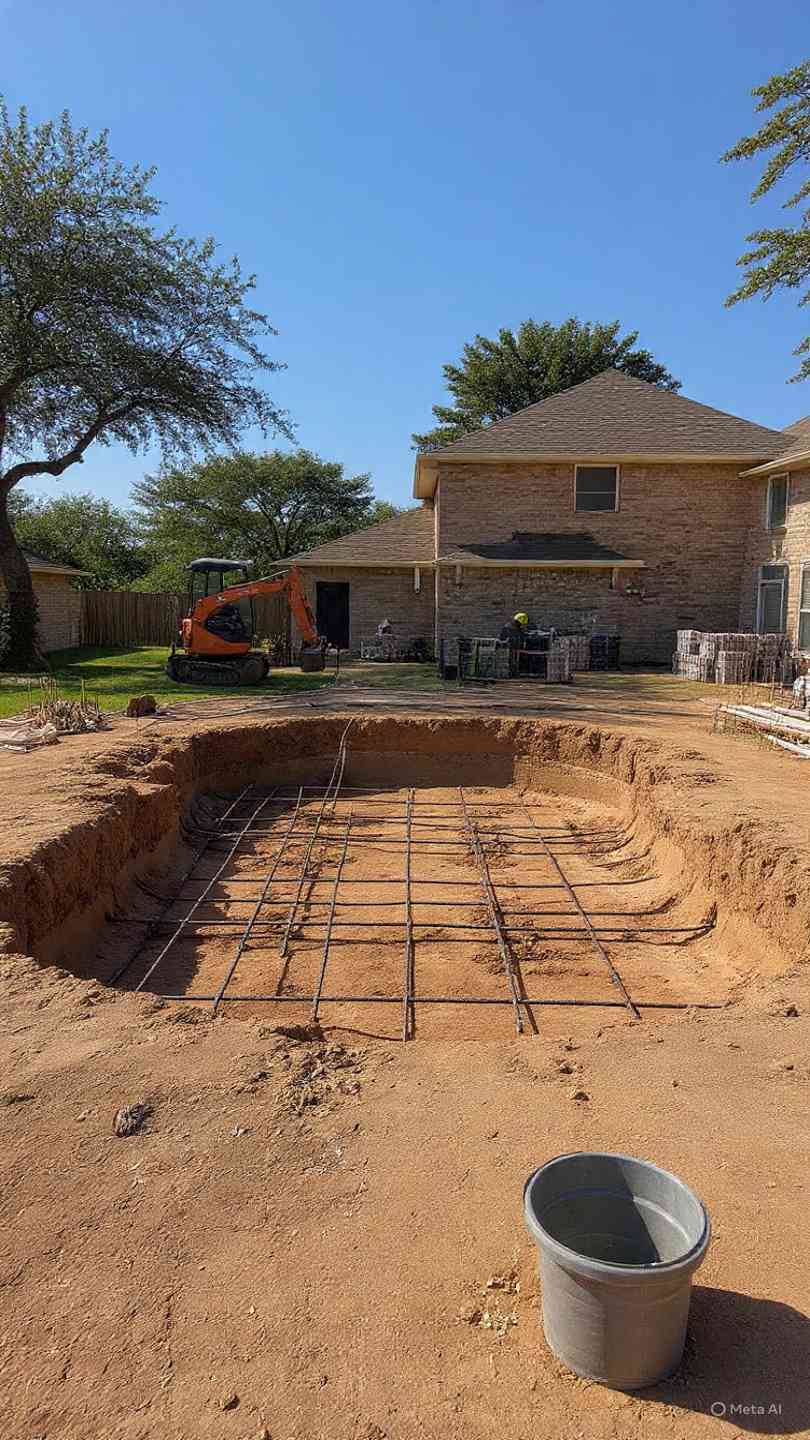
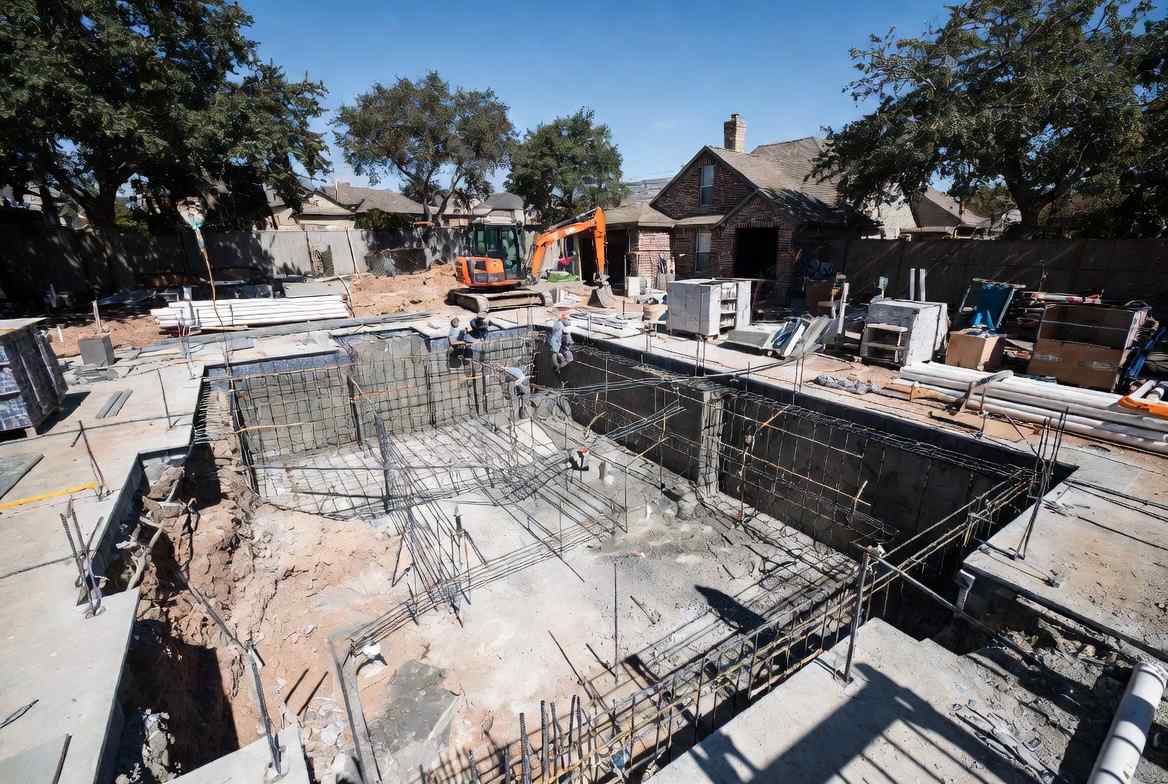
1. Customization. Gunite wins this one outright. Because gunite is sprayed concrete over rebar, your builder can create literally any shape, depth, size, or feature you want — freeform curves, tanning ledges, vanishing edges, integrated spas, you name it. Fiberglass pools come as pre-formed shells from a manufacturer, so you’re limited to their catalog of shapes and sizes. If you want a fully custom design, the gunite pool vs fiberglass pool decision is already made. If you’re happy picking from available shapes, fiberglass works great.
The Pool & Hot Tub Alliance notes that gunite accounts for the majority of custom residential builds in warm-climate markets like DFW.
2. Build time. Fiberglass wins big here. A fiberglass shell drops into the ground and the project is done in 3 to 6 weeks. Gunite takes 8 to 16 weeks — excavation, steel, plumbing, gunite spray, cure time, tile, coping, plaster, fill, startup. If you want to be swimming fast, fiberglass gets you there months sooner.
3. Cost. Fiberglass starts lower. A basic fiberglass pool in DFW runs $35,000 to $50,000 versus $45,000 to $60,000 for basic gunite. Mid-range fiberglass is $50,000 to $70,000 versus $60,000 to $85,000 for gunite. Premium builds push gunite well past $100,000 while fiberglass tops out around $90,000. HomeAdvisor’s pool construction data shows similar pricing trends nationally. Our Texas pool cost guide breaks down where every dollar goes for both types.
4. Maintenance. Fiberglass has a real edge here. The smooth gel coat surface resists algae growth, which means less brushing and fewer chemical demands. Gunite’s plaster surface is porous — algae grabs onto it easier, and it requires more frequent brushing and slightly higher chlorine levels. In DFW’s heat, that difference matters during summer when algae pressure is highest. Our fiberglass maintenance guide and inground pool maintenance guide cover the specific care each type needs.
5. Durability and lifespan. Gunite structures last 50+ years. The shell itself is incredibly strong — it handles DFW’s expansive clay soil movement better than fiberglass because minor cracks in plaster can be repaired without replacing the whole surface. Fiberglass shells last 25 to 30+ years, but if the gel coat cracks or the shell develops structural issues, repairs are more complex. Plaster on a gunite pool needs resurfacing every 10 to 15 years ($5,000 to $15,000), which is a cost fiberglass avoids.
The U.S. Department of Energy notes that both pool types benefit equally from covers and efficient equipment when it comes to long-term operating costs.
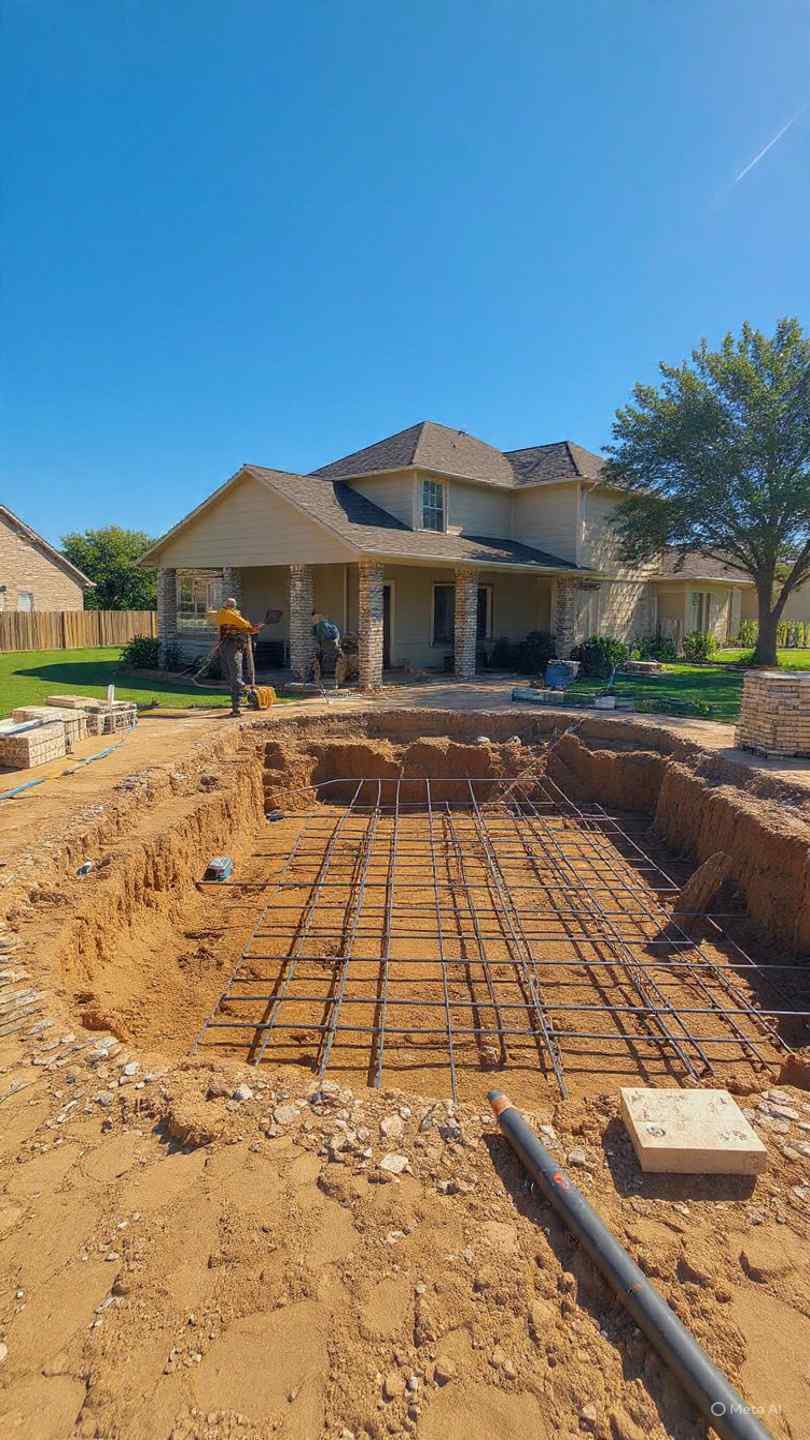
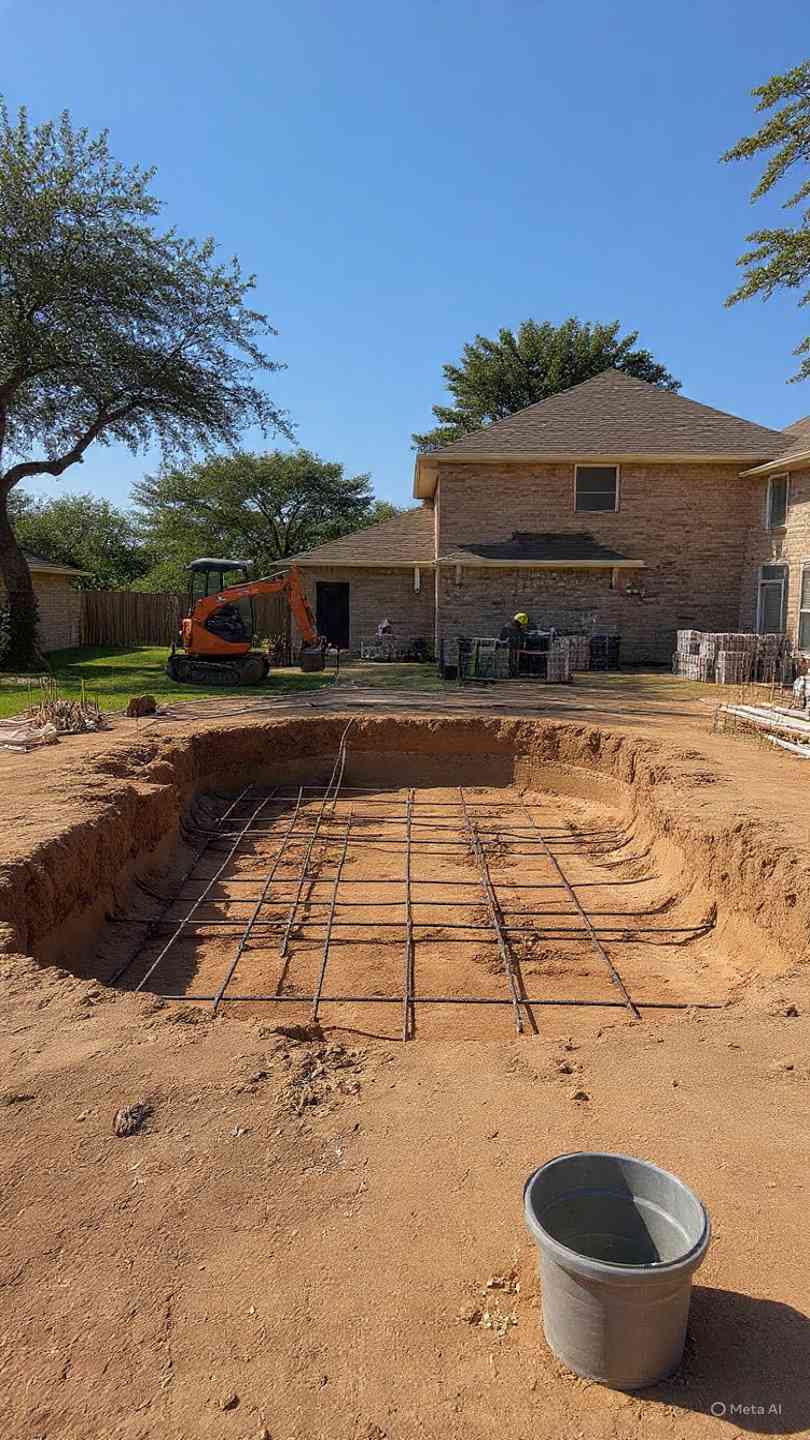
6. Surface feel and appearance. Fiberglass feels smoother underfoot — the gel coat is slick and easy on bare feet. Gunite with standard plaster can feel rougher, though pebble and quartz finishes close that gap significantly. Appearance-wise, gunite offers unlimited tile, coping, and finish options. Fiberglass colors and finishes are set by the manufacturer. If aesthetics and design control matter to you, gunite gives more options. If you want a smooth, comfortable surface out of the box, fiberglass delivers.
7. DFW-specific factors — the best pool type for Texas. North Texas has two conditions that influence the gunite vs fiberglass choice. First, our expansive clay soil shifts seasonally. Gunite’s rigid structure handles this well when properly engineered. Fiberglass shells can flex slightly, which is sometimes an advantage — but extreme shifting can cause the shell to pop or settle unevenly. Soil engineering matters for both types. Second, our hard water causes calcium scaling on both surfaces, but gunite’s porous plaster absorbs scale more visibly.
Our water chemistry guide covers managing hard water for either pool type. According to Texas Realtors data, both gunite and fiberglass pools add comparable value to DFW homes — the condition of the pool matters far more than the type when it comes to resale.
PoolBurg’s Honest Take on Gunite Pool vs Fiberglass Pool
If you want total design control, a resort-style build, or a pool that’ll last 50+ years with periodic resurfacing — gunite. If you want a faster install, lower upfront cost, easier maintenance, and you’re happy choosing from available shapes — fiberglass. Both are excellent choices for DFW. The best pool type for Texas is whichever one gets built right and maintained properly. Our maintenance services handle both with the same level of care.
People Also Ask
Is a gunite pool or fiberglass pool better for Texas?
Both work well in Texas. Gunite offers full customization and handles clay soil movement well. Fiberglass installs faster and requires less maintenance. The best pool type for Texas depends on your budget, design preferences, and maintenance commitment.
Is fiberglass cheaper than gunite in DFW?
Yes, fiberglass typically costs $10,000 to $20,000 less for comparable builds. Basic fiberglass starts around $35,000 versus $45,000 for gunite. But gunite offers more customization at higher price points.
Which pool type lasts longer?
Gunite structures last 50+ years. Fiberglass shells last 25 to 30+ years. However, gunite requires plaster resurfacing every 10 to 15 years, which is an ongoing cost that fiberglass avoids.
Does DFW clay soil affect pool type choice?
It’s a factor. Gunite handles soil movement with its rigid structure. Fiberglass can flex, which is sometimes beneficial but can cause problems with extreme shifting. Proper soil engineering is critical for both types in North Texas. Our deck repair guide covers how soil movement affects the area around any pool type.
Which pool type is easier to maintain?
Fiberglass. The smooth gel coat resists algae, requires less brushing, and uses slightly less chemicals. Gunite’s porous surface needs more regular brushing and higher chlorine attention, especially during DFW summers.
PoolBurg Maintains Every Pool Type Across DFW
Gunite, fiberglass, vinyl, above ground — we service them all with the same expertise. Building a new pool and not sure which direction to go? Contact PoolBurg for an honest conversation about what’s right for your yard, your budget, and your lifestyle. No sales pitch, just real advice.