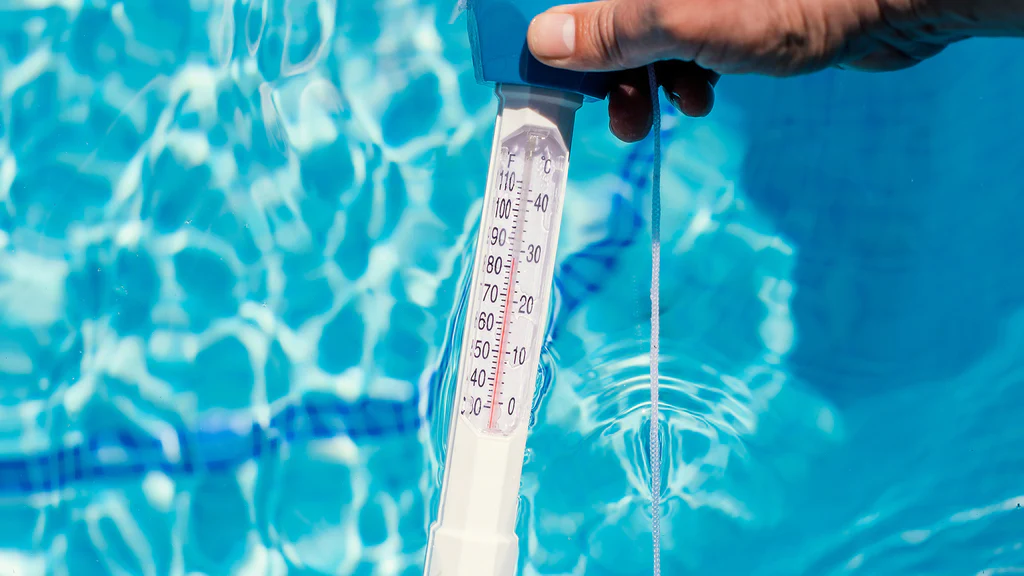
Every single week, I get asked the exact same question by new pool owners across North Texas. What is the ideal pool temperature? It sounds like a simple question, but the answer is actually incredibly subjective. A water temperature that feels perfectly refreshing to a lap swimmer might feel freezing to a toddler. If you are trying to figure out the best pool temperature for your backyard, this pool water temperature guide breaks down exactly what to aim for based on how you actually use your water.
What Temperature Should Your DFW Pool Be? It Depends on How You Use It
There is absolutely no single “perfect” temperature for everyone. Here in the DFW metroplex, our pools swing wildly from 50°F in the dead of winter to a bathwater-like 95°F during the peak summer heat—all without any active heating or cooling. Managing your temperature effectively is really about balancing comfort, swimmer safety, and energy efficiency.
Ideal Pool Temperatures by Use Case
Recreational swimming (adults): 78-84°F
This is the ultimate sweet spot for general swimming comfort. Most DFW pool owners target right around 82°F as their ideal pool temperature. It is cool enough to be incredibly refreshing on a 100°F Texas afternoon, but warm enough that you can float for hours without getting the shivers.
Children and families: 82-86°F
Kids lose body heat much faster than adults do. If the pool is too cold, their lips will turn blue and swim time is over in twenty minutes. For families with younger children, bumping the water up to 84°F or 86°F keeps everyone swimming longer and complaining less.
Lap swimming and exercise: 76-82°F
If you are swimming hard, you need cooler water to prevent dangerous overheating. Competitive swimmers usually prefer the water between 78°F and 80°F. Anything above 84°F during intense cardiovascular exercise can quickly lead to exhaustion and heat cramps.
Water therapy and rehabilitation: 84-88°F
Warmer water is fantastic for relaxing tight muscles and easing joint pain. This temperature range is highly recommended for arthritis relief, physical therapy, and chronic pain management. For a deeper dive into making your backyard fully therapeutic, check out our guide.
Spa / hot tub: 100-104°F
This is the standard operating temperature for a residential hot tub. You should NEVER exceed 104°F, as it creates an immediate health risk from overheating. The PHTA strictly advises that pregnant women, the elderly, and anyone with heart conditions should consult a doctor before soaking in water above 100°F.
Cold plunge: 45-60°F
This is a massively growing wellness trend across the DFW area. Cold immersion therapy is used for reducing inflammation, muscle recovery, and mental alertness. However, it is definitely not for everyone, so please consult a physician before starting any extreme cold exposure regimen.
DFW Pool Temperature Throughout the Year (Without Heating)
If you don’t have a heater, here is what your unheated water will feel like throughout the year:
- January-February: 45-55°F (Far too cold for most swimming)
- March: 55-68°F (Getting swimmable for the brave, but a heater is highly recommended)
- April: 65-78°F (Comfortable with solar heating or short heater use)
- May: 75-85°F (Prime swim season officially begins)
- June-August: 85-95°F (Your pool can actually get TOO HOT without proper management)
- September: 80-88°F (Still very warm, excellent prime swimming)
- October: 70-80°F (Comfortable, but a heater easily extends the season)
- November: 58-70°F (A heater is absolutely needed for comfortable swimming)
- December: 48-60°F (Heater required; most pools go completely unused without one)

Can a DFW Pool Get TOO HOT?
Yes—and honestly, it happens more than people realize. DFW pools routinely reach 90°F to 95°F in late July and August. When the water gets above 90°F, it becomes highly uncomfortable for exercise. Worse, your chlorine consumption increases dramatically, and algae growth accelerates exponentially. Water above 95°F poses a potential health risk during vigorous activity and creates an extremely high chemical demand just to keep the water safe.
How to cool a hot DFW pool
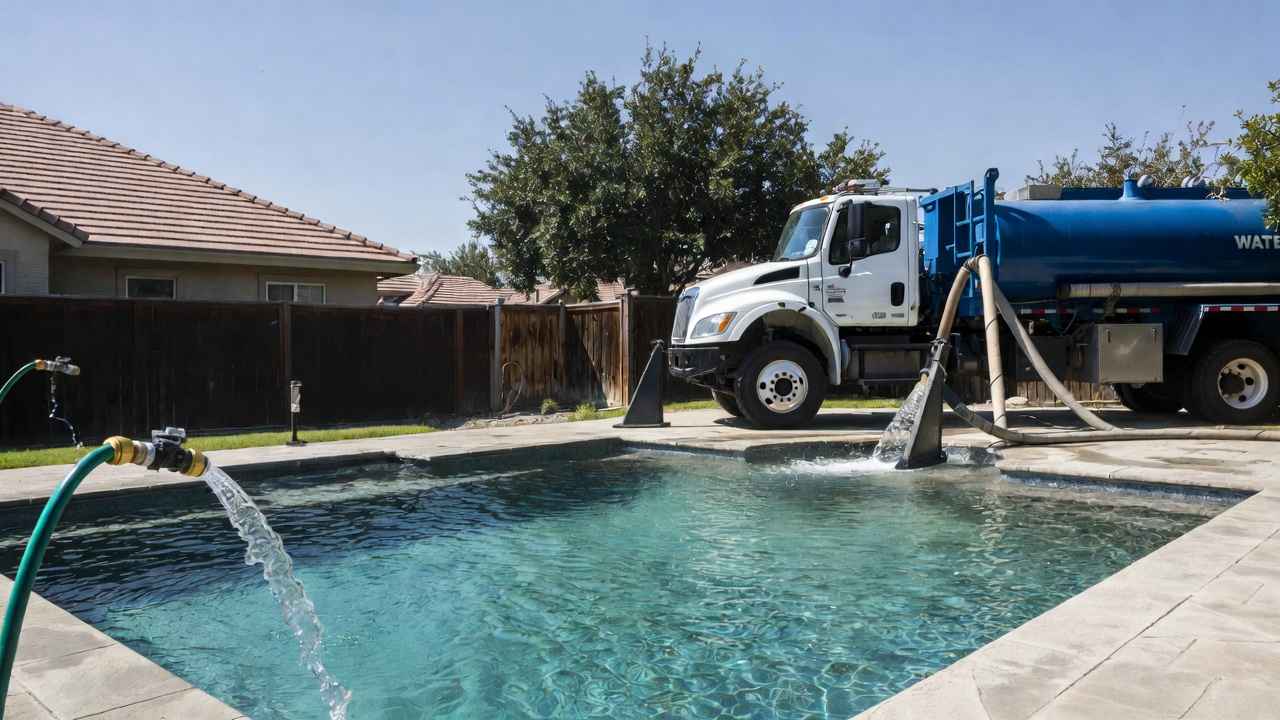
If your pool is too hot, you don’t necessarily need to buy a $3,000 pool chiller. Run your water features (like waterfalls or deck jets) at night. Evaporative cooling from the moving water can easily drop the temperature by 3 to 5 degrees. Run your pump overnight, as circulating water cools much faster than stagnant water. You can also point your return jets upward to increase surface agitation. If you want to read more about extreme heat effects, the highlights how extreme UV ratings in Texas destroy chlorine rapidly.
Chemical implications of hot water
Your chlorine consumption increases by 50% to 100% when the water crosses 90°F. The risk of a severe algae bloom skyrockets, and your pH will drift upward much faster. You must test your chemistry much more frequently during peak heat to prevent a green pool disaster.
Heating Your DFW Pool Efficiently
When to heat
To maximize your investment, heat the pool in March and April to get an early spring start, and again in October and November to extend the fall season.
Heating options ranked by DFW efficiency
A solar cover is virtually free to run. A heat pump will cost you roughly $50 to $150 a month to operate. A traditional gas heater is powerful but can run you $150 to $400 a month in utility costs. For a complete breakdown, see our comparison guide.
The hybrid approach
The absolute best setup for North Texas is combining a solar cover with an electric heat pump. The explicitly states that utilizing a physical cover drastically reduces overnight heat loss and evaporation. This hybrid method gives you a comfortable 10 to 11-month swimming season at a very reasonable monthly cost.
Temperature and Pool Chemistry — The Connection
- Higher temperature = faster chlorine burn-off. Every 10°F increase roughly doubles your chlorine consumption rate.
- Higher temperature = faster algae growth. Algae absolutely loves 85°F to 95°F water, which is exactly where DFW pools sit all summer.
- Higher temperature = faster pH drift. Salt systems in particular will aggressively push your pH higher in warm water.
- Higher temperature = more evaporation. Water loss increases significantly once the pool crosses 85°F.
This is exactly why North Texas pools require more chemicals, longer pump run times, and much more professional attention than pools up north.
People Also Ask
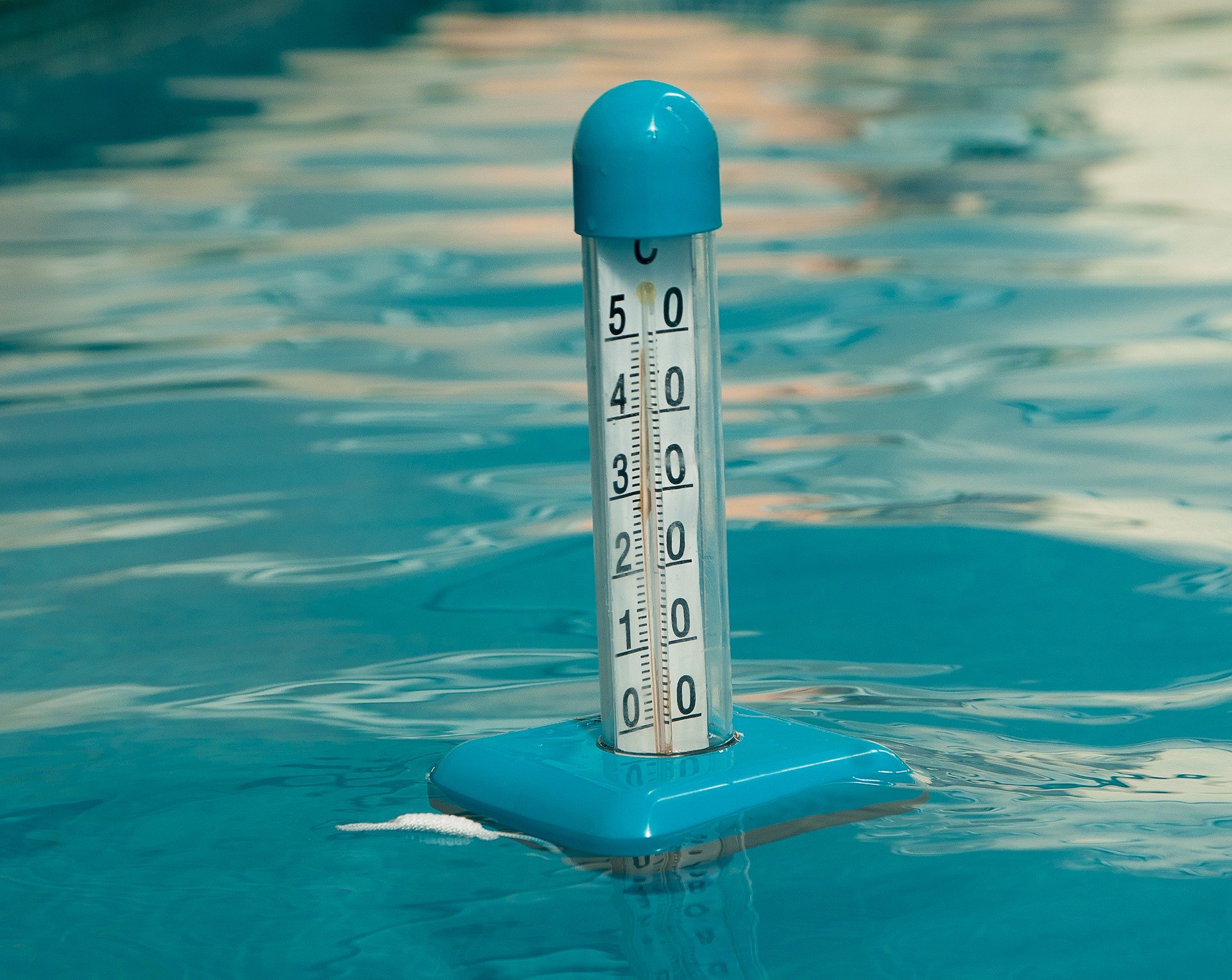
What temperature should a pool be in Texas?
For recreational swimming, the ideal pool temperature in Texas is usually between 82°F and 84°F. It provides a refreshing escape from the intense 100-degree ambient heat without feeling overly chilly.
Can a pool get too hot in DFW?
Absolutely. By August, many unshaded DFW pools reach 90°F to 95°F. Water this hot feels like a bathtub, burns through chlorine instantly, and provides the perfect breeding ground for aggressive algae blooms.
What is the best pool temperature for kids?
Children get cold much faster than adults, so the best pool temperature for kids is slightly warmer, usually between 84°F and 86°F.
How do I cool down my pool in summer?
The easiest free method is to run your water features (waterfalls and fountains) overnight. The cooler night air combined with surface agitation creates evaporative cooling, which can lower your water temperature by several degrees.
What pool temperature is best for exercise?
For active lap swimming or water aerobics, the ideal pool temperature is between 76°F and 82°F. Cooler water helps dissipate body heat and prevents you from dangerously overheating during a workout.
Does pool temperature affect chemical usage?
Yes, drastically. Warm water degrades sanitizer incredibly fast. A pool sitting at 90°F will consume nearly twice as much chlorine as a pool sitting at 80°F, requiring you to test and dose much more frequently.
PoolBurg Adjusts Chemistry for Your Pool’s Temperature
We know exactly how much Texas weather messes with your water balance. We use temperature-aware service protocols, meaning we actively adjust your chemical dosing based on the current water temperature at every single visit. Want comfortable water at the right temperature without the hassle? Contact PoolBurg for reliable and let us manage the chemistry to perfectly match your pool’s conditions.