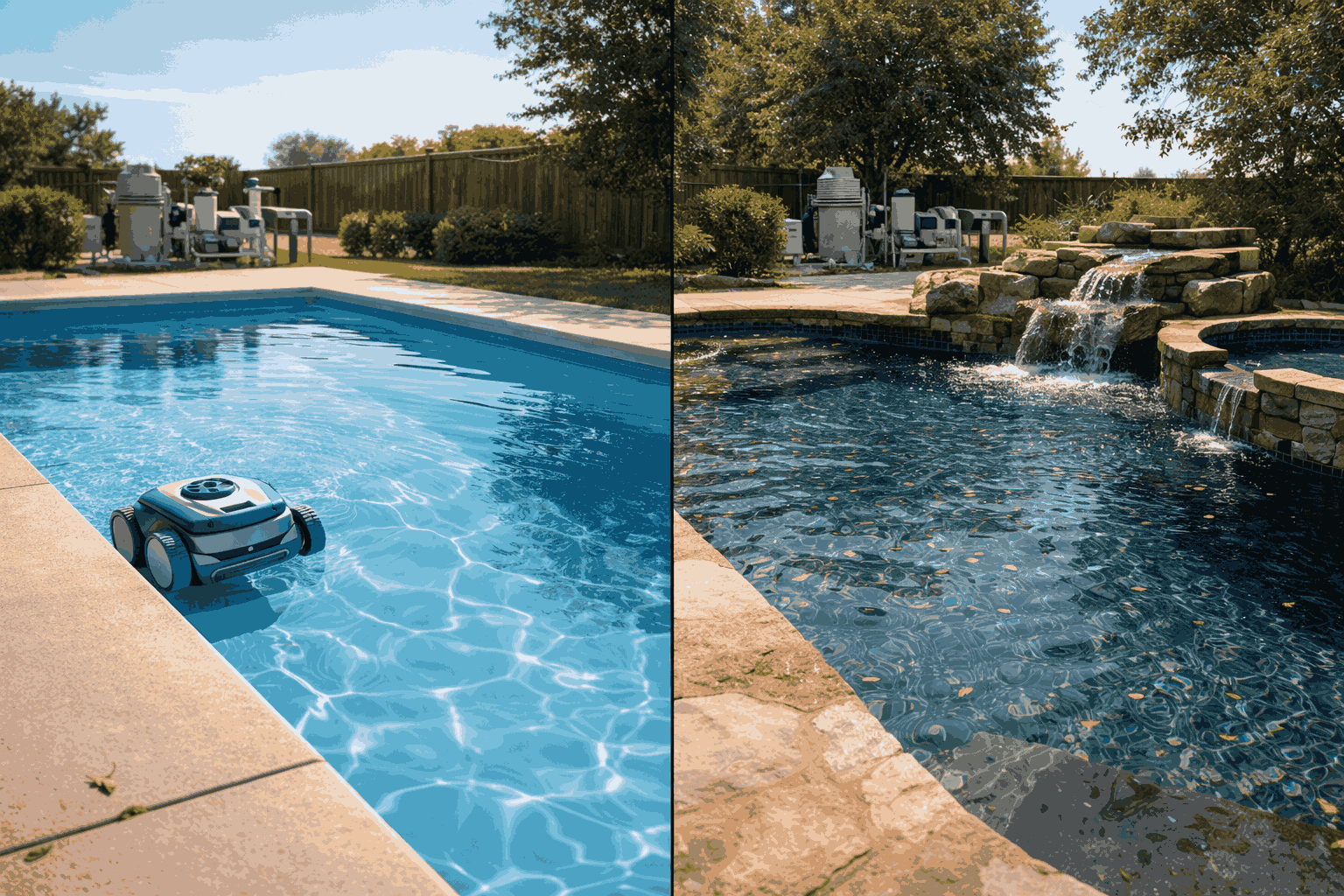
A low maintenance pool is the dream every pool buyer starts with, and it’s a promise every pool builder loves to make. But in North Texas, where summer heat pushes water temperatures into the 90s, hard water scales everything it touches, and winter freezes can crack equipment overnight, no pool is truly maintenance-free. Some pools are significantly easier to manage than others, though, and choosing the right type, the right equipment, and the right features can cut your weekly effort dramatically.
This is the honest low maintenance pool guide for DFW — what actually reduces work, what secretly adds it, and the ideal setup for the easiest pool maintenance in this market.
Does a Truly Low Maintenance Pool Exist in Texas?
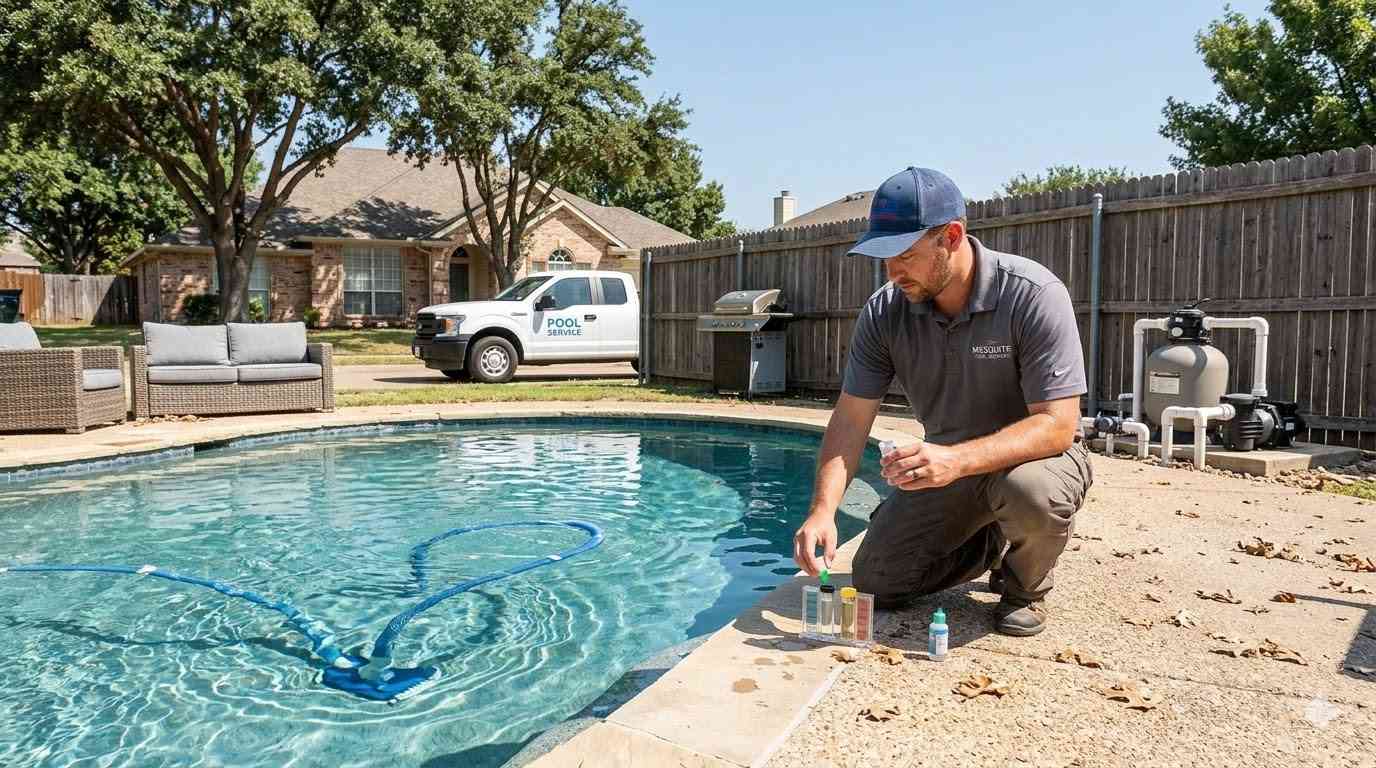
The honest answer is that no pool is no-maintenance, but some are genuinely easier than others. Every pool in North Texas needs chemical management because heat and UV destroy chlorine faster than in cooler climates. Every pool needs equipment monitoring because hard water from NTMWD water quality reports showing 200 to 300-plus ppm calcium damages components over time. And every pool needs freeze protection during the 20 to 30 nights per year when temperatures drop below freezing.
A low maintenance pool in DFW means something different than a low maintenance pool in San Diego. Here, the goal is reducing effort and frequency, not eliminating it. The easiest pool maintenance in this climate still requires attention — just significantly less of it with the right choices.
Pool Types Ranked by Maintenance Level in North Texas

1. Fiberglass Pools: Lowest Maintenance for DFW
Fiberglass is the closest thing to a low maintenance pool you’ll find in North Texas. The non-porous gel coat surface resists algae attachment, which means less brushing, less chemical absorption, and more stable water chemistry from week to week. You won’t need replastering because there’s no plaster. Chemical costs are lower because the smooth surface doesn’t consume sanitizer the way porous gunite does.
DFW-specific considerations still apply: you’ll still manage hard water calcium on the gel coat, UV exposure degrades the surface over decades, and the easiest pool maintenance schedule still includes weekly chemistry checks. But fiberglass makes every task faster and less frequent than the alternatives.
2. Vinyl Liner Pools: Low to Medium Maintenance
Vinyl liners offer a smooth, non-porous surface that’s easy to clean and resists algae almost as well as fiberglass. Chemical demand is lower than gunite, and the smooth surface means less scrubbing. The trade-off for this low maintenance pool option is liner replacement every 7 to 12 years at $3,000 to $7,000, puncture vulnerability, and limited shape customization. Vinyl liners are less common in DFW than gunite or fiberglass, but they’re a solid middle ground for homeowners prioritizing easiest pool maintenance.
3. Gunite and Plaster Pools: Highest Maintenance
Gunite is the most popular pool type in DFW and the highest maintenance. The porous plaster surface absorbs chemicals, harbors algae, and requires regular brushing to prevent algae from embedding in the texture. Chemical consumption is higher because the surface acts like a sponge. Resurfacing is needed every 10 to 15 years at $5,000 to $15,000.
Hard water in DFW accelerates plaster deterioration and calcium deposits roughen the surface faster than in softer-water markets. Gunite gives you unlimited design flexibility and is the industry standard here, but it’s the opposite of a low maintenance pool. The easiest pool maintenance for gunite owners comes from professional weekly service.
Pool Features That Reduce Maintenance
Variable Speed Pumps
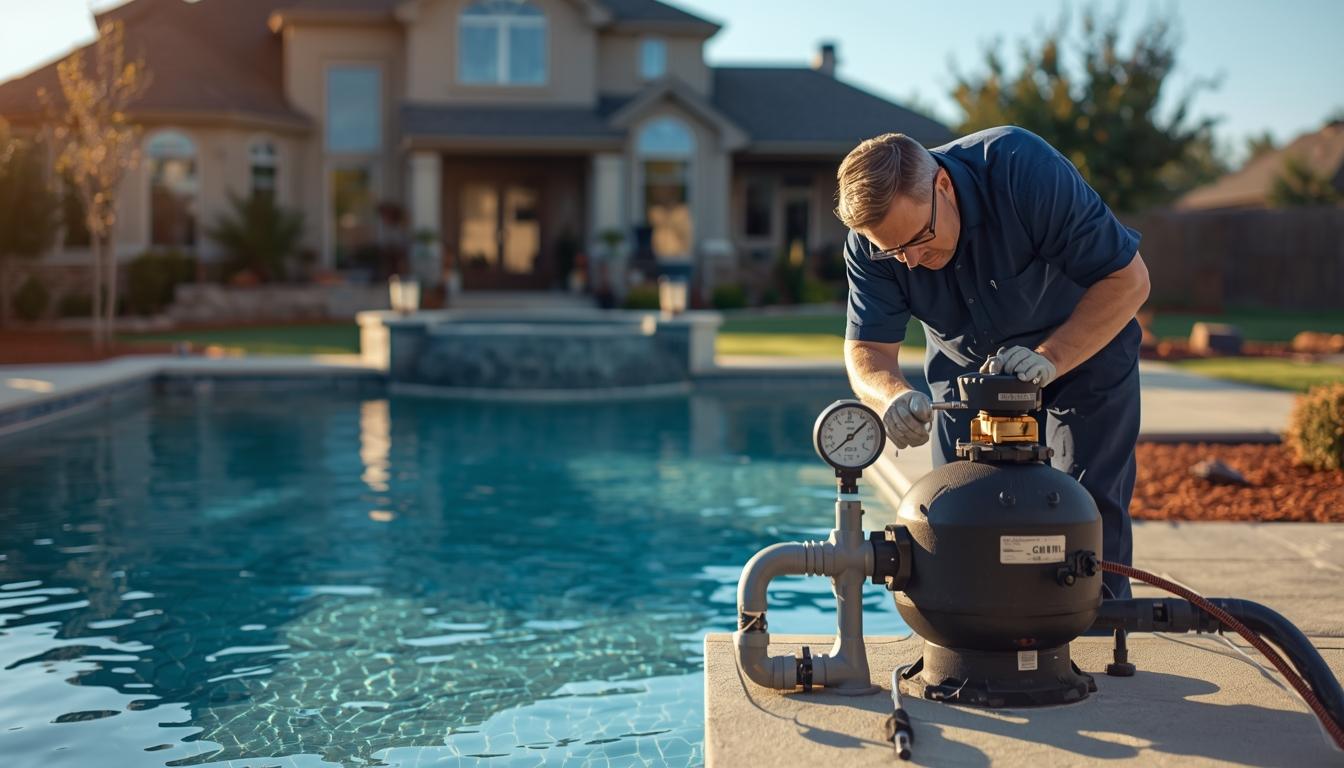
Better circulation at lower speeds means more consistent water chemistry and less algae growth. Department of Energy variable speed pump standards now require variable speed for new installations, and the energy savings of $400 to $800 per year make this the single best low maintenance pool investment.
Salt Water Chlorine Generators
Consistent, automated chlorine production eliminates the need to manually add chlorine every week. Salt systems produce chlorine continuously, keeping levels more stable than tablet or liquid dosing. The trade-off is salt cell cleaning and replacement every 3 to 5 years in hard water markets.
Robotic Pool Cleaners
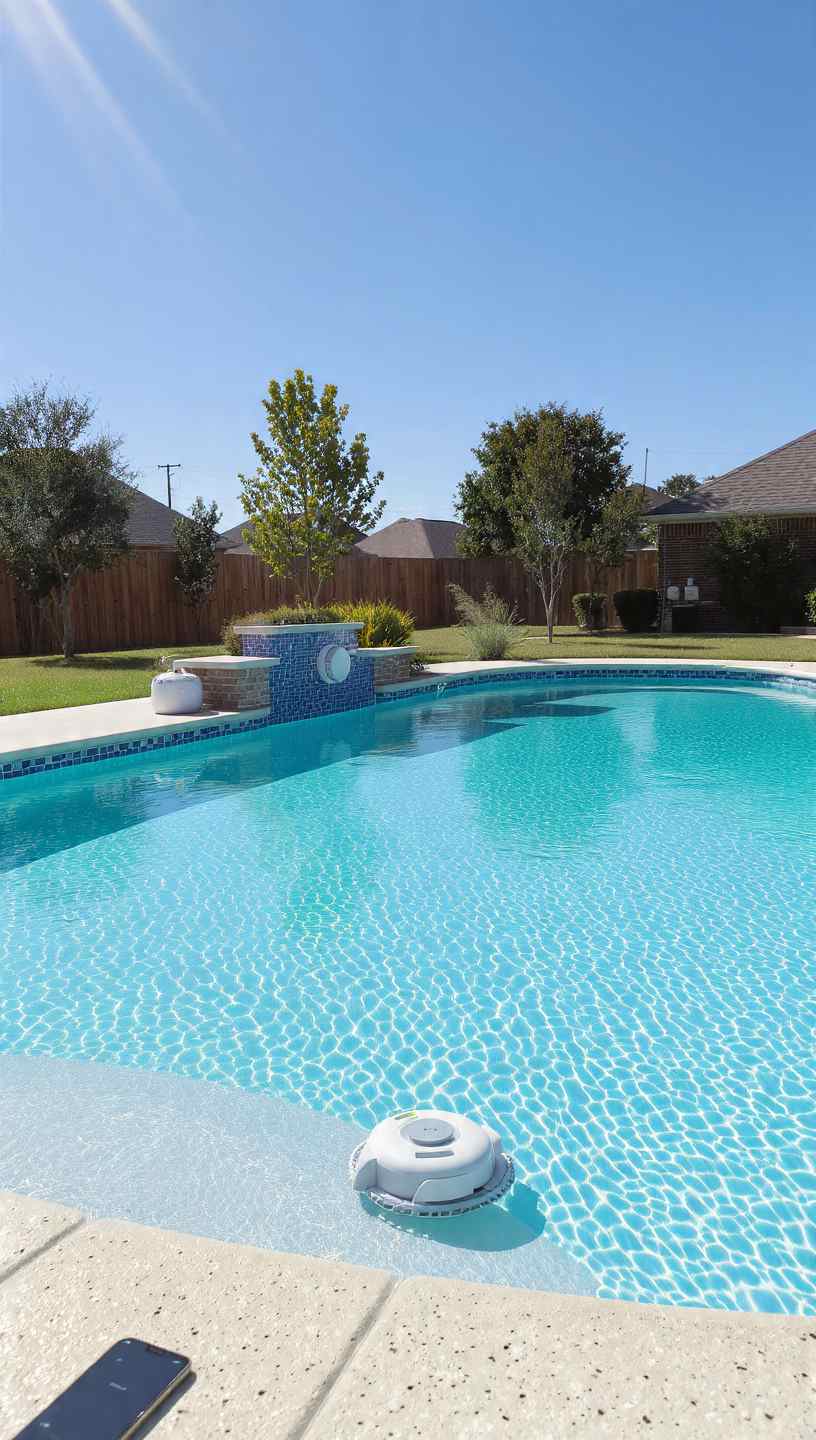
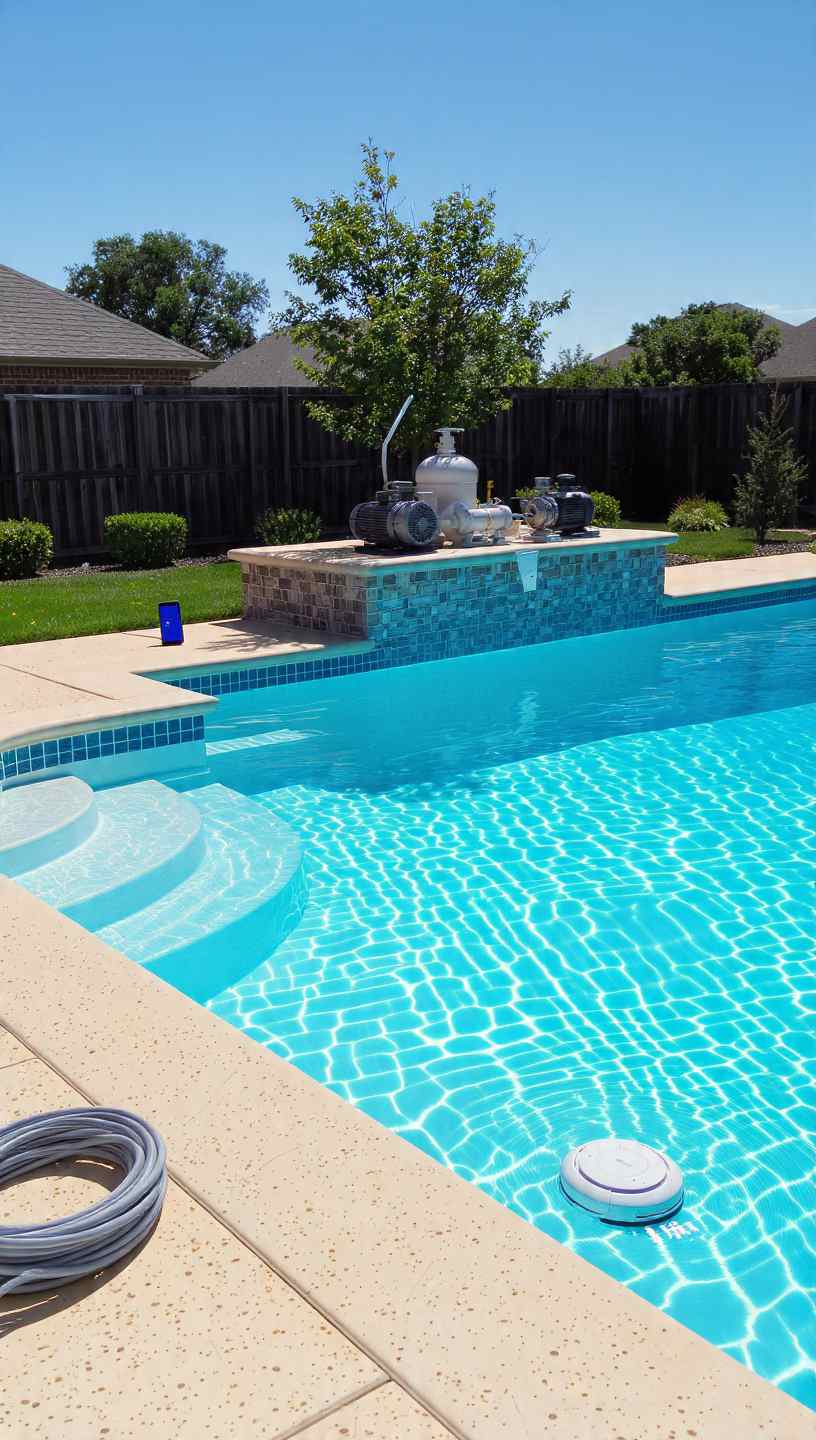
A quality robotic cleaner handles daily vacuuming and wall scrubbing automatically, dramatically reducing manual effort. For a low maintenance pool setup, a dedicated robotic cleaner is one of the best time-saving investments.
Pool Covers
Covers reduce evaporation by up to 90 percent according to the Pool and Hot Tub Alliance, cut chemical loss, keep debris out, and reduce heat loss. A pool cover turns a high-demand pool into a genuinely lower maintenance system.
Automation Systems
Pentair IntelliCenter, Jandy iAqualink, and Hayward OmniLogic automate pump schedules, heater activation, lighting, and chemical monitoring from a phone app. Automation removes the daily decision-making that makes pool ownership feel like work.
Oversized Filtration
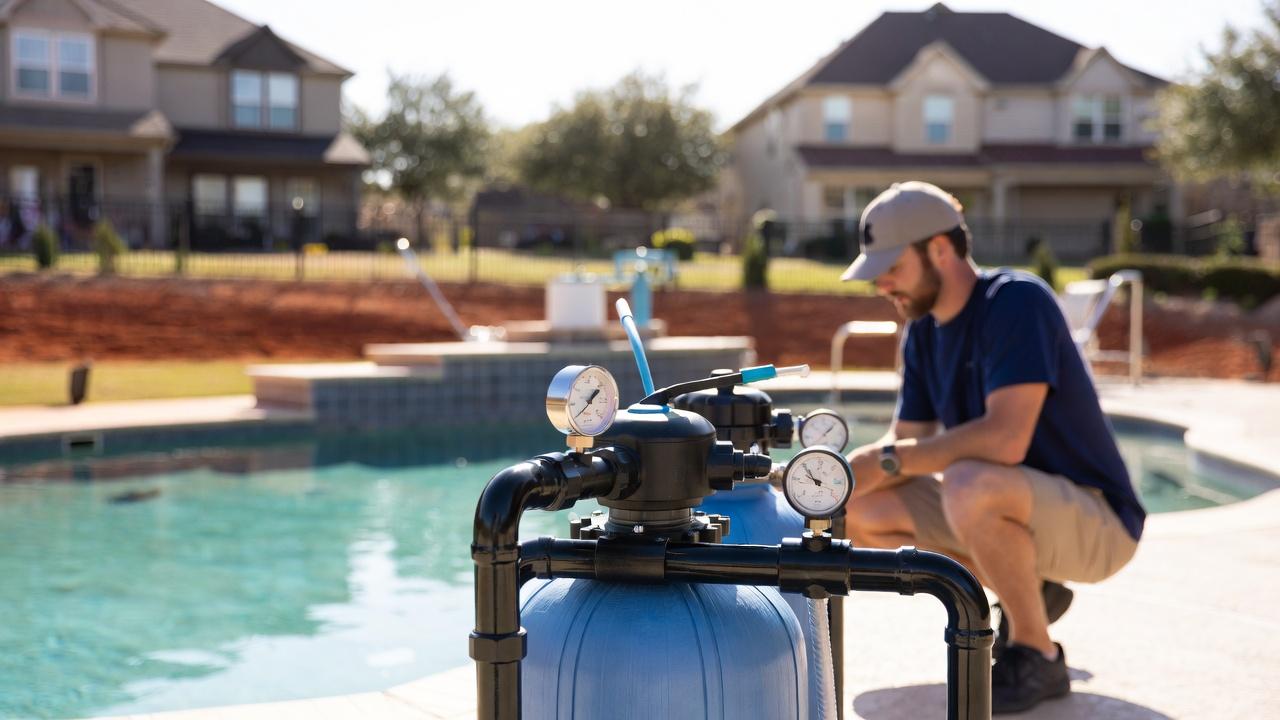
A filter sized larger than the minimum requirement for your pool volume cleans more effectively, runs at lower pressure, and needs cleaning less frequently. Oversizing your filter is a simple low maintenance pool upgrade that pays off at every service interval.
Pool Features That Increase Maintenance

Water Features
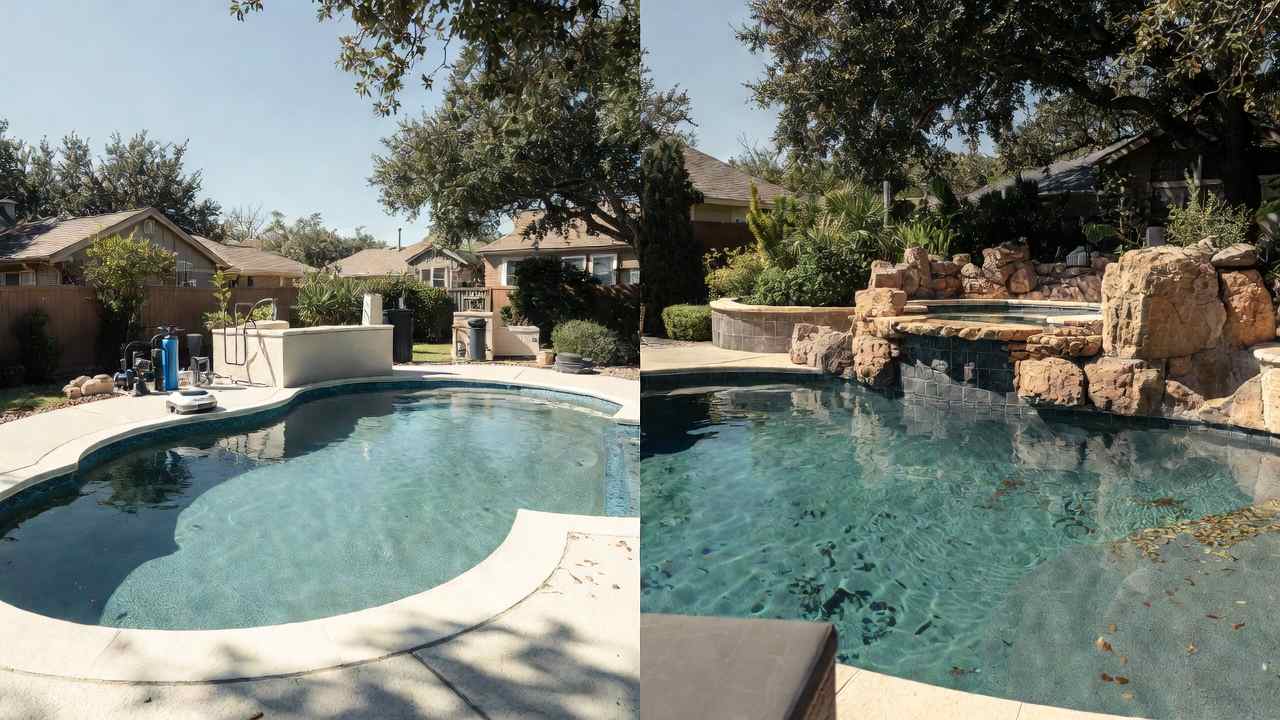
Waterfalls, sheer descents, and bubblers add plumbing complexity, increase aeration that drives pH up, and create splash zones that accelerate calcium deposition. Beautiful, but the opposite of easiest pool maintenance.
Rock Features and Grottos
Natural rock collects debris in crevices, harbors algae in textured surfaces, and creates hard-to-reach areas that need manual cleaning. Maintenance time increases significantly.
Shallow Tanning Ledges
Tanning ledges in Texas sun become algae hot spots because shallow water heats up faster and chlorine burns off more quickly in thin layers exposed to direct UV.
Dark-Colored Plaster
Dark plaster shows calcium scale more visibly and absorbs more heat, raising water temperature and increasing chemical demand. Not a low maintenance pool choice for DFW hard water.
Excessive Landscaping Near the Pool
Trees, bushes, and flowering plants within 10 feet of the pool edge create constant debris, pollen, and organic matter that feed algae and clog filters. The easiest pool maintenance comes from minimal landscaping near the water.
The Lowest Maintenance Pool Setup for North Texas
If you’re building or renovating and want the absolute low maintenance pool configuration for DFW, here’s what it looks like: fiberglass shell for algae resistance and no replastering, salt water chlorine generator for automated sanitizer production, variable speed pump sized correctly for the pool volume, oversized cartridge filter for less frequent cleaning, a dedicated robotic cleaner for automated daily vacuuming, a pool cover for off-season protection from evaporation and debris, an automation system like Pentair IntelliCenter for remote monitoring and scheduling, and minimal landscaping within 10 feet of the pool edge to reduce debris.
This setup reduces your personal effort to 15 to 20 minutes per week of basic checks, plus monthly professional service for chemistry verification and equipment inspection. That’s as close to the easiest pool maintenance as DFW conditions allow.
People Also Ask About Low Maintenance Pools
What type of pool requires the least maintenance?
Fiberglass. The non-porous gel coat surface resists algae, absorbs fewer chemicals, and never needs replastering. It’s the closest thing to a low maintenance pool available in North Texas.
Are fiberglass pools really low maintenance?
Lower maintenance than gunite or vinyl, yes. They still need weekly chemical testing, pump runtime, filter service, and hard water management in DFW. But every task takes less time and happens less frequently than with other pool types.
Is a salt water pool less maintenance than chlorine?
It automates chlorine production, which eliminates manual chlorine dosing. But salt systems add cell cleaning, pH management from salt’s natural pH rise, and cell replacement every 3 to 5 years. Net effort is slightly lower for the easiest pool maintenance but not dramatically less.
What’s the easiest pool to maintain in Texas?
A fiberglass pool with a salt water system, variable speed pump, robotic cleaner, automation, and minimal surrounding landscaping. This combination gives you the lowest weekly effort while still handling DFW’s hard water and heat demands.
How can I make my existing pool lower maintenance?
Start with a variable speed pump upgrade for better circulation and energy savings. Add a robotic cleaner to eliminate manual vacuuming. Consider a salt water conversion for automated chlorination. Use a pool cover when the pool isn’t in use. And hire weekly professional service — that’s the single fastest way to turn any pool into a low maintenance pool from your perspective.
PoolBurg Makes Any Pool Low Maintenance — That’s Our Job
PoolBurg provides weekly service across all 17 North Texas cities that turns even the highest-maintenance gunite pool into a low maintenance pool from your perspective. We handle the chemistry, the cleaning, the equipment monitoring, and the problem-solving so you don’t have to. Whether you’ve got a fiberglass pool that needs minimal attention or a 20-year-old gunite pool with a full spa and water features, the easiest pool maintenance for you is letting PoolBurg handle everything.
Want a truly low maintenance pool experience? Let PoolBurg handle everything.
Weekly service, chemicals included, equipment monitoring, and the peace of mind that your pool is always ready.
Visit poolburg.com or call us today.