Your pool after a storm probably looks rough. DFW gets hit with severe thunderstorms, hail, straight-line winds, and the occasional tornado from March through October, and every single one of those events affects your pool. Sometimes it’s just a chemistry shift. Sometimes it’s branches in the water and equipment knocked sideways. Either way, what you do in the first 24 hours makes the difference between a quick recovery and an expensive mess. Here’s your pool maintenance after storm game plan.
Post-Storm Pool Checklist — Do This Within 24 Hours
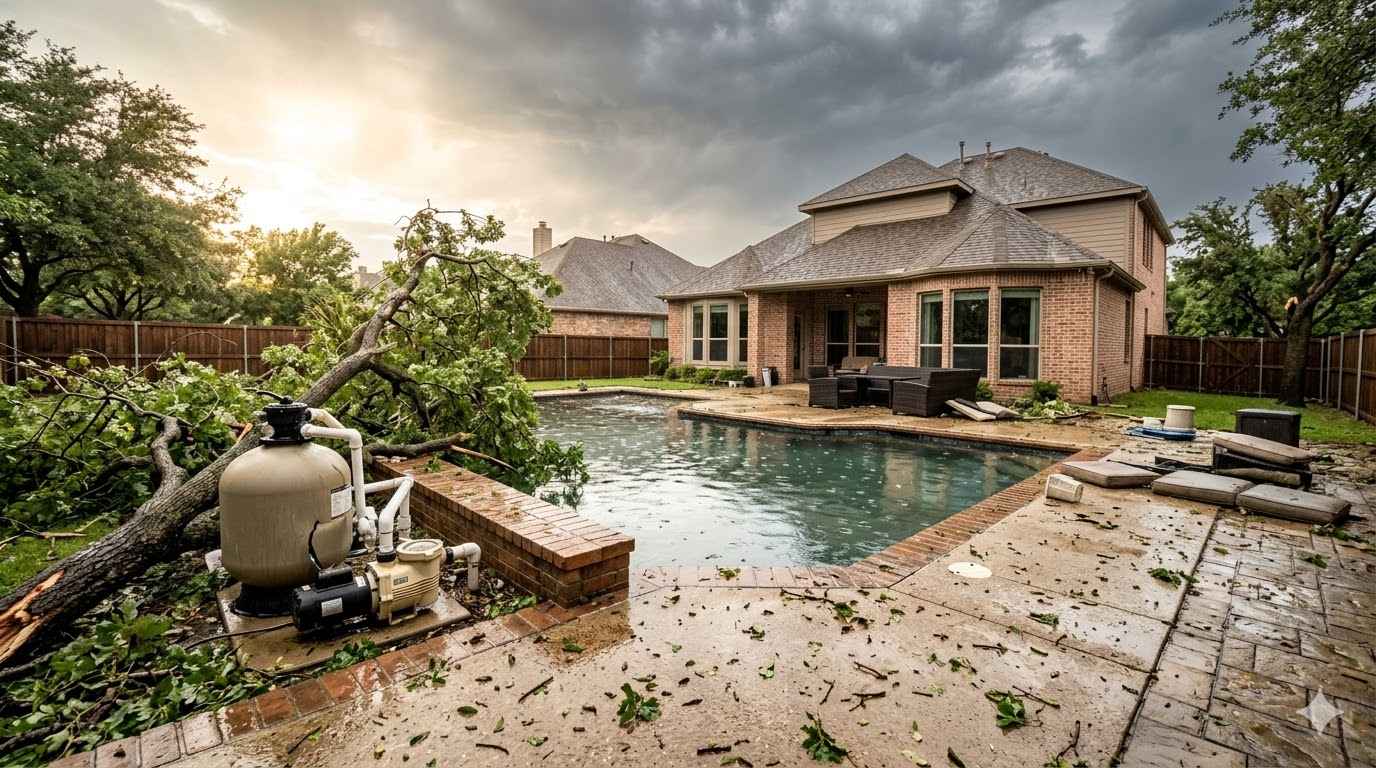
Safety first. Do not walk into the pool area if power lines are down or water is touching electrical equipment. If you see sparking, smell gas, or notice flooding near the equipment pad, stay back and call 911. The National Weather Service reminds homeowners that downed power lines can energize water and wet ground — this is not something to mess with. Check fencing, decking, and enclosures for structural damage before you get close to anything.
Remove large debris. Grab a leaf net and pull branches, leaves, and anything else off the surface. Clear out the skimmer baskets and pump strainer basket. Clean debris off the equipment pad area. Do not run the pump until those baskets are clear — debris can jam the impeller and cause real damage.
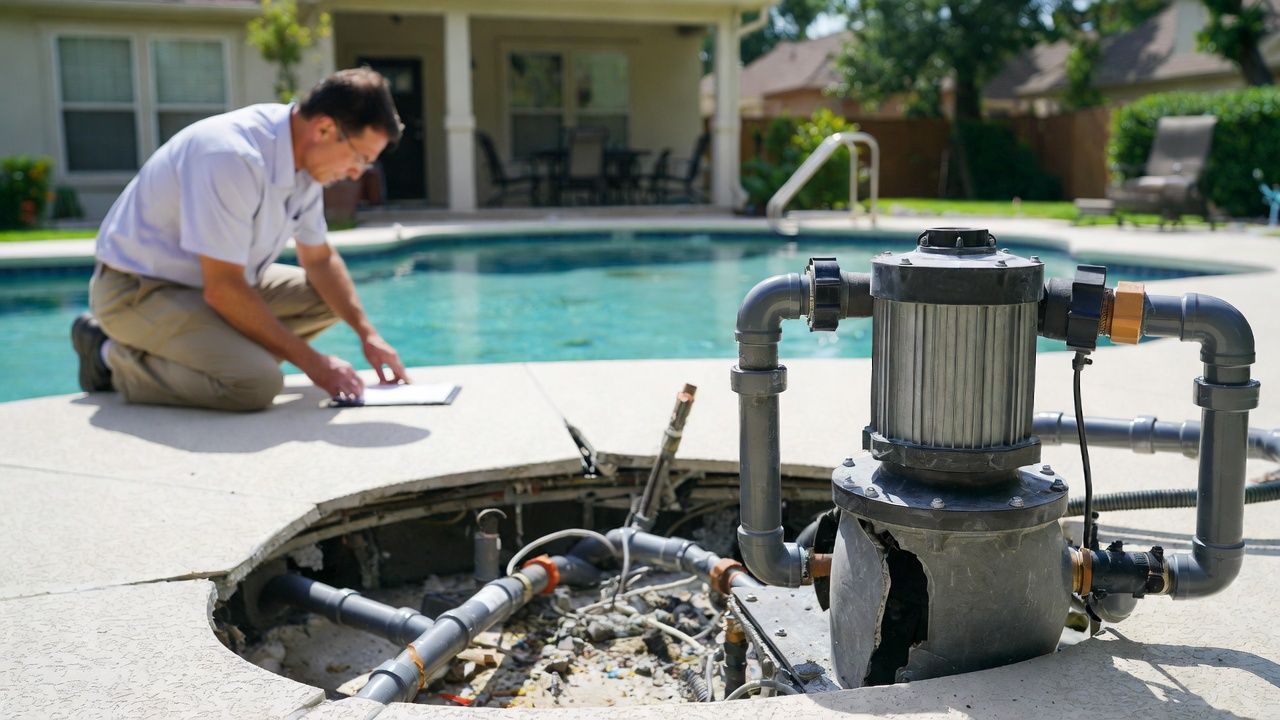
Check equipment. Walk the equipment pad and visually inspect the pump, filter, heater, and all plumbing connections. Look for cracked housings, displaced covers, or anything that shifted. Try priming the pump and listen for unusual sounds. If any equipment was submerged in floodwater, do not turn it on — call a professional first. Our damaged equipment guide covers what to look for.
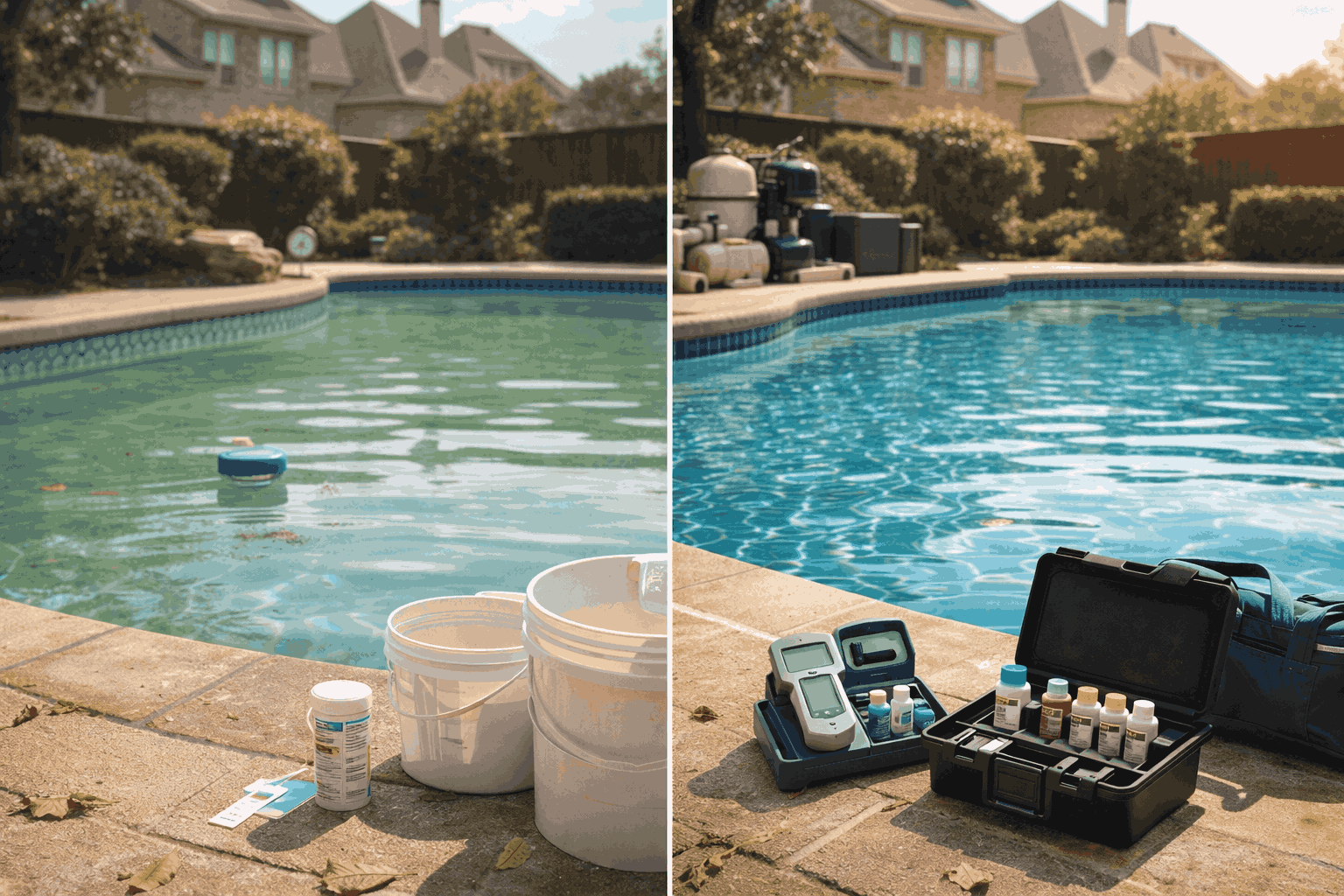
Shock the pool immediately. Heavy rain dumps untreated water into your pool — a 2-inch rainstorm on a 15,000-gallon pool adds roughly 1,000 gallons of rainwater carrying phosphates, organics, and bacteria from runoff. Your chlorine has almost certainly crashed. Don’t wait to test first if the rain was heavy — hit it with a strong dose of liquid chlorine now, test after. The CDC’s healthy swimming guidelines stress that proper sanitation after contamination events is critical for water safety. Our chlorine shock guide has the dosing details.
Run the pump 24 to 48 hours straight. Circulation and filtration are doing the heavy lifting for your pool care after heavy rain Texas recovery. Clean the filter after the first 24 hours of continuous running — it’ll be loaded.
Retest and balance within 48 hours. Run a full panel: chlorine, pH, alkalinity, calcium hardness, CYA, and salt if you have a salt system. Rain is slightly acidic and dilutes everything — pH and alkalinity probably dropped, salt levels are lower, and stabilizer may need a bump. Our water testing guide walks through target ranges for every parameter.
After Hail — Special Concerns for Pool After a Storm

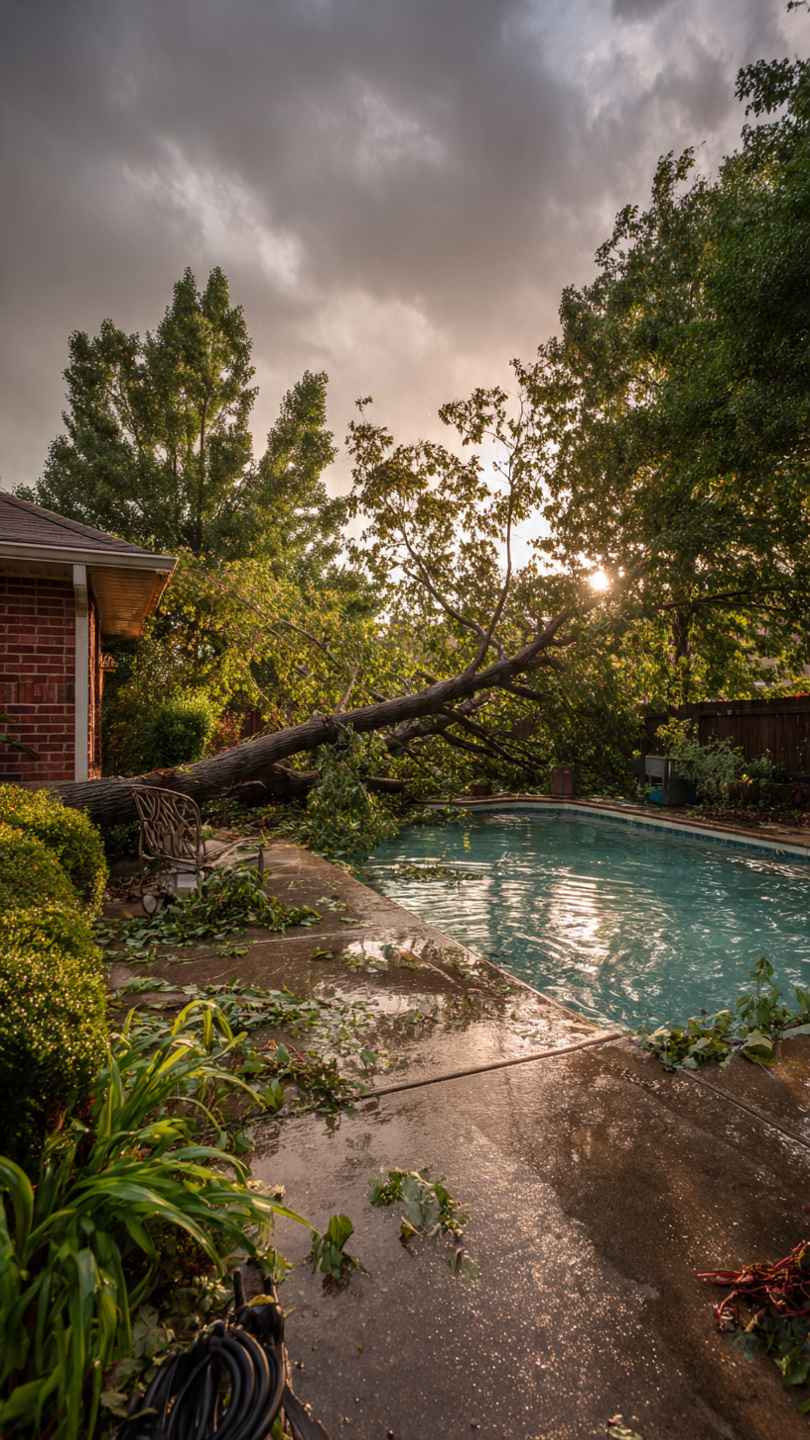
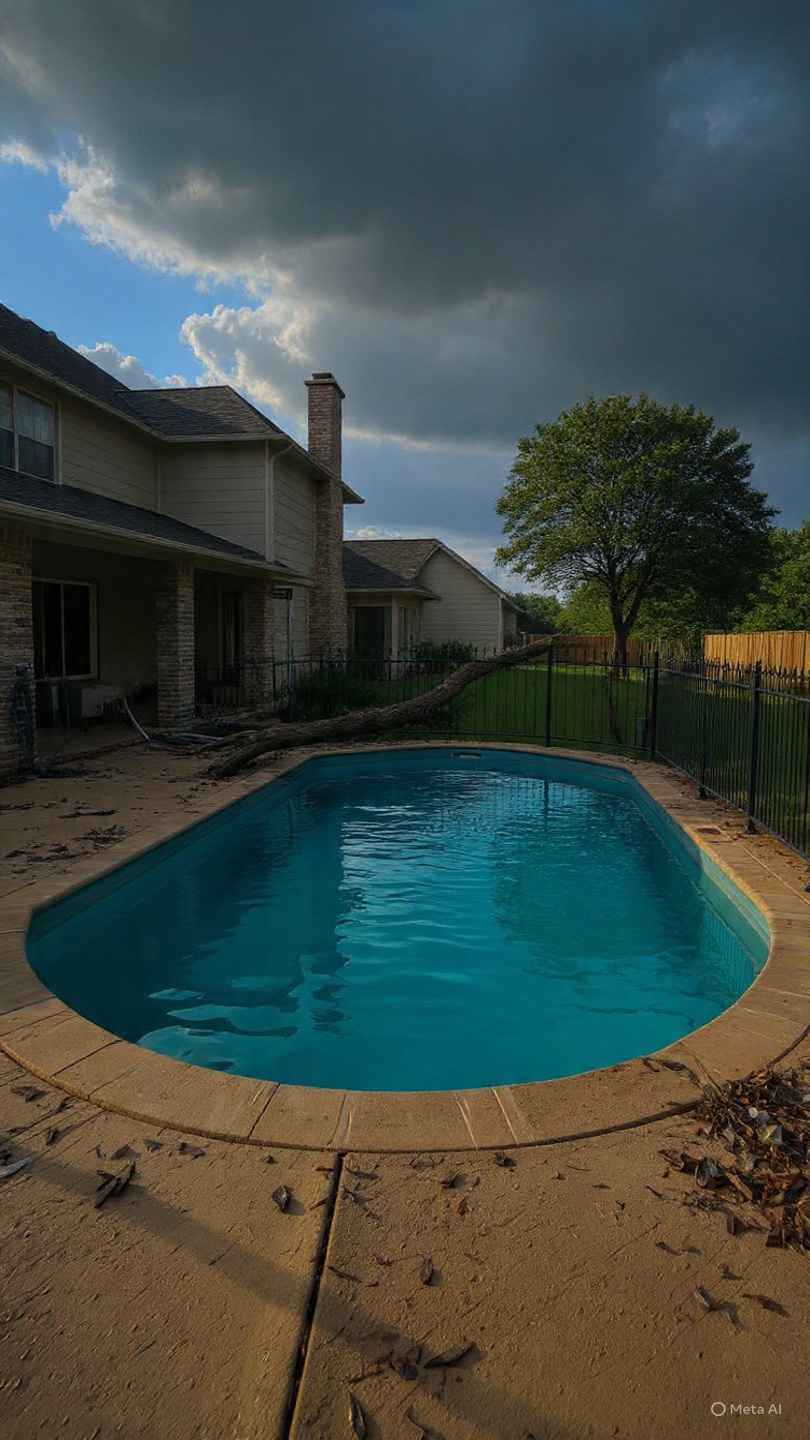
DFW hail is no joke. Check heat pump fan housings for dents, filter lids for cracks, and automation panel covers for impact damage. Inspect waterline tile and coping for chips. If you have solar panels, check those too. Photograph everything immediately with dates and storm details — you’ll need that documentation if you file an insurance claim. Texas Department of Insurance has guidance on filing storm-related property claims. Our pool insurance guide covers what’s typically covered and what’s not.
After High Winds — Debris and Tree Damage
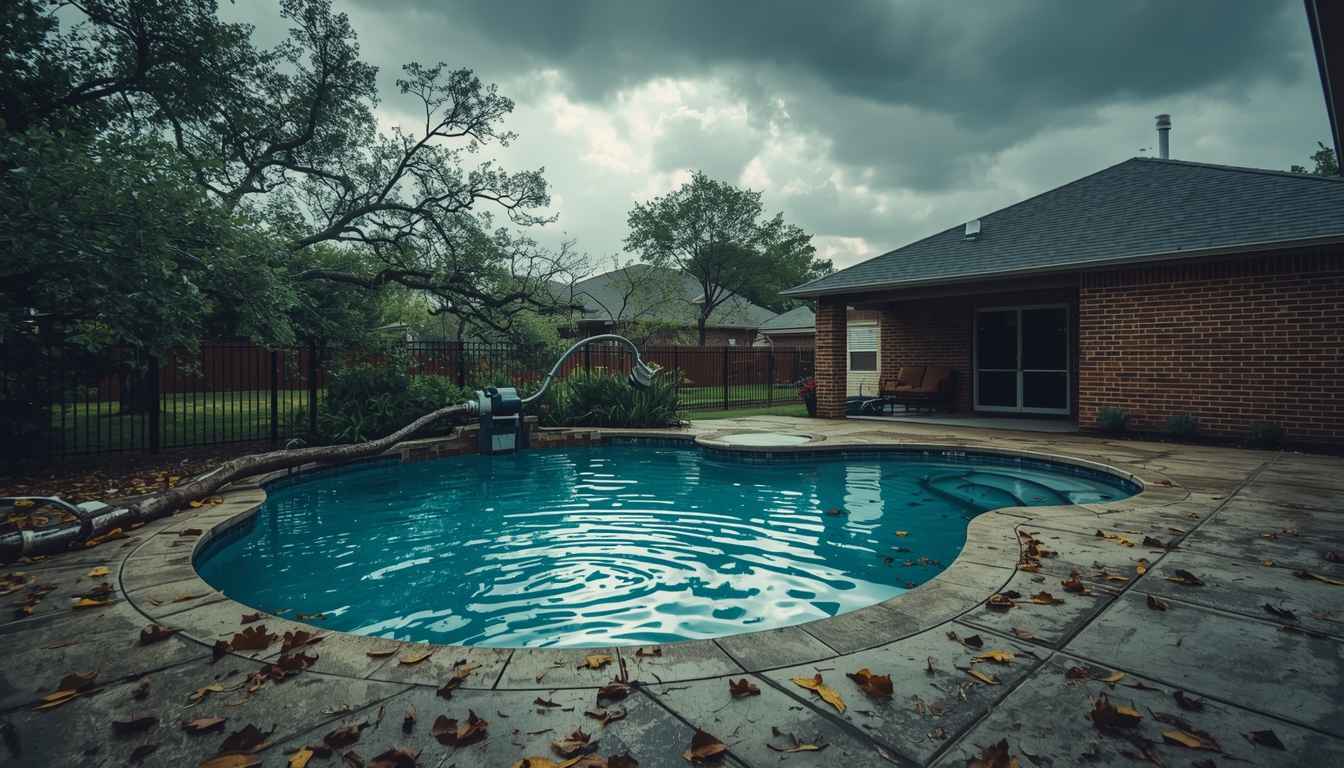
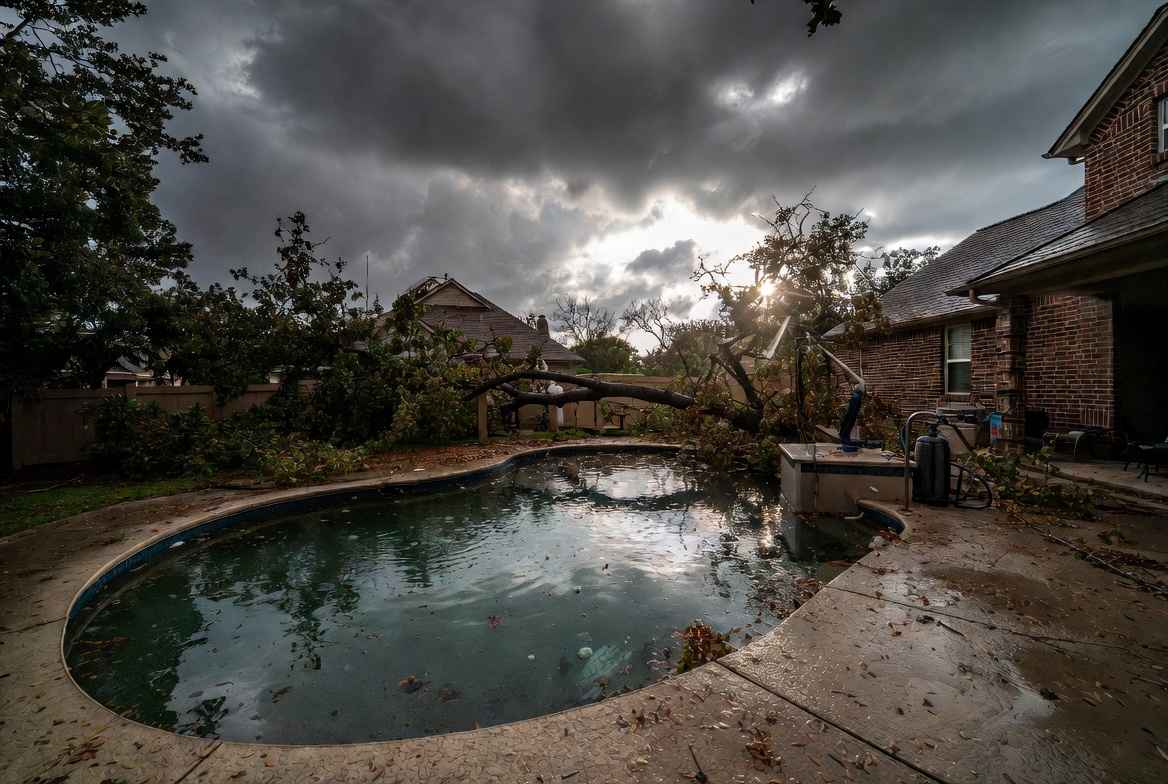
When removing tree branches from the pool, lift them straight out — dragging branches across plaster scratches the surface. If a tree fell on your equipment, don’t move it yourself, especially if it’s touching electrical components. Call a tree service and a pool pro, and document everything for insurance before anything gets moved. After a major wind event, you may need to clean the filter 2 to 3 times in 48 hours. For heavy bottom debris, vacuum to waste so you bypass the filter entirely. Our maintenance tips page covers the vacuum-to-waste method.
After Flooding — When It Gets Serious
If floodwater entered your pool, treat it as contaminated — sewage, chemicals, bacteria, all of it. Do not swim. Triple shock at minimum, run the filter nonstop, and get a professional water test before anyone gets back in. Equipment that was submerged needs professional inspection before use — flood silt inside motors and electrical components creates failures and safety hazards. Also check for new cracks in the pool shell, deck shifting, or coping separation. Flooding moves soil, and in North Texas clay soil shifts are already a constant concern. The FEMA flood insurance page has resources if damage is extensive.
People Also Ask
What should I do to my pool after a storm?
Check for safety hazards first, remove debris, clear baskets, shock the water, run the pump 24 to 48 hours, and rebalance chemistry. Our full pool after a storm checklist above covers every step.
Does rain ruin pool chemistry?
It absolutely shifts it. Rain dilutes chlorine, drops pH and alkalinity, lowers salt levels, and introduces phosphates and contaminants. Even a moderate rainstorm requires retesting and adjusting.
Can hail damage my pool equipment?
Yes. Hail dents fan housings, cracks filter lids, damages panel covers, and can chip tile and coping. Document and photograph everything for insurance purposes.
How long should I run my pump after a storm?
24 to 48 hours continuously. This gives filtration time to process the debris and contamination. Clean the filter after the first 24 hours.
Should I shock my pool after heavy rain?
Yes, and don’t wait. Heavy rain crashes chlorine and introduces contaminants. Shock first, test after. Our shock treatment guide has dosing amounts.
PoolBurg’s Post-Storm Recovery — We Respond Fast
Storm just hit and your pool needs help? Call PoolBurg for post-storm pool recovery across DFW. Equipment inspection, chemistry correction, debris removal, and full recovery service — we’ll get your pool back to safe and clear.