
Pool chiller repair in Dallas typically costs $150 to $3,500, depending on the type of repair needed . Simple electrical repairs like capacitor or sensor replacement run $150 to $500. Moderate repairs such as fan motor or control board issues cost $500 to $1,500. Major repairs like compressor or coil replacement range from $1,500 to $3,500+ .
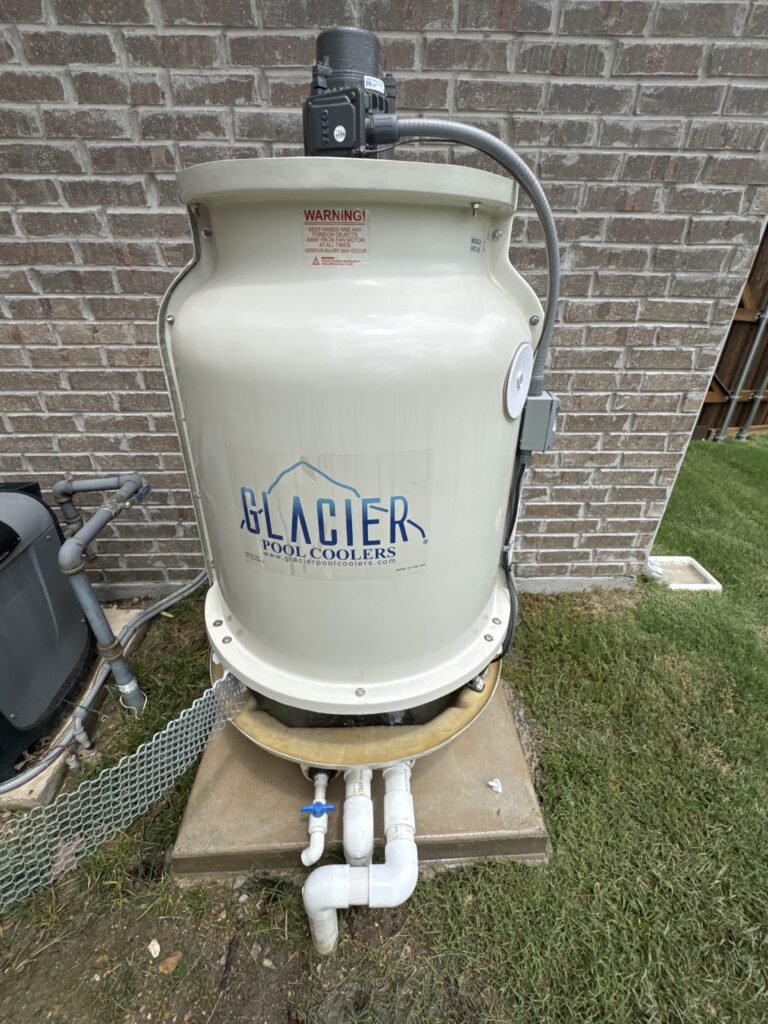
Professional pool chiller repair to restore proper cooling and system performance. A pool chiller is essentially an air conditioner for your pool water. While most people are familiar with pool heaters, chillers remove heat from your pool water to maintain comfortable swimming temperatures during hot weather. This becomes especially important in North Texas where summer temperatures regularly exceed 95°F, turning pool water into an uncomfortably warm bath-like 90-95°F or higher without cooling intervention.
A pool chiller is essentially an air conditioner for your pool water. While most people are familiar with pool heaters that warm water, chillers perform the opposite function they remove heat from your pool water to maintain comfortable swimming temperatures during hot weather. This becomes especially important in regions where summer temperatures regularly exceed 90°F, as pool water can quickly become bath-like and uncomfortable, sometimes reaching 90-95°F or higher without cooling intervention.
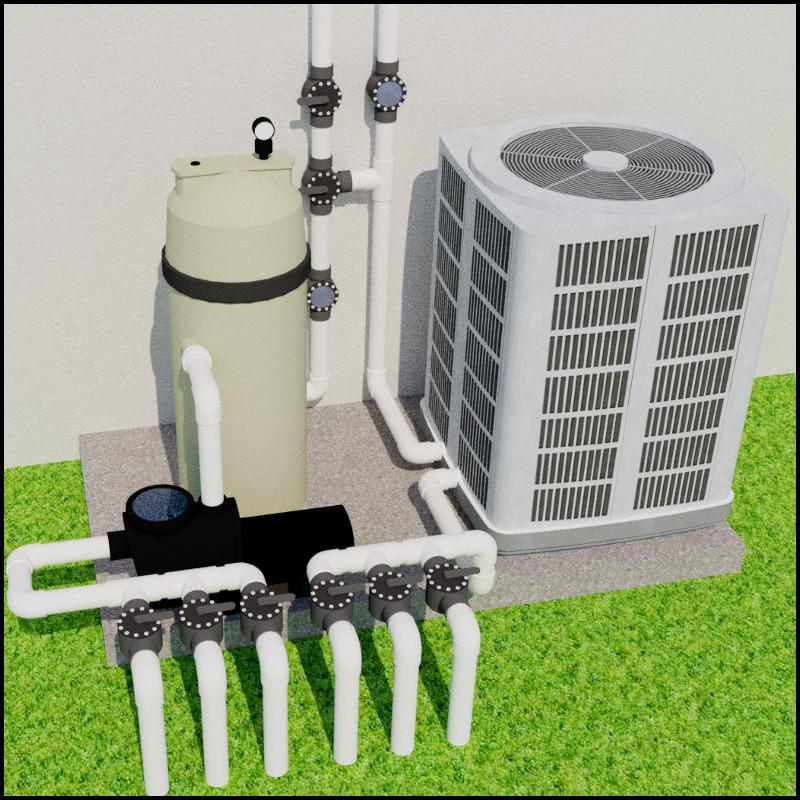
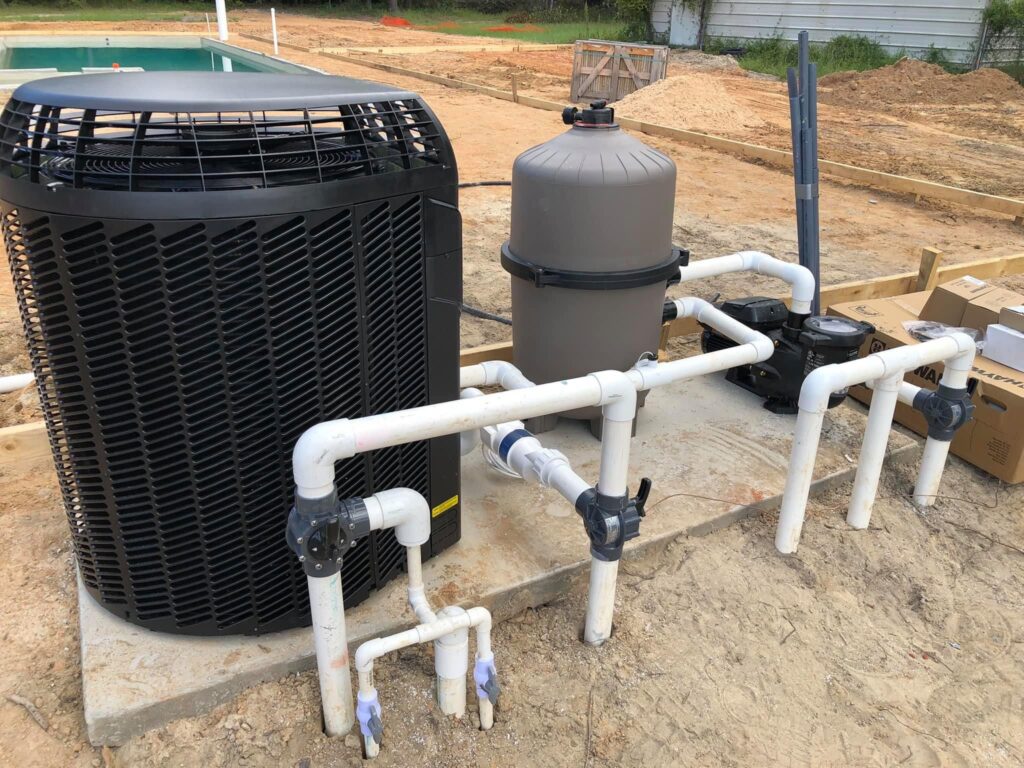
Pool chillers operate on the same basic principle as your home’s air conditioning system or refrigerator. They use a refrigeration cycle that involves compressing and expanding refrigerant to absorb heat from the pool water and release it into the surrounding air. The system consists of several key components: a compressor, condenser, evaporator, expansion device, and circulation pump, all controlled by sophisticated electronics that monitor and regulate temperature.
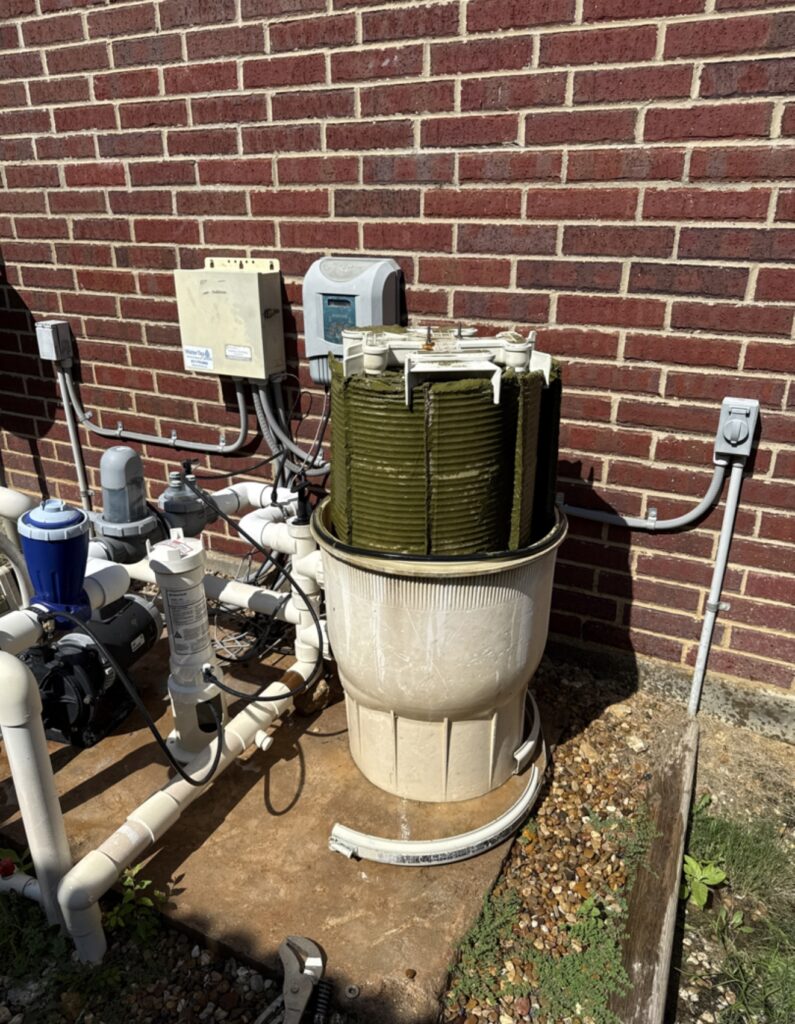
When your pool chiller isn’t working correctly, several problems emerge:
Swimmer discomfort: Water temperatures above 88°F become increasingly unpleasant and can even pose health risks during vigorous exercise
Chemical inefficiency: Warmer water accelerates chlorine consumption and can promote algae and bacteria growth
Equipment stress: Other pool equipment, particularly pumps and filters, work harder in warmer water conditions
Increased costs: Running a malfunctioning chiller consumes more energy while delivering less cooling
Limited pool use: During heat waves, an uncooled pool may become unusable during daylight hours
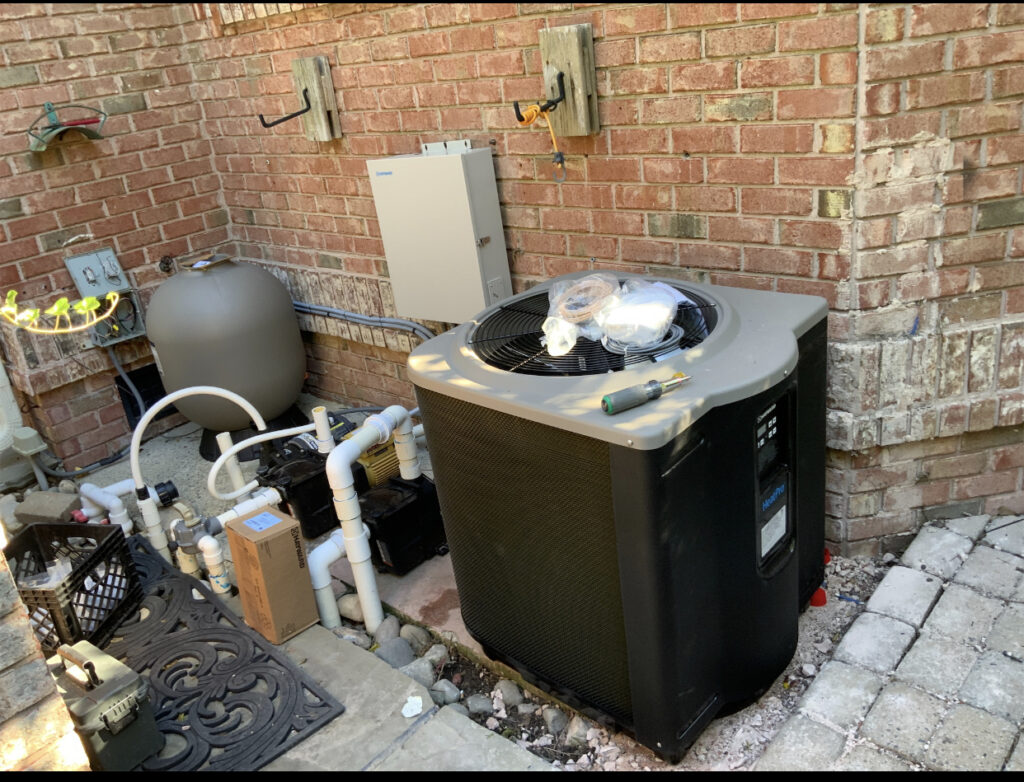
Inadequate Cooling Performance:
Water temperature consistently higher than setpoint
Chiller runs constantly but temperature drops very slowly
Temperature varies dramatically throughout the day
Cooling capacity seems diminished compared to previous seasons
Temperature Control Issues:
Chiller doesn’t respond to thermostat adjustments
Temperature swings more than 3-4 degrees from setpoint
System cycles on and off too frequently
Different areas of pool have significantly different temperatures
Extended Run Times:
Chiller runs continuously during hot weather without achieving desired temperature
Run times are significantly longer than in previous seasons
System never seems to reach “satisfied” condition
Reduced Cooling Capacity:
Noticeably less cool air coming from unit during operation
Water temperature drop per hour is less than expected
System struggles to maintain temperature during peak heat
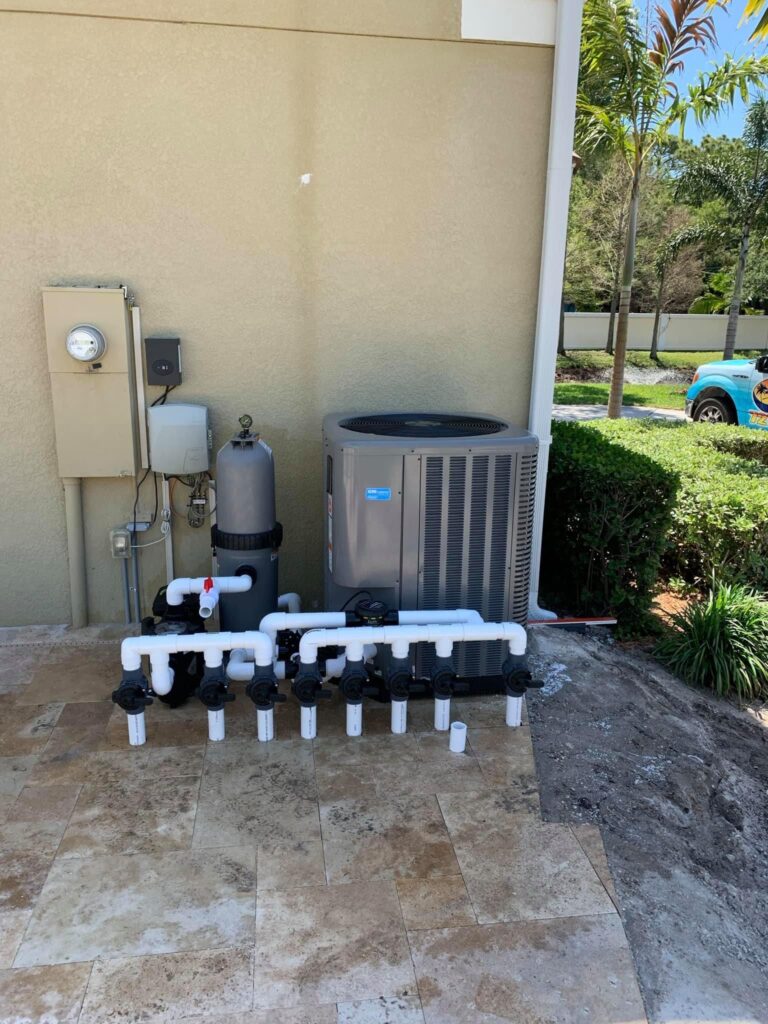
Unusual Noises:
Grinding or screeching from compressor area
Unusual fan noises (clicking, rattling, uneven operation)
Loud humming or buzzing that wasn’t present before
Pinging or knocking sounds during operation
Visual Indicators:
Ice formation on coils or refrigerant lines
Oil stains or refrigerant leaks around connections
Corrosion on electrical connections or cabinet
Water leaks from drain lines or connections
Unusual vibration during operation
Control and Display Issues:
Error codes on control panel
Display not functioning properly
Buttons not responding as expected
Automation system reporting chiller faults
Communication Failures:
Chiller not responding to automation system commands
Temperature sensors reporting inaccurate readings
Integration with pool pump or other equipment failing
Smartphone app unable to connect or control chiller
Water Flow Issues:
Reduced water flow through the system
Pressure gauge readings outside normal range
Water temperature difference across chiller too small
Air bubbles in water lines to/from chiller
Compressor Failure:
Electrical failures: Burned windings, failed capacitors, or relay problems
Mechanical failures: Seized bearings, broken valves, or internal damage
Overheating: Insufficient cooling, refrigerant issues, or electrical problems
Short cycling: Rapid on/off cycling that stresses the compressor
Compressor Performance Problems:
Reduced capacity: Not pumping refrigerant efficiently
Excessive noise: Worn internal components or mounting issues
High amp draw: Working harder than designed, often due to system issues
Tripping breakers: Electrical problems or mechanical overload
Refrigerant Issues:
Low refrigerant charge: Leaks in the system reduce cooling capacity
Overcharge: Too much refrigerant can cause multiple problems
Contamination: Moisture, air, or debris in the refrigerant circuit
Wrong refrigerant type: Incorrect refrigerant for the system
Refrigerant Flow Problems:
Restricted flow: Blocked filter driers, expansion devices, or lines
Poor heat transfer: Dirty coils or incorrect refrigerant charge
Flash gas in liquid line: Caused by restrictions or improper charge
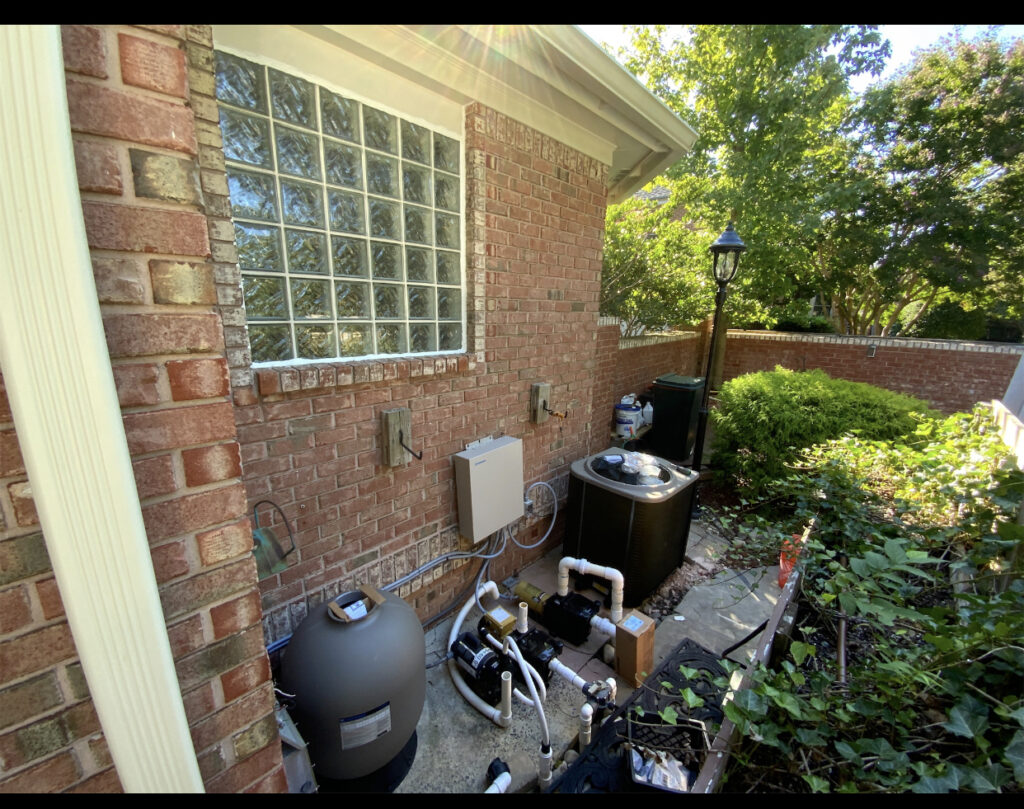
Condenser Issues:
Dirty coils: Reduced airflow and heat rejection
Fan problems: Failed motors, bad capacitors, or damaged blades
Airflow restrictions: Blocked intake or exhaust areas
Corrosion: Especially in coastal or chemical-exposed areas
Evaporator Problems:
Scale buildup: Mineral deposits from pool water
Fouling: Organic growth or debris in water passages
Corrosion: Chemical attack from pool water
Freezing: Low refrigerant or water flow causing ice formation
Flow Problems:
Insufficient flow: Pump issues, clogged filters, or valve problems
Excessive flow: Can reduce heat transfer efficiency
Air in system: Causes noise and reduces heat transfer
Pressure problems: High or low pressure indicating system issues
Water Quality Issues:
Scale formation: Hard water causing mineral deposits
Chemical damage: Improper water chemistry attacking components
Biological growth: Algae or bacteria in water passages
Debris accumulation: Sand, leaves, or other contaminants
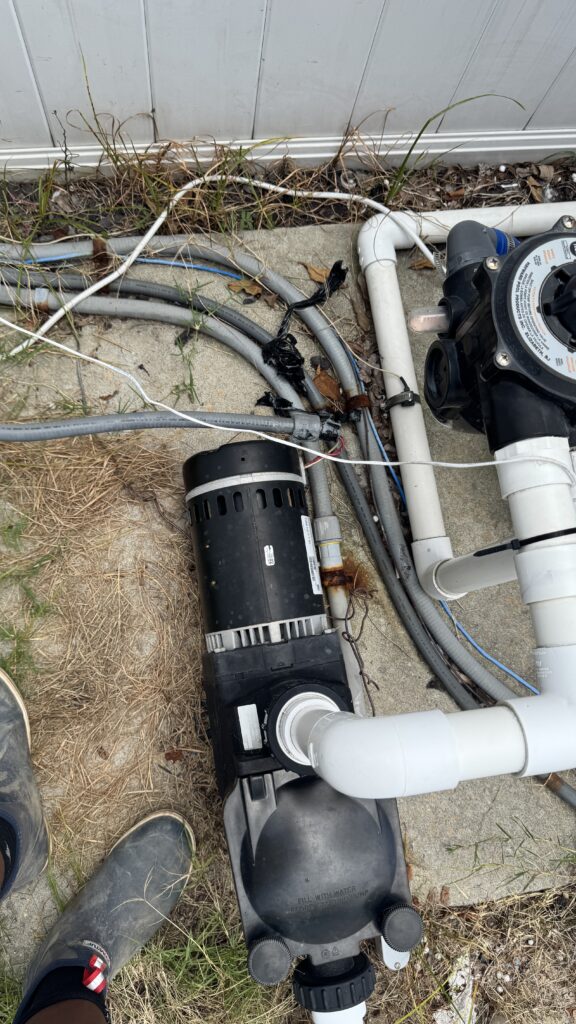
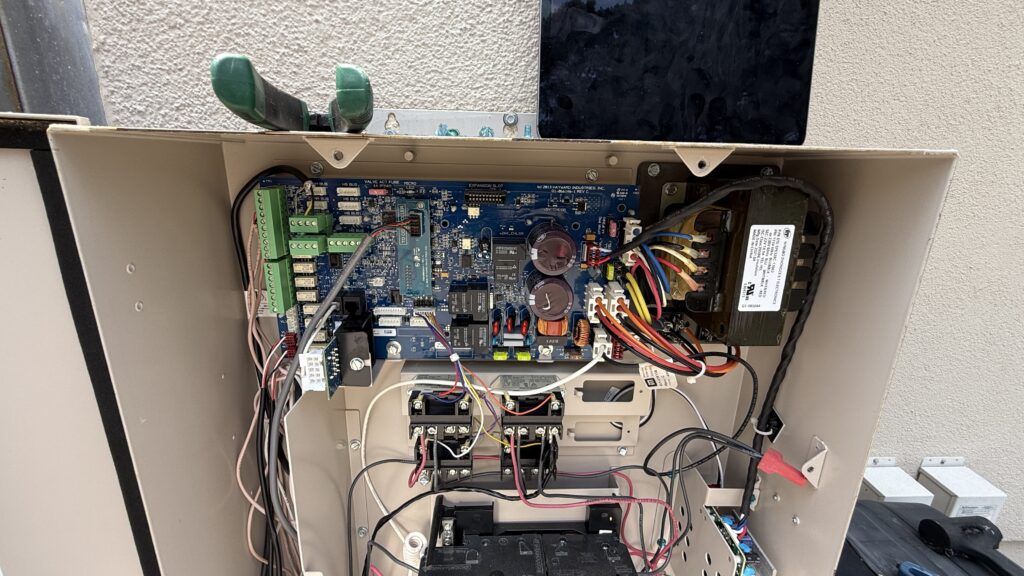
Control System Failures:
Board failures: Burned components or failed circuitry
Sensor problems: Temperature, pressure, or flow sensors failing
Communication issues: With automation systems or remote controls
Programming errors: Incorrect setup or corrupted memory
Electrical Component Failures:
Contactors and relays: Burned contacts or failed coils
Capacitors: Failed start or run capacitors
Wiring issues: Corrosion, loose connections, or damaged insulation
Safety devices: Tripped or failed high-pressure switches, thermal cutouts
Initial Assessment:
We begin with a thorough visual inspection of the entire chiller system, including:
External examination: Checking for physical damage, corrosion, or leaks
Control system review: Reading error codes, checking settings, testing controls
Operational observation: Watching startup, listening for unusual sounds, observing cycling patterns
Performance Testing:
We conduct systematic testing to measure actual performance:
Temperature measurements: Water in/out temperatures, ambient air temperature
Pressure readings: Refrigerant high and low side pressures
Electrical measurements: Voltage, amperage, capacitor testing
Flow verification: Water flow rate and pressure drop across chiller
Cycle analysis: Monitoring on/off cycles and run times
Advanced Diagnostics:
For complex problems, we employ specialized diagnostic tools:
Refrigerant leak detection: Electronic detectors, ultraviolet dye, or bubble testing
Compressor analysis: Megohm testing, winding resistance, performance curves
Control system diagnostics: Computer interface tools for communicating with control boards
Thermal imaging: Identifying hot spots, cold spots, or refrigerant restrictions
Understanding Your Situation:
We take time to understand:
Your usage patterns and cooling needs
Any changes in performance you’ve noticed
Previous repairs or maintenance history
Your budget considerations and priorities
Explaining the Problem:
We provide clear explanations in plain language:
What’s specifically wrong with your chiller
Why the problem occurred
How it affects cooling performance
What happens if it’s not repaired
Presenting Options:
We offer comprehensive repair options:
Immediate repair: Fixing the specific problem identified
Preventive measures: Addressing potential future issues while we’re working
Efficiency improvements: Upgrades that can improve performance or reduce operating costs
Replacement consideration: When repair may not be the most cost-effective solution
Safe Work Practices:
Electrical safety: Proper lockout/tagout procedures, verification of de-energization
Refrigerant handling: EPA-certified technicians, proper recovery and charging
Worksite safety: Protection of property, proper tool use, clean work practices
Quality Repair Standards:
Manufacturer procedures: Following specific repair guidelines for your equipment
Quality components: Using OEM or equivalent quality replacement parts
Proper techniques: Correct installation, torquing, and sealing of all components
Documentation: Recording all work performed, parts used, and measurements taken
Specialized Repair Procedures:
Compressor replacement: Proper refrigerant recovery, oil management, system cleaning
Coil repair: Careful cleaning, leak repair, pressure testing
Electrical repairs: Correct wiring, proper terminations, insulation testing
Control system repairs: Board replacement, sensor calibration, programming
System Testing:
Leak testing: Verifying all repairs are leak-free
Electrical testing: Checking all circuits and safety devices
Performance verification: Measuring cooling capacity and efficiency
Safety system check: Testing all safety switches and controls
Operational Validation:
Startup sequence: Verifying proper startup and shutdown
Temperature control: Testing thermostat accuracy and response
Cycle testing: Monitoring on/off cycles for proper operation
Integration testing: Ensuring proper communication with other pool equipment
Final Verification:
Customer demonstration: Showing you how the system now operates
Performance documentation: Providing before/after measurements
Maintenance guidance: Explaining any new maintenance requirements
Warranty information: Reviewing warranty coverage on parts and labor
Additional challenges:
Increased corrosion potential
Chemical compatibility issues
Different maintenance requirements
Potential for scale formation
Our specialized approach:
Using corrosion-resistant replacement parts
Additional protective measures
Specific cleaning and maintenance recommendations
Experience with saltwater system interactions
Unique considerations:
Different heat load calculations
Humidity control interactions
Air quality considerations
Year-round operation demands
Our expertise:
Understanding indoor pool thermodynamics
Coordinating with building HVAC systems
Addressing humidity-related issues
Year-round maintenance planning
Critical requirements:
Precise temperature control
High reliability needs
Specific temperature ranges
Regulatory compliance
Our capabilities:
Precision calibration and control
Backup system considerations
Compliance documentation
Specialized temperature sensors and controls
Additional requirements:
Higher reliability demands
Regulatory compliance
Usage pattern considerations
Maintenance scheduling around operations
Our experience:
Working with commercial-grade equipment
Understanding health department requirements
Off-hours repair scheduling
Preventative maintenance programs
Problem Complexity:
Simple component replacement vs. major system repair
Accessibility of failed components
Need for specialized tools or equipment
Diagnostic time required
Parts Requirements:
Compressor replacement (typically most expensive part)
Control board replacement
Coil repair or replacement
Refrigerant requirements
Labor Intensity:
Time required for diagnosis
Repair complexity and duration
Need for multiple technicians
Site-specific challenges
Minor Repairs ($150 – $500):
Capacitor replacement
Contactor or relay replacement
Sensor replacement
Minor electrical repairs
Moderate Repairs ($500 – $1,500):
Fan motor replacement
Control board repair
Major electrical component replacement
Refrigerant leak repair and recharge
Major Repairs ($1,500 – $3,500+):
Compressor replacement
Coil replacement
Complete electrical system overhaul
Multiple component failures
When Repair Makes Financial Sense:
Repair cost less than 50% of replacement cost
Chiller less than 7-10 years old
Good maintenance history
No repeated failures
Still under warranty
When Replacement May Be Better:
Repair approaching 50-70% of replacement cost
Multiple systems failing simultaneously
Obsolete or unavailable parts
Inefficient older technology
Frequent breakdowns
Energy Efficiency Considerations:
Newer chillers often 20-40% more efficient
Energy savings may justify replacement
Utility rebates sometimes available for efficiency upgrades
Long-term operating cost comparison
Monthly Checks (Homeowner):
Visual inspection for leaks or damage
Cleaning debris from around unit
Checking that fans are operating properly
Listening for unusual noises
Seasonal Maintenance (Professional):
Spring Startup:
System inspection and testing
Cleaning coils and components
Checking refrigerant charge
Verifying control operation
Testing safety devices
During Season:
Regular cleaning as needed
Monitoring performance
Addressing minor issues promptly
Water chemistry maintenance
Fall Shutdown:
Proper system shutdown
Winterization if needed
Off-season protection
Planning for next season
What Our Maintenance Includes:
Comprehensive inspection: All components checked
Performance testing: Actual cooling capacity measurement
Cleaning services: Coils, filters, and components
Electrical testing: Components and connections
Refrigerant check: Pressure and charge verification
Control calibration: Temperature and safety controls
Documentation: Performance records and recommendations
Benefits of Professional Maintenance:
Early problem detection
Maintained efficiency
Extended equipment life
Warranty compliance
Reduced emergency repairs
Maintenance Impact:
Clean coils improve heat transfer
Proper refrigerant charge maximizes efficiency
Good airflow reduces compressor load
Calibrated controls prevent overcooling
Operational Optimization:
Proper temperature setpoints
Smart scheduling based on usage
Integration with pool cover use
Coordination with other pool equipment
System Upgrades:
Variable speed compressors or fans
Improved controls and sensors
Better insulation on refrigerant lines
High-efficiency replacement components
Key Performance Indicators:
Temperature drop per hour
Energy consumption per degree cooled
Run time percentage
Cycling frequency
Performance Tracking:
Regular measurement and recording
Comparison to manufacturer specifications
Tracking changes over time
Identifying degradation before failure
High voltage hazards: Proper lockout/tagout procedures
Capacitor discharge: Safe handling of stored energy
Grounding verification: Ensuring proper equipment grounding
Circuit protection: Proper fuses and breakers
EPA regulations: Proper handling and certification
Pressure hazards: Safe working with pressurized systems
Chemical exposure: Proper handling and ventilation
Environmental protection: Preventing releases
Trip hazards: Keeping work areas organized
Overhead hazards: Working safely around installed equipment
Weather considerations: Safe work in various conditions
Customer protection: Keeping pool areas safe during repairs
How they work: Use fans to blow ambient air across condenser coils to reject heat
Common applications: Most residential pools, some commercial installations
Typical problems: Dirty coils, fan failures, airflow restrictions, corrosion
Repair considerations: Often located outdoors, exposed to weather elements
How they work: Use cooling water (often from a cooling tower or well water) to reject heat
Common applications: Larger commercial pools, areas with water availability
Typical problems: Water treatment issues, scale buildup, pump failures
Repair considerations: Additional water system components to maintain
How they work: Reversible systems that can both heat and cool pool water
Common applications: Pools needing both heating and cooling capabilities
Typical problems: Reversing valve issues, dual-function control problems
Repair considerations: More complex systems with additional components
How they work: Smaller, movable units often used for temporary or supplemental cooling
Common applications: Special events, therapy pools, temporary installations
Typical problems: Hose connection issues, mobility damage, smaller component failures
Repair considerations: Often less serviceable, may require more frequent maintenance
How they work: Larger capacity systems for public pools, water parks, or multiple pools
Common applications: Community pools, hotels, aquatic centers
Typical problems: Multiple compressor systems, complex controls, heavy usage issues
Repair considerations: Often require specialized training and tools
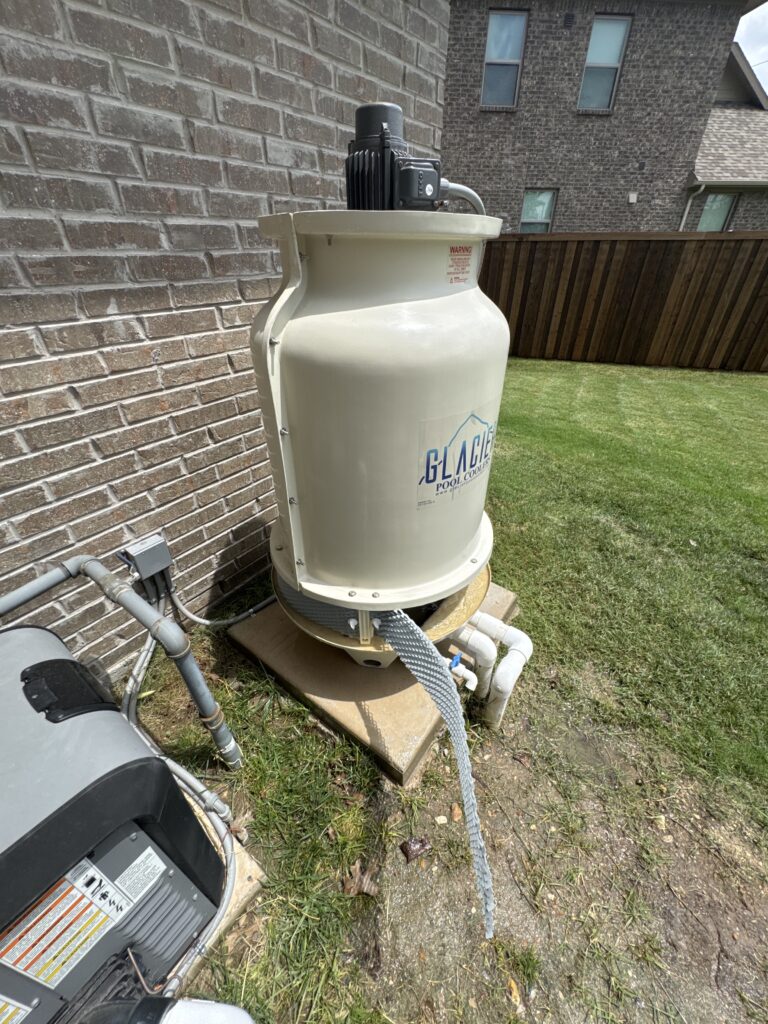
We perform a thorough evaluation of your chiller, checking electrical components, refrigerant systems, water flow, and controls to pinpoint the exact cause of the problem.
Once diagnosed, we explain the issue in plain language and outline the recommended repair options, expected performance results, and any preventative steps.
Repairs are completed using manufacturer-approved parts and proper calibration procedures to restore accurate temperature control and efficient operation.
After repairs are complete, we run full operational tests to ensure consistent cooling, safe electrical performance, and proper integration with existing pool equipment.
Typical lifespan: 10-15 years with proper maintenance
Factors affecting lifespan:
Maintenance quality and frequency
Environmental conditions
Usage patterns and hours
Water chemistry management
Initial installation quality
Generally not recommended because:
Covers trap heat, making chiller work harder
Reduced evaporation actually reduces natural cooling
Can cause the chiller to run excessively
May lead to premature component failure
Better approach: Use cover at night to retain cooling, remove during chiller operation
Variable factors:
Chiller size and efficiency
Desired temperature vs. ambient temperature
Hours of operation
Local electricity rates
Pool size and heat gain factors
Typical range: $50-$300 per month during cooling season
Energy-saving tips: Use at night, maintain proper temperature, ensure good maintenance
Not recommended for most repairs because:
Specialized tools and knowledge required
Refrigerant handling requires EPA certification
Electrical hazards can be serious
Incorrect repairs can cause additional damage
May void manufacturer warranties
What homeowners can do:
Keep area around chiller clean
Monitor performance and report changes
Change air filters if applicable
Schedule professional maintenance
Comfort range: Typically 78-85°F for most swimmers
Factors to consider:
Personal preference
Activity level (cooler for exercise)
Humidity levels (cooler feels more comfortable in high humidity)
Time of day (warmer in morning, cooler in afternoon heat)
Energy consumption (each degree cooler increases energy use)
A properly functioning pool chiller transforms your summer swimming experience, turning what could be an uncomfortably warm pool into a refreshing oasis. When your chiller isn’t working correctly, professional repair restores not just cooling capacity but also energy efficiency, equipment protection, and peace of mind.
The key to chiller longevity and reliability is prompt attention to problems combined with regular professional maintenance. Small issues addressed early prevent major failures during peak cooling season when you need your chiller most.
Whether you’re dealing with a complete breakdown or just noticing reduced performance, professional diagnosis and repair ensure your chiller operates efficiently and reliably throughout the swimming season.
We provide professional pool chiller repair across North Texas, including Frisco, Plano, McKinney, Allen, and surrounding communities.

