Pool freeze protection is the single most important thing you can do for your pool equipment between November and March in North Texas. We hear it every year: “It doesn’t really freeze here.” Tell that to the thousands of DFW homeowners who replaced cracked pumps, split heater headers, and busted PVC after Winter Storm Uri in 2021, or the hard freezes in 2022, 2023, and January 2025. Collin and Denton County average 20 to 30 freeze nights per year, and all it takes is one night with no preparation to cost you $500 to $3,000 in equipment damage. Here’s how to prevent it.
Do You Really Need to Winterize Your Pool in Texas?
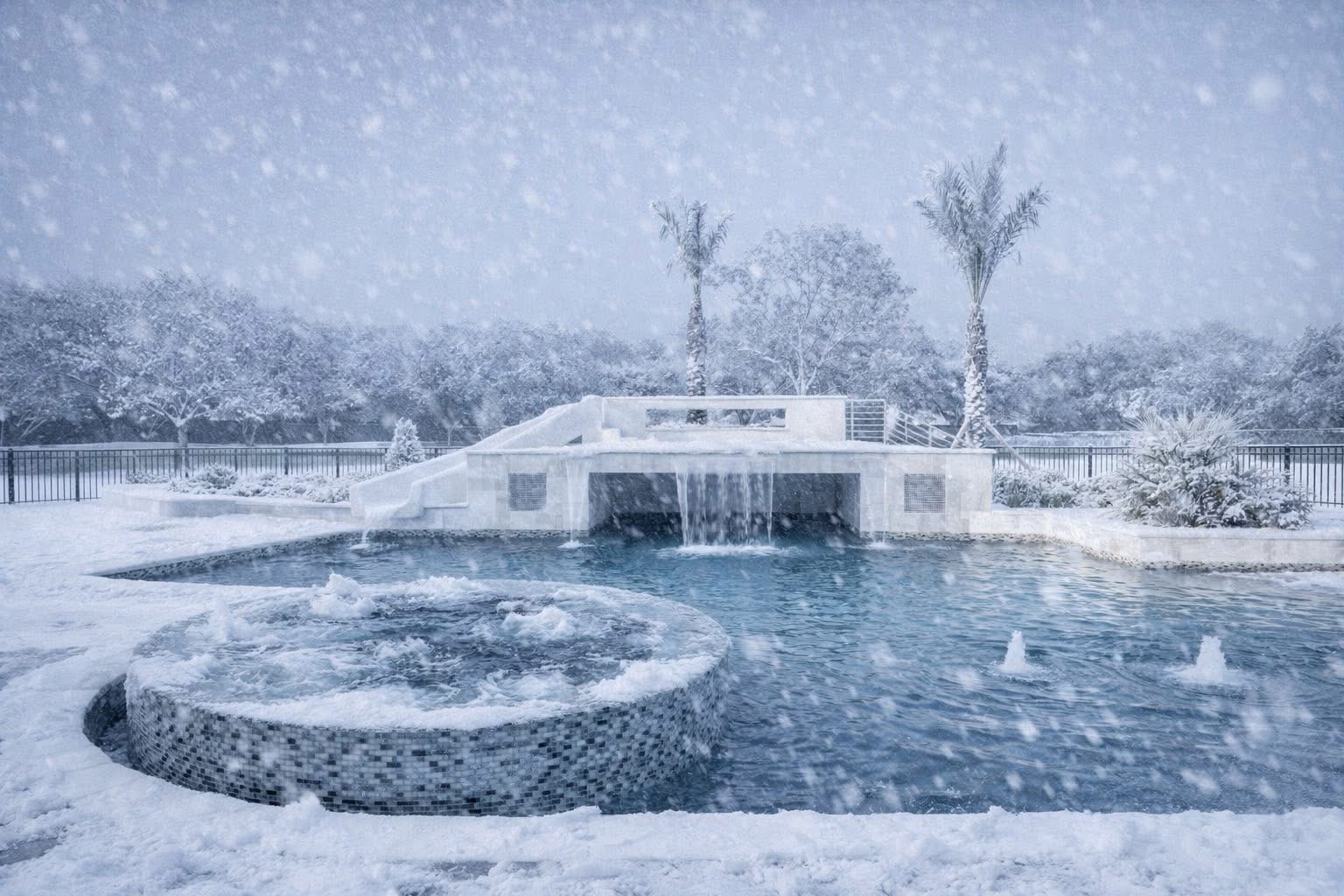
Absolutely. The myth that North Texas doesn’t get cold enough to damage pool equipment is exactly that — a myth. During Winter Storm Uri in February 2021, temperatures in Frisco hit single digits for days while millions lost power. The result was catastrophic: cracked pump housings, split heater headers, burst PVC plumbing, and frozen filter tanks across the entire DFW metroplex. The insurance industry estimated billions in total pipe and equipment damage across Texas, with 16 percent of homeowners reporting burst pipes statewide. Even in a normal winter, DFW sees hard freezes multiple times per season. Pool freeze protection isn’t something you do once in a decade — it’s something you prepare for every single year.
What Happens When Pool Equipment Freezes
Pump Housing Cracks
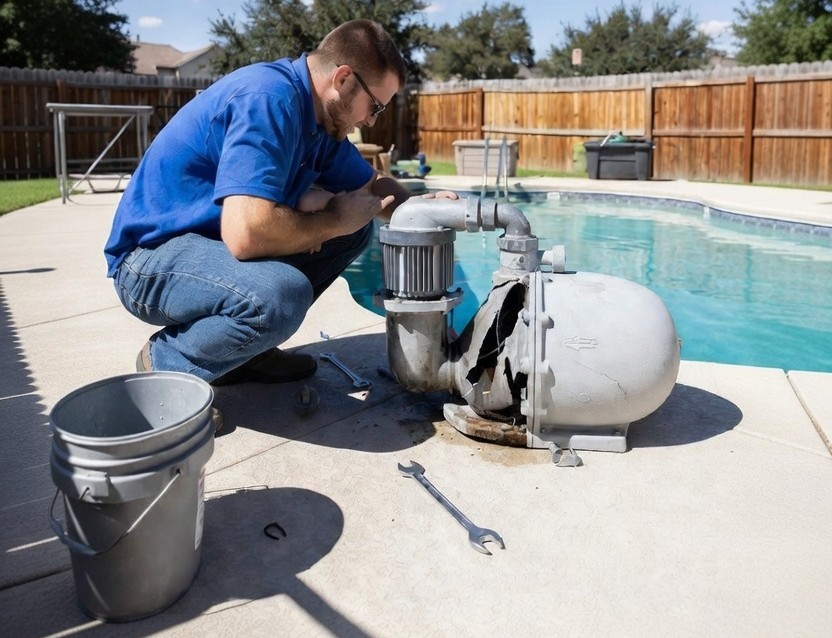
This is the most common freeze damage we see every winter. Water trapped inside the pump housing expands as it freezes and cracks the volute or strainer pot. Replacement costs $400 to $1,500 depending on the pump model.
Heater Header Splits and Heat Exchanger Damage
Water inside copper or cupronickel heater headers expands and splits the metal. Heat exchanger tubes crack internally. Repairs run $300 to $1,200, and in many cases the heater needs full replacement at $1,500 to $4,000.
Filter Tank Cracks
Sand and DE filter tanks are especially vulnerable. Water trapped inside the tank freezes and cracks the fiberglass or polypropylene shell. A cracked tank can’t be repaired — it requires full replacement at $400 to $1,500.
PVC Pipe Bursting
PVC plumbing at connections, unions, and exposed runs on the equipment pad is rigid and brittle in cold temperatures. Frozen water inside cracks the pipe at joints and fittings. Underground pipe failures are especially costly to locate and repair.
Salt Cell and Chlorinator Damage
Water trapped inside the salt cell housing expands and cracks the cell or the flow housing. Replacement cells cost $400 to $700 — an expensive loss that proper pool freeze protection prevents entirely. Total freeze damage across multiple components can easily run $500 to $3,000 or more in a single event.
Step-by-Step Pool Freeze Protection for North Texas
Step 1: Monitor the Forecast
Sign up for NWS freeze alerts for your specific city. When temperatures are forecast to drop below 35 degrees, it’s time to act. Don’t wait for 32 — exposed equipment and pipes can freeze before the air temperature officially hits freezing.
Step 2: Run the Pump Continuously
Moving water doesn’t freeze nearly as easily as standing water. When temps drop below 35, switch your pump to run 24 hours a day. This is the single most effective pool freeze protection step you can take.
Step 3: Open All Valves
Make sure water is flowing through every piece of equipment — the heater, the filter, the salt cell, the spa return if you have one. Any dead-end line with standing water is a freeze risk.
Step 4: If Power Goes Out, Drain Immediately
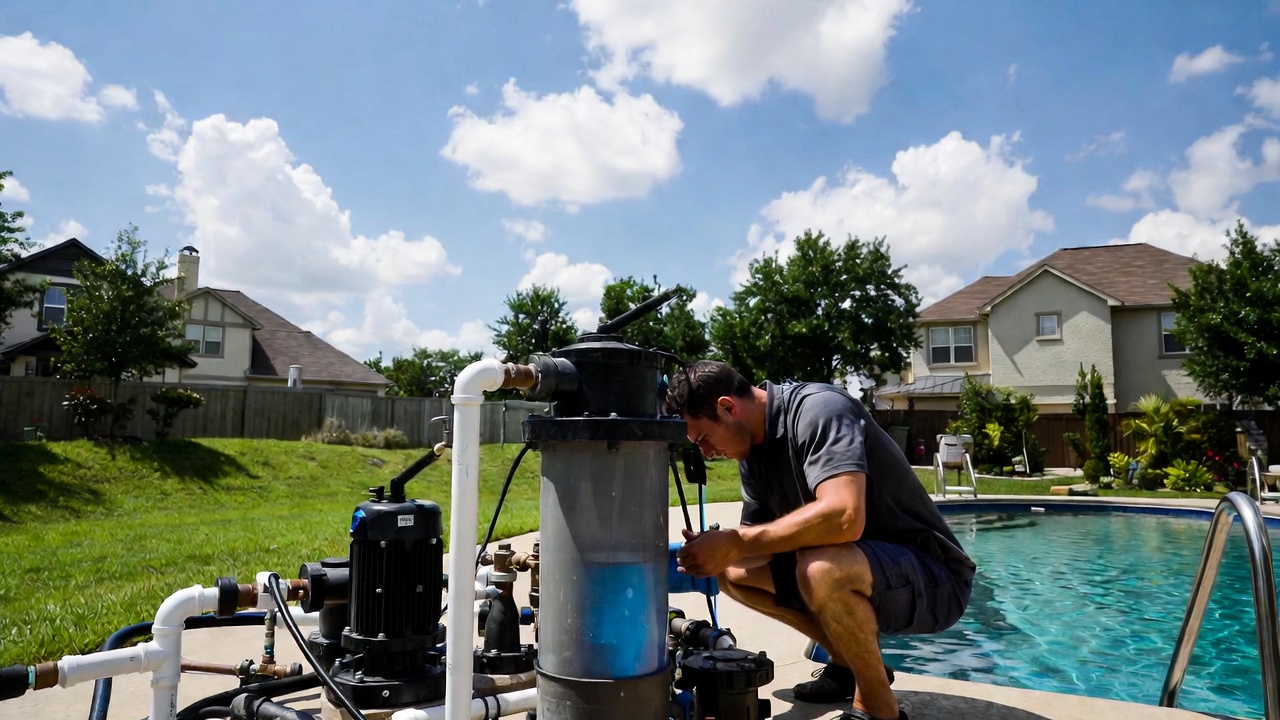
This is the critical one. If you lose power and the pump stops, drain the pump, filter, and heater through their drain plugs right away. Remove the pump lid to let water flow out. Open bleeder valves on the filter and heater. Standing water in equipment without circulation will freeze and crack.
Step 5: Add Pool Antifreeze to Exposed Lines
Non-toxic pool antifreeze — not automotive antifreeze — can be poured into exposed plumbing lines, skimmer pipes, and any line that can’t be drained. It’s cheap insurance for pipes you can’t easily empty.
Step 6: Insulate Exposed Pipes and Equipment
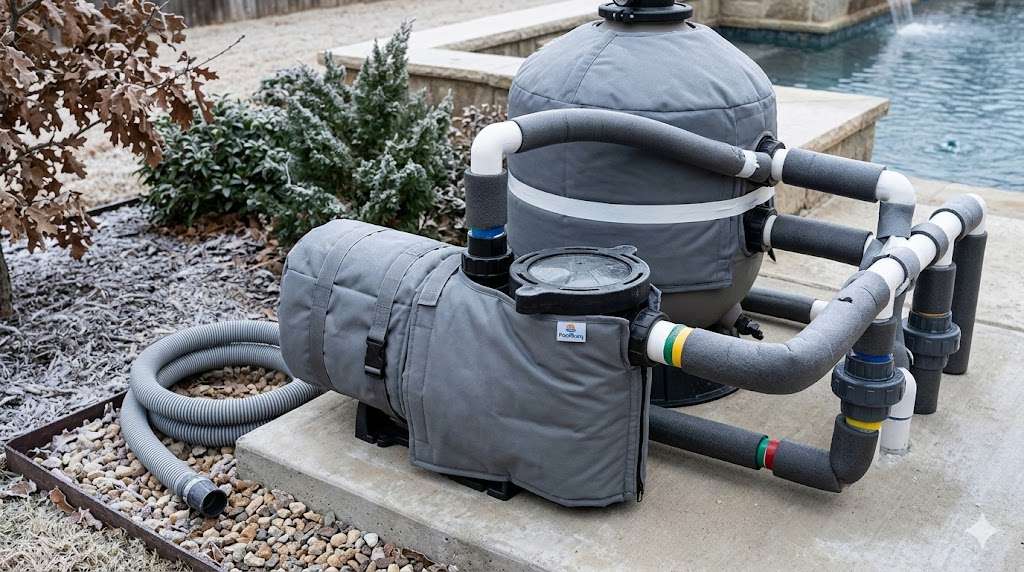
Wrap exposed PVC pipes, unions, and fittings with foam pipe insulation or even towels and blankets in a pinch. Cover the pump and filter with insulated blankets. It won’t stop a multi-day freeze, but it buys you critical hours.
Step 7: Don’t Rely Solely on the Freeze Guard
Freeze guards on Pentair, Hayward, and Jandy automation systems are designed to kick the pump on when temperatures drop. But here’s the problem: they need power to work. During Uri, millions lost power for days. The freeze guard is a helpful backup for overnight dips, but it is not a complete pool freeze protection strategy for extended freezes or outages.
Freeze Guard Systems and What They Actually Protect
After the Freeze: What to Check Before Turning Your Pool Back On
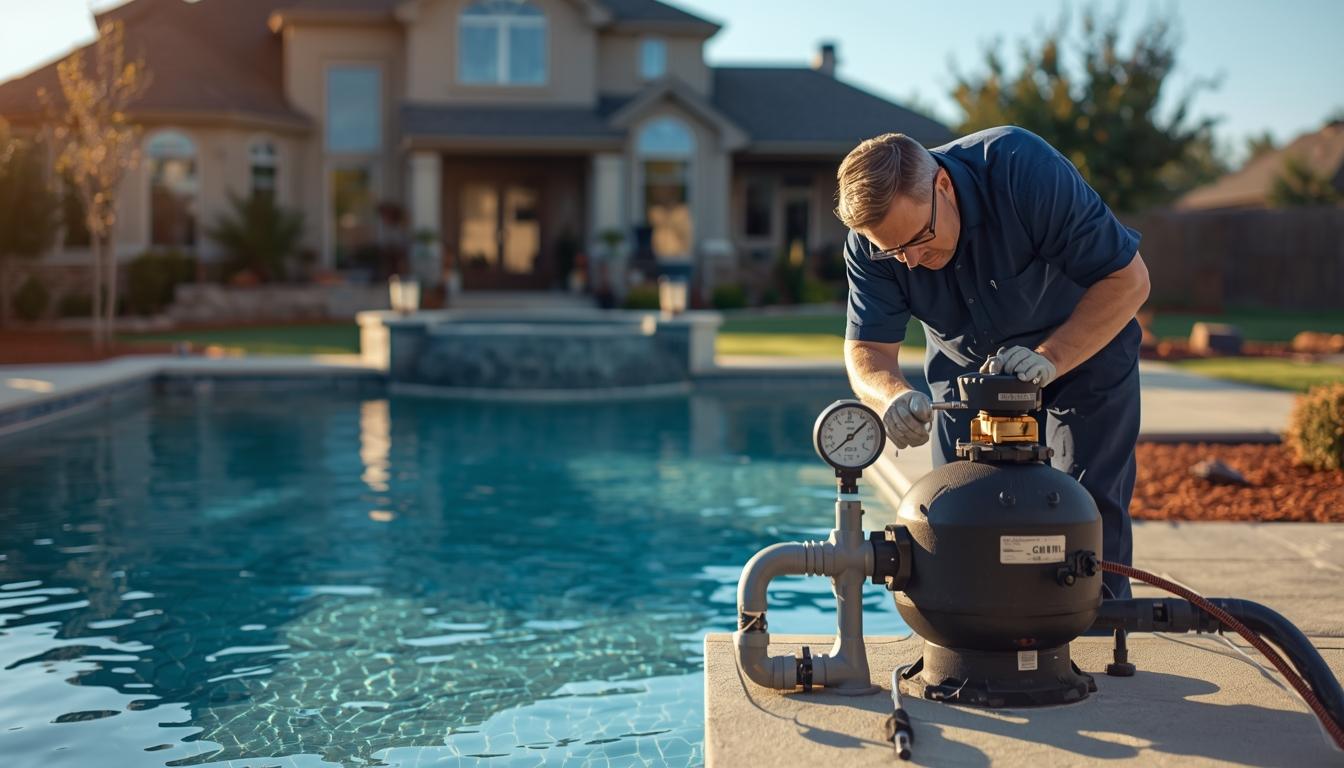
Before you restart anything, visually inspect every piece of equipment. Look for cracks in the pump housing, wet spots around the heater, drips from filter connections, and split PVC at unions and fittings. Check the pressure gauge on the filter — if it reads zero with the pump off, the gauge itself may have cracked. Turn the pump on slowly and watch for leaks. If water sprays from a cracked housing or fitting, shut it off immediately and call for pool freeze protection damage assessment. Running a cracked pump will burn out the motor and turn a $400 repair into a $1,500 one.
Professional Pool Winterization Services in DFW
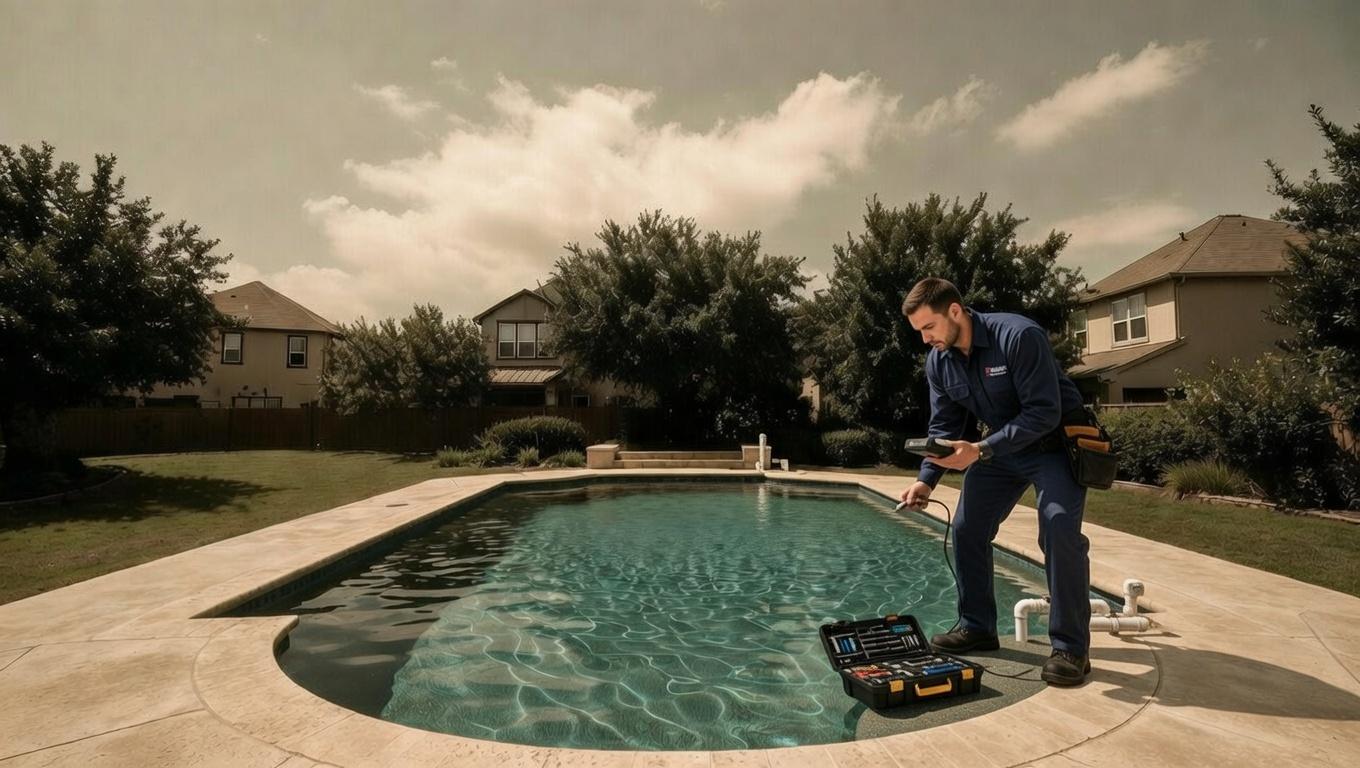
A professional winterization visit typically includes draining and blowing out all exposed plumbing lines, removing drain plugs from the pump, filter, and heater, adding non-toxic antifreeze to lines that can’t be fully drained, insulating exposed pipes and connections, programming the freeze guard if you have automation, and briefing you on what to do if power goes out. Professional winterization runs $150 to $300 in DFW. Compare that to $500 to $3,000 in freeze damage repairs and the math is obvious. It’s the best pool freeze protection investment a North Texas pool owner can make.
People Also Ask About Pool Freeze Protection
At what temperature should I worry about my pool freezing?
Start taking action when the forecast shows 35 degrees or below. Exposed pipes and equipment can freeze before the air temperature reaches 32 because metal and PVC lose heat faster than the surrounding air, especially on windy nights.
Should I drain my pool pump for a freeze?
Only if the power is out and the pump can’t run. If you have power, keep the pump running continuously — that’s far better pool freeze protection than draining. If you lose power, drain the pump, filter, and heater immediately through their drain plugs.
Does running the pool pump prevent freezing?
Yes, in most conditions. Moving water resists freezing much better than standing water. Running the pump continuously when temps drop below 35 is the most effective thing you can do. It’s not foolproof in extreme multi-day events, but it handles 95 percent of North Texas freeze nights.
How much does pool freeze damage repair cost?
A single cracked pump runs $400 to $1,500 to replace. Heater damage costs $300 to $4,000. Filter tanks cost $400 to $1,500. Burst PVC plumbing adds $200 to $1,000. Multiple component damage in a single freeze event commonly totals $1,000 to $3,000 or more.
Can I use antifreeze in my pool pump?
Use non-toxic pool antifreeze only — never automotive antifreeze, which is poisonous. Pool antifreeze goes into plumbing lines that can’t be drained. It’s not meant to be added to the pool water itself.
How do I know if my pool pump was damaged by a freeze?
Look for visible cracks on the pump housing or strainer lid, water leaking from the volute when the pump runs, the pump failing to prime, or unusual noises during startup. If you see any of these after a freeze, don’t keep running it — call for a pool freeze protection damage inspection before the motor burns out.
PoolBurg’s Pool Freeze Protection and Winterization Services
PoolBurg provides complete pool freeze protection for all 17 North Texas cities we serve. Pre-freeze winterization to prepare your equipment before the cold hits. Emergency freeze response guidance when temperatures drop and power goes out. And post-freeze damage assessment to inspect every component before you turn anything back on. We’ve seen what Texas winters do to unprotected pools, and we’d rather help you spend $150 on prevention than $3,000 on repairs.
Don’t wait for the next freeze — schedule your winterization service now.
We’ll prepare your equipment, insulate your lines, and make sure you know exactly what to do if the power goes out.
Visit poolburg.com or call us today.