
A reliable pool heat pump repair service becomes essential when your pool heater suddenly stops working or struggles to maintain temperature. Pool heat pumps are designed to be efficient and durable, but like any mechanical equipment, they eventually develop problems. When homeowners notice heating issues, strange noises, or unexpected shutdowns, calling a professional pool heat pump repair service quickly can prevent much larger equipment failures and costly replacements.
According to the Pool & Hot Tub Alliance equipment maintenance guidelines, regular inspection and timely repair of pool heating systems helps extend heater life and maintain safe pool operation.
Why Pool Heat Pump Repairs Are Common in North Texas
North Texas weather creates unique challenges for pool heating systems. During spring and fall, heat pumps often run continuously to maintain comfortable swimming temperatures.
These long operating cycles place heavy demand on compressors, fans, and electrical components. On top of that, dust, pollen, and seasonal debris common in the region can clog airflow vents and condenser coils.
Over time, even small airflow restrictions can cause overheating and efficiency loss. According to the U.S. Department of Energy heat pump efficiency guide, restricted airflow and poor maintenance are among the most common causes of heat pump performance issues.
When these issues are ignored, a simple service call can quickly turn into a much more expensive heater replacement.
What a Professional Pool Heat Pump Repair Service Actually Does
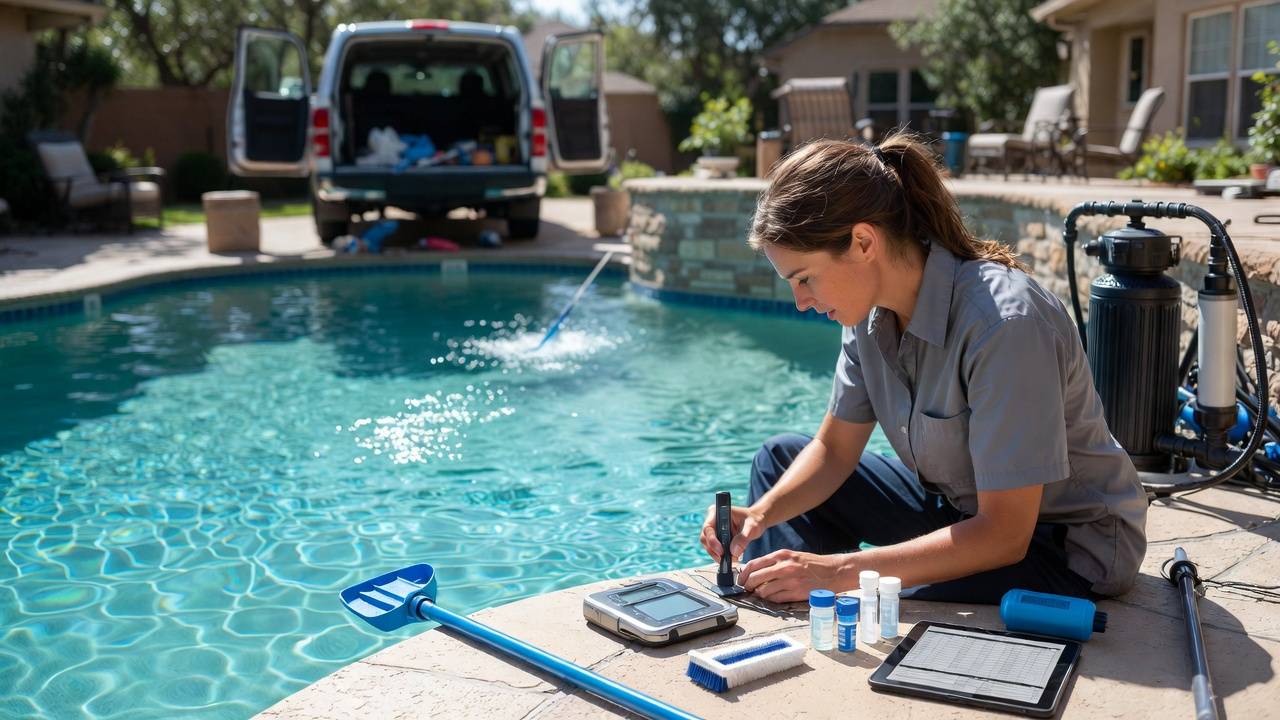
A qualified pool heat pump repair service begins with a full equipment inspection. Professional technicians check electrical systems, airflow, water flow, and mechanical components to determine why the heater is not working properly.
During a typical service visit, technicians inspect:
- The compressor and refrigerant system
- Fan motor and airflow pathways
- Thermostat and control boards
- Electrical connections and capacitors
Water flow and pressure are also tested to ensure the heat exchanger is transferring heat efficiently.
Industry equipment manufacturer Pentair’s pool heating system documentation explains that proper water flow is critical for safe heat pump operation and efficiency.
Common Pool Heat Pump Problems That Require Repair
Heat pump running but not heating the pool
One of the most common reasons homeowners call a pool heat pump repair service is when the unit runs but produces little or no heat. This can be caused by airflow restrictions, refrigerant problems, or compressor failure.
Heat pump will not turn on
Electrical issues such as tripped breakers, faulty relays, or control board failures can prevent the heater from starting.
Strange noises coming from the heater
Grinding, rattling, or vibrating sounds often indicate worn fan motors or loose internal components.
Error codes or system shutdowns
Many modern heaters include built-in sensors that shut the system down when a malfunction is detected. According to Hayward pool heater troubleshooting documentation, error codes are designed to prevent equipment damage.
Signs You Should Call a Pool Heat Pump Repair Service Immediately
Pool water temperature dropping unexpectedly
If your heater suddenly struggles to maintain temperature, it usually means a component is failing.
Heat pump repeatedly turning on and off
Short cycling is a sign of electrical or airflow problems that should be diagnosed quickly.
Ice forming on the unit
Ice buildup indicates airflow restrictions or refrigerant problems.
Electrical smells or visible leaks
Any burning smell or water leakage around the unit requires immediate professional inspection.
How to Find the Closest Pool Heat Pump Repair Service Near You
When searching for a pool heat pump repair service, it’s important to choose technicians experienced with pool equipment rather than general HVAC contractors.
Look for companies that repair major heater brands such as Pentair, Hayward, and Raypak, since each system has different diagnostic procedures and parts.
The Association of Pool and Spa Professionals equipment certification standards recommend using trained technicians who specialize in pool heating systems.
What to Expect During a Pool Heat Pump Repair Visit
Full equipment inspection
Technicians inspect electrical systems, airflow pathways, and heat exchanger components.
Diagnostic testing
Voltage, refrigerant pressure, and system performance tests help determine the root cause of heating issues.
Repair or replacement recommendation
If a repair is possible, technicians replace worn components. If the heater is beyond repair, they may recommend equipment replacement.
People Also Ask
How much does pool heat pump repair cost?
Most repairs range between $150 and $800, depending on the component that failed.
Why is my pool heat pump running but not heating?
Airflow blockages, refrigerant issues, or compressor problems are common causes.
Can a pool heat pump be repaired?
Yes. Most problems involve replaceable electrical components, sensors, or capacitors.
How long do pool heat pumps last?
A well-maintained unit typically lasts 10 to 15 years.
Who repairs pool heaters near me?
Professional pool equipment technicians or pool service companies typically provide heater repair.
How quickly can a pool heater be repaired?
Most diagnostic visits identify the issue within one service appointment.
PoolBurg Provides Fast Pool Heat Pump Repair Across North Texas
When pool heaters stop working, homeowners need fast and reliable help. PoolBurg provides professional pool heat pump repair service for homeowners throughout North Texas.
Our technicians diagnose airflow issues, electrical failures, compressor problems, and sensor faults on all major heat pump brands. Each service visit includes a full equipment inspection to identify the root cause of heating problems.
Searching for the closest pool heat pump repair service near you? PoolBurg technicians provide fast diagnostics and dependable heater repairs across Frisco, Plano, McKinney, and surrounding DFW communities.