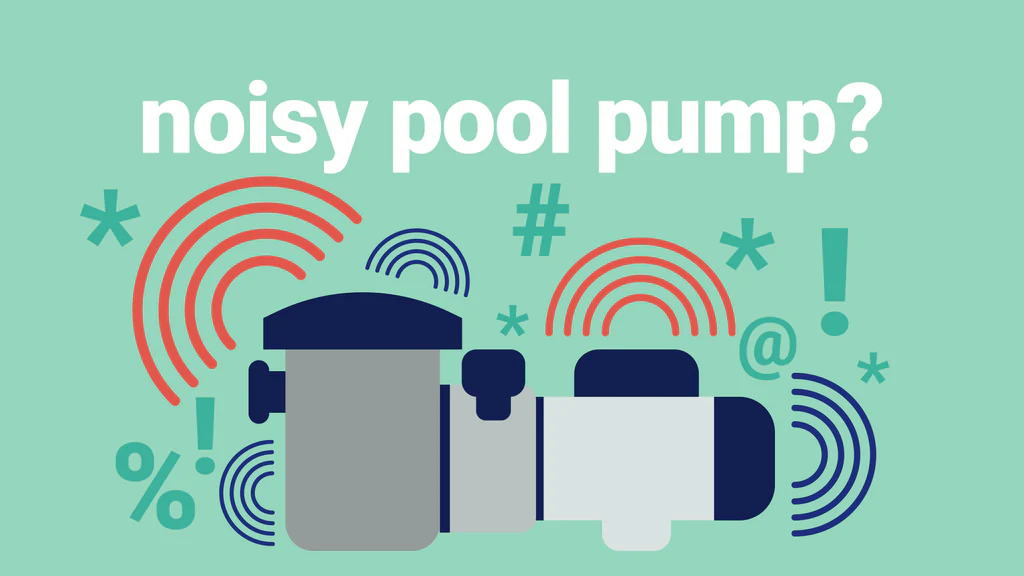
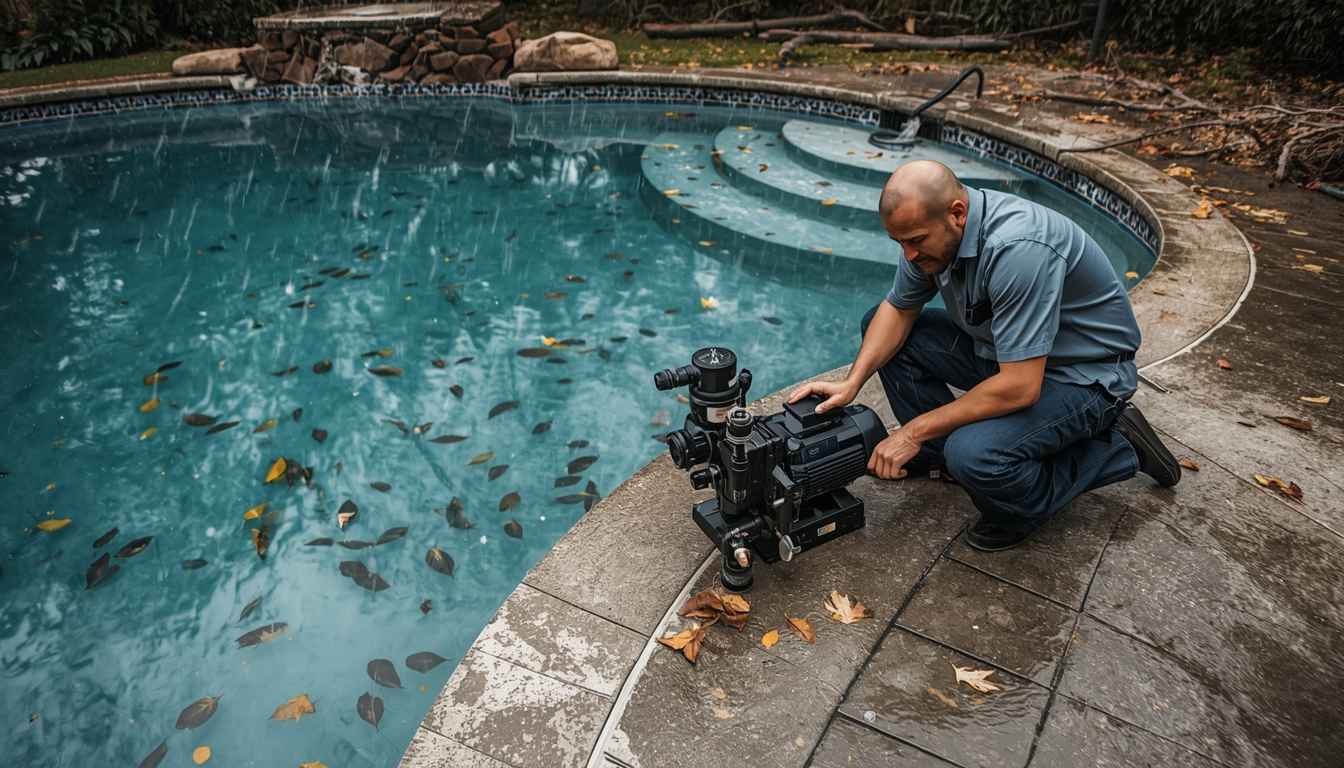
Pool pump noise is one of those problems that gets worse the longer you ignore it. DFW’s suburban lot sizes mean your equipment pad is often 15 to 30 feet from your neighbor’s bedroom window. A loud pool pump running at 3,450 RPM can produce 65 to 80 decibels — that’s vacuum cleaner territory. Noise complaints are one of the most common neighbor disputes in DFW HOA communities. The good news? Getting to a quiet pool pump setup is very doable, and most solutions pay for themselves in energy savings or prevented equipment failure.
Why Your Pool Pump Is So Loud
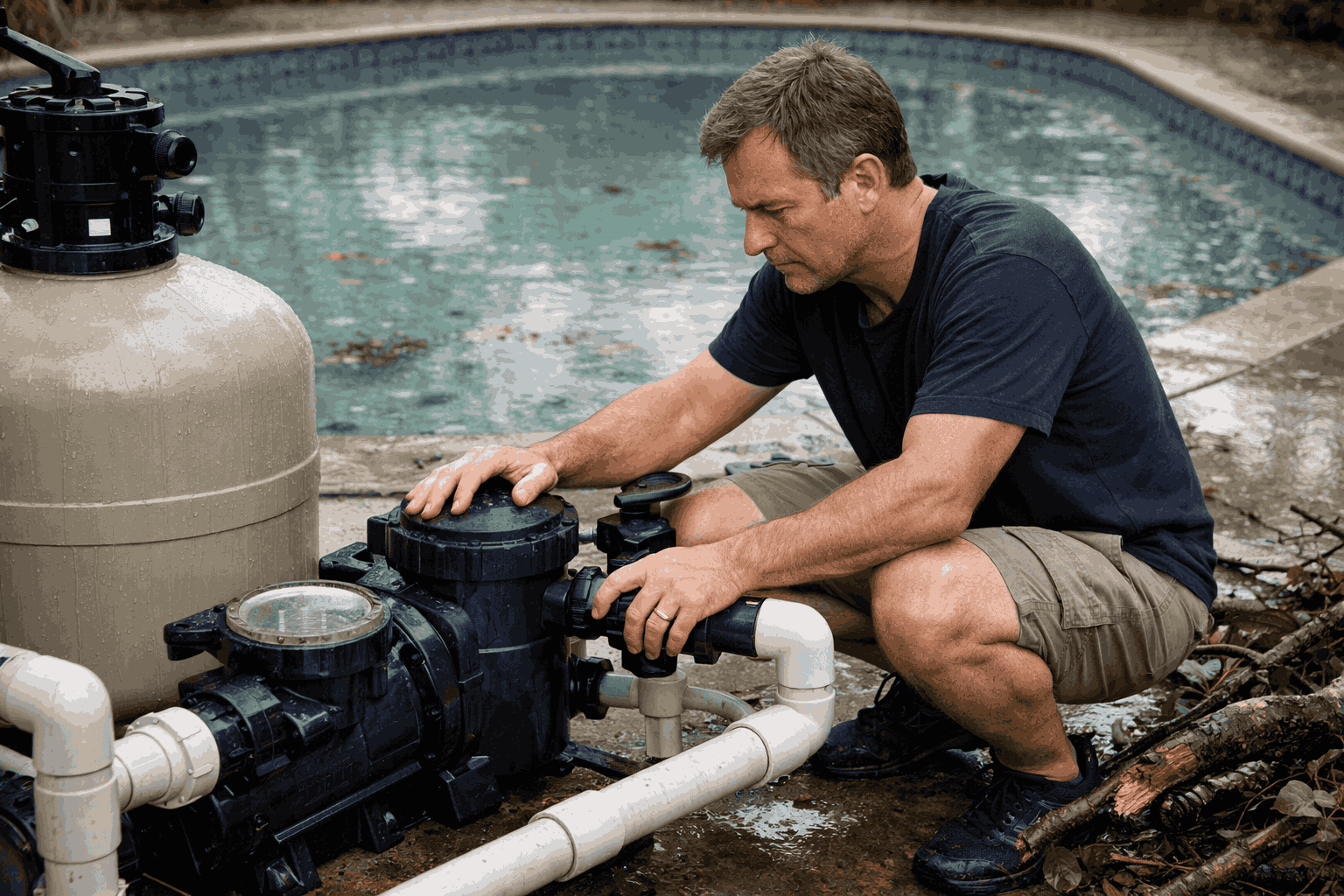
Single-speed pumps are inherently noisy because they run at maximum RPM for every task. Motor noise, vibration, and water turbulence all stack up. The older the pump gets, the louder it gets — worn bearings amplify pool pump noise progressively until the motor eventually seizes. Grinding or screeching sounds mean bearings are failing and motor replacement is coming. A loud rumbling or heavy vibration usually means cavitation — the pump is starving for water from clogged baskets, a dirty filter, low water level, or a partially closed valve. Cavitation isn’t just loud — it damages the impeller. Our pump noise diagnostic guide covers every sound and what it means. The Pool & Hot Tub Alliance notes that pump noise is the number one equipment complaint among residential pool owners nationwide.
Vibration transfer makes things worse. Pump vibration travels through the concrete pad, into plumbing, and through the ground. It can resonate through nearby structures and sound louder inside your neighbor’s house than at the equipment pad itself. Plumbing noise from water rushing through pipes at high flow rates adds another layer, especially with undersized piping or sharp 90-degree bends.
How to Fix Pool Pump Noise — From Cheapest to Most Effective
Vibration isolation pad ($20 to $50). The cheapest fix and the easiest. Rubber or neoprene pads placed under the pump absorb vibration before it transfers to the concrete. Significantly reduces vibration-transmitted pool pump noise. Takes five minutes to install. Start here.
Schedule optimization (free). Run the pump during daytime hours when ambient noise masks it. Avoid high-speed operation during early morning or late night. If you have a variable speed pump, schedule high-speed cycles for midday and low-speed overnight. Our pump run time guide covers optimal scheduling for both noise and efficiency.
Plumbing modifications ($100 to $500). Flexible PVC connectors between the pump and plumbing absorb vibration that rigid pipe transmits. Larger pipe diameter reduces water velocity and turbulence noise. Sweep elbows instead of 90-degree elbows reduce flow noise. These modifications are usually done during a pump replacement.
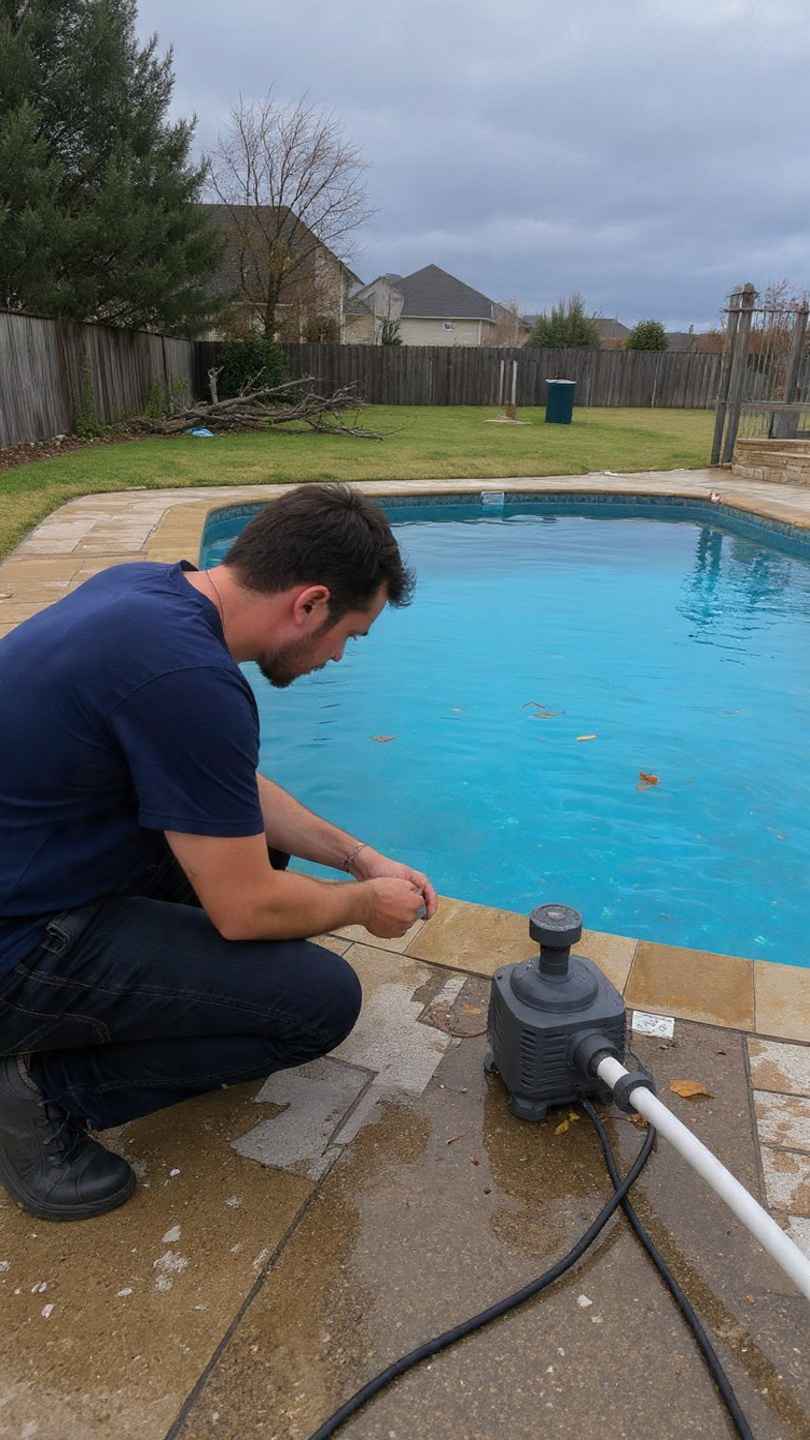
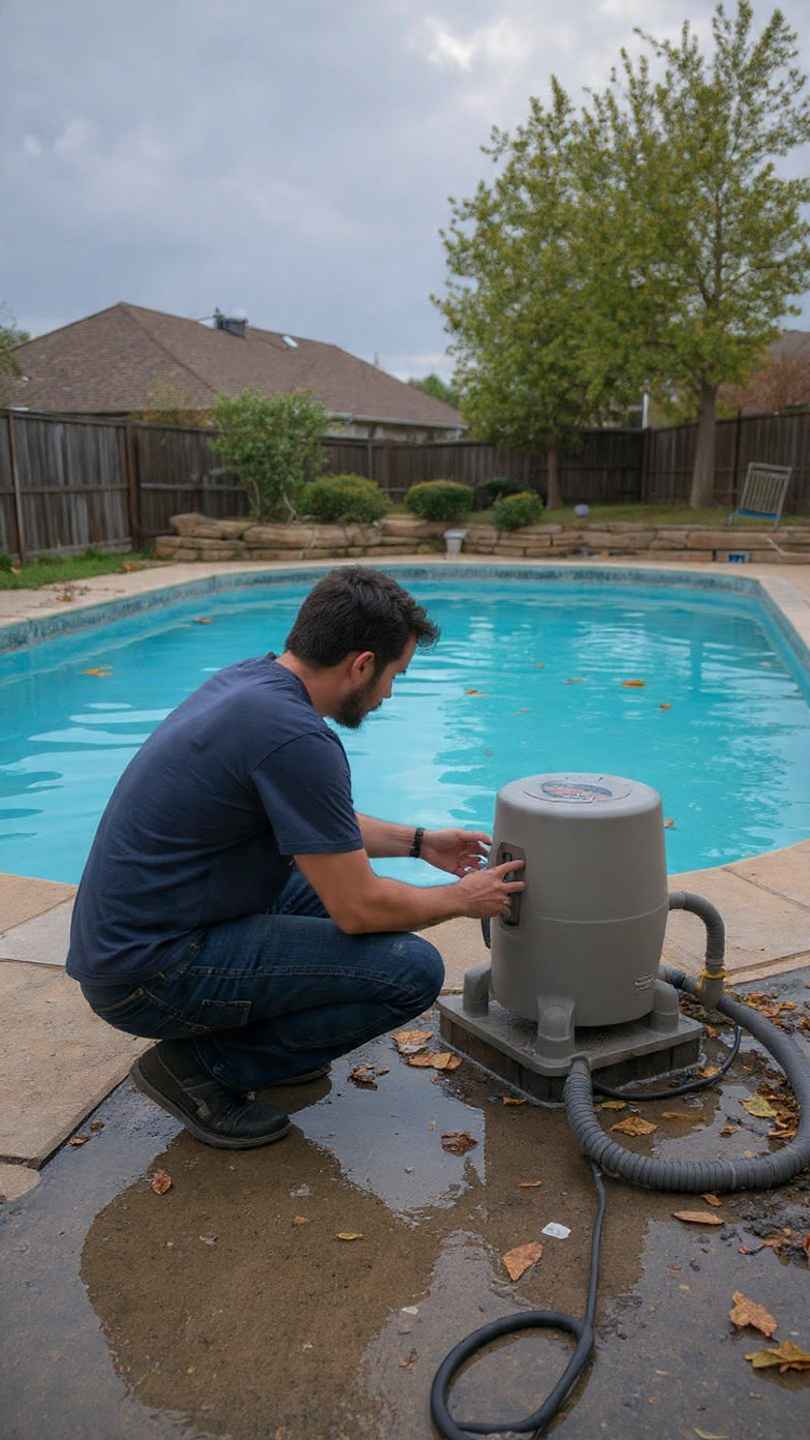
Equipment enclosure ($500 to $3,000). A wood, composite, or masonry enclosure around the equipment pad, lined with sound-absorbing material, makes a big difference. It must maintain airflow — heat pumps especially need ventilation. Many DFW HOAs require equipment screening anyway, so an enclosure solves pool pump noise and HOA compliance at the same time. According to HomeAdvisor’s pool data, sound-dampening equipment enclosures reduce perceived noise by 10 to 15 decibels — which is a dramatic difference to the human ear.
Variable speed pump upgrade ($800 to $1,800 installed). This is the best solution. A variable speed pump at 1,500 to 2,000 RPM produces just 45 to 55 decibels — whisper-quiet compared to a single-speed. Most DFW owners with VS pumps can’t hear their pump from inside the house. It’s the single most effective way to get a quiet pool pump, and it pays for itself in energy savings within 12 to 18 months. Our VS vs single speed comparison has the full math. The U.S. Department of Energy confirms that variable speed pumps reduce both energy consumption and operational noise by up to 75%.
Landscaping buffer (bonus). Dense hedges or shrubs between equipment and the neighbor’s property aren’t highly effective alone for pool pump noise reduction, but combined with an enclosure they break line-of-sight sound. Keep plants 2 to 3 feet from equipment for airflow and service access.
When Pool Pump Noise Means Something Is Failing
Not all loud pool pump sounds are just annoyances. Grinding means bearings are failing and the motor needs attention soon. Screeching means severe bearing wear — the motor may seize any day. A loud hum without spinning means a dead capacitor. Cavitation rumble means the pump is starving for water — check baskets, filter, and water level immediately. Clicking or electrical buzzing from a VS pump points to a drive board issue. These sounds are warnings of impending failure, not just noise problems. The Consumer Product Safety Commission recommends addressing unusual equipment sounds promptly because mechanical failures near water carry safety risks.
DFW HOA Noise Standards and Your Pool Pump
Some DFW HOAs have specific decibel limits for equipment noise — typically 60 decibels at the property line during daytime and 50 at night. A loud pool pump on a single-speed motor may violate these standards. A quiet pool pump on a VS motor at low speed typically falls well under the limit. If you’ve received a noise complaint, a VS pump upgrade plus a vibration pad usually resolves it completely. Our HOA pool rules guide covers equipment screening and noise requirements across DFW communities.
People Also Ask
Why is my pool pump so loud?
Most commonly: it’s a single-speed pump running at full RPM, worn bearings amplifying noise over time, or cavitation from restricted water flow. Age makes every pump louder.
How can I make my pool pump quieter?
Best solution: upgrade to a variable speed pump. Quick fixes: add a vibration isolation pad, optimize run schedule to avoid nighttime high-speed operation, and check for cavitation causes like clogged baskets or dirty filter.
Are variable speed pumps quieter than single speed?
Dramatically quieter. A VS pump at low speed runs at 45 to 55 decibels versus 65 to 80 for a single-speed. Most owners can’t hear a VS pump from inside the house. It’s the most effective quiet pool pump upgrade available.
Can I build an enclosure around my pool pump?
Yes, as long as you maintain adequate airflow for ventilation and heat dissipation. Heat pumps especially need clearance. Use sound-absorbing lining material for maximum noise reduction. Many DFW HOAs actually require equipment enclosures.
Can my HOA force me to fix a loud pool pump?
If your HOA has decibel limits or equipment noise standards in the CC&Rs, yes. They can issue violation notices and escalating fines. A VS pump upgrade typically solves the problem and brings you into compliance. Our maintenance services include equipment recommendations for HOA compliance.
Pump Driving You or Your Neighbors Crazy?
PoolBurg diagnoses the cause of pool pump noise and recommends the quietest, most cost-effective solution. Contact us and we’ll tell you whether it’s a simple fix, a bearing issue, or time for a quiet pool pump upgrade.