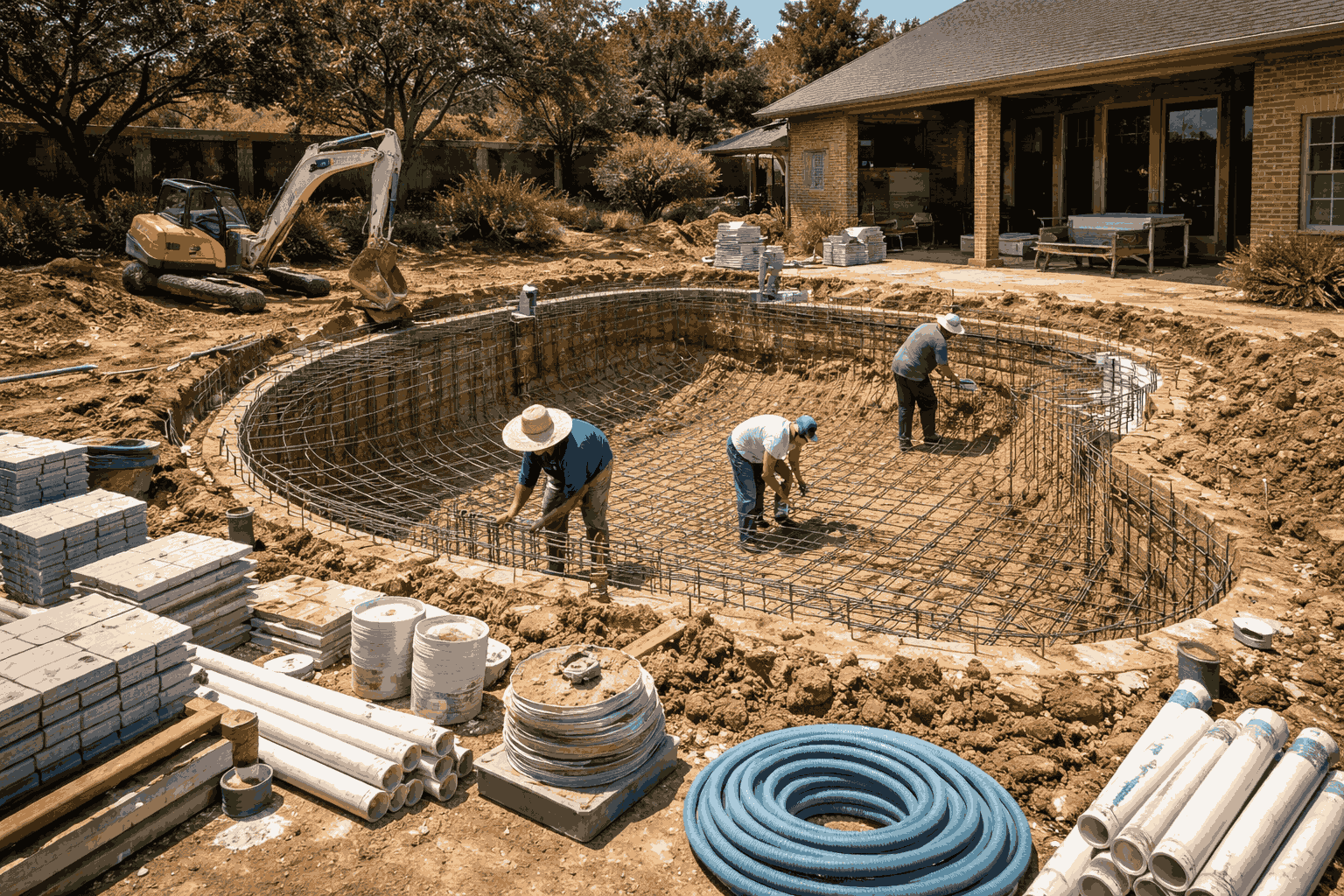
Every gunite pool eventually needs resurfacing, and choosing the right pool resurfacing options matters more in DFW than almost anywhere else. Our hard water chews through cheap finishes years faster than the national average. The finish you pick affects how the pool looks, how it feels underfoot, how long it lasts, and how much you spend on maintenance and the next resurface. If you’re comparing plaster vs pebble vs quartz pool finish choices, this guide ranks every pool resurfacing types option by what actually survives DFW’s calcium-heavy water long-term.
Pool Resurfacing Options — Every Finish Ranked for DFW
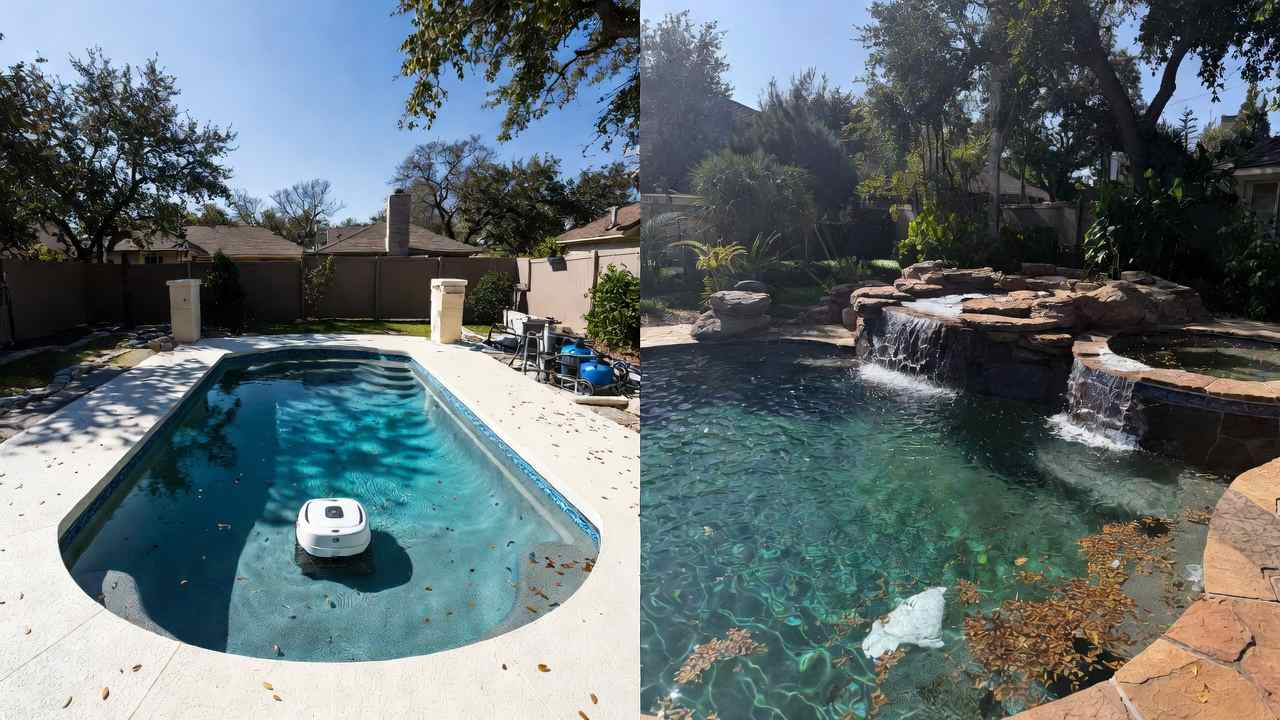
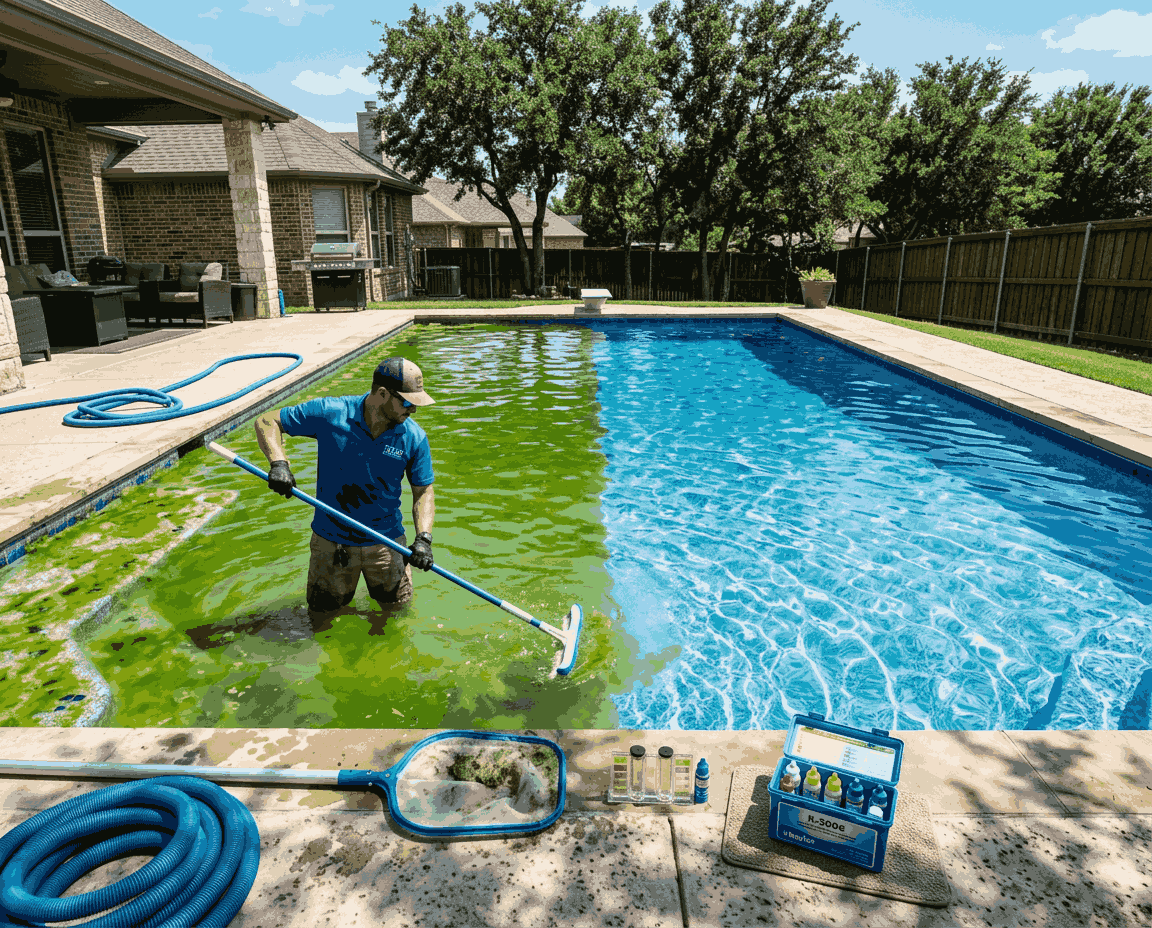
Standard white plaster. The classic pool finish. Smooth, bright white, and the cheapest pool resurfacing options available at $4,000 to $7,000. The catch in DFW: our hard water embeds calcium into the porous plaster surface, causing roughness and staining within 3 to 5 years. Lifespan here is 5 to 8 years — shorter than the national average. The Water Quality Association confirms that high-calcium water accelerates surface degradation in cement-based pool finishes. Best for budget-conscious owners who accept resurfacing again in 5 to 8 years.
Colored plaster. Same material as white with added pigment — blue, grey, black, or tan. Richer look and hides staining better, which is a real advantage in DFW hard water. Same 5 to 8 year lifespan because pigment doesn’t add durability. Cost: $5,000 to $8,000. Best for homeowners wanting better aesthetics at a modest premium.
Quartz aggregate. This is where the plaster vs pebble vs quartz pool finish conversation gets interesting. Brands like Diamond Brite and Hydrazzo mix colored quartz crystals into the plaster, creating a textured, sparkly surface that catches light beautifully. Quartz is denser and less porous than standard plaster, so it resists DFW’s calcium penetration significantly better. Lifespan: 10 to 15 years. Cost: $7,000 to $12,000. Feel is slightly textured but comfortable underfoot.
This is PoolBurg’s recommended sweet spot for most DFW pool resurfacing options — a major durability upgrade at a moderate cost premium. Our pool stain guide covers how to manage the staining that even quartz finishes encounter in hard water over time.
Pebble finish. PebbleTec, PebbleSheen, PebbleFina, and StoneScapes mix natural pebbles into the plaster for a natural stone look. This is the longest-lasting plaster-based option at 15 to 20+ years in DFW. Hard water impact is low — the surface is the densest available and highly resistant to calcium penetration and staining. Cost: $9,000 to $15,000. PebbleSheen is the most popular variant in DFW because it’s smoother than the original PebbleTec while keeping the durability. The Pool & Hot Tub Alliance notes that pebble finishes have become the industry standard for premium residential pools in hard water markets.
Glass bead finish. Recycled glass beads mixed into plaster create a luminous, shimmery surface that catches light differently throughout the day. Very smooth underfoot — glass beads are rounder than pebbles. Lifespan: 12 to 18 years. Cost: $10,000 to $16,000. Best for premium homes in Southlake, Frisco, and Prosper wanting a unique luxury look.
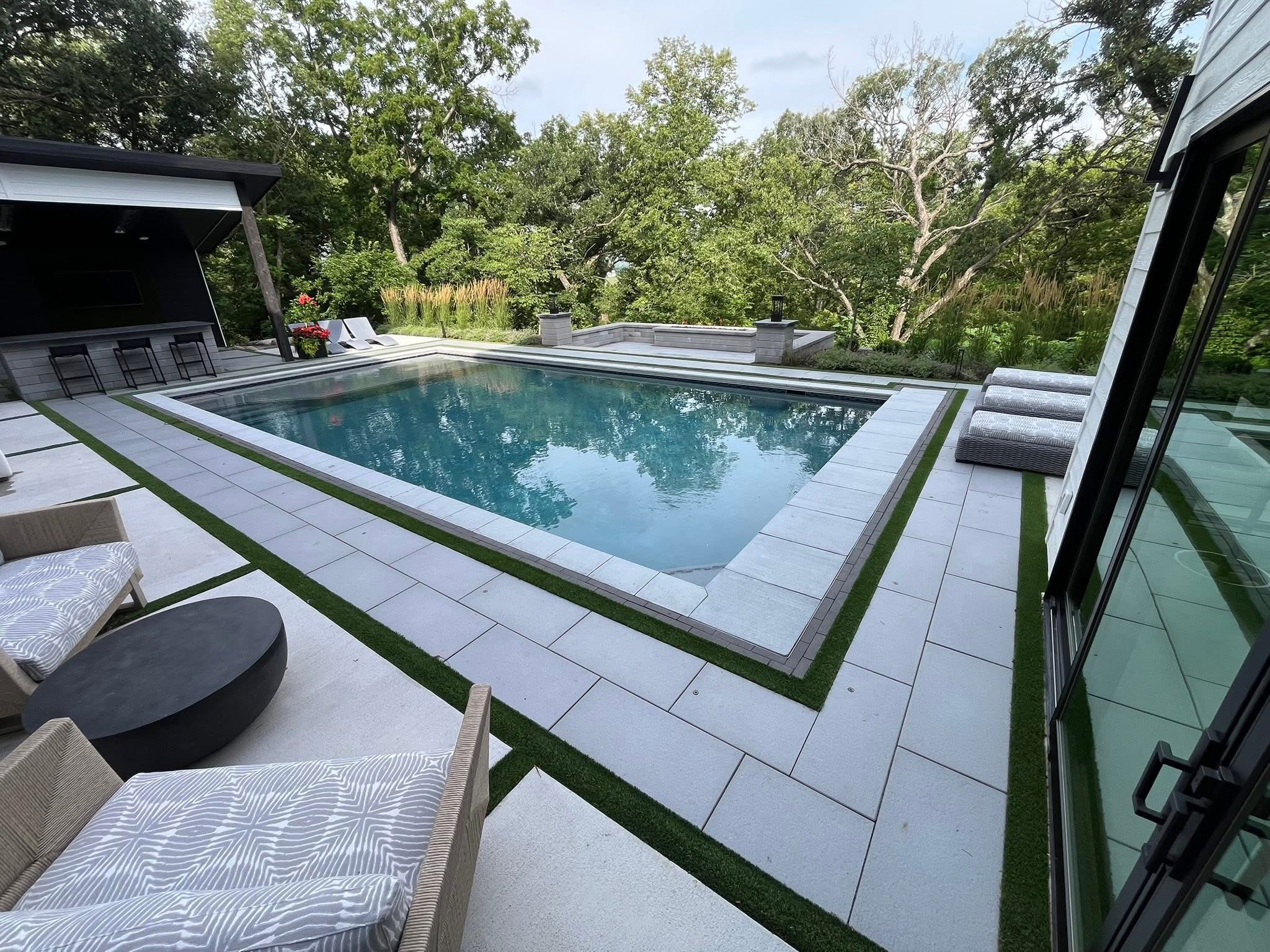
Full tile. The ultimate. Porcelain or glass mosaic covering the entire interior. Absolutely stunning with unlimited design possibilities. Lifespan: 20 to 30+ years — the longest of any pool resurfacing options. Tile is non-porous, so DFW calcium sits on the surface where it can be cleaned off rather than penetrating in. The downside: cost runs $20,000 to $60,000+, and grout needs periodic attention. Best for ultra-premium builds and homeowners who never want to resurface again.
PoolBurg’s Recommendation for DFW Hard Water
Budget: colored plaster at $5,000 to $8,000 — hides staining, accept the 5 to 8 year cycle. Best value: quartz aggregate at $7,000 to $12,000 — significant durability jump, beautiful finish. Premium: PebbleSheen at $9,000 to $13,000 — longest residential lifespan and best hard water resistance. Luxury: glass bead or full tile for those who want the absolute best. The key DFW insight: spending more upfront on a durable finish saves money over 20 years because you resurface less often. According to HomeAdvisor’s pool data, one premium resurfacing job over 15 years costs less than three plaster jobs over the same period. Our resurfacing service page covers what we handle during and after the process.
When Is Your DFW Pool Due for Resurfacing?
White or colored plaster: every 5 to 8 years. Quartz: every 10 to 15 years. Pebble: every 15 to 20 years. Glass bead: every 12 to 18 years. Tile: grout maintenance every 10 to 15 years, tile itself lasts 20 to 30+. Signs it’s time: surface feels rough on your feet, staining that won’t clean off, visible popping or delamination of the finish, and persistent cloudy water that chemistry can’t fix. Our water chemistry guide covers how proper chemistry extends the life of every finish type. The U.S. Department of Energy notes that smooth, well-maintained surfaces also improve water circulation efficiency.
People Also Ask
What is the best pool resurfacing material for hard water?
Pebble finishes like PebbleSheen offer the best hard water resistance in DFW. Quartz aggregate is the best value option. Standard plaster is the worst choice for hard water because calcium penetrates the porous surface rapidly.
How much does pool resurfacing cost in DFW?
White plaster: $4,000 to $7,000. Colored plaster: $5,000 to $8,000. Quartz: $7,000 to $12,000. Pebble: $9,000 to $15,000. Glass bead: $10,000 to $16,000. Full tile: $20,000 to $60,000+.
How long does PebbleTec last in Texas?
15 to 20+ years with proper water chemistry management. PebbleSheen and PebbleFina have similar durability with a smoother feel. DFW’s hard water shortens other finishes but has minimal impact on pebble.
Is quartz finish better than plaster for pools?
Significantly better in DFW. Quartz lasts 10 to 15 years versus 5 to 8 for plaster, resists hard water damage better, looks better, and costs only moderately more. It’s the best value pool resurfacing options choice for most North Texas pools.
What is the smoothest pool finish?
Glass bead is the smoothest textured finish. Standard plaster is smooth when brand new but gets rough quickly in DFW hard water. Full tile is smooth and stays smooth the longest. Among pebble finishes, PebbleFina is the smoothest variant.
Pool Surface Looking Rough? Talk to PoolBurg
We maintain every pool resurfacing options type and know exactly how each finish behaves in DFW hard water. Contact PoolBurg for post-resurfacing chemistry management, new surface curing protocols, and long-term care that makes your finish last every year it’s supposed to.