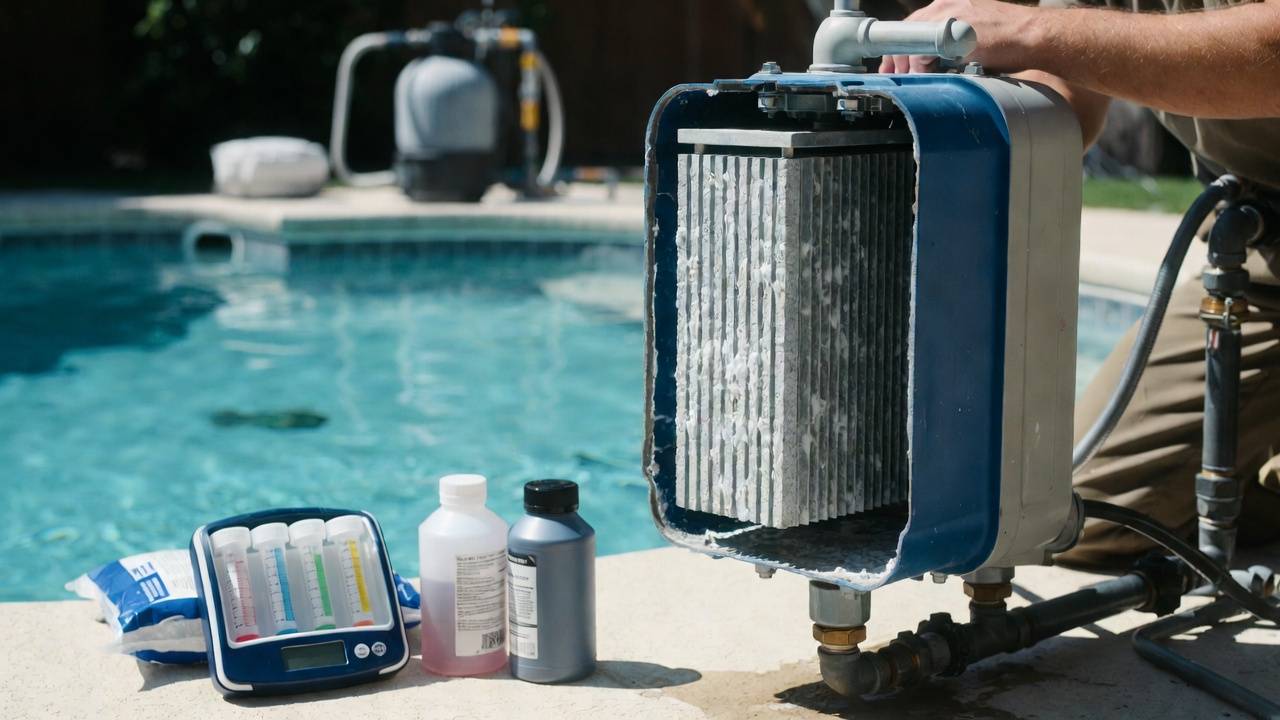
Pool sand replacement is one of those jobs that’s easy to forget about until your water starts telling you something’s wrong. Sand filters are workhorses — they run quietly in the background for years. But the sand inside doesn’t last forever. It wears down, clumps together, and eventually stops catching the stuff it’s supposed to catch. In DFW, our hard water makes this happen faster than the national average. If you’re wondering when to replace pool filter sand, this guide covers the signs, the process, and exactly what type of sand works best in North Texas.
When to Replace Pool Filter Sand
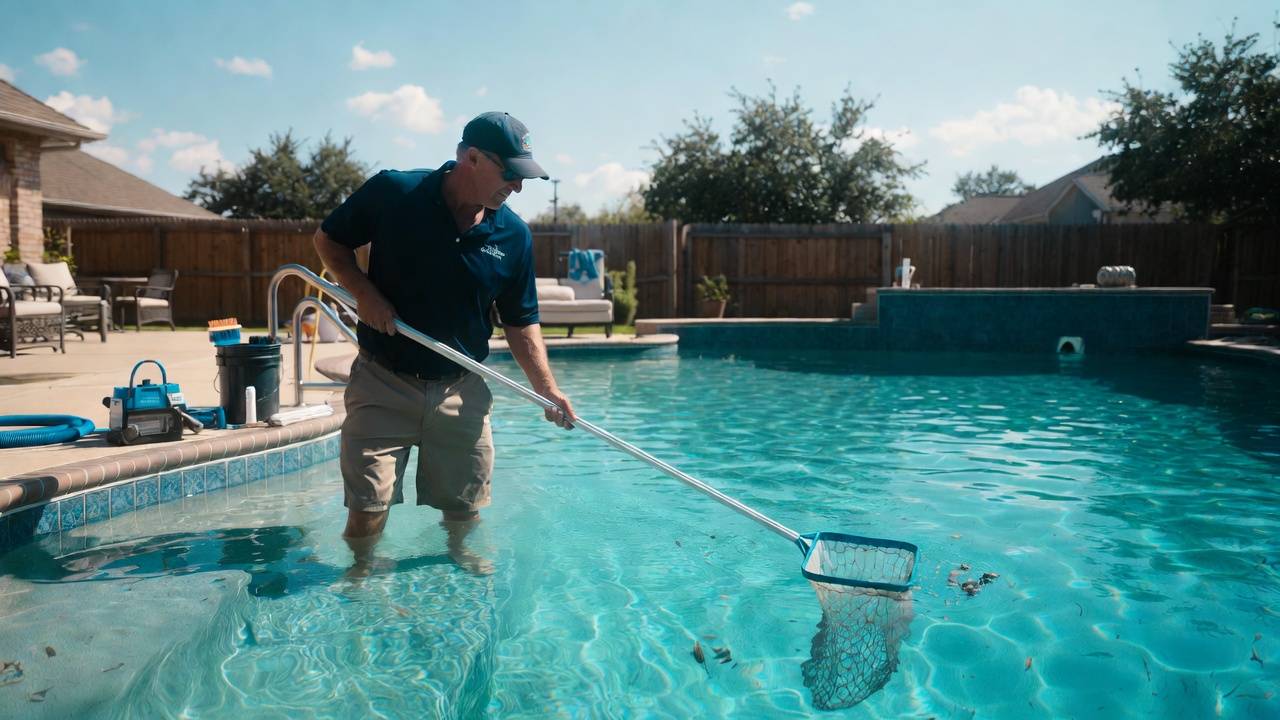
Nationally, pool filter sand lasts 5 to 7 years. In DFW? Plan on 3 to 5 years. The difference is our calcium-heavy water. Over time, hard water calcifies the sand grains, cementing them together into clumps that can’t filter properly. The Water Quality Association confirms that high-calcium water accelerates media degradation in filtration systems.
Here are the signs that pool sand replacement is overdue. First, persistently cloudy water that won’t clear up no matter how much you shock or run the pump. The sand has lost its filtration ability. Second, your filter pressure gauge never rises between backwashes. Healthy sand creates resistance that builds pressure over time — when the sand is spent, water flows through without being filtered. Third, you’re finding sand in the pool itself.
That means a lateral inside the filter has cracked, and sand is blowing back through the return lines. That’s both a sand issue and a lateral issue that needs to be addressed during pool sand replacement.
What Type of Sand to Use for Pool Sand Replacement in DFW
Only use #20 silica sand — it’s the industry standard grain size for pool filters. Never use play sand, construction sand, or anything from a hardware store that isn’t specifically labeled for pool filtration. The Pool & Hot Tub Alliance specifies #20 silica as the required media for sand filters.
That said, DFW pool owners have two alternatives worth considering. ZeoSand is a zeolite-based media that filters finer particles than standard sand and handles hard water better because it resists calcification. FilterGlass is made from recycled glass and offers similar benefits — finer filtration and better longevity in hard water conditions. Both cost more upfront but can last longer in DFW’s water. Our sand filter vs cartridge filter comparison covers how sand media options stack up against cartridge systems overall.
How to Change Pool Filter Sand — Step by Step
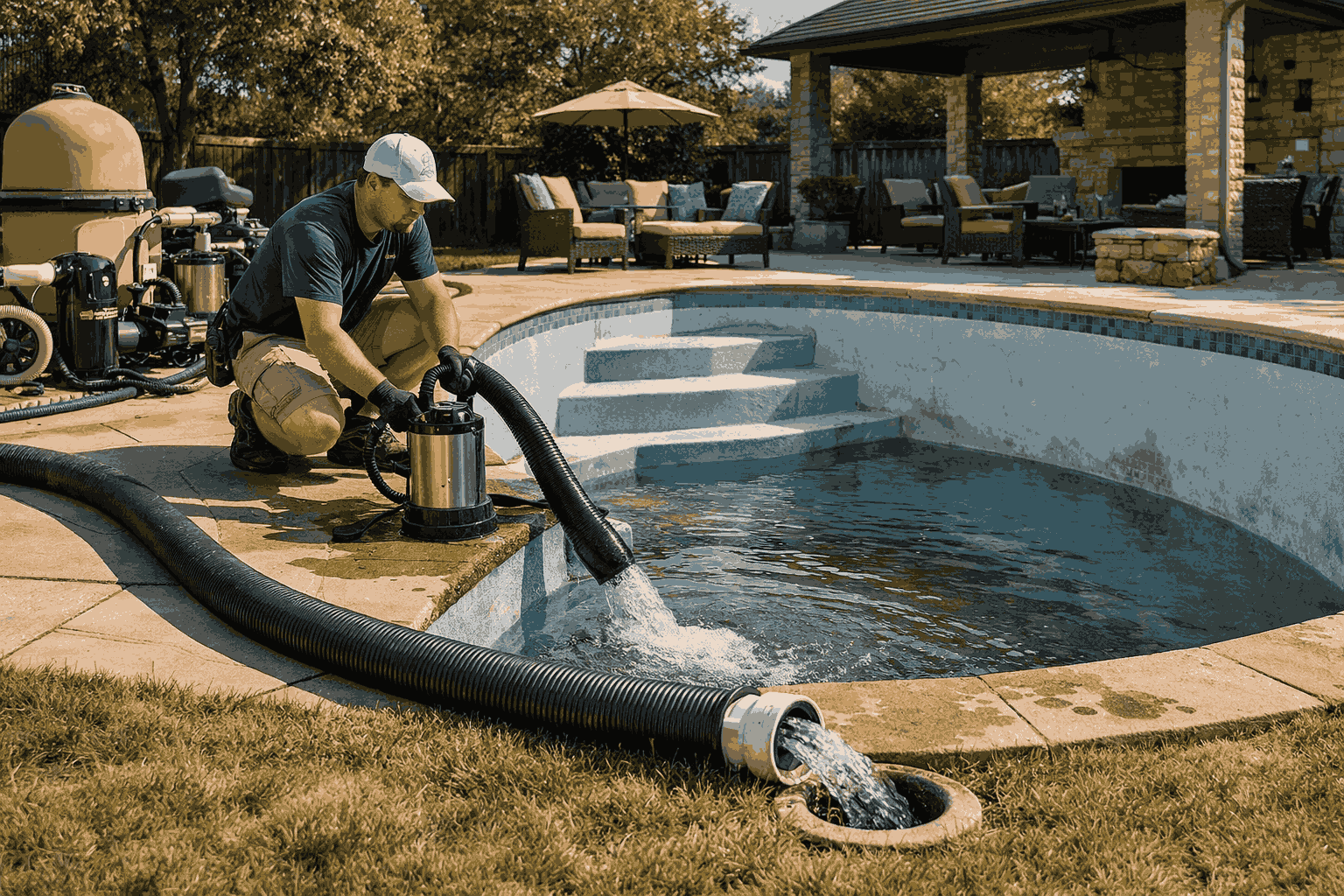
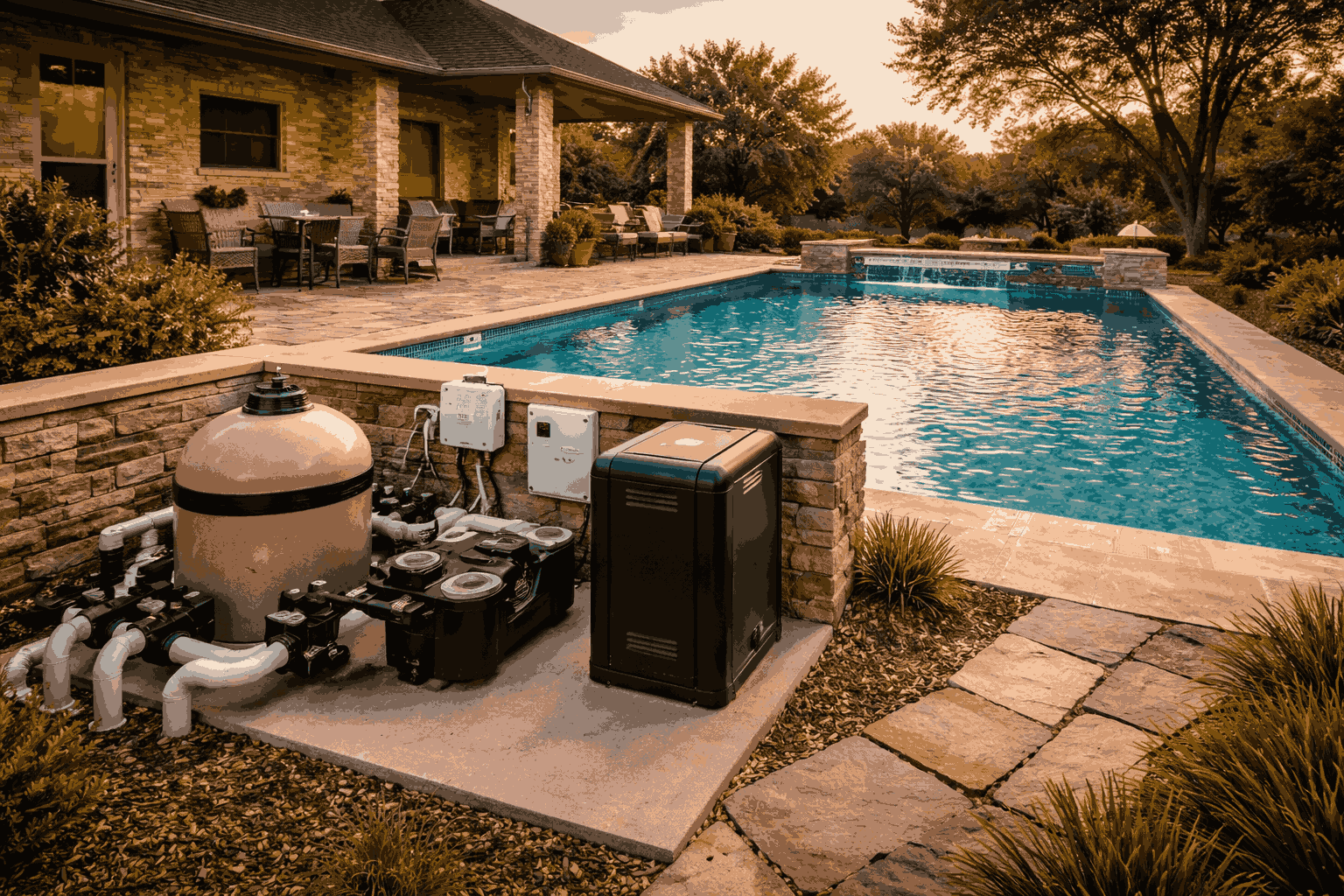
If you want to know how to change pool filter sand yourself, here’s the process. It’s not complicated, but it’s heavy, messy work.
Step 1: Turn off the pump and disconnect power completely. Safety first on every pool sand replacement job.
Step 2: Remove the multiport valve from the top of the filter tank. Disconnect any plumbing unions and set the valve aside carefully — don’t damage the multiport valve or its spider gasket.
Step 3: Scoop out the old sand. A plastic cup or small bucket works. This is the hard part — a typical residential filter holds 150 to 300 pounds of sand. It takes a while.
Step 4: Inspect the laterals at the bottom of the tank. These are the slotted fingers that keep sand in and let clean water through. If any are cracked, replace them now — this is your only opportunity without doing the whole job again.
Step 5: Fill the tank about halfway with water before adding new sand. This cushions the laterals so the weight of the sand doesn’t crack them.
Step 6: Pour in the new sand slowly. Check your filter manual for the exact amount — overfilling or underfilling both cause problems.
Step 7: Reassemble the multiport valve and reconnect plumbing.
Step 8: Backwash for 2 to 3 minutes to flush out fine sand dust.
Step 9: Rinse for 30 to 60 seconds to settle the sand bed.
Step 10: Return to filter mode and check for leaks. Run the system and confirm pressure is building normally. According to the U.S. Department of Energy, a clean, properly loaded filter runs more efficiently and reduces overall pool energy consumption.
Pool Sand Replacement Cost in DFW
DIY pool sand replacement costs $50 to $150 — that’s just the sand and maybe a new set of laterals if yours are cracked. Professional pool sand replacement runs $200 to $400 in DFW, which includes the labor, the sand, lateral inspection, multiport valve service, and proper backwash and startup. HomeAdvisor’s pool maintenance data puts professional sand changes in a similar range nationally.
Given the heavy lifting involved, most homeowners find the professional route worth every dollar. Our filter maintenance page covers the full scope of what we inspect during a sand change.
People Also Ask
How often should you replace pool filter sand?
Every 3 to 5 years in DFW due to hard water calcification. Nationally the recommendation is 5 to 7 years, but our water chemistry shortens sand life.
What kind of sand goes in a pool filter?
#20 silica sand is the standard. Alternatives like ZeoSand and FilterGlass offer finer filtration and better performance in hard water areas like DFW.
Can I use regular sand in my pool filter?
No. Play sand and construction sand have the wrong grain size and shape. They’ll clog the filter, pass through the laterals, and end up in your pool. Only use sand specifically graded for pool filtration.
Why is sand coming out of my pool jets?
A cracked lateral inside the filter tank is letting sand escape through the return lines and into the pool. You need to open the filter, inspect the laterals, and replace any broken ones during your next pool sand replacement. Our damaged equipment guide covers lateral failures.
Is ZeoSand better than regular pool sand?
For DFW specifically, it can be. ZeoSand filters finer particles and resists the calcium calcification that degrades standard sand in hard water. It costs more upfront but often lasts longer in our conditions. Our water testing guide helps determine how aggressive your water is and which media makes sense.
Overdue for a Pool Sand Replacement? PoolBurg Handles the Heavy Work
Pool sand replacement is messy, heavy, and easy to get wrong if you miss the laterals or overload the tank. Contact PoolBurg and we’ll handle the full job — sand change, lateral inspection, multiport service, backwash, and startup. Your filter will run like new.