
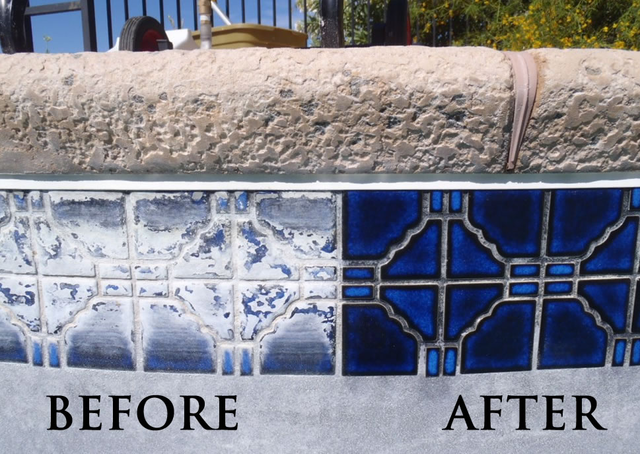
Poolburg uses advanced dustless blasting (wet abrasive blasting) to strip away buildup without the mess or damage of traditional methods. We deliver a smooth, like-new finish while protecting the integrity of your material.
Among all the problems that affect pool tile, calcium buildup is perhaps the most common and frustrating. Those white, crusty deposits that form along your waterline aren’t just unsightly, they’re actively damaging your tile and grout. Understanding what causes these problems and how professional restoration addresses them is the first step toward bringing your pool’s beauty back to life.
Watch years of buildup disappear in seconds. Our professional blasting process delivers a level of cleanliness that traditional scrubbing and dangerous chemicals simply can’t match.
Don’t let hard water scale ruin your backyard oasis.
Calcium buildup can leave your pool looking weathered and outdated. Razor Blast safely eliminates stubborn scale and mineral deposits from tile, stone, and plaster, restoring that polished, sparkling finish without the use of harsh, corrosive chemicals.
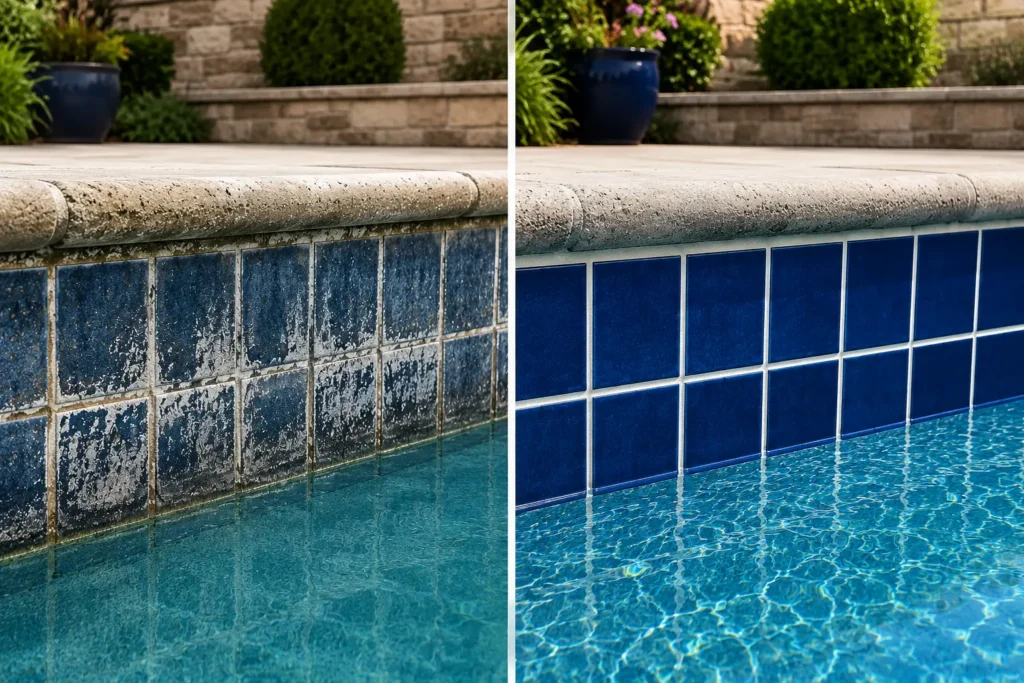
Pool tile restoration and calcium removal in Dallas typically costs $300 to $1,200+ depending on the severity of buildup and the size of your pool. Light calcium removal for minor buildup runs $300 to $500. Moderate cleaning with chemical treatment costs $500 to $800. Heavy, thick calcium scale requiring advanced techniques like bead blasting runs $800 to $1,200+.
Professional pool tile restoration and calcium removal to restore beauty and performance to your pool. Pool tile represents a significant investment in your pool’s appearance and functionality. It frames your pool, protects its structure, and creates the visual identity of your backyard oasis. However, even the highest quality pool tile faces constant assault from water, chemicals, minerals, weather, and time—all working together to dull, stain, and damage your pool’s tile surfaces .
Among all the problems that affect pool tile, calcium buildup is perhaps the most common and frustrating. Those white, crusty deposits that form along your waterline aren’t just unsightly, they’re actively damaging your tile and grout . Understanding what causes these problems and how professional restoration addresses them is the first step toward bringing your pool’s beauty back to life.
Pool tile represents a significant investment in your pool’s appearance and functionality. It frames your pool, protects its structure, and creates the visual identity of your backyard oasis. However, even the highest quality pool tile faces constant assault from the environment it lives in. Water, chemicals, minerals, weather, and time all work together to dull, stain, and damage your pool’s tile surfaces.
Among all the problems that affect pool tile, calcium buildup is perhaps the most common and frustrating. Those white, crusty deposits that form along your waterline aren’t just unsightly, they’re actively damaging your tile and grout. Understanding what causes these problems and how professional restoration addresses them is the first step toward bringing your pool’s beauty back to life.
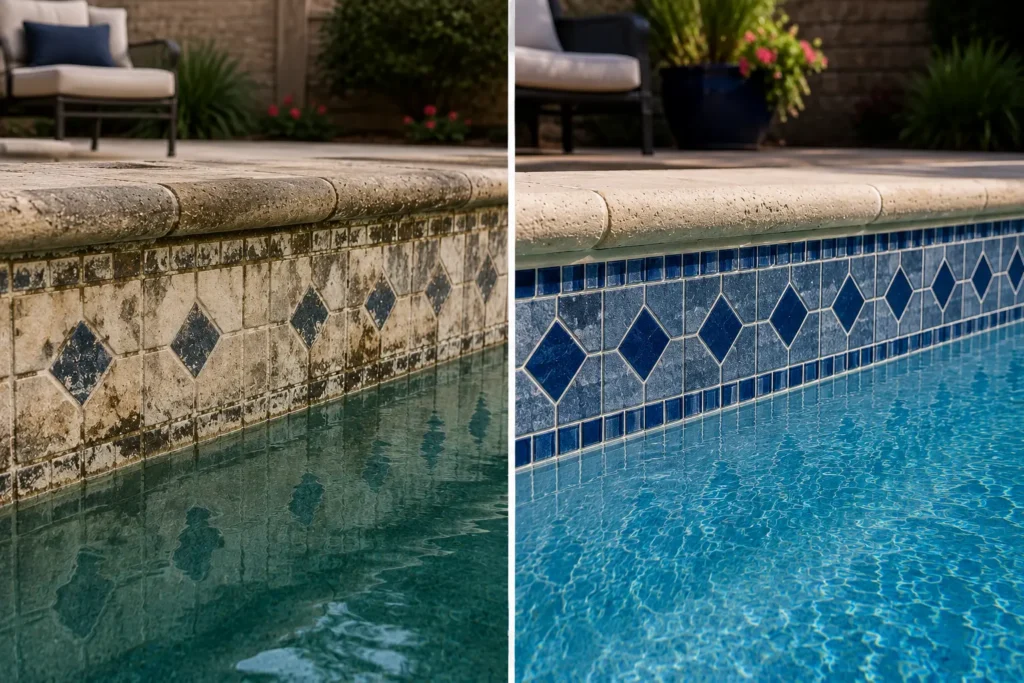
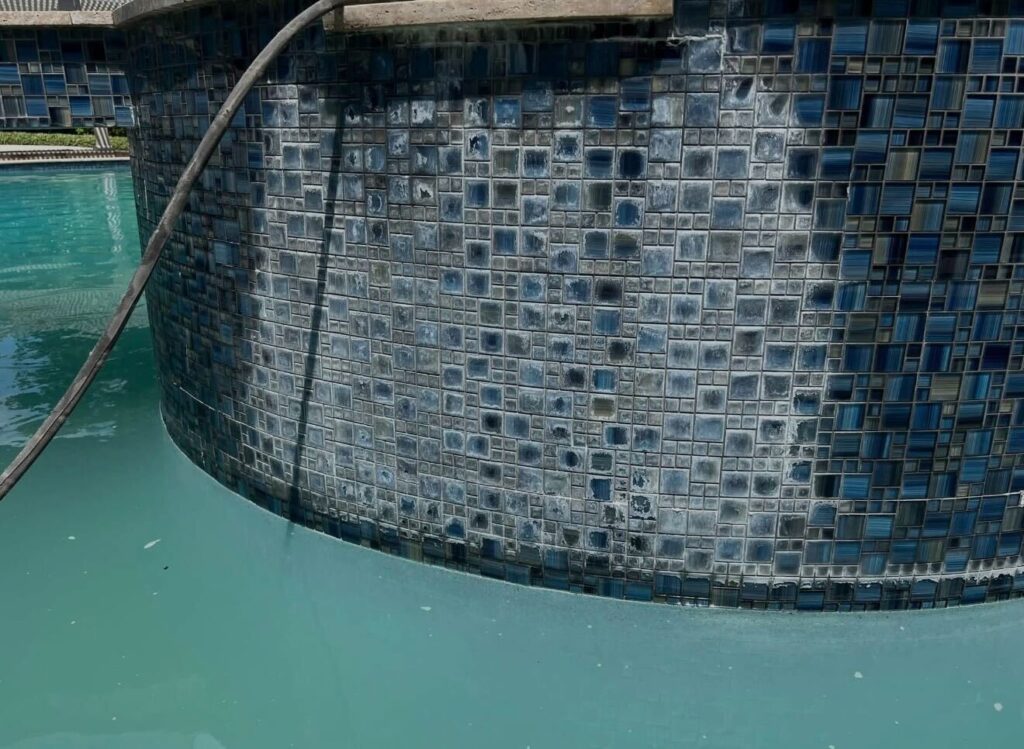
Calcium buildup doesn’t appear randomly. It’s the result of specific chemical and physical processes happening in your pool water. When you understand the causes, you can better appreciate why professional removal is necessary and how to prevent future problems.
Hard Water and Mineral Content:
Many areas have naturally “hard” water containing high levels of dissolved minerals, particularly calcium and magnesium. When this water evaporates from your pool tile (especially at the waterline), it leaves these minerals behind. Over time, these deposits build up into visible white or gray crusty layers.
High pH and Alkalinity:
When your pool’s pH rises above 7.8, calcium becomes less soluble in water. Instead of staying dissolved, it precipitates out of solution and attaches to surfaces, particularly rough or porous surfaces like tile grout and certain tile finishes. This is why maintaining proper water chemistry isn’t just about swimmer comfort, it’s essential for preventing mineral deposits.
Temperature Effects:
Warm water holds fewer dissolved minerals than cold water. As your pool water heats up (especially in direct sunlight), calcium that was previously dissolved can come out of solution and deposit on tile surfaces. This is why calcium buildup is often worse on south-facing pool walls and in spas with higher temperatures.
Evaporation Concentration:
As water evaporates from your pool surface, the minerals remain behind, becoming more concentrated in the remaining water. The waterline area experiences the most evaporation, which is why calcium deposits are typically thickest along the tile band at the water’s surface.
Scale Formation Process:
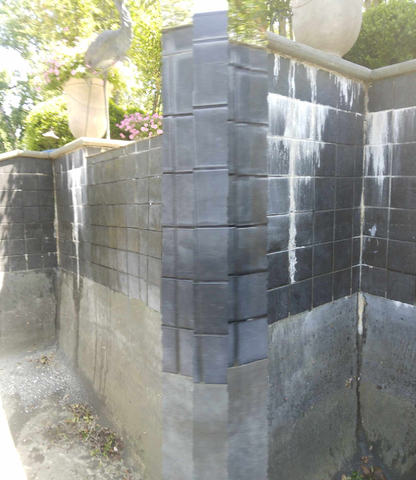
Calcium deposits don’t just sit on top of your tile they actually bond to the surface. The initial deposit creates a rough surface that encourages more calcium to attach. Over time, these layers build up into thick, hard deposits that ordinary cleaning methods cannot remove.
While calcium is the most common problem, pool tile faces other forms of staining and buildup:
Metal Staining:
Iron: Rust-colored brown or orange stains
Copper: Green or blue-green stains (often from algaecides or corroding equipment)
Manganese: Purple-black or dark brown stains
Silver: Black stains (rare, from certain algaecides)
Organic Staining:
Algae: Green, yellow, or black discoloration
Tannins: Brownish stains from leaves and organic debris
Body oils: Greasy yellow-brown buildup at waterline
Sunscreen and lotions: White or yellow waxy deposits
Chemical Damage:
Etching: Rough, dull areas from acidic water
Color fading: UV and chemical exposure damaging tile glazes
Grout deterioration: Crumbling or discolored grout lines
What It Is:
The Spot Check is our targeted maintenance service designed for pools that are already in good condition but need occasional attention to stay that way. Rather than waiting for problems to become severe, this service addresses issues while they’re still minor, preventing the need for more intensive restoration later.
When You Need It:
Your pool looks generally good but has a few problem areas
You notice early-stage calcium deposits starting to form
The waterline has light buildup that regular brushing isn’t removing
You want to maintain your pool’s appearance between deeper cleanings
You’re preparing for a special event or pool party
What We Do:
Our technician performs a thorough inspection of your pool tile, identifying areas where buildup is beginning. We then:
Target early-stage calcium deposits before they become thick and bonded
Clean waterline buildup using professional-grade, tile-safe products
Address surface blemishes like light stains or discoloration
Spot treat problem areas without affecting surrounding tile
Provide maintenance recommendations to extend results
Results You Can Expect:
Early deposits completely removed
Waterline looking clean and fresh
Tile surface restored to its original appearance
Prevention of more serious buildup
Extended time between major cleanings
Best For:
Pools with good maintenance history
Homeowners who want to stay ahead of problems
Seasonal touch-ups between major services
Budget-conscious maintenance approach
What It Is:
The Calcium Crew Deep Clean is our comprehensive, no-compromises restoration service for pools with significant calcium buildup and tile deterioration. This is not a quick surface cleaning, it’s a thorough, professional restoration that returns your pool tile to a factory-fresh, showroom finish.
When You Need It:
Years of calcium buildup have created thick, crusty deposits
Previous cleaning attempts have failed or made problems worse
Your pool tile looks dull, stained, or generally neglected
You’re preparing to sell your home and want maximum curb appeal
You simply want your pool to look its absolute best
What We Do:
Our specialized team, known as “The Calcium Crew,” brings years of experience and professional-grade equipment to your pool. The process includes:
Phase 1: Assessment and Preparation
Complete inspection of all tile surfaces
Identification of problem areas and deposit types
Protection of surrounding surfaces and pool finishes
Selection of appropriate cleaning methods and products
Phase 2: Initial Calcium Removal
Application of professional-grade calcium dissolvers
Mechanical removal of thick deposits using specialized tools
Careful work around delicate tile and grout
Multiple passes for heavily encrusted areas
Phase 3: Deep Cleaning and Stain Removal
Thorough cleaning of all tile surfaces
Targeted stain removal for metal and organic stains
Grout line cleaning and brightening
Waterline scum line elimination
Phase 4: Final Detailing and Finishing
Complete rinse and neutralization of cleaning products
Final inspection and touch-up of any missed areas
Polishing of tile surfaces to restore shine
Application of protective treatment if desired
Phase 5: Results Demonstration
Walk-through of completed work
Before and after documentation
Maintenance recommendations for lasting results
Warranty information for the service
Results You Can Expect:
Years of embedded scale completely eliminated
Every inch of tile returned to factory-fresh appearance
Grout lines bright and clean
Waterline restored to perfect condition
Pool looking better than it has in years
Best For:
Pools with significant neglect or buildup
Homeowners wanting dramatic, visible results
Properties being prepared for sale
Anyone who wants their pool to look truly exceptional
What It Is:
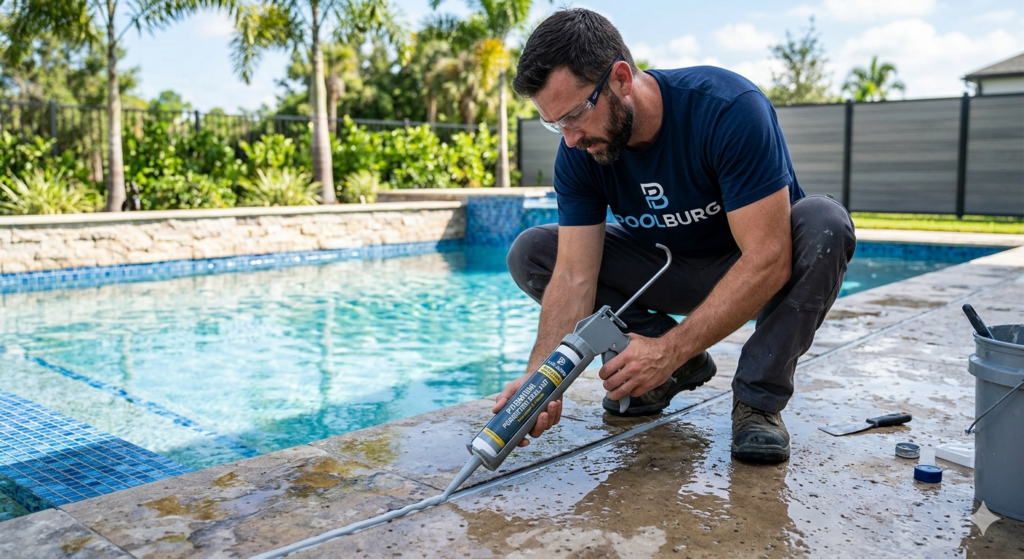
The Premium Perimeter Sealant is our advanced protective treatment applied to pool tile after restoration. This specialized sealer creates a protective barrier that helps retard mineral and calcium buildup while also protecting against deterioration from chemicals and weather.
Why Sealant Matters:
Even after professional cleaning, your pool tile remains vulnerable to future calcium deposits. The microscopic pores and surface irregularities that allow minerals to attach are still present. Sealant fills these pores, creating a smooth, non-stick surface that resists mineral attachment.
Benefits of Premium Perimeter Sealant:
Protection Against Calcium Buildup:
Creates a barrier that minerals cannot easily attach to
Retards the formation of new deposits
Makes future cleaning significantly easier
Extends time between professional cleanings
Protection Against Deterioration:
Shields tile from chemical attack
Reduces water absorption into porous tiles
Protects grout from erosion and staining
Extends the life of your tile installation
Enhanced Appearance:
Adds subtle sheen to tile surfaces
Enhances color depth and richness
Creates uniform appearance across all tiles
Makes the pool look professionally finished
Easier Maintenance:
Regular brushing becomes more effective
Stains are less likely to set in
Cleaning takes less time and effort
Pool stays looking better between services
Application Process:
Surface preparation: Tile must be perfectly clean and dry
Product selection: Sealer matched to your specific tile type
Precise application: Even coverage without pooling or missing areas
Proper curing: Allowing adequate time for bonding
Verification: Checking for complete coverage
Longevity:
Typically lasts 1-3 years depending on conditions
Saltwater pools may require more frequent application
High-use pools may need annual reapplication
Professional reapplication recommended for best results
Best For:
Pools after professional cleaning or restoration
Homeowners wanting to reduce maintenance
Pools in hard water areas
Anyone wanting to protect their tile investment
Before any work begins, we conduct a comprehensive evaluation of your pool tile:
Visual Inspection:
We examine every tile for damage, cracks, or loose pieces
We identify the types of buildup (calcium, metal stains, organic)
We assess grout condition and any missing areas
We note any underlying issues that need attention
Testing and Analysis:
We test deposit hardness to determine removal method
We identify tile type (ceramic, porcelain, glass, natural stone)
We check for any previous sealants or treatments
We evaluate water chemistry history if available
Documentation:
We take detailed photos of problem areas
We create a work plan tailored to your specific situation
We note any areas requiring special care or techniques
We prepare before-and-after documentation
Based on our assessment, we develop a specific treatment plan:
Method Selection:
Chemical removal: For moderate calcium deposits
Mechanical removal: For thick, bonded deposits
Combination approach: For severe buildup
Specialized techniques: For delicate or unique tiles
Product Selection:
Professional-grade calcium dissolvers
pH-neutral cleaners for sensitive surfaces
Stain-specific treatments for metal or organic stains
Grout cleaners and brighteners
Safety Considerations:
Protection of pool water and surfaces
Containment of cleaning products
Ventilation considerations for indoor pools
Protection of surrounding landscaping
Calcium Removal:
For calcium deposits, we use a systematic approach:
Light to Moderate Buildup:
Application of professional calcium dissolver
Dwell time for product to work
Gentle agitation to loosen deposits
Thorough rinsing and neutralization
Heavy, Thick Buildup:
Multiple product applications for deep penetration
Specialized scraping tools for thick deposits
Careful mechanical removal to avoid tile damage
Final chemical cleaning for remaining residue
Stubborn, Embedded Scale:
Extended dwell times with product reapplication
Combination of chemical and mechanical methods
Specialized poultices for deep-set deposits
Multiple passes for complete removal
Stain Removal:
Different stains require different approaches:
Metal Stains:
Identification of metal type (iron, copper, manganese)
Metal-specific stain removers
Careful application to avoid tile damage
Thorough rinsing and neutralization
Organic Stains:
Enzyme-based cleaners for oils and lotions
Algae treatments for green or black stains
Tannin removers for leaf stains
Gentle agitation for stain lifting
Grout Restoration:
Deep cleaning of grout lines
Stain removal from grout
Brightening of discolored grout
Sealing of cleaned grout
After cleaning and restoration, we offer our Premium Perimeter Sealant treatment:
Preparation:
Thorough drying of all tile surfaces
Ensuring complete removal of all cleaning residues
Protection of non-tile surfaces
Temperature and humidity verification
Application:
Professional-grade sealant selected for your tile type
Precise application to all tile and grout surfaces
Even coverage without pooling or missing areas
Proper penetration into porous surfaces
Curing and Protection:
Adequate drying time before water exposure
Protection from rain or moisture during curing
Verification of complete coverage
Instructions for post-application care
Quality Verification:
Complete inspection of all treated areas
Checking for any missed spots or remaining deposits
Verification of sealant coverage (if applied)
Comparison to pre-service documentation
Client Demonstration:
Walk-through of completed work
Explanation of what was done and why
Before and after photo comparison
Discussion of maintenance recommendations
Maintenance Guidance:
Recommended cleaning products and methods
Brushing frequency recommendations
Water chemistry tips for prevention
Signs that future professional cleaning is needed
Our technicians are trained in all aspects of pool surface care. They identify different types of stains and buildup, select the right treatment methods, and use professional-grade products safely. They also understand different surface materials and recognize when resurfacing is needed.
We use only professional-grade products to ensure the best results. Our team selects specialized cleaners for each stain type and applies high-quality sealants for lasting protection. We also use professional equipment and environmentally responsible products.
We do more than just clean your pool. We assess underlying issues and treat root causes whenever possible. After cleaning, we protect the surface and provide maintenance recommendations along with long-term care planning.
We clearly explain our services and expected results from the start. We provide before and after documentation and walk you through the completed work. We also follow up to ensure your satisfaction and offer ongoing support and advice.
General recommendation: Every 1-2 years for most pools
Factors that increase frequency:
Hard water in your area
High pool usage and body oil accumulation
Hot, dry climate with high evaporation
Poor water chemistry maintenance history
Saltwater pool systems
Factors that decrease frequency:
Soft water source
Excellent water chemistry maintenance
Regular pool cover use
Mild climate with low evaporation
Previous sealant application
Not when done properly: Professional calcium removal using appropriate methods and products is safe for quality pool tile.
Risks of improper removal:
Using metal scrapers or abrasive pads can scratch tile
Harsh acids can etch or damage tile glazes
Excessive force can crack or loosen tiles
Wrong products for specific tile types cause damage
Our protection measures:
Tile-appropriate cleaning methods
Professional-grade, pH-balanced products
Careful technique to avoid mechanical damage
Testing on inconspicuous areas first
Most deep cleans are completed in 1-3 days depending on:
Pool size and surface area
Severity of buildup
Number of different stain types
Need for multiple treatment applications
Yes, for most pools. The sealant significantly extends the time between professional cleanings and makes routine maintenance easier. Over the 1-3 year lifespan of the sealant, most pool owners save in reduced cleaning time and extended intervals between deep cleans.
Professional application is recommended for best results. Proper surface preparation is critical and requires experience. Inadequate preparation leads to poor adhesion and short sealant life. Professional application ensures even coverage and proper curing.
| Aspect | The Spot Check | The Calcium Crew Deep Clean |
|---|---|---|
| Best for | Good-looking pools with minor issues | Neglected pools with significant buildup |
| Time required | 2-4 hours | 1-3 days |
| Scope | Targeted problem areas | Every inch of tile |
| Results | Maintains current appearance | Dramatic transformation |
| Price range | $200-$500 | $800-$2,500+ |
| Frequency needed | Every 6-12 months | Every 3-5 years typically |
| Issue | Impact |
|---|---|
| Aesthetic decline | Pool looks less attractive, reducing enjoyment |
| Cleaning difficulty | Buildup becomes harder to remove over time |
| Water chemistry challenges | Scale interferes with proper water balance |
| Issue | Impact |
|---|---|
| Tile damage | Calcium bonds to and can etch tile surfaces |
| Grout deterioration | Scale forces grout apart, leading to failure |
| Structural concerns | Severe buildup can affect waterline integrity |
| Reduced property value | Poor pool appearance negatively impacts home value |
Poolburg provides Professional Pool Tile Restoration and Calcium Cleaning across North Texas, including Frisco, Plano, McKinney, Allen, and surrounding communities.

