
If you’ve ever opened your pool heater after winter and found chewed wires, nesting material, or a unit that won’t fire, you’re not alone. Rodents—especially mice and rats—regularly invade pool equipment in North Texas. And heaters are one of their favorite targets.
At PoolBurg, we see this every season across DFW. The damage can range from minor wiring repairs to complete board replacement. In some cases, the heater becomes unsafe to operate.
This guide breaks down why rodents are drawn to pool heaters, what damage they cause, and how rodent barrier mesh solutions can protect your system long-term.
Why Rodents Target Pool Heaters


Pool heaters—such as the Jandy JXi, Pentair MasterTemp, or Hayward Universal H-Series—offer exactly what rodents look for:
- Warmth (especially after recent operation)
- Shelter from predators and weather
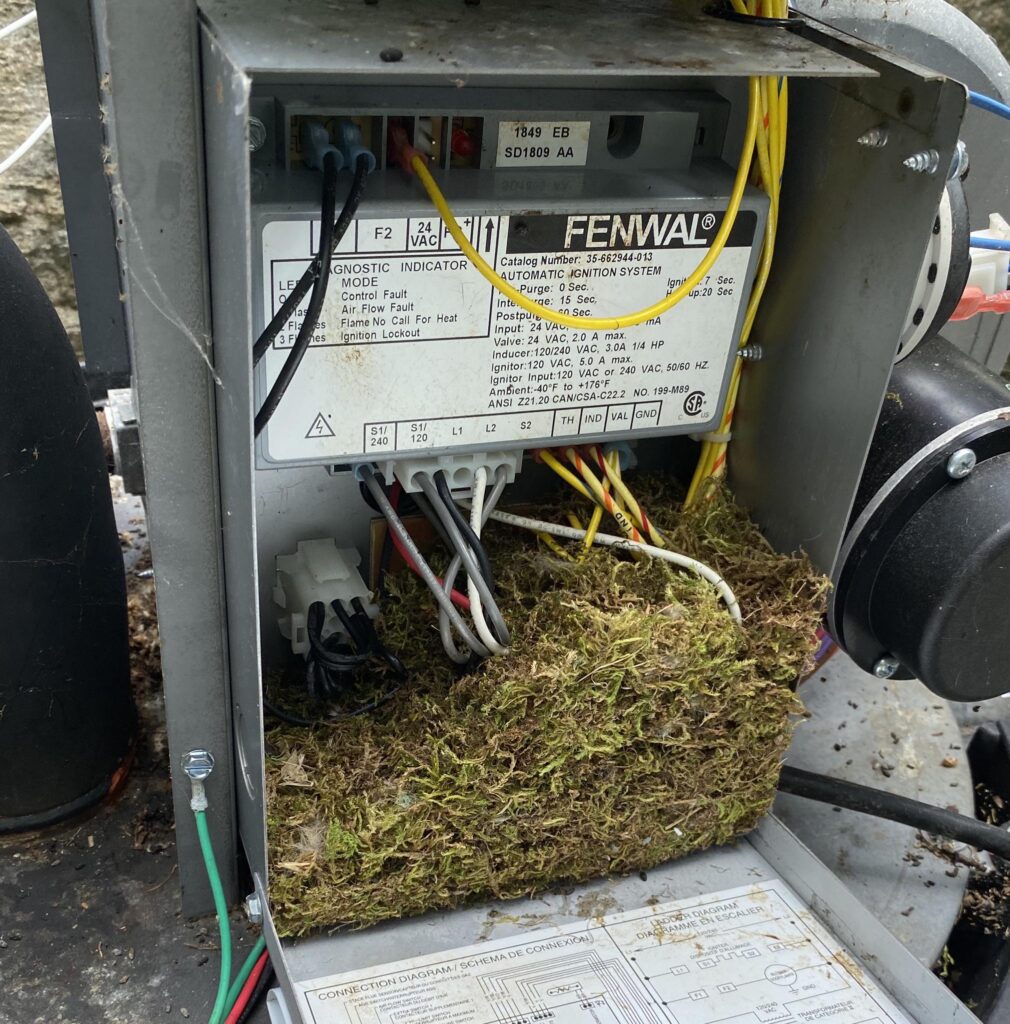
- Soft insulation and wiring for nesting
- Dark, enclosed space
During colder months, equipment pads become ideal hiding spots. Once inside, rodents chew wiring insulation to keep their teeth trimmed and gather nesting material from foam insulation and internal components.
Common Damage We See in the Field
When rodents invade a pool heater, the damage is often more extensive than it appears externally.
1. Chewed Wiring Harnesses
Low-voltage ignition wires and sensor leads are prime targets. This can lead to:
- Ignition failure
- Flame sensor errors
- Blower faults
- Complete no-start conditions
2. Control Board Failure
Rodent urine is corrosive. Once it contaminates a board, you may see:
- Intermittent faults
- Display failure
- Burned traces on PCB
Control board replacement on modern heaters can be costly.
3. Gas Line and Burner Obstruction
Nesting material can block combustion air passages, affecting airflow and safe ignition.
4. Safety Hazard
Damaged wiring can create:
- Short circuits
- Electrical arcing
- Fire risk
If your heater smells like burnt plastic or trips breakers after sitting unused, rodent damage is a possibility.
Signs You May Have Rodents in Your Heater
- Heater won’t fire after winter
- Error codes related to ignition or sensors
- Visible droppings near the equipment pad
- Nesting material inside cabinet
- Chewed insulation or debris under the unit
- Strong ammonia odor
If you suspect rodent intrusion, do not continue resetting the unit repeatedly. It needs to be opened and inspected.
The Solution: Rodent Barrier Mesh Protection

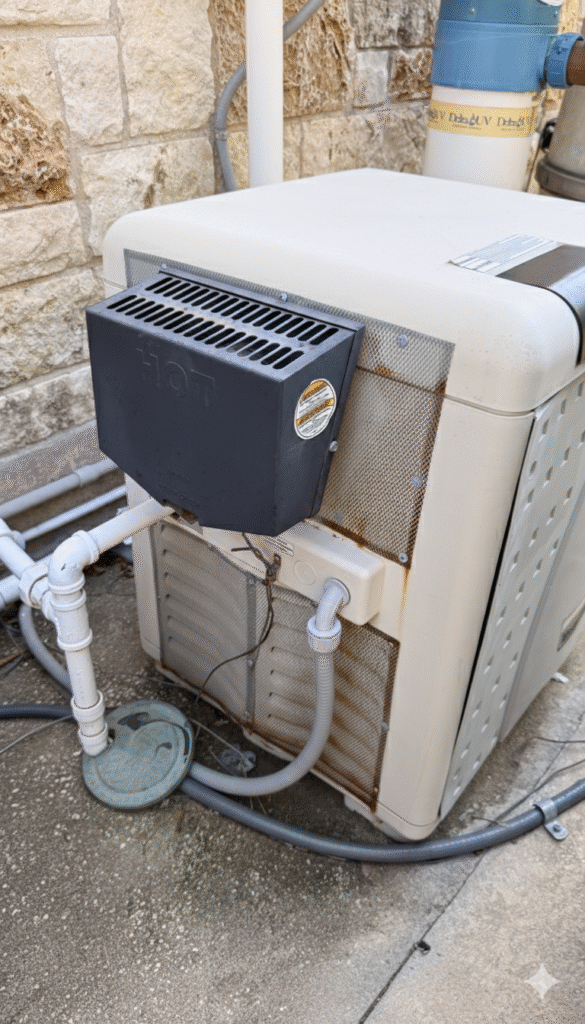
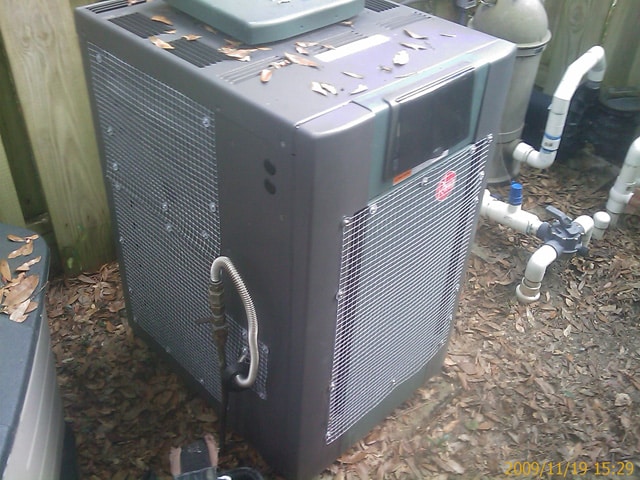
One of the most effective preventative methods is installing stainless steel rodent barrier mesh around heater cabinet openings.
High-quality mesh systems—similar to solutions used in professional rodent proofing—are:
- Corrosion resistant
- Heat tolerant
- Sized to block small rodents
- Non-restrictive to airflow when properly installed
Proper installation is critical. The mesh must:
- Protect vent openings
- Avoid blocking combustion air
- Maintain manufacturer clearance specs
- Be secured to prevent displacement
Improper DIY installs can cause airflow restriction, overheating, or warranty concerns.
Why Spray Foam and Repellents Don’t Work
We often see:
- Expanding foam stuffed into openings
- Steel wool loosely packed into vents
- Ultrasonic deterrents
These are temporary at best and sometimes unsafe.
Rodents can chew through foam easily. Steel wool rusts and falls apart outdoors. And blocking combustion airflow improperly can damage the heater.
Mechanical exclusion (physical barrier mesh) is the only reliable long-term solution.
Cost of Rodent Damage vs. Prevention
Typical repair ranges:
- Minor wiring repair: $250–$600
- Ignition component replacement: $400–$900
- Control board replacement: $700–$1,200+
- Severe internal damage: Heater replacement
Preventative rodent barrier installation is significantly less expensive than replacing electronics.
Professional Inspection Matters
At PoolBurg, we:
- Open and inspect heater internals
- Test ignition sequence
- Verify gas pressure and combustion airflow
- Repair damaged wiring
- Install rodent barrier mesh correctly
- Confirm safe operation before restart
Because we work on these units daily across DFW, we know where rodents typically enter and how to protect those points without compromising heater performance.
Seasonal Recommendation for Texas Pool Owners
In North Texas, rodents are most active:
- During freeze events
- In late fall and winter
- After heavy rain when burrows flood
If your heater hasn’t been opened or inspected in over a year, preventative inspection is recommended.
Protect Your Heater Before It Becomes a Major Repair
Rodents inside pool heaters are not rare—they’re common. And the damage is often hidden until the heater fails when you need it most.
If you:
- Notice heater issues
- Haven’t used it since winter
- Want preventative rodent barrier installation
- Or just want peace of mind
Contact PoolBurg for a professional inspection and protection plan.
We service the entire DFW area and specialize in pool heater diagnostics, repair, and preventative upgrades.
PoolBurg – Fast Swimming Pool Repair and Maintenance
Call or text: 469-277-9893
Book online: PoolBurg.com