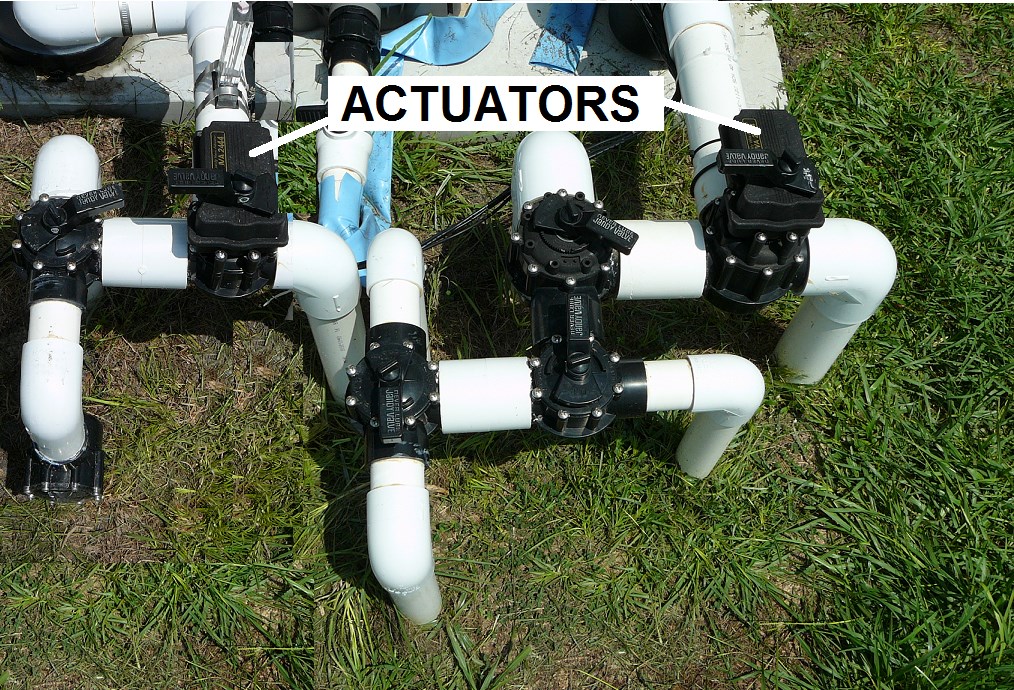
Pool valve repair is one of those things homeowners put off because valves seem like minor components. They’re not. Your pool’s valves direct water flow throughout the entire system — filter, heater, spa, water features, returns, and drain. Most DFW pools have 3 to 8 valves on the equipment pad, and automated systems add actuators on top of each one. When a pool diverter valve sticks, leaks, or breaks, the problem cascades. Water routes to the wrong place, equipment starves for flow, and your pool stops functioning the way it should. If you need pool actuator repair or a valve is dripping on the pad, ignoring it always costs more than fixing it now.
Types of Pool Valves in DFW Pools
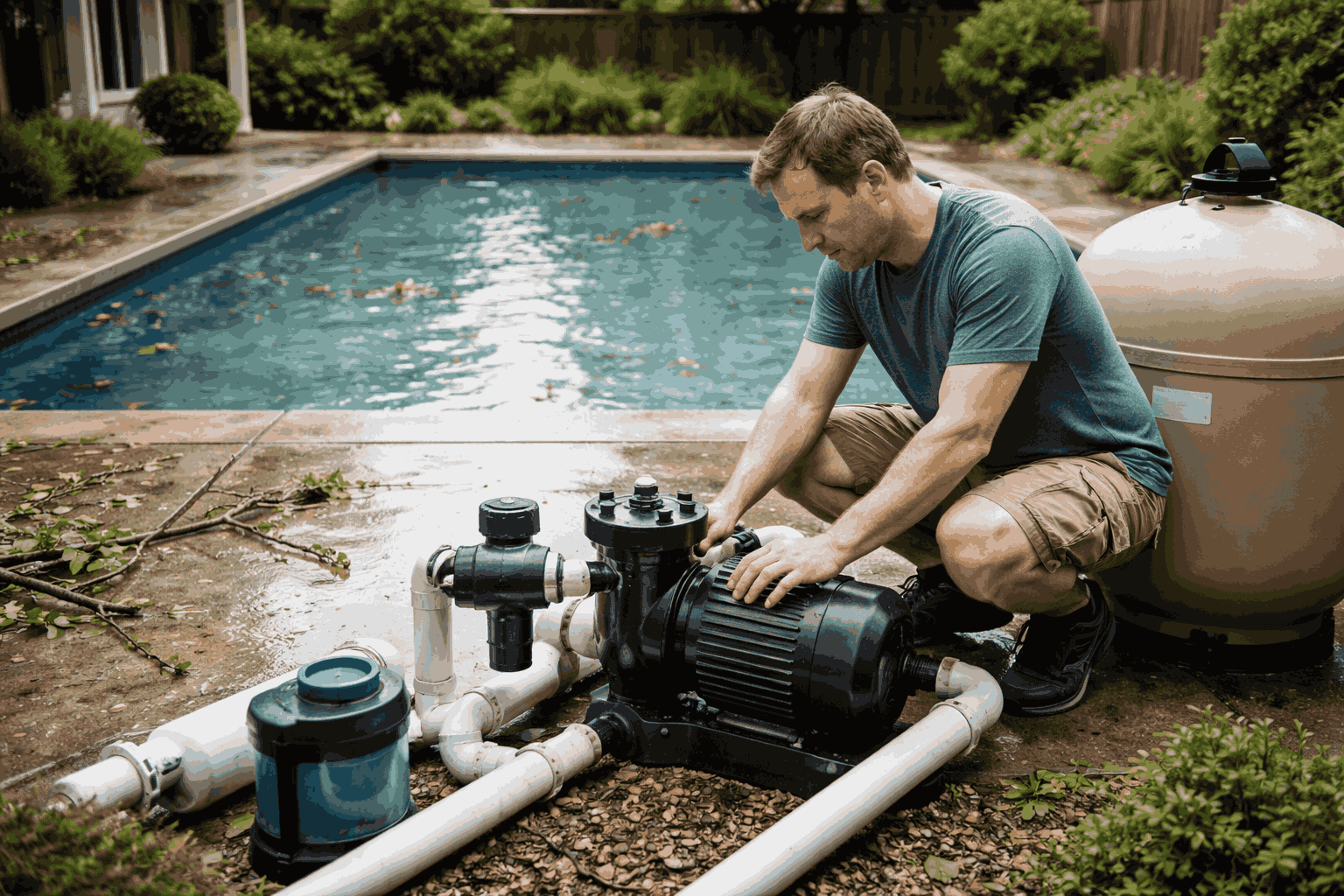
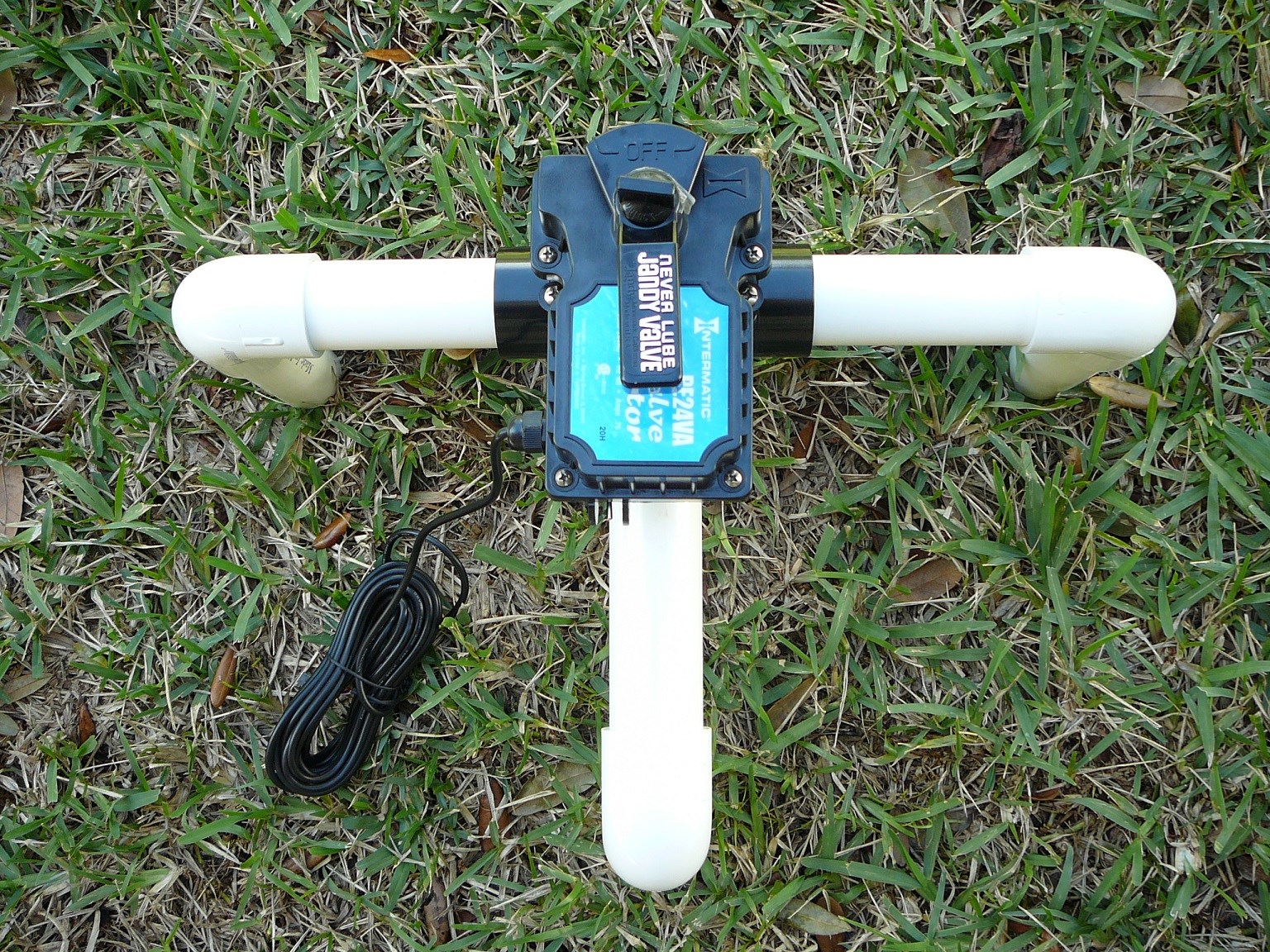
Three-way diverter valves are the most common — they direct water between two paths, like splitting flow between the pool and spa. Two-way shut-off valves simply open or close a single line. Check valves allow water flow in one direction only, preventing backflow through the system. Multiport valves sit on sand and DE filters and control filtration modes. And actuator valves are motorized versions that rotate on command from your automation system — the electronic muscle behind remote pool control.
The Pool & Hot Tub Alliance classifies valves as critical flow-control components that require regular inspection as part of any professional maintenance program.
Common Pool Valve Repair Problems in North Texas
Valve stuck and won’t turn. The number one pool valve repair call we get. DFW’s hard water deposits calcium and mineral buildup inside valve bodies, jamming the diverter. UV degradation makes the plastic brittle. Swollen O-rings create friction. Never force a stuck pool diverter valve — you’ll crack the body and turn a $100 repair into a $400 replacement. A technician disassembles, cleans, lubricates, and replaces seals. Cost: $50 to $200.
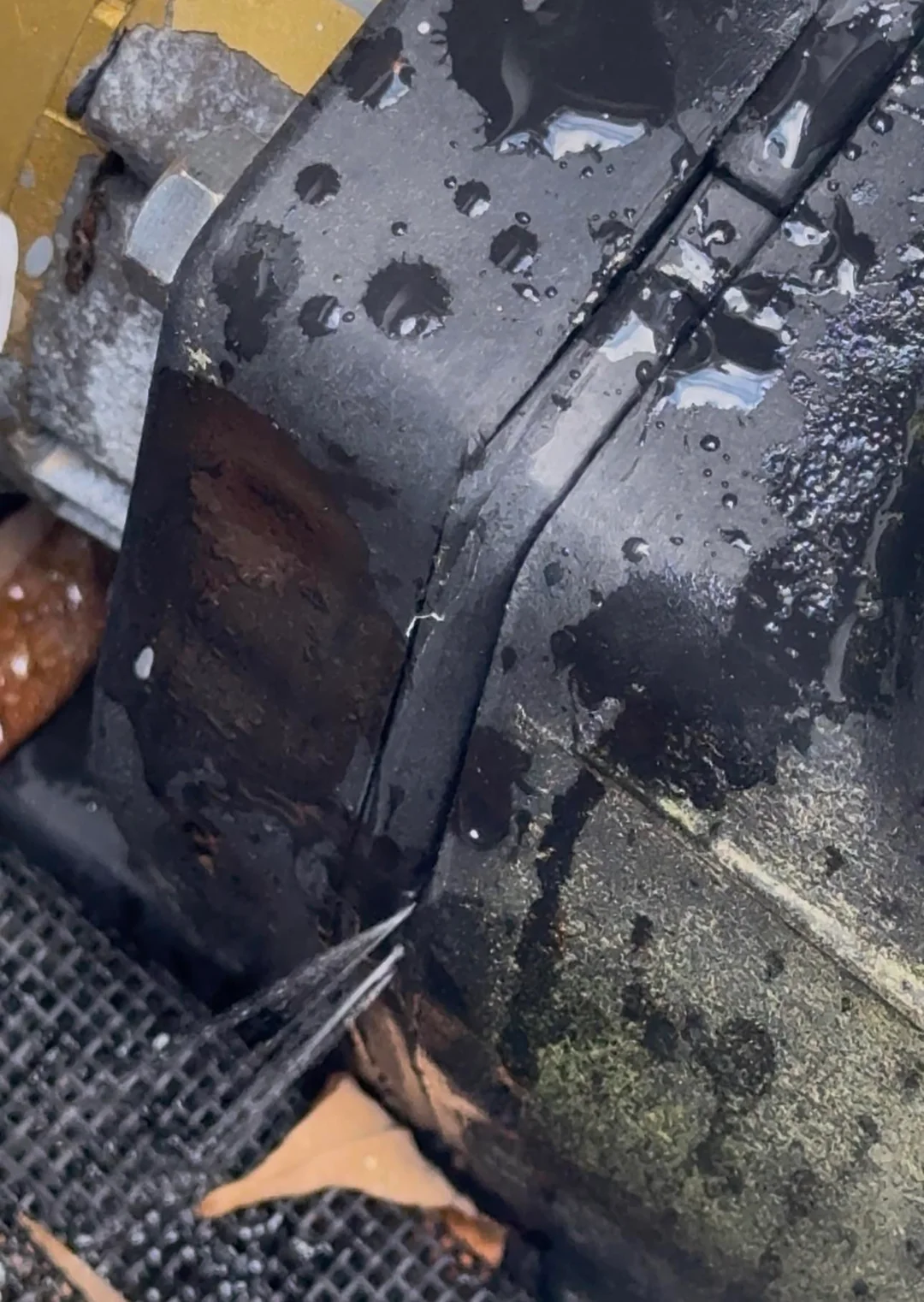
Valve leaking from the body. Water seeping from cracks in the valve housing or around pipe connections. Causes: UV sun damage cracking the PVC, freeze damage from trapped water expanding, or over-tightening during installation. If it’s an O-ring issue, that’s a $20 to $50 fix. If the body is cracked, full valve replacement runs $100 to $400 installed. Our freeze protection guide covers preventing freeze damage to valves and equipment.
Valve not fully diverting. You turn the handle to “spa” but water still flows to the pool, or vice versa. A worn diverter seal inside the valve isn’t sealing the port completely. Seal replacement runs $30 to $75. If the handle mechanism isn’t engaging the diverter properly, the whole valve may need replacing. According to HomeAdvisor’s pool data, worn diverter seals are the most common cause of pool and spa flow distribution problems in residential systems.
Actuator not rotating. The motor doesn’t move when the automation sends the command. Causes: burned-out motor, stripped gears inside the actuator, loss of signal from the control board, or corroded wiring. Pool actuator repair usually means replacing the actuator entirely — $150 to $400. Sometimes it’s just a wiring issue at $50 to $150. Our electrical repair guide covers automation wiring diagnosis.
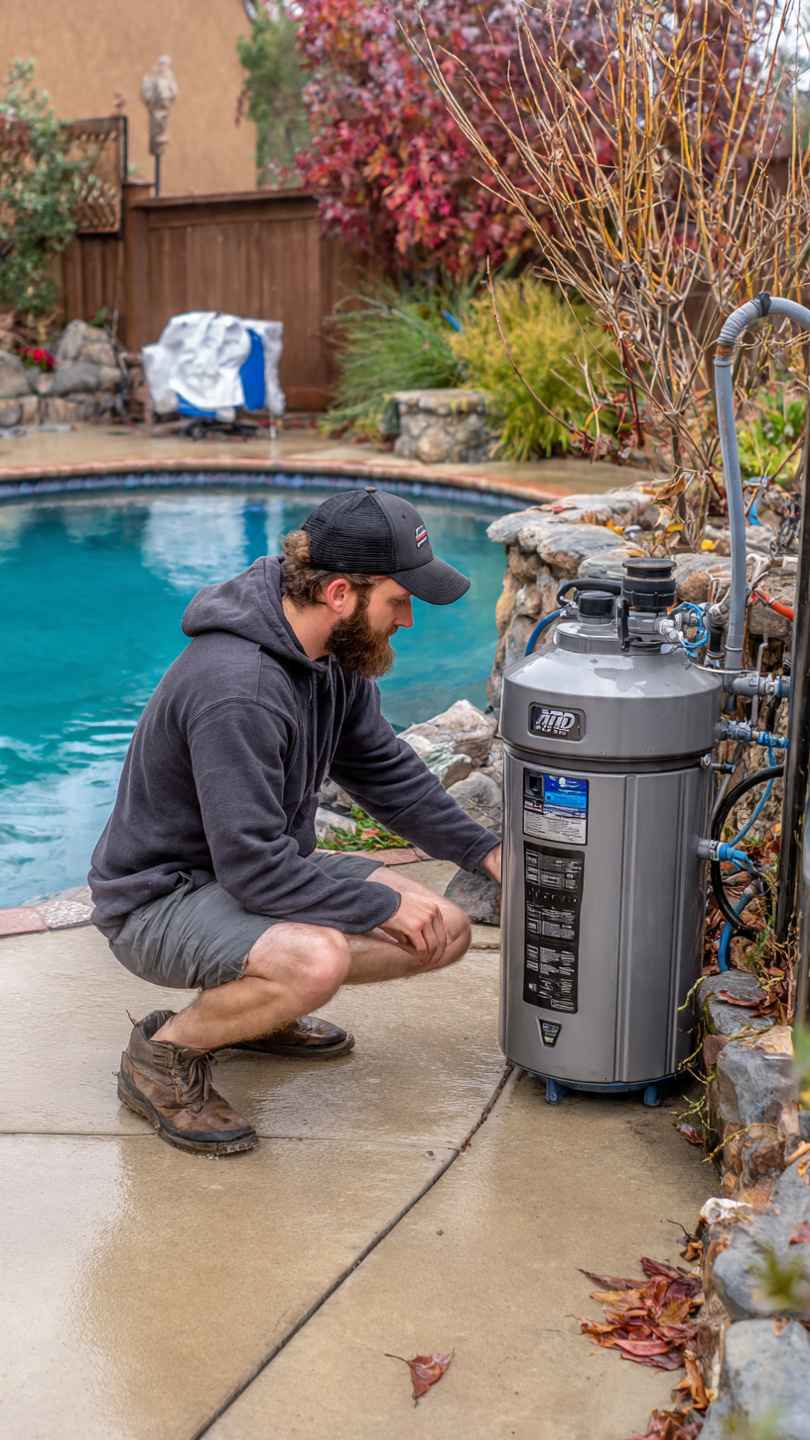
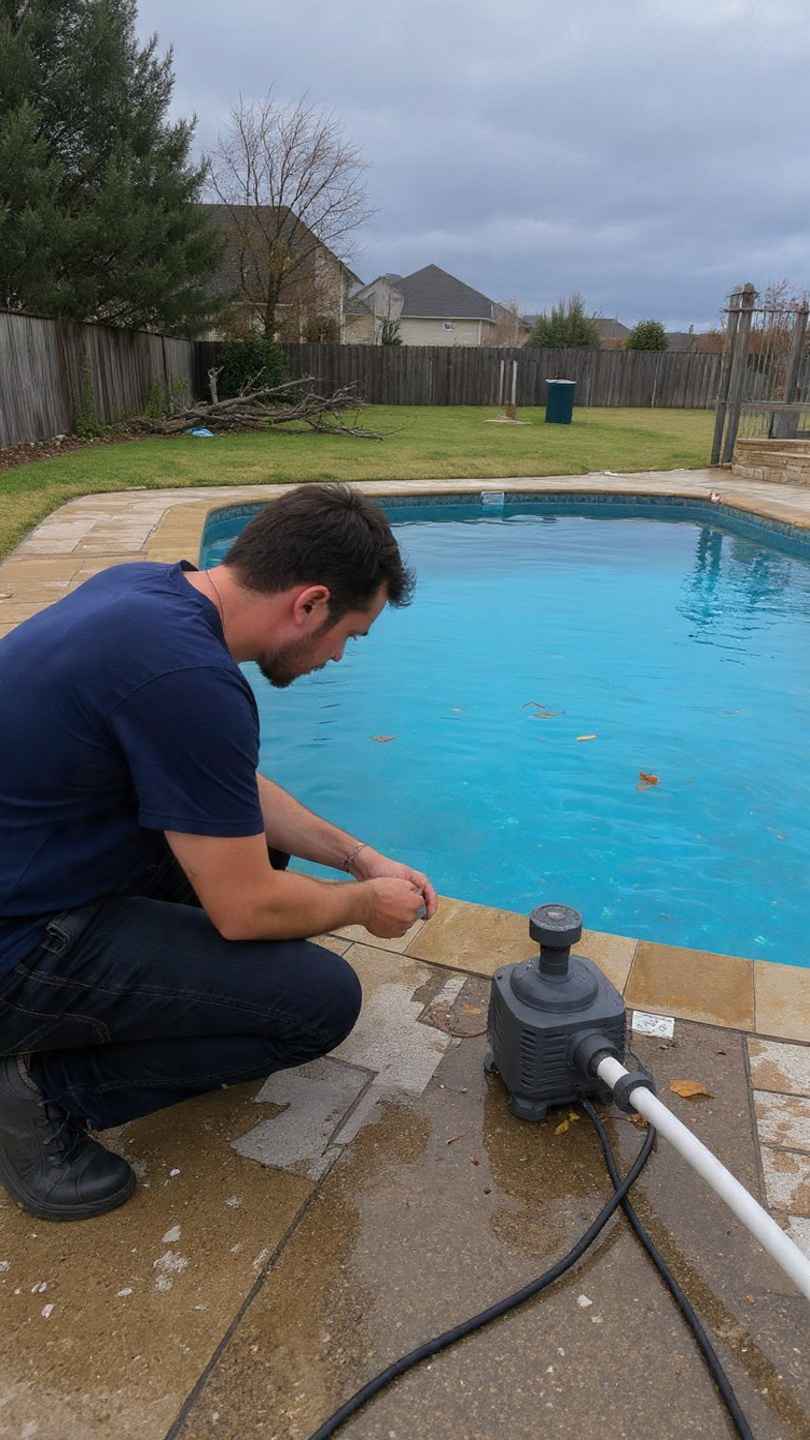
Actuator running continuously past its stop. The actuator keeps spinning instead of stopping at the correct position. That’s a cam switch failure or misalignment inside the actuator. Recalibration sometimes fixes it. If not, pool actuator repair means replacement at $150 to $400.
Check valve stuck open or closed. Debris, calcium buildup, or a failed spring prevents the check valve from operating. Water backflows when it shouldn’t, or flow is blocked entirely. Clean or replace at $25 to $100. The Water Quality Association confirms that calcium deposits from hard water are a leading cause of check valve failure in residential pool plumbing.
Pool Valve Repair and Replacement Costs in DFW
O-ring kit and lubrication: $30 to $75. Manual valve replacement: $100 to $300 installed. Actuator replacement: $200 to $500 installed. Check valve replacement: $50 to $150 installed. Full valve and actuator combo: $300 to $600 installed. Wiring repair for actuator: $75 to $200. Pool valve repair is almost always cheaper than the cascade of problems a failed valve creates — equipment running dry, heaters firing without flow, or spa water never reaching temperature.
Why DFW Conditions Are Tough on Pool Valves
Texas UV breaks down PVC and plastic faster than cooler climates — 5 to 10 year lifespan is common for exposed valve bodies. Hard water jams diverters and degrades seals from calcium deposits. Temperature cycling between 110°F summer pad temperatures and sub-freezing winter events stresses valve bodies with constant expansion and contraction. And freeze damage is the most dramatic — water trapped inside a valve cracks the body instantly when it expands. The U.S. Department of Energy recommends seasonal equipment inspections that include all valves as part of efficient pool operation.
Prevention helps: lubricate O-rings annually with silicone-based lubricant, protect valves from direct sun when possible with equipment screening, and drain exposed valves during extended freeze events. Our winterization guide covers freeze protection for every component on the equipment pad.
People Also Ask
Why is my pool valve stuck?
Calcium and mineral buildup from DFW hard water jamming the internal diverter, UV-degraded plastic creating friction, or swollen O-rings. Never force it — you’ll crack the body. A technician cleans and lubricates it for $50 to $200.
How much does it cost to replace a pool valve?
Manual valve: $100 to $300 installed. Actuator valve: $200 to $500. Full valve and actuator combo: $300 to $600. O-ring repair is $30 to $75 if the body is still sound.
Can I repair a pool valve actuator myself?
Recalibration and wiring checks are possible for handy homeowners. Actuator motor replacement involves electrical work near water — that’s best left to a professional. Pool actuator repair typically means swapping the unit, which requires matching the replacement to your automation system.
Why is my pool valve leaking?
Cracked body from UV or freeze damage, worn O-ring, or over-tightened fittings. If water seeps from the body itself, the valve likely needs replacement. If it’s from a union or fitting, an O-ring swap usually fixes it.
How long do pool valves last in Texas?
5 to 10 years for exposed PVC valve bodies in DFW sun. Actuators last 5 to 8 years. Check valves 5 to 7 years. Hard water, UV exposure, and freeze events all shorten lifespan. Our maintenance services catch valve wear early before failure.
What is a pool diverter valve?
A pool diverter valve directs water between two paths — typically pool and spa, or different return lines. It’s the three-way valve with a handle or actuator that controls where water flows in your system. When it fails, water goes to the wrong destination or flow is restricted.
Valve Stuck, Leaking, or Actuator Dead? PoolBurg Fixes It
All valve types, all actuator brands, honest pool valve repair vs replacement guidance. Contact PoolBurg and we’ll diagnose the problem, give you a straight answer on repair or replace, and get your flow control back to normal.