
Pool automation has gone from a luxury add-on to something that genuinely makes sense for most North Texas pool owners. If you’re still walking outside to flip breakers, manually adjusting your heater, or guessing when your pump should run, you’re working way harder than you need to. A modern pool automation system puts your entire pool on your phone — pumps, lights, heater, water features, all of it. But which system should you actually buy? That’s where it gets interesting, because the three big players are very different animals.
What Is Pool Automation and Why Are DFW Homeowners Investing in It?
At its core, pool automation lets you control every piece of pool equipment from a central panel or a phone app. Pump speeds, heater temperature, light colors, waterfalls, spa mode — all scheduled, all adjustable from the couch or from across the country. It’s growing fast in Frisco, Southlake, Prosper, and McKinney’s premium communities. And it’s not just about convenience — a properly programmed pool automation system saves real money on electricity and chemicals by running equipment only when it needs to run.
Major Pool Automation Systems in North Texas
Pentair IntelliCenter
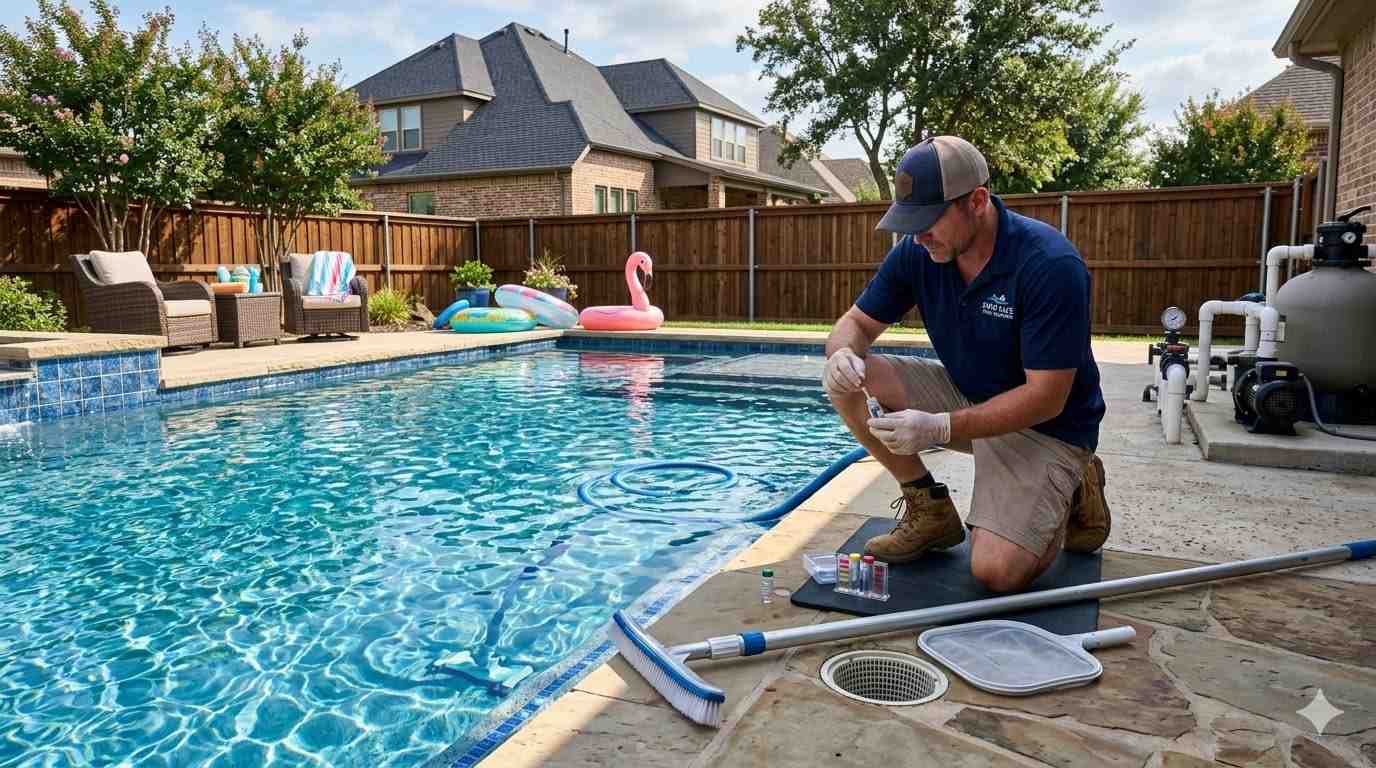
The Pentair IntelliCenter is the most common pool automation system you’ll find in DFW new construction right now. It comes with a touchscreen panel that’s actually pleasant to use, full app control through the Pentair Home app, scheduling for every piece of equipment, and real-time monitoring. It works seamlessly with all Pentair gear — IntelliFlo pumps, MasterTemp heaters, IntelliChlor salt systems. The interface is intuitive, the DFW dealer network is strong, and reliability is solid. Common issues we see? Occasional software update hiccups, wireless connectivity dropping out, and relay failures after a few years of Texas heat exposure. Nothing catastrophic, but worth knowing.
Jandy iAqualink
The Jandy iAqualink shows up a lot in custom pool builds across DFW. Its biggest selling point is remote control — the app works well, the web interface is clean, and it integrates with voice assistants like Alexa and Google Home. That means you can literally tell your pool to turn on the lights or start heating the spa. It’s compatible with Jandy and Zodiac equipment, which gives you a broad range of options. Where it stumbles: the wireless communication module can be finicky, and sensor communication errors pop up more than we’d like to see. When it works — and it usually does — it’s a fantastic pool automation platform.
Hayward OmniLogic and OmniHub
Hayward’s OmniLogic is gaining ground in the DFW market and for good reason. It’s highly customizable — you can build themes, create complex schedules, and the touchscreen interface feels modern. The OmniHub is the streamlined version for simpler setups. Both work with Hayward equipment and offer solid app control. The downsides? Initial setup can be complex, and we’ve seen relay board issues that require professional diagnosis. But once it’s dialed in, the OmniLogic is one of the most capable pool automation systems on the market.
Basic Timer and Relay Systems
Plenty of DFW pools — especially older ones — still run on basic Intermatic timers and simple relay panels. They work. They turn equipment on and off at set times. But there’s no remote control, no smart scheduling, no app, and no way to adjust anything without physically walking to the equipment pad. If this is your current setup, the good news is every pool can be upgraded to full pool automation without rebuilding anything. It’s a straightforward retrofit.
What Can a Pool Automation System Actually Control?
More than most people realize. A modern pool automation setup handles pump speeds and scheduling, heater activation with target temperatures, pool and spa light colors and brightness, water features like waterfalls, bubblers, and deck jets, pool-to-spa diverter valves so you can switch modes from your phone, chemical feeders including salt chlorine generators, and even gas fire features near the pool. Basically, if it’s wired to your equipment pad, automation can control it.
Pool Automation and Energy Savings in Texas


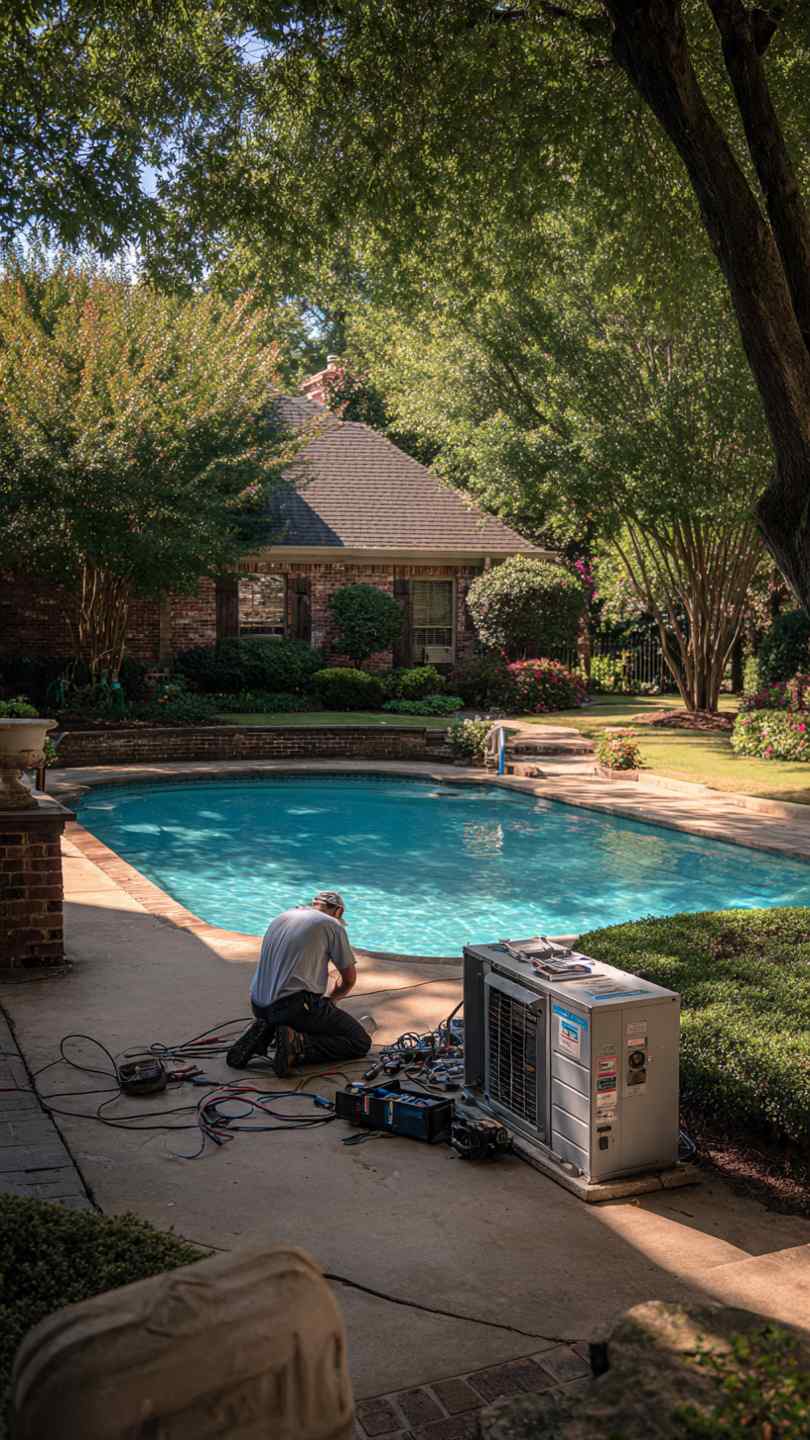
This is where pool automation really pays for itself. Smart pump scheduling alone can reduce electricity costs by 30 to 50 percent compared to running a single-speed pump on a fixed timer. The Department of Energy has documented significant savings from variable speed pumps — and automation makes those pumps even smarter by adjusting speeds based on actual need. Heating optimization is another big win — instead of heating on a dumb timer, automation heats to a target temperature and shuts off. For most DFW homeowners, proper pool automation saves $50 to $150 per month on electricity. Over a couple of years, the system pays for itself.
Pool Automation Installation and Upgrade Costs in DFW
Here’s what you’re looking at for a pool automation system in the DFW market. A basic timer upgrade to a smart relay system runs $500 to $1,500. A full Pentair IntelliCenter installation typically costs $2,000 to $5,000. A Jandy iAqualink system runs $1,500 to $4,000 installed. And a Hayward OmniLogic setup falls in the $2,000 to $5,000 range. The price depends on how many pieces of equipment you’re connecting and whether you’re building into new construction or retrofitting an existing pool.
Retrofits cost a bit more because of wiring and panel mounting, but it’s absolutely doable on any pool.
Common Pool Automation Problems and Repairs
Wireless Connectivity Issues
The most common complaint across all three brands — the app won’t connect, or the panel loses wifi. Usually it’s a router range issue or the wireless module needs a reset. Sometimes the module itself fails and needs replacement.
Relay Failures
Relays are the switches that actually turn equipment on and off. Texas heat and power surges wear them out over time. When a relay fails, the equipment stops responding to commands even though the panel looks fine.
Sensor Errors
Temperature sensors, flow sensors, and chemical sensors can drift or fail, giving you incorrect readings. A bad temp sensor might tell your heater the water is already warm when it’s not, or vice versa.
Software and Firmware Update Issues
Updates occasionally cause glitches — schedules reset, settings change, or features stop working until the firmware stabilizes. Always check your settings after an update.
Power Surge Damage
Texas storm season sends power surges through pool equipment constantly. A good surge protector on your pool automation panel is cheap insurance against frying a $3,000 control board. Most repair calls we see for automation problems run between $100 and $500 depending on the issue.
People Also Ask

Is pool automation worth the investment?
For most DFW pool owners, absolutely. Between energy savings of $50 to $150 per month and the convenience of controlling everything from your phone, a pool automation system typically pays for itself within two to three years.
How much does pool automation cost to install in DFW?
Depending on the brand and complexity, expect $1,500 to $5,000 for a full system installation. Basic upgrades from timers to smart relays start around $500.
Can I add automation to my existing pool?
Yes. Any pool can be retrofitted with pool automation regardless of age. Your technician will wire the new panel into your existing equipment — no major construction required.
Which pool automation system is the best?
It depends on your equipment. If you have Pentair gear, the IntelliCenter is the natural fit. Jandy equipment works best with iAqualink. Hayward owners should look at the OmniLogic. Check out our full breakdown on DFW smart pool automation for more detail.
Can my pool service technician manage my automation system?
A good one can — and should. Your tech should know how to program schedules, troubleshoot connectivity, diagnose relay issues, and optimize settings for DFW conditions. Not every company has that expertise, so ask before you hire.
PoolBurg — Pool Automation Service and Support Across DFW
At PoolBurg, we work with all three major pool automation brands every single week. Pentair IntelliCenter, Jandy iAqualink, Hayward OmniLogic — we program them, troubleshoot them, repair them, and optimize them for North Texas conditions. Whether you’re upgrading from a basic timer or your existing system is throwing errors, we’ve got the experience to sort it out.
Want smarter pool control? Ask PoolBurg about automation options for your pool.