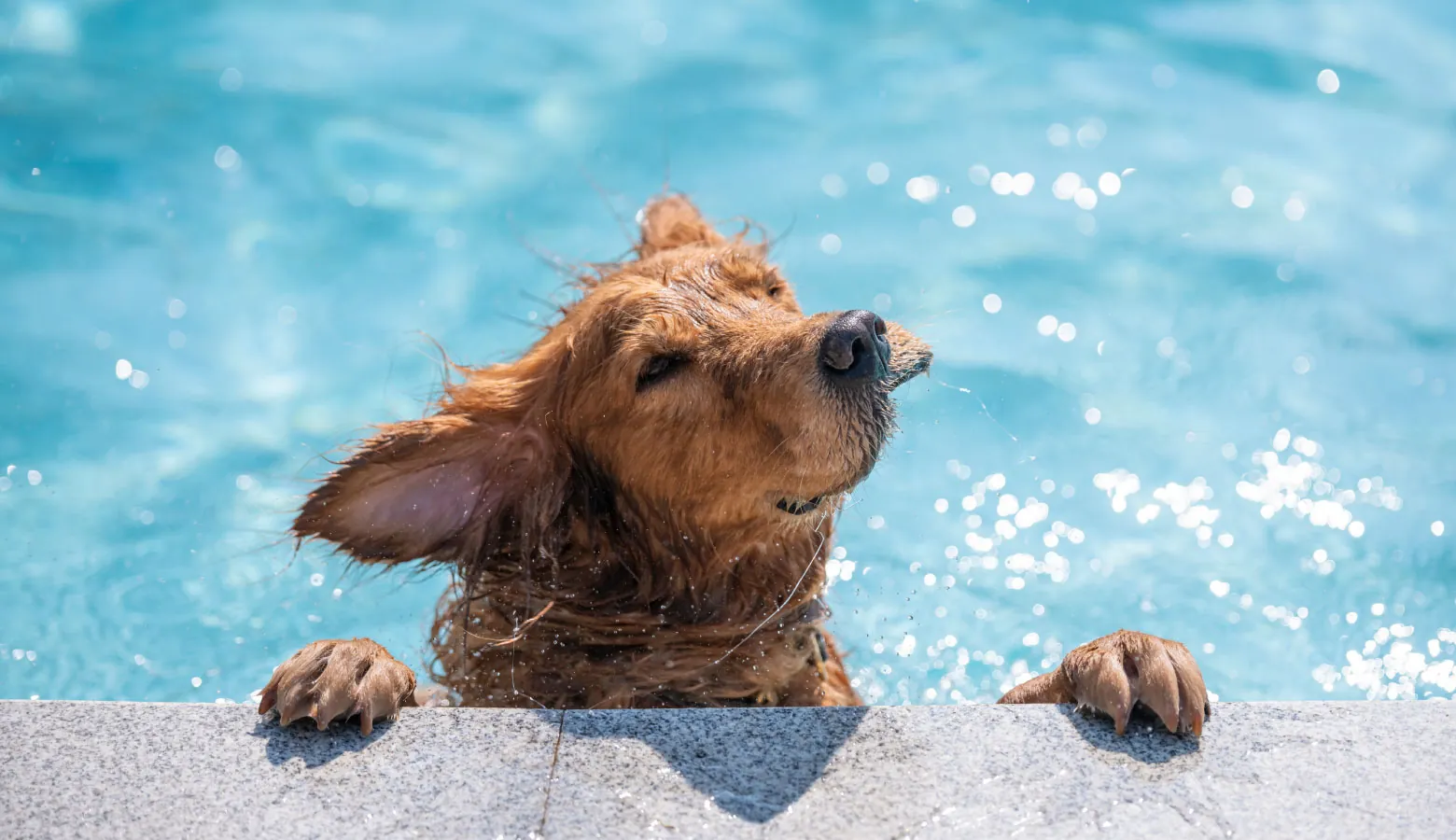
A dog in pool water can be pure summer joy. The tail. The splash. The heroic belly flop that somehow looks both graceful and chaotic. But if you own a pool in Dallas-Fort Worth, there is one very real question hiding behind the cute moment:
Is a dog in pool water safe for the dog, the swimmers, and the pool system?
The answer is usually yes — but only when the pool is properly maintained, the dog is supervised, and the water chemistry is kept in check.
At PoolBurg, we help DFW pool owners keep backyard water clean, balanced, and ready for real life — including kids, guests, Texas heat, leaves, sunscreen, and yes, the occasional dog in pool moment.
Is Pool Chlorine Safe for Dogs?
Let’s start with the big one: is pool chlorine safe for dogs?
In a properly balanced swimming pool, chlorine is generally safe for brief dog swimming. The issue is not usually the dog touching chlorinated water. The bigger concern is a dog drinking too much pool water, swimming too long, or getting irritated skin and eyes after repeated exposure.
According to CDC Healthy Swimming guidance, pool water needs the right disinfectant and pH balance to stay safer for swimmers. That same principle matters when there is a dog in pool water, because pets bring in fur, dirt, oils, and bacteria just like people bring in sweat, sunscreen, and germs. Pool chemistry should be monitored regularly, especially when pets swim often.
So, is pool chlorine safe for dogs in a neglected pool? Not really. In a well-maintained pool? Usually, yes.
What Happens When You Let a Dog in Pool Water?
A dog in pool water changes the pool environment faster than many homeowners expect.
Dogs can introduce:
- Loose hair and dander
- Dirt from paws
- Grass, mulch, and outdoor debris
- Natural body oils
- Saliva and bacteria
- Extra organic load that chlorine has to fight
That means one dog in pool swim session may create more work for your filter and sanitizer than a quick human swim. If your pool already has cloudy water, weak circulation, or low chlorine, adding a dog in pool situation can push things over the edge.
This is why Weekly Pool Service matters for pet owners. Regular testing, brushing, skimming, and filter care help keep your pool from turning into a fur-season science project.
Pool Maintenance With Pets: What DFW Homeowners Should Do
Good pool maintenance with pets is not complicated, but it does need consistency.
Here is a simple routine for any homeowner who allows a dog in pool water:
- Brush your dog before swimming.
This helps reduce fur in the skimmer basket and filter. - Rinse your dog before pool time.
A quick hose-down removes dirt, pollen, and grass before they hit the water. - Check pool chemistry more often.
If your dog swims weekly, your pool may need more frequent testing. - Clean skimmer baskets after swimming.
A dog in pool session can fill baskets quickly with hair and debris. - Watch the filter pressure.
Pet hair can clog filters faster, especially during shedding season. - Rinse your dog after swimming.
This helps remove chlorine residue from fur and skin.
For easier balancing after heavy swim days, use the Pool Calculators to estimate pool volume and chemical needs before guessing.
Dog in Pool Safety Checklist
Before you let a dog in pool water, run through this quick safety checklist.
| Safety Check | Why It Matters |
| Supervise at all times | Even strong swimmers can panic or tire |
| Show your dog the exit | Dogs need to know where steps or ledges are |
| Keep water balanced | Poor chemistry can irritate skin and eyes |
| Limit swim time | Too much swimming can lead to fatigue |
| Stop excessive drinking | Drinking pool water can upset your dog’s stomach |
| Rinse after swimming | Helps remove chlorine from coat and paws |
| Check filters and baskets | Pet hair can strain circulation |
A dog in pool setup works best when safety is part of the routine — not an afterthought.
Can a Dog Damage Pool Equipment?
Yes, indirectly.
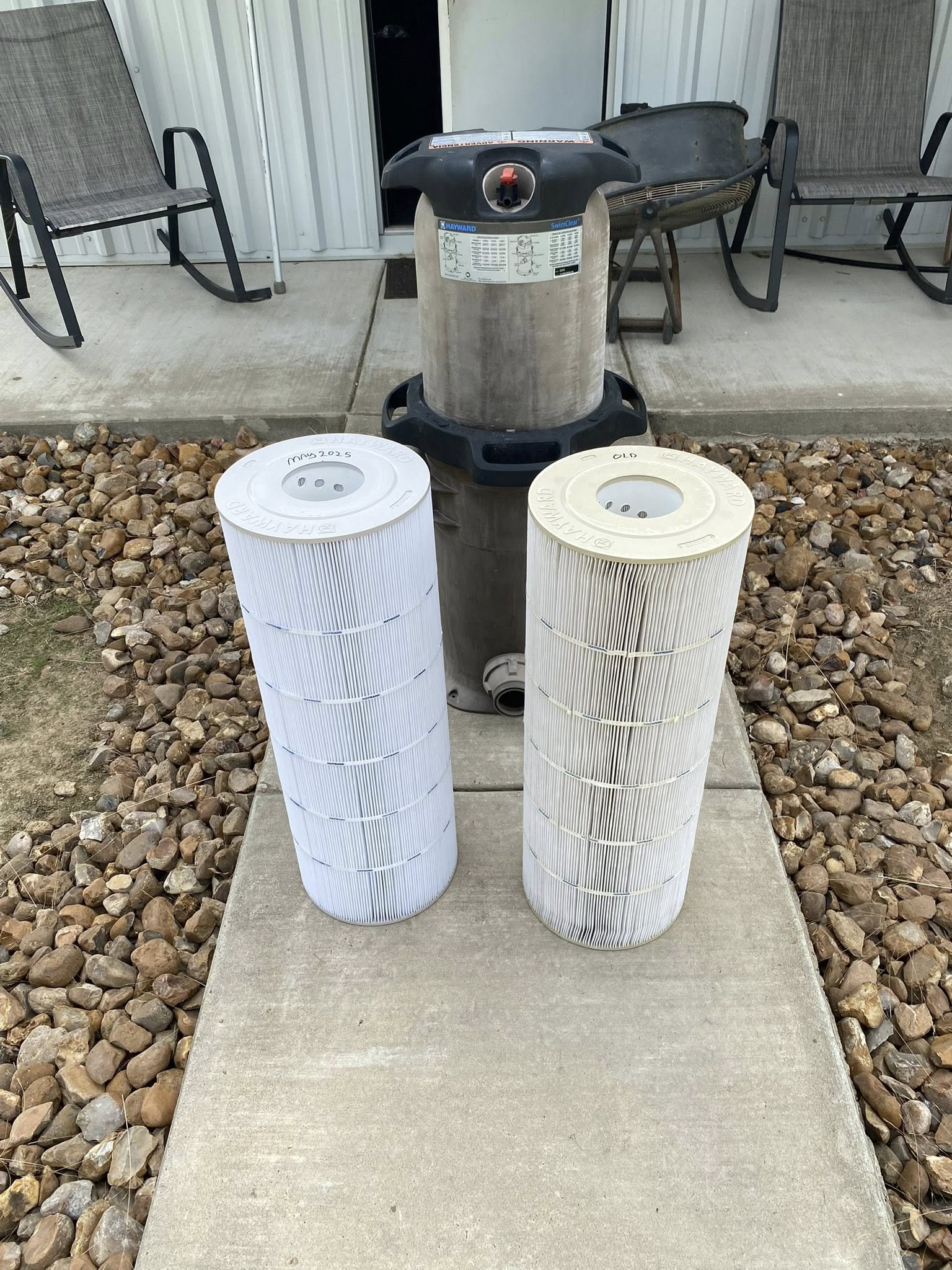
A dog in pool water will not instantly destroy your equipment, but pet hair and debris can make your pump and filter work harder. If baskets are clogged, circulation drops. If circulation drops, chemicals do not move evenly. If chemicals do not move evenly, algae and cloudy water can show up fast.
That is when a simple dog in pool day can become a pool cleaning headache.
If your water is cloudy, your pump sounds strained, or your pressure gauge is climbing, schedule Pool Equipment Repair before a small issue becomes expensive.
Is Pool Chlorine Safe for Dogs With Sensitive Skin?
This is where homeowners need to be more careful.
If your dog has allergies, dry skin, hot spots, ear issues, or sensitive eyes, ask your vet before making swimming a regular thing. Even if the answer to is pool chlorine safe for dogs is generally yes, individual dogs react differently.
After a dog in pool swim, watch for:
- Red eyes
- Excessive scratching
- Dry or flaky skin
- Ear shaking
- Vomiting or diarrhea
- Lethargy
- Coughing or unusual breathing
If symptoms appear, stop swimming and contact your veterinarian. For general pet swimming safety, resources like the American Kennel Club and Cornell University College of Veterinary Medicine offer helpful pet health guidance.
Pool Maintenance With Pets During Texas Summer
DFW summer does not play fair. Heat, evaporation, storms, pollen, and heavy swim traffic already challenge your water chemistry. Add a dog in pool habit, and your pool needs extra attention.
During peak summer, pool maintenance with pets should include:
- More frequent water testing
- Extra brushing around steps and shallow areas
- Filter checks after dog swims
- Skimmer basket cleaning after every pet swim
- Shock treatment when needed
- Professional inspections if water keeps turning cloudy
If your pool smells strongly like chlorine, that does not always mean “too much chlorine.” It can mean chlorine is working hard against contaminants. A dog in pool can add to that demand, especially if the dog is dirty before swimming.
Need help figuring out whether the issue is chemistry, circulation, or filtration? Book a Pool Inspection with PoolBurg.
Should Every Dog Be Allowed in the Pool?
Not every dog is built for swimming. Some breeds love water. Others sink like furry little bricks with confidence issues.
Before allowing a dog in pool water, consider:
- Age
- Health
- Breed
- Weight
- Energy level
- Swimming ability
- Fear or anxiety around water
Short-nosed breeds, senior dogs, puppies, overweight dogs, and dogs with medical issues may need extra caution. A dog life jacket can help, but supervision is still non-negotiable.
A dog in pool should never be forced. If your dog hates it, let the pup live peacefully as a deck supervisor.
How to Keep Your Pool Cleaner After Dog Swimming
Here is the PoolBurg pet-owner formula:
Brush the dog. Rinse the dog. Watch the dog. Clean the baskets. Test the water. Repeat as needed.
Simple, but it works.
For homeowners who regularly allow a dog in pool water, Pool Cleaning Service can make life much easier. Instead of constantly reacting to cloudy water, you stay ahead of the mess.And if you are dealing with mysterious water loss, wet spots, or cracks around the pool, schedule Pool Leak Detection before assuming the dog is just splashing half the pool into the yard.
Final Takeaway: A Dog in Pool Water Can Be Safe With the Right Care
A dog in pool moment can be one of the best parts of summer. It is fun, it is adorable, and it gives your dog a way to cool off during brutal Texas heat.
But a dog in pool also means more debris, more filter demand, and more responsibility. The key is smart pool maintenance with pets: balanced water, clean baskets, strong circulation, and regular service.
So, is pool chlorine safe for dogs? In a properly maintained pool, usually yes. But the safer question is: Is your pool ready for your dog?
If you want a cleaner, safer, pet-friendly pool in DFW, Contact Us today and let PoolBurg help keep your water ready for every swimmer — two-legged or four-legged.
Suggested FAQ Schema Questions
Is pool chlorine safe for dogs?
Yes, properly balanced pool chlorine is generally safe for dogs for short swimming sessions, but dogs should not drink large amounts of pool water and should be rinsed afterward.
How often should I clean my pool if my dog swims?
If you regularly allow a dog in pool water, you should test chemistry more often, clean baskets after dog swims, and schedule regular pool maintenance with pets in mind.
Can dog hair damage my pool filter?
Dog hair can clog skimmer baskets and filters, reducing circulation and making your equipment work harder. Regular cleaning helps prevent problems.
Should I rinse my dog after swimming in the pool?
Yes. Rinsing your dog after swimming helps remove chlorine, pool residue, and debris from the coat and skin.