
How a pressure test works
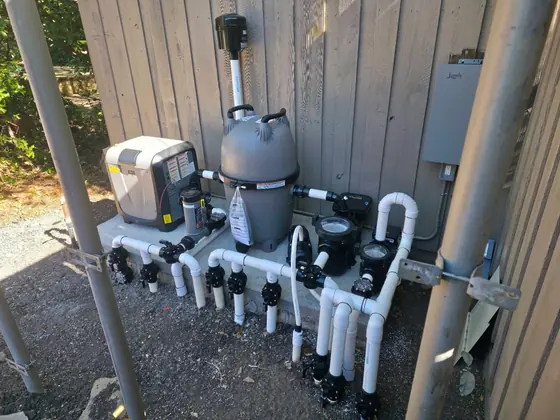
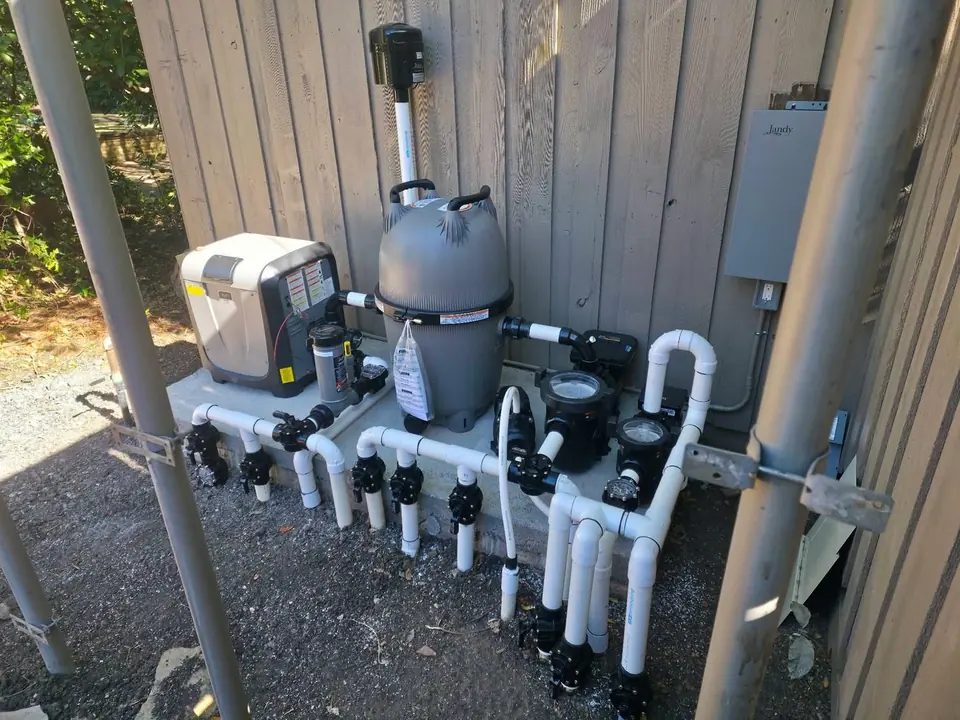
- One line at a timeSkimmer lines, return lines, the main drain, the cleaner line and the spa lines are each closed off from the rest.
- The line is pressurizedWe plug the line at the pool, fill it and bring it up to pressure from the equipment pad.
- We watch the gaugeA sound pipe holds steady. A leaking pipe drops, and how fast it drops says how bad the leak is.
- A failed line is locatedWe find the spot along the pipe so the repair opens as little ground as possible.
What leak detection includes
- Check valves tested
- A pressure test of every testable plumbing line
- A dye test of the pool and spa structure
Some systems take extra time and equipment to test and are priced separately: in-floor cleaning systems, auto-fill supply lines, in-deck chlorinators, holding vaults, negative-edge pools, some spa jets and some water features. We tell you before testing them.
Before we come
- The pool needs to be full and clean
- Payment is due when the work is done
- 30-day warranty on the leak detection, starting once repairs are done
Pressure testing questions
Does a pressure test damage old pipes?
A sound pipe is not harmed by a test. A pipe that fails under test pressure was already leaking under pump pressure.
Can you test with water in the pool?
Yes. The pool should be full for leak detection.
Is a pressure test enough on its own?
It covers the pipes. The shell, the lights and the fittings are checked with dye. Leak detection does both.
Prove where the leak is
Leak detection is $550 for a pool or a spa and $650 for both, with every testable line pressure tested.
Local teams in Dallas–Fort Worth, Austin and Houston
Teams work from Frisco, Plano, Fort Worth, Arlington, Cedar Hill, Austin and Houston, so a PoolBurg truck is never far from your pool.
 Book a visit