How many gallons is my pool is a question that usually comes up right after a homeowner in Frisco or Plano realizes they’ve just dumped fifty dollars’ worth of chemicals into the water with zero results. Look, I’ve been in the North Texas pool industry for a long time, and if I had a dollar for every time someone guessed their pool size and got it wrong, I’d have retired to a beach in Cabo by now.
Knowing exactly how many gallons is my pool is the foundation of everything you do in your backyard. Every cup of acid, every gallon of chlorine, and every piece of equipment you buy is based on this one specific number. If you are guessing, you aren’t just wasting money; you are potentially damaging your pool’s finish and equipment. This guide will show you how to use a basic pool gallon calculator method to calculate pool size accurately so you can stop the guesswork for good.
Why You NEED to Know Your Pool’s Volume
Every single chemical dosage depends on your total water volume. If you don’t know how many gallons is my pool, you cannot possibly give it the correct dose. Professional service companies like PoolBurg need this number to serve you correctly. In the 100°F DFW summer heat, the margin for error is slim. According to official water quality standards, maintaining a precise balance is the only way to prevent rapid algae growth and structural scaling.
How to Calculate Your Pool Volume
You don’t need a degree in math to answer how many gallons is my pool. You just need a tape measure and these standard formulas.
Rectangular pools
This is the most common calculate pool size request.
Formula: Length × Width × Average Depth × 7.5 = gallons.
To find the average depth, add the shallow end depth to the deep end depth and divide by two. For example, a 15ft × 30ft pool with a 5ft average depth holds 16,875 gallons.
Round and Oval pools
For circular pools, use: Diameter × Diameter × Average Depth × 5.9 = gallons. For an oval pool, you’ll use the Long Diameter × Short Diameter × Average Depth × 5.9. This simple pool gallon calculator method keeps things accurate for above-ground and custom builds.
Freeform and kidney-shaped pools
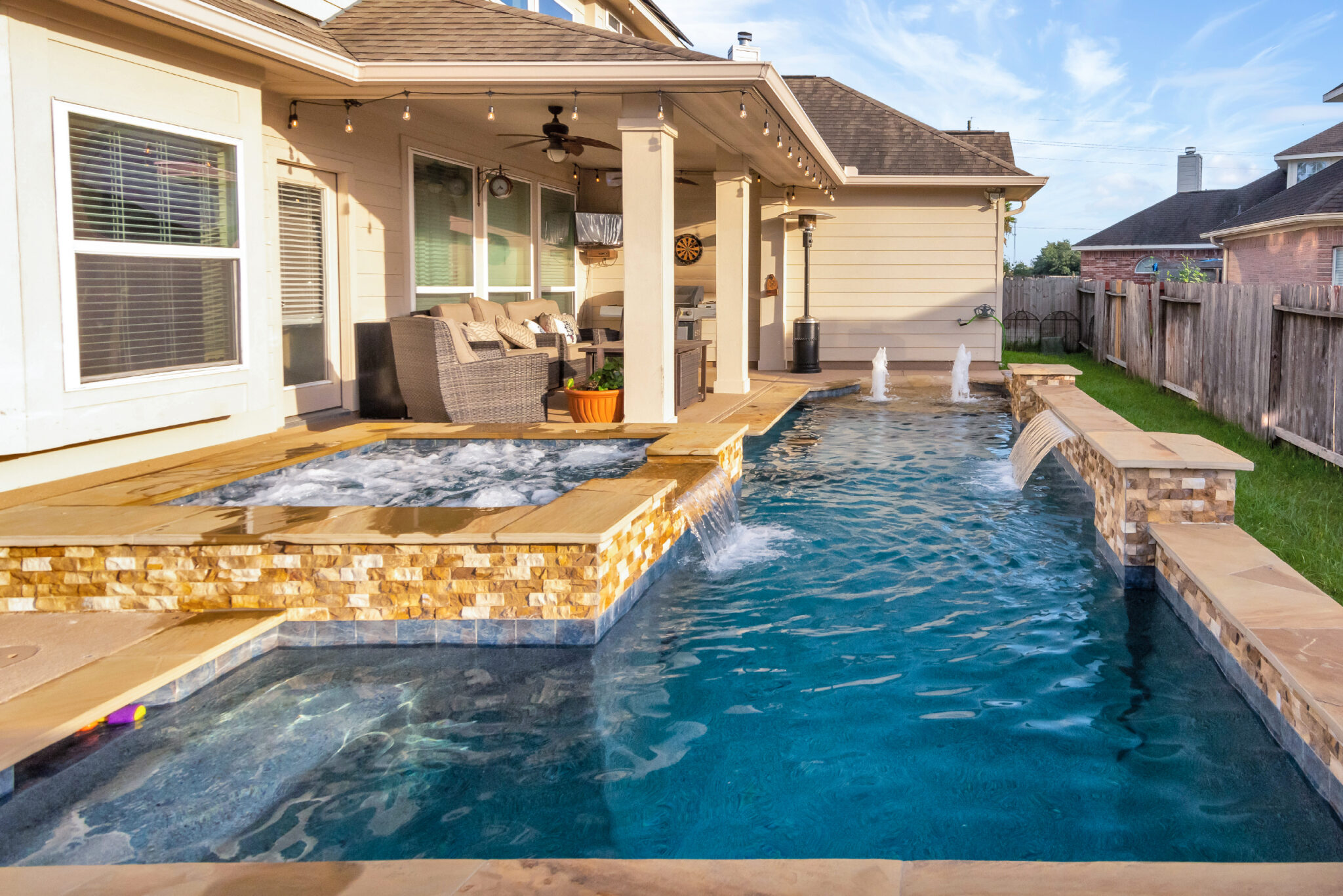
Frisco is full of beautiful freeform designs. To answer how many gallons is my pool when the shape is irregular, measure the longest length and widest width. Multiply Length × Width × Average Depth × 7.5, then multiply that final number by 0.85. That multiplier accounts for the curves reducing the total volume.
Pool + spa combination
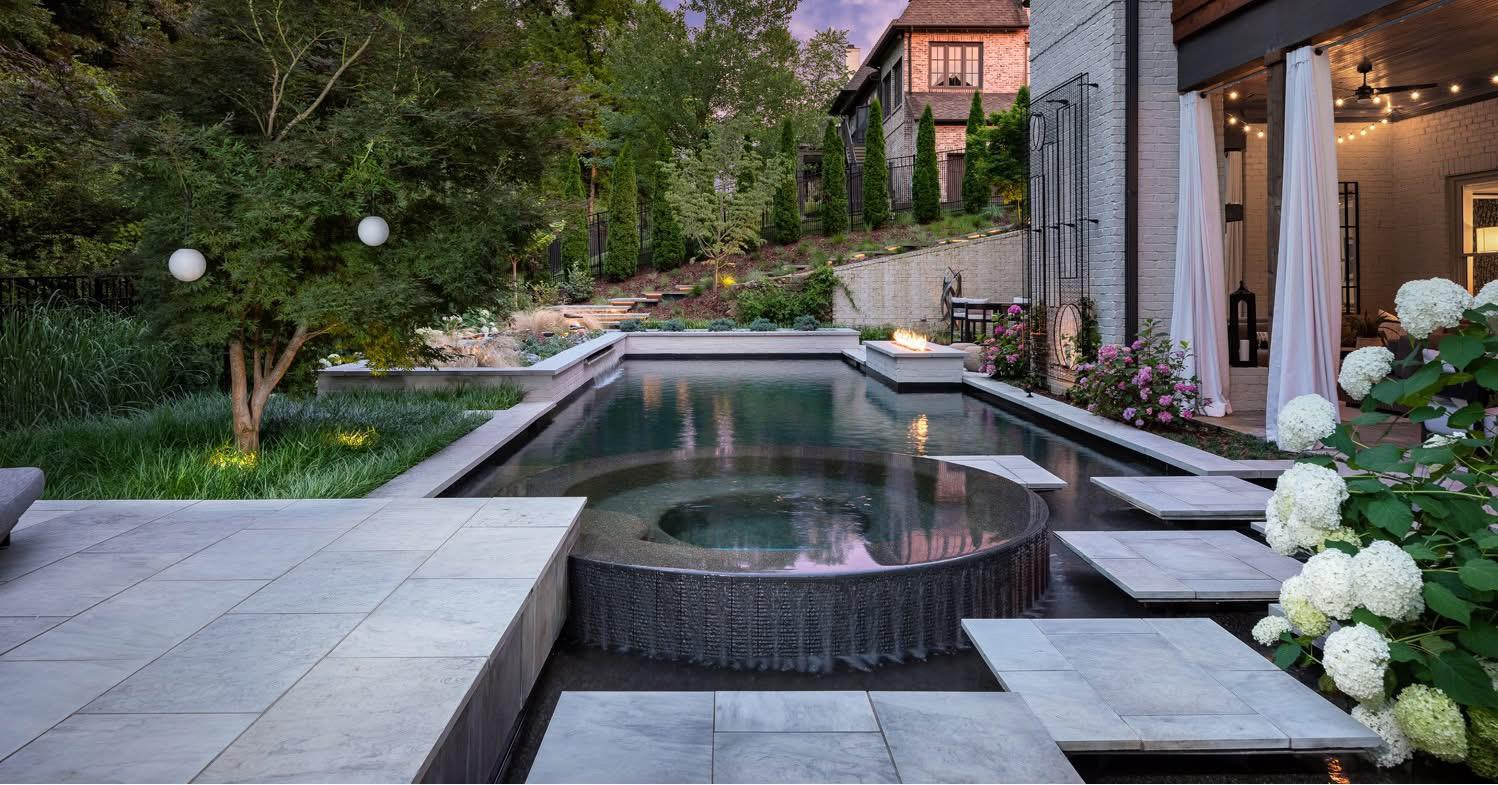
If you have a raised spa that spills into the pool, calculate them separately and add them together. A standard DFW spa is usually 400 to 800 gallons.
Common DFW Pool Sizes by Neighborhood Type
Knowing your neighborhood trend can help you estimate how many gallons is my pool:
- Standard Suburban (Frisco, Plano, McKinney): Usually 12,000 to 22,000 gallons.
- Compact/Townhome (Addison, Las Colinas): Typically 6,000 to 12,000 gallons.
- Large Premium (Southlake, Prosper): Often 20,000 to 40,000+ gallons.
Why Wrong Volume = Wrong Everything
If you are wrong about how many gallons is my pool, everything else fails. If your volume calculation is too low, you will overdose. Too much chlorine can bleach your pool resurfacing project, while too much acid can lead to corrosive water that eats your heater’s copper core.
Conversely, if you think you have more water than you do, you will under-dose. This leads to high pH, cloudy water, and the “green pool” nightmare. According to the CDC, insufficient sanitizer is a primary cause of waterborne illness. Getting the volume right ensures your family stays safe.
How to Find Your Pool Volume If You Don’t Know It
If you are still asking how many gallons is my pool and the math isn’t working for you, try these options:
- Check Builder Records: Your original blueprints will have the exact number.
- Water Meter Method: This is the most accurate. Read your meter before and after a drain and refill.
- Ask a Pro: PoolBurg measures every pool at the very first visit.
Quick Reference Chemical Dosing by Pool Volume
| Pool Gallons | 1 Gallon Liquid Chlorine Rise | 1 Cup Muriatic Acid pH Drop |
| 10,000 | ~12 ppm | ~0.2 |
| 15,000 | ~8 ppm | ~0.2 (using 1.5 cups) |
| 20,000 | ~6 ppm | ~0.2 (using 2 cups) |
| 30,000 | ~4 ppm | ~0.2 (using 3 cups) |
Note: These are approximations for DFW hard water; always test after 24 hours.
People Also Ask
How do I calculate how many gallons my pool holds?
Use the formula: Length x Width x Average Depth x 7.5. This is the standard answer for anyone asking how many gallons is my pool.
How many gallons is a typical pool in DFW?
Most suburban pools in North Texas sit between 15,000 and 20,000 gallons.
Does my pool service need to know my pool volume?
Yes. A professional tech cannot accurately balance your water or size your equipment without it.
PoolBurg Measures Your Pool Volume at the First Visit
We don’t believe in “guesstimate” chemistry. When we start your weekly service, we perform an accurate volume measurement and verify your equipment sizing. Not sure how many gallons your pool holds? PoolBurg measures it accurately at your first visit — free assessment.