
Hot Tub Heater Repair Dallas TX | Same-Day Service | Poolburg

Hot tub not heating in Dallas? Poolburg fixes spa heaters,  elements, sensors, flow switches, control boards. Same-day service, all brands. Get your hot water back.

Hot Tub Heater Repair Dallas

There’s nothing relaxing about stepping into a lukewarm hot tub. You set the temperature, you wait, and the water never gets hot. Or it heats partway and then stalls. Or the heater doesn’t kick on at all. Whatever the symptom, a broken heater turns your spa into a cold disappointment.

Poolburg specializes in hot tub heater repair across Dallas and North Texas. We fix heating elements, sensors, flow switches, control boards, and every other component that stands between you and a properly heated spa. Same-day service, honest diagnosis, and repairs that last.

Hot tub heater repair services in Dallas Tx

We Understand Hot Tub Heating Systems

A hot tub heater isn’t just one part. It’s a system — and when your spa won’t heat, the problem isn’t always the heating element itself. Many heater repairs start with someone replacing the element, only to discover the spa still won’t heat. Why? Because the real problem was a circulation pump that wasn’t moving water, a flow switch that wasn’t detecting flow, a temperature sensor giving bad readings, or a control board relay that stopped working.

We diagnose the entire heating system, not just the most obvious part. That’s how we find the real problem the first time, saving you money and getting your hot water back faster.

How Your Hot Tub Heater Works

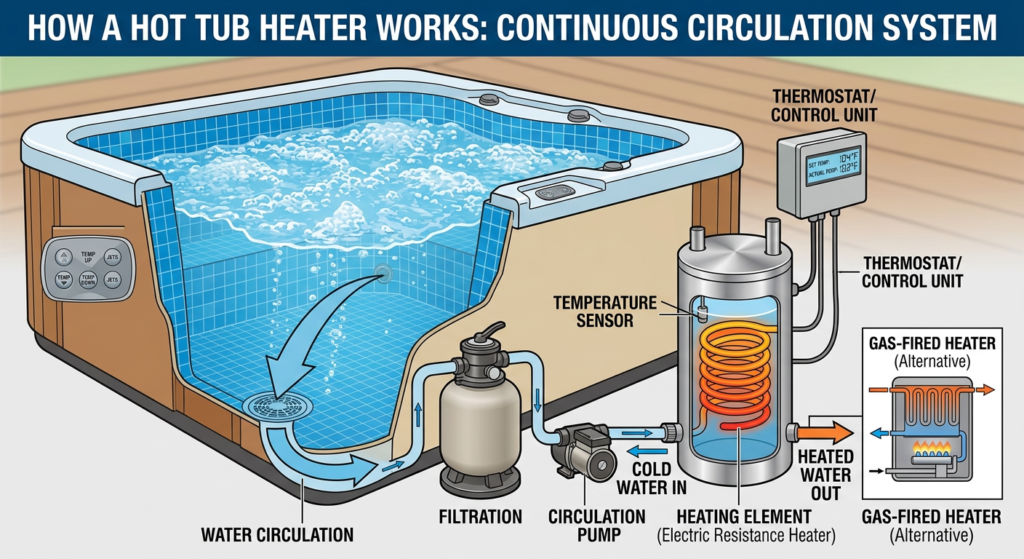
How Hot tub heater Works

Understanding the basics helps you understand what can go wrong.

The Heating Element
An electric coil inside a metal tube. When electricity passes through it, it gets hot. Water flows over it and picks up the heat. This is the component that actually warms your water.

The Flow Path
Water must be moving through the heater for it to work. A circulation pump moves water continuously through the filter, then through the heater, then back to the spa. No flow means no heat — and a heater running without water will burn out in seconds.

The Safety Systems
Multiple safety devices protect your spa. The flow switch or pressure switch confirms water is moving before allowing the heater to activate. The high-limit switch shuts everything down if water gets too hot. The temperature sensor tells the control board what the actual water temperature is. If any safety system detects a problem, the heater won’t run.

The Control Board
The brain of your spa. It reads the temperature sensor, checks the safety switches, and sends power to the heating element when heat is needed. A failed relay or circuit on the board can prevent heating even if every other component is fine.

When your spa won’t heat, the problem could be in any of these areas. We find it.

Common Hot Tub Heater Problems We Fix

Heating Element Failed

This is the most common heater repair, and the one people most often misdiagnose themselves. A heating element is essentially a coil that burns out over time, like the element in a water heater or oven. When it fails, no heat is produced.

Symptoms:

  • Spa runs but water never warms

  • Heater has power but no heat output

  • Breaker trips when heater activates

  • Visible corrosion or cracking on the element

What We Do:
We test the element for continuity and resistance. A healthy element shows specific resistance; a failed element shows an open circuit. We also test for a short to ground, which is what causes breaker trips. If the element is bad, we replace it with the correct wattage and configuration for your spa.

Important: Even if the element tests bad, we check why it failed. An element that burns out prematurely often died because of a flow problem, water chemistry issue, or electrical fault. We fix the root cause, not just the symptom.

Circulation or Flow Problem Preventing Heat

This is the number one misdiagnosed heating issue. Your heater element is fine, but water isn’t moving through it. The flow switch detects no flow and prevents the heater from activating — because running a heater without water destroys it instantly.

Symptoms:

  • Spa shows FLO error

  • Heater never activates even though pump runs

  • Water stays cold or lukewarm

  • Circulation pump is noisy or not running

  • Problem started gradually — heat was weak, then gone

What We Do:
We check the circulation pump, filter condition, and plumbing for blockages or airlocks. We test the flow switch. We verify water is actually moving through the heater. If the circulation pump has failed, we replace it — and then the heater will work again without any heater repair needed.

Flow Switch or Pressure Switch Failure

The flow switch is the safety device that tells your control board “water is flowing — it’s safe to turn on the heater.” When this switch fails, it either prevents the heater from running (even though flow is fine) or, in rare cases, fails to shut off the heater when flow stops (which is dangerous).

Symptoms:

  • FLO error on display despite good water flow

  • Heater works intermittently — sometimes heats, sometimes doesn’t

  • Error code appears and disappears at random

  • Switch shows visible corrosion or mineral buildup

What We Do:
We test the flow switch electrically to see if it’s closing the circuit when water flows. We check the switch paddle or plunger for debris or mineral buildup that prevents movement. We test wiring continuity between the switch and control board. If the switch has failed, we replace it and verify proper heater operation.

Temperature Sensor or Thermistor Failure

The temperature sensor tells your control board the actual water temperature. If it gives a false reading — say, telling the board the water is already 104°F when it’s actually 80°F — the heater will never turn on because the board thinks the spa is already hot.

Symptoms:

  • Display shows incorrect water temperature

  • Heater doesn’t activate despite water being cold

  • Display shows Sn, Sn1, Sn2, or sensor error

  • Spa overheats because sensor isn’t reading correctly

  • Temperature reading jumps around erratically

What We Do:
We test the sensor’s resistance at known temperatures and compare it to the correct values for your spa model. A sensor that’s out of spec gets replaced. This is a relatively inexpensive repair that makes a dramatic difference.

High-Limit Switch Tripped or Failed

The high-limit switch is an emergency safety device. If water temperature exceeds a safe maximum — usually around 118°F to 120°F — it cuts power to the heater. It’s there to prevent scalding and equipment damage.

Symptoms:

  • Heater won’t activate at all

  • OH (overheat) error on display

  • May have been triggered by a genuine overheat event

  • May have failed and is falsely tripping

What We Do:
We check whether the high-limit trip was genuine (your spa actually overheated) or false (the switch failed). If the spa overheated, we find why — a stuck heater relay, a bad sensor, or a circulation failure. If the switch itself failed, we replace it. We never bypass a high-limit switch — that’s a serious safety risk.

Control Board Relay or Circuit Failure

The control board sends power to the heating element through relays. Over time, these relays can fail — contacts burn, solder joints crack, or circuits short. When the relay fails, the board may think it’s sending power to the heater, but the heater never actually receives it.

Symptoms:

  • Display shows heater is on but water doesn’t warm

  • Heater works sometimes and not others

  • Clicking sound from board when heater should activate but no heat

  • Visible burn marks or damage on the board

  • Other electrical symptoms present

What We Do:
We test for voltage at the heater terminals when the board indicates heating. If the board says it’s heating but no power reaches the element, the problem is upstream — usually the relay. Depending on the board, we may be able to repair the relay or the board may need replacement.

Water Chemistry Damage

Poor water chemistry doesn’t just make water cloudy or irritating. It destroys heater elements. Low pH corrodes the element housing. High calcium causes scale buildup that insulates the element and causes it to overheat and burn out. This is why heater elements in poorly maintained spas fail much faster than those in properly balanced water.

Symptoms:

  • Heater elements failing repeatedly in a short time

  • White, crusty scale buildup on the element

  • Corrosion or pitting on the heater housing

  • Water chemistry consistently out of balance

What We Do:
We replace the damaged element and advise on water chemistry management. If scale is severe, we may recommend a plumbing flush to remove deposits throughout the system. We help you understand what caused the damage so it doesn’t happen again.

Heater Relay Stuck On (Overheating)

Less common but serious. The relay that sends power to the heater gets stuck in the ON position. The heater runs continuously regardless of temperature setting. The high-limit switch eventually trips, but the spa may have already reached dangerously high temperatures.

Symptoms:

  • Spa water is much hotter than the set temperature

  • High-limit trips repeatedly

  • Heater runs even when display doesn’t indicate heating

  • Water temperature continues climbing with no limit

What We Do:
This is a safety-critical repair. We replace the failed relay or the control board. We verify the high-limit switch is functional. We test the entire heating system to ensure safe operation before we leave.

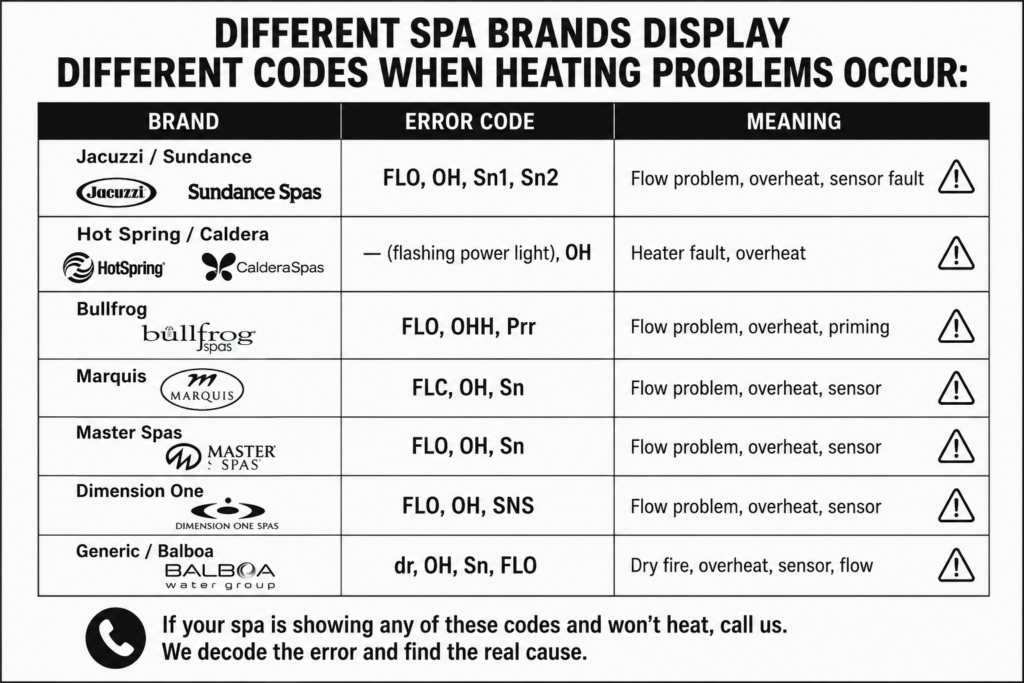
Heater Error Codes by Brand

Different spa brands display different codes when heating problems occur:


BrandError CodeMeaning
Jacuzzi / SundanceFLO, OH, Sn1, Sn2Flow problem, overheat, sensor fault
Hot Spring / Caldera— (flashing power light), OHHeater fault, overheat
BullfrogFLO, OHH, PrrFlow problem, overheat, priming
MarquisFLC, OH, SnFlow problem, overheat, sensor
Master SpasFLO, OH, SnFlow problem, overheat, sensor
Dimension OneFLO, OH, SNSFlow problem, overheat, sensor
Generic / Balboadr, OH, Sn, FLODry fire, overheat, sensor, flow

If your spa is showing any of these codes and won’t heat, call us. We decode the error and find the real cause.

Our Heater Diagnostic Process

1

We Listen

You describe what's happening. How long has it not been heating? Does it heat at all, or not even try? Any error codes? Did this start suddenly or gradually?

2

We Check Flow First

Before testing any heater components, we verify water is actually moving through the system. Filter condition, circulation pump operation, valve positions, plumbing blockages. No flow means no heat, and running a heater without flow destroys it.

3

We Test the Safety Chain

Flow switch, high-limit switch, temperature sensor. Every safety device gets tested. If the safety chain is broken anywhere, the heater won't run regardless of the element condition.

4

We Test the Heating Element

Continuity test, resistance measurement, ground fault test. We determine if the element is functional and within specification.

5

We Test Power Delivery

Does the control board send power to the heater when it should? We test voltage at the heater terminals during a call for heat.

6

Clear Diagnosis & Quote

We tell you exactly what's wrong, what needs to be replaced or repaired, and what it costs. No guessing. No unnecessary work.

7

Repair & Verification

We complete the repair, clear any error codes, and run the spa through a full heating cycle. You see hot water before we leave.

Why Choose Poolburg for Hot Tub Heater Repair

Whole-system diagnosis

We don't just swap the heating element and hope. We verify the entire heating system, flow, safety devices, sensors, controls, and power delivery.

Root cause focus

If your element burned out, we find out why. Replacing the element without fixing the cause means you'll replace it again soon.

Dallas, Fort Worth, and every city in betweens

Authorized warranty center

Repairs meet manufacturer standards for all major brands

Brands We Service

We repair all major hot tub and spa brands, including:
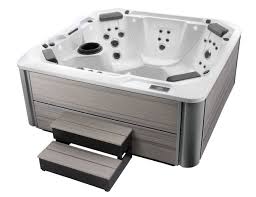
Image gallery marquee

Frequently Asked Questions

Why did my hot tub stop heating?

The most common reasons, in order: the heating element burned out, the circulation pump failed so no water moves through the heater, the filter is so dirty it’s restricting flow, the flow switch failed and is preventing heater activation, or the temperature sensor is giving false readings. We test the entire system to find which one applies to your spa.

You can’t know for certain without testing. If your spa shows a FLO error, the problem is almost certainly flow-related, not the element. If the display says it’s heating but water never warms, it could be the element, the control board relay, or a wiring issue. If the display shows an incorrect temperature, suspect the sensor. These symptoms overlap, which is why professional diagnosis saves time and money.

We don’t recommend it. Replacing a heating element involves working with high-voltage electrical connections in a wet environment. You need to drain the spa or isolate the heater, correctly torque electrical connections, use the right gaskets to prevent leaks, and verify proper operation including all safety systems.

We’ve seen DIY element replacements that leaked water onto electrical components, that used incorrectly rated elements, and that failed to address the reason the original element burned out. The money saved on a DIY attempt often gets spent, and more, when we’re called to fix the result.

In a properly maintained spa with balanced water chemistry, a heating element should last 5 to 10 years. In spas with poor water chemistry, especially low pH or high calcium, elements can fail in 1 to 2 years. The element is often the victim of other problems: a failing circulation pump, a dirty filter, or corrosive water chemistry.

Repeated heater failures almost always point to an underlying problem. The element is the victim, not the cause. Common reasons elements fail repeatedly: consistently low pH corroding the element housing, high calcium causing scale buildup that makes the element overheat, a circulation pump that intermittently fails causing the element to dry-fire, or a stuck relay that keeps the heater running continuously. We find the underlying cause rather than becoming the next technician to replace the same element.

This usually indicates an intermittent problem. The heater works, but something is causing it to shut off prematurely and restart later. Common causes: a circulation pump that’s failing and occasionally stops moving water, a flow switch that’s sticking, a temperature sensor with a loose connection, or a control board with a failing relay. These intermittent problems can be frustrating to diagnose, but our systematic approach finds them.

It depends entirely on what’s wrong. A temperature sensor replacement is relatively inexpensive. A heating element replacement costs more but is still a standard repair. A control board replacement is more significant. The key is accurate diagnosis, paying for a heating element you didn’t need is more expensive than paying for the correct repair the first time. We give you a clear quote before any work starts.

Yes. Contact your spa manufacturer and request Poolburg as your service provider. If we’re an authorized center for that brand, they’ll dispatch us and often cover the full repair cost.

Yes. A tripping breaker means there’s an electrical fault, possibly in the heater, pump, or wiring. Don’t keep resetting it. This is a safety issue that needs professional diagnosis right away.

Let Poolburg Repair Your Hot Tub Heater.

Cold spa? Don’t wait. Call Poolburg for same-day heater repair across Dallas.