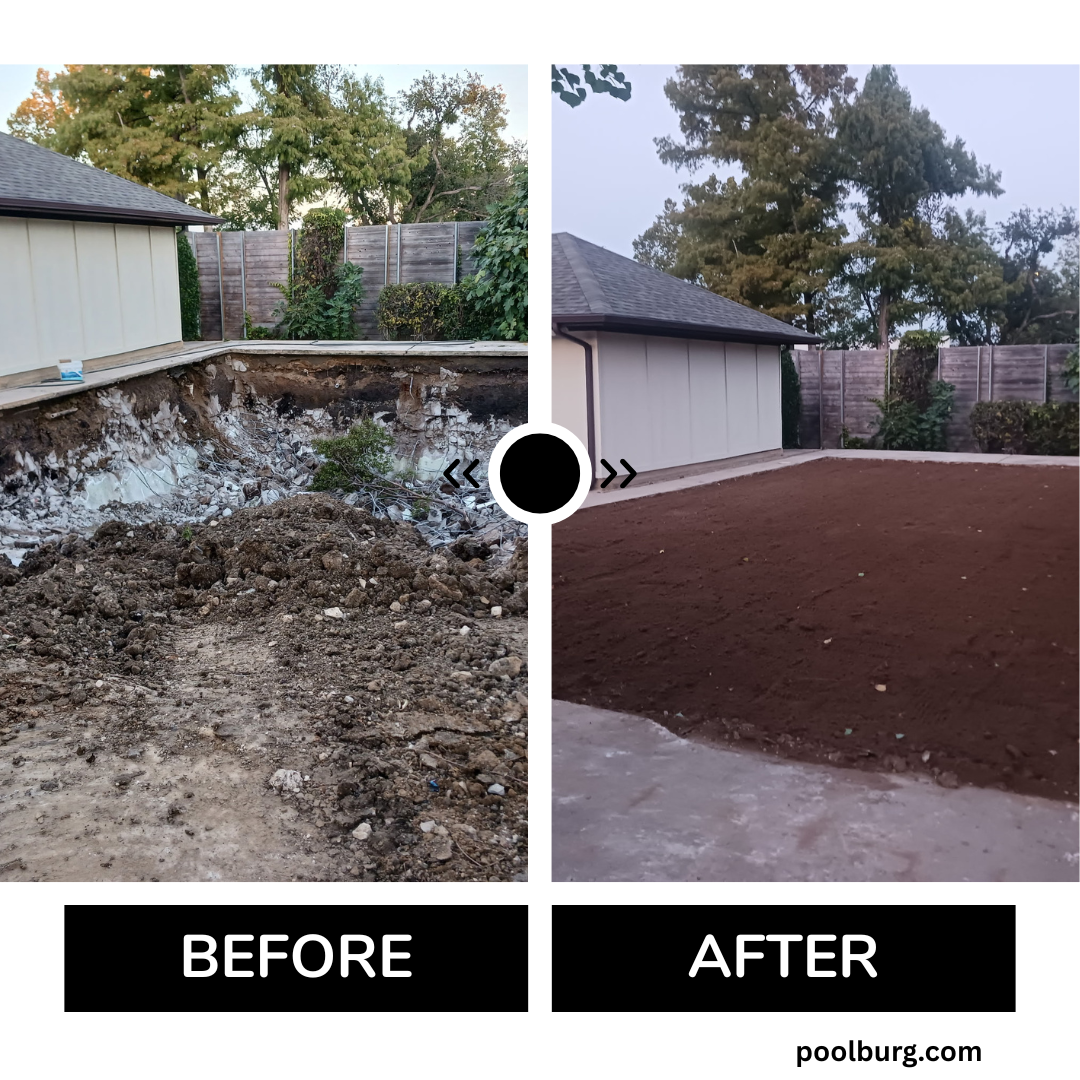
Estimating pool demolition cost typically ranges from $2,500 to $16,000, though extensive or complex full removal projects can surpass $20,000. Based on Angi pool-removal cost data, partial fill-ins generally cost between $2,500 and $10,000, whereas full removals fall between $4,000 and $16,000. Additionally, the HomeAdvisor pool-removal cost guide indicates overall project costs span from approximately $2,000 to $19,000. Because these figures serve as general benchmark estimates, an on-site evaluation is necessary to establish exact pricing for North Texas properties.
What Pool Demolition Cost Includes
A complete proposal may cover draining, utility disconnection, equipment removal, demolition, hauling, clean fill, compaction, grading, and yard restoration. A pool demolition cost quote should say whether decking, coping, a spa, fencing, irrigation, sod, and permits are included.
Review local discharge rules, such as Fort Worth’s guidance on proper pool drainage. Texas811 excavation guidance also requires homeowners and excavators to request underground utility locations before digging. Both steps protect people, property, and the budget.
Partial Pool Removal vs Complete Removal
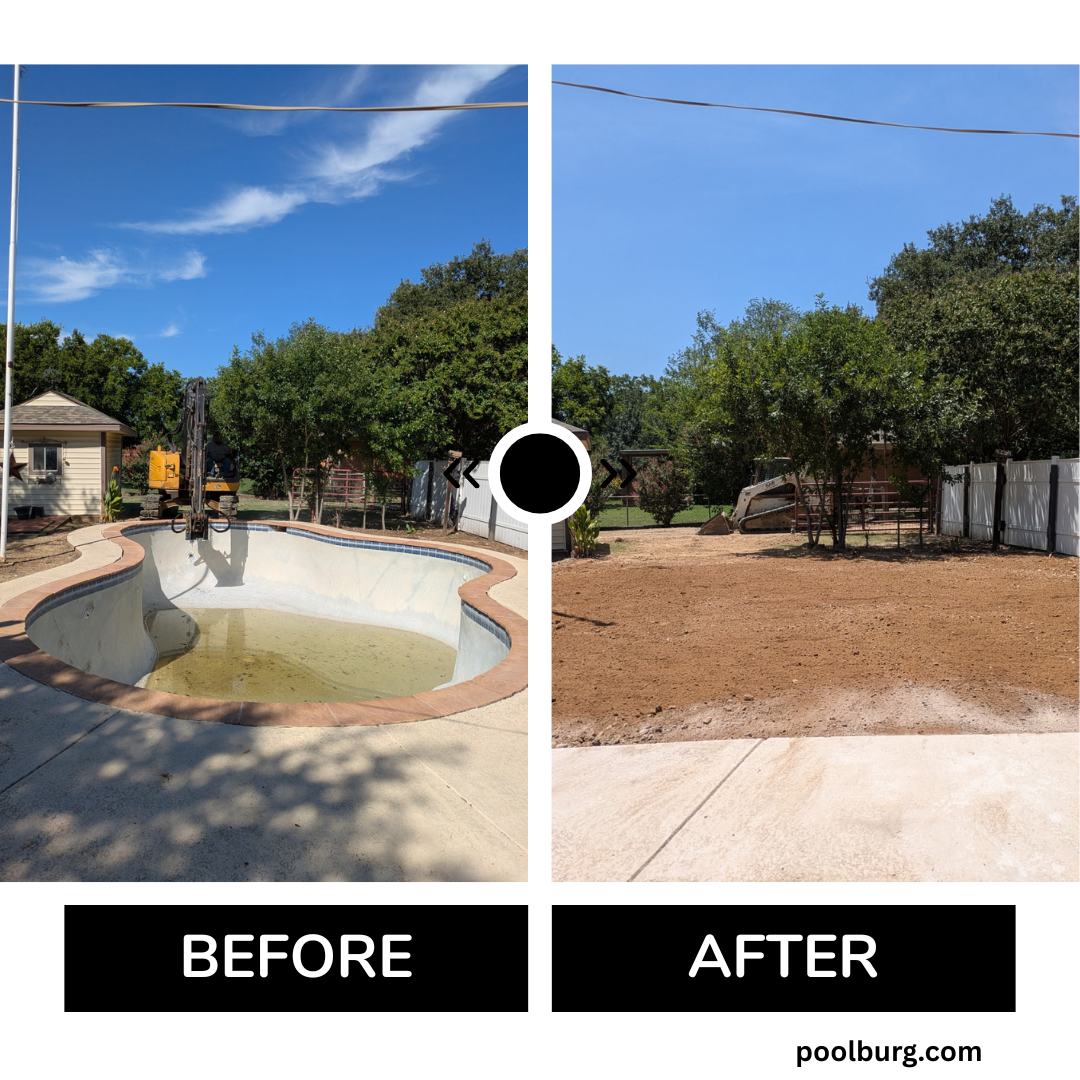
Partial pool removal generally opens the floor for drainage, demolishes the upper part of an eligible concrete or gunite shell, and fills the cavity as local rules allow. It lowers pool demolition cost because less material is hauled away, but buried structure remains. Settling, disclosure, financing, or future construction can become concerns.
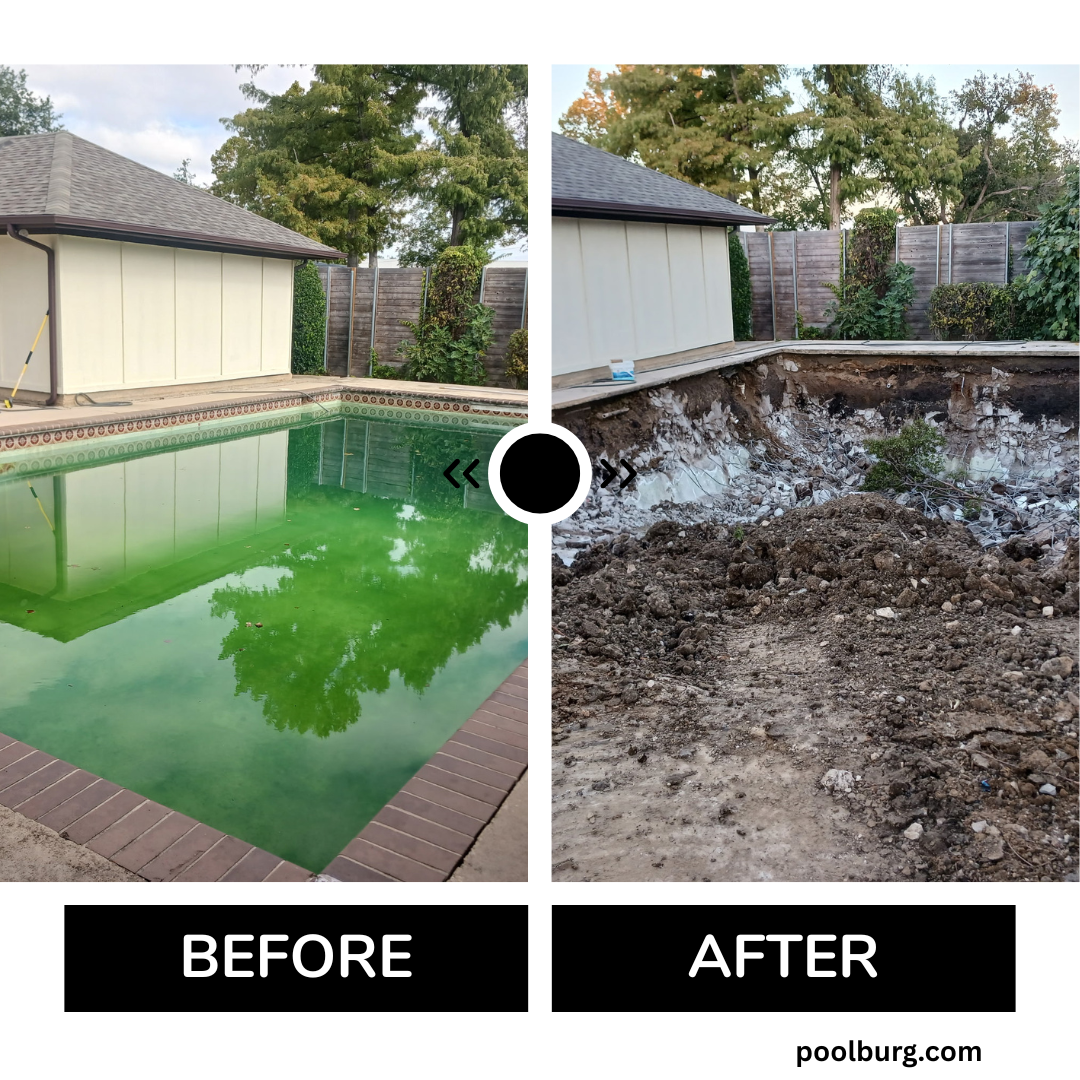
Complete removal takes out the shell, rebar, plumbing components, and specified materials before clean fill is compacted. It costs more but offers greater flexibility for future landscaping or construction. Fiberglass and some vinyl systems may require this method.
Garland’s official pool-demolition requirements, for example, call for openings in the pool, capped utilities, removed equipment, an inspection, and clean fill. Confirm the city-approved method before choosing a bid.
What Changes Pool Demolition Cost
The biggest price factors are pool size, construction, access, and material volume. Concrete and gunite demand breaking and heavy hauling. A narrow side yard may require smaller machinery, added labor, fence removal, or a crane. Decks, spas, retaining walls, and thick reinforcement increase the work. That is why swimming pool removal cost can vary sharply between neighboring homes.
Fill is another major line item: it must be sourced, placed in controlled lifts, and compacted for the intended use. Disposal distance and fees matter too. The EPA overview of construction and demolition landfills explains why concrete, metal, plastic, and other debris need appropriate handling.
Hidden Pool Demolition Cost Factors
An honest pool removal cost estimate should address access, utility conflicts, drainage, permits, unexpected shell thickness, unsuitable soil, retaining walls, tree roots, and landscaping. Ask whether it includes:
- permit coordination and required inspections;
- utility disconnection and capping;
- deck, coping, spa, and equipment removal;
- debris transportation and disposal fees;
- fill quantity, compaction method, and grading; and
- fence, irrigation, drainage, and lawn restoration.
An itemized scope makes estimates comparable and reduces mid-project surprises.
Pool Removal vs Pool Renovation
Before finalizing an inground pool demolition cost, compare it with the work required to keep the pool. A tired finish and old equipment may call for pool resurfacing or a North Texas pool renovation. Structural failure, chronic leakage, nonuse, or redevelopment plans can favor removal.
A professional pool inspection can separate cosmetic problems from structural ones. Compare future use, maintenance, yard plans, resale considerations, and the value of retaining a working pool.
People Also Ask
How much does inground pool demolition cost?
Pool demolition cost for many projects falls between $2,500 and $16,000; large complete removals may exceed $20,000. Access and scope control the quote.
What is the difference between partial and complete removal?
Partial removal leaves approved shell portions below grade. Complete removal excavates and hauls away the specified structure.
Can a concrete pool be filled in?
Often, but city-approved drainage, demolition, fill, inspection, and compaction rules must be followed.
Does pool removal require a permit?
Many cities require a permit, inspections, or both. Those fees add to pool demolition cost, so verify locally before work starts.
How long does pool demolition take?
Fieldwork may take several days or longer. Permits, inspections, weather, access, and landscaping can extend the schedule.
Can heavy equipment access affect cost?
Yes. Tight gates may raise pool demolition cost by requiring smaller machinery, added labor, fence removal, or crane service.
What happens to the pool plumbing?
The scope should state which lines and equipment are removed, disconnected, or capped.
Is renovating cheaper than removing a pool?
Sometimes. Compare the shell, finish, plumbing, deck, equipment, and long-term plans.
Get a Site-Specific North Texas Estimate
PoolBurg provides pool demolition and removal across DFW, including Plano, Carrollton, Farmers Branch, Garland, Mesquite, Lewisville, and The Colony. The team can assess access, removal method, debris, fill, grading, and restoration before quoting. Contact PoolBurg for a site-specific pool demolition cost or renovation comparison.