Pool leak repair starts with one frustrating question: is my pool actually leaking, or is it just evaporation? In North Texas, that question is harder to answer than you’d think because DFW summers can evaporate a quarter inch of water per day from a pool surface. But if you’re topping off more than that, noticing wet spots in the yard, or watching your water bill climb for no obvious reason, there’s a real chance you need pool leak repair. The sooner you find it, the cheaper it is to fix. Here’s how to tell, where to look, and what it costs in DFW.
How to Tell If Your Pool Has a Leak
The Bucket Test
Fill a bucket to the waterline, set it on the pool step, and mark both the pool water level and the bucket water level. Wait 24 hours. If the pool dropped more than the bucket, you’re losing water beyond normal evaporation and likely need pool leak repair.
Water Level Dropping More Than a Quarter Inch Per Day
A quarter inch daily is normal evaporation in Texas heat. Half an inch or more consistently points to a leak. An inch per day means something significant is leaking and you’re losing hundreds of gallons.
Auto-Fill Running Constantly
If your auto-fill system runs more than once a day or you hear it running at odd hours, it’s compensating for water loss. This masks the problem and inflates your water bill until someone investigates.
Wet Spots in the Yard
Soggy patches near the equipment pad, along the pool edge, or between the pool and the house suggest an underground plumbing leak. In DFW’s clay soil, this water doesn’t drain — it sits and saturates.
Air Bubbles in Return Jets
Air entering the suction side of the plumbing creates visible bubbles at the return jets. This usually means a crack or loose fitting on the suction line between the skimmer and the pump — a common pool leak repair issue.
Deck Cracks or Lifting Concrete
Water leaking underground saturates the soil beneath the deck, causing it to shift, crack, or lift. If your pool deck is suddenly uneven or cracking in new places, a leak underneath may be the cause.
Unexplained Water Bill Increase
A steady rise in your water bill — especially outside of summer when you’d expect higher usage — often points to a leak that the auto-fill is silently covering. The Texas Water Development Board tracks regional water pricing, and even a small leak can add $50 to $200 per month to your bill.
Common Sources of Pool Leaks in North Texas
Underground Plumbing
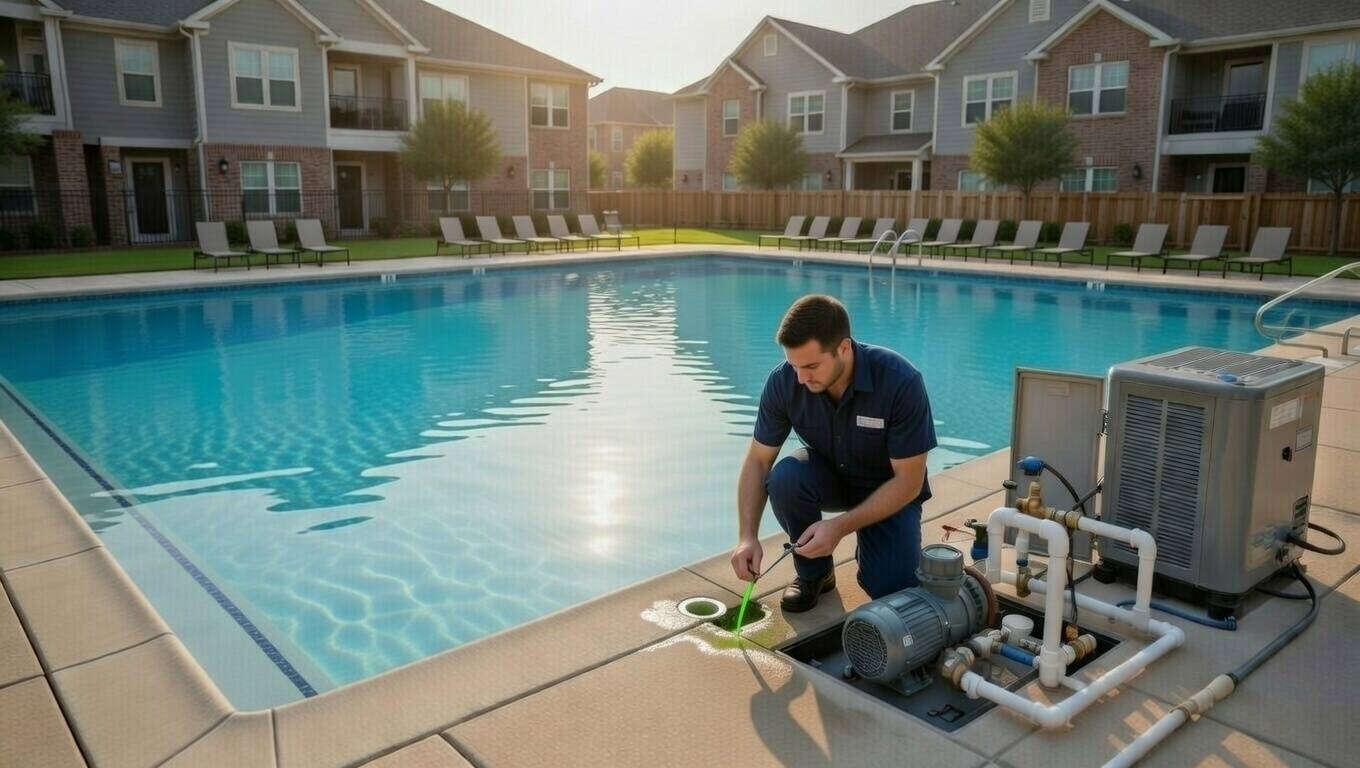
This is the most expensive and most common pool leak repair in DFW. Our expansive clay soil — documented extensively by U.S. Geological Survey soil data — swells when wet and shrinks when dry, shifting the ground and stressing rigid PVC pipes until they crack at joints and connections.
Equipment Pad Connections
Unions, valves, and fittings on the equipment pad loosen over time from thermal expansion, vibration, and chemical exposure. These are usually the easiest and cheapest pool leak repair — often just a gasket or O-ring replacement.
Skimmer and Return Fitting Seals
The seal between the skimmer body and the pool shell or between return fittings and the wall deteriorates over time. Dye testing around these areas quickly reveals whether water is escaping through the gasket.
Pool Light Niche and Conduit
The conduit that carries the light cord from the niche to the junction box is a known leak path. If the conduit seal fails, water follows the cord and drains continuously. This is a sneaky one that’s easy to miss without dye testing.
Main Drain Connections
The plumbing connection at the main drain sits at the deepest point of the pool and is under the most hydrostatic pressure. A failed seal or cracked fitting here causes steady water loss that’s invisible from the surface.
Pool Shell Cracks
Older gunite pools develop structural cracks over time, especially in DFW where soil movement puts lateral pressure on the shell. Not every crack leaks, but any crack that extends through the plaster and into the gunite is a potential pool leak repair candidate.
Freeze Damage
Burst pipes from winter freeze events are a major source of pool leaks that often don’t show up until spring. Water trapped in unprotected plumbing expands, cracks the PVC, and leaks underground where you can’t see it until the yard gets soggy or the water bill spikes.
How Professional Pool Leak Detection Works
Pressure Testing Plumbing Lines
Each plumbing line is isolated and pressurized to determine whether it holds pressure or drops. A line that won’t hold pressure has a breach somewhere along its length. This narrows down the location before any digging begins.
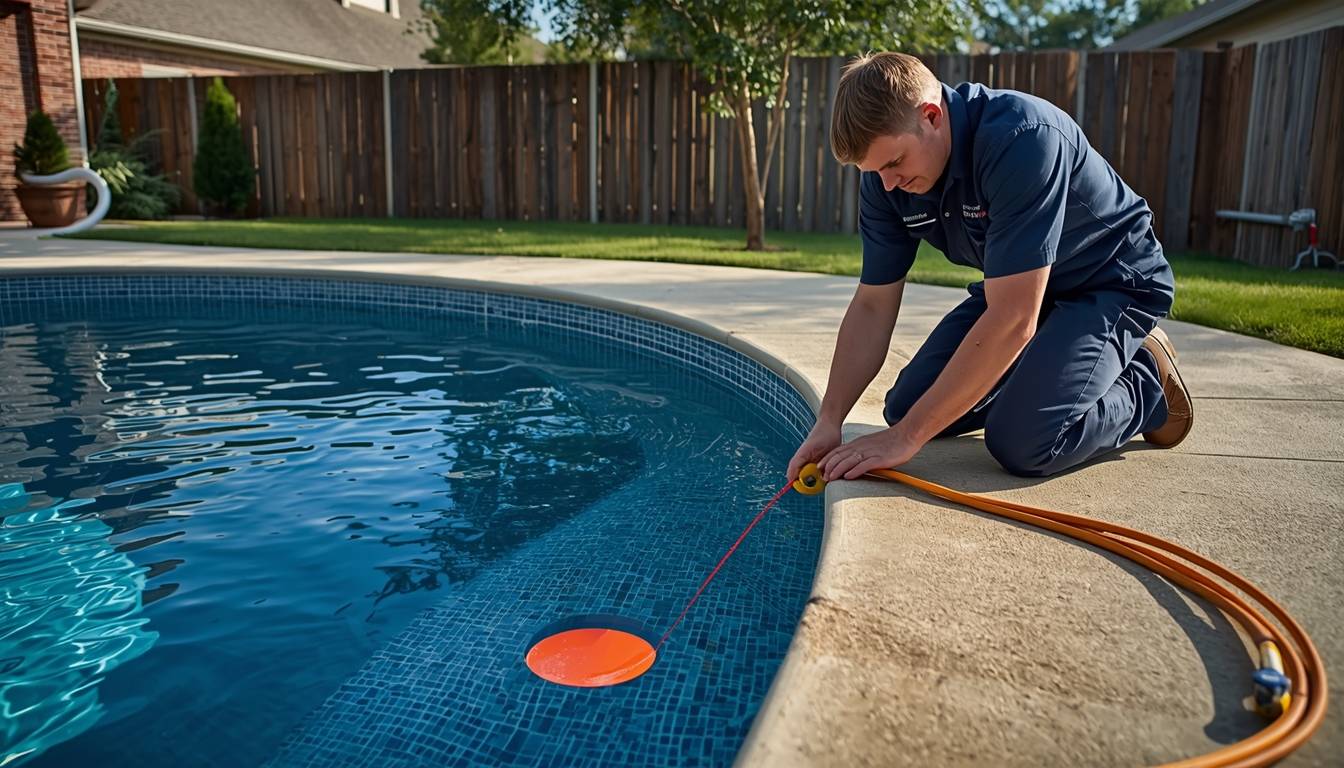
Dye Testing at Suspected Leak Points
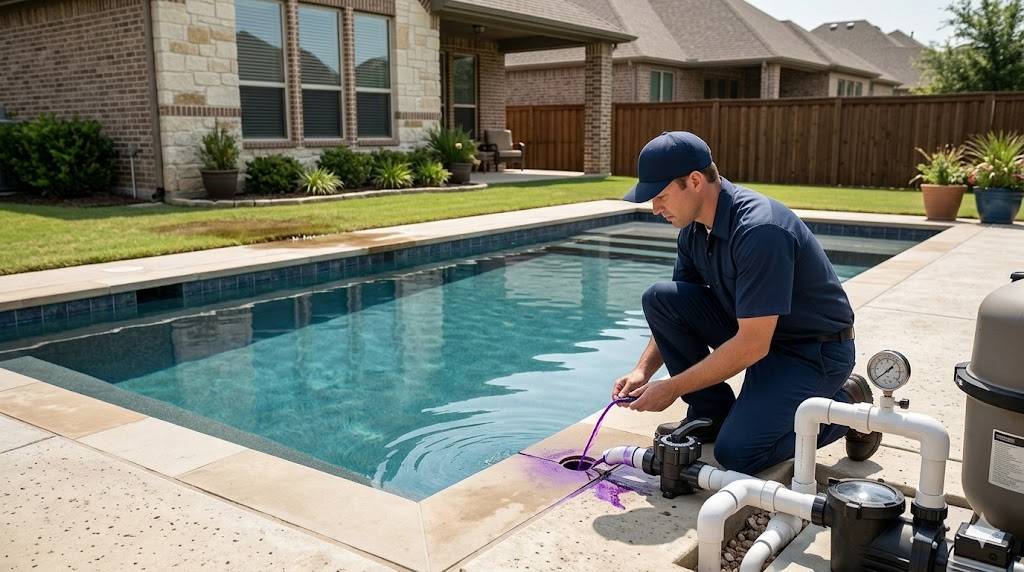
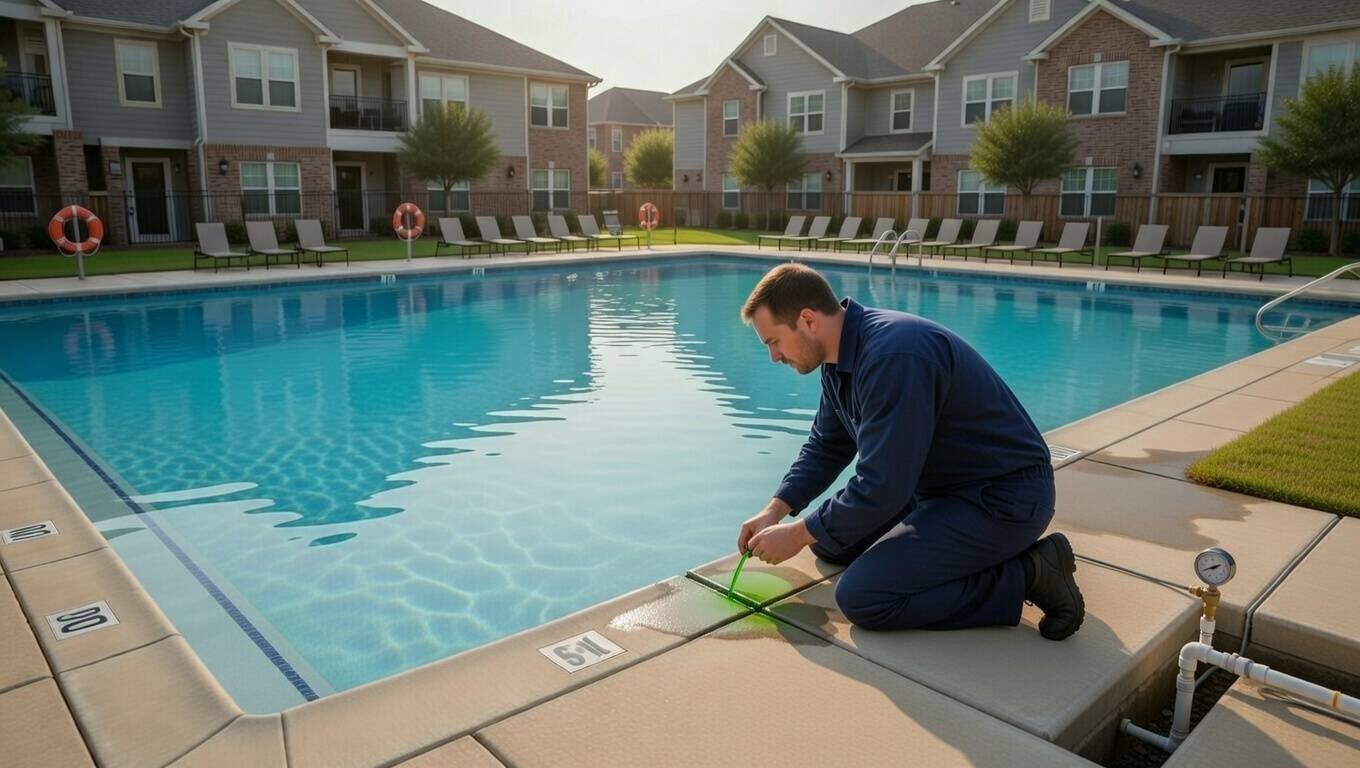
A small amount of colored dye is released near suspected areas — skimmer throats, return fittings, light niches, cracks. If the dye gets pulled toward the surface, water is escaping there. It’s simple, effective, and non-invasive.
Electronic Leak Detection
Specialized electronic listening equipment detects the sound of water escaping underground pipes. This allows technicians to pinpoint the leak location without excavating the entire plumbing run. It’s the most efficient method for underground pool leak repair situations.
Camera Inspection
For hard-to-reach plumbing, a small camera can be inserted into the pipe to visually identify cracks, separations, or blockages. This is especially useful for long underground runs where the leak location isn’t obvious from pressure testing alone. Professional detection saves money because it eliminates guessing and unnecessary digging.
Pool Leak Repair Methods and Costs in DFW
Fitting and Gasket Replacement: $75 to $200
The simplest pool leak repair. Worn O-rings, cracked unions, and failed gaskets at the equipment pad or at wall fittings are quick fixes that stop the leak immediately.
Accessible Pipe Repair: $150 to $500
Pipes visible at the equipment pad or just below the deck surface can be cut out and replaced without major excavation. Cost depends on how much plumbing needs to be reworked.
Underground Pipe Repair: $500 to $2,000+
This is where pool leak repair gets expensive. Locating and accessing underground plumbing requires excavation, pipe replacement, and backfill. In DFW’s clay soil, the dig is harder and the soil must be properly compacted to prevent future settling.
Shell Crack Repair: $300 to $1,000
Structural cracks in gunite pools are repaired by chipping out the damaged area, applying hydraulic cement or epoxy, and resurfacing the patch to match. Cost depends on crack length and depth.
Skimmer Body Replacement: $400 to $800
If the skimmer body itself is cracked — not just the gasket — the entire unit needs to be cut out and replaced. This involves deck cutting, plumbing reconnection, and concrete patching.
Full Plumbing Reroute: $1,500 to $4,000+
When underground plumbing has multiple failures or is too deteriorated to patch, a full reroute replaces the line entirely with a new surface or shallow-buried run. This is the most expensive pool leak repair but sometimes the most cost-effective long-term solution for aging plumbing systems.
Why Pool Leaks Are Especially Problematic in North Texas

DFW sits on some of the most expansive clay soil in the country. When it rains, the soil swells. When it dries in summer, it contracts dramatically. This constant movement shifts pool plumbing and creates stress fractures that worsen over time. A small leak in this soil also creates a bigger problem because the water doesn’t drain — it saturates, causing more soil movement and potentially affecting your home’s foundation if the pool is close to the house.
On top of that, every gallon lost in Texas heat has to be replaced with hard NTMWD water that brings more calcium into the pool, accelerating scale buildup. And in a drought-prone region, wasted water isn’t just expensive — it’s irresponsible. Fast pool leak repair protects your pool, your property, your wallet, and your water supply.
People Also Ask About Pool Leak Repair
How do I know if my pool is leaking or just evaporating?
Do the bucket test. Place a bucket of water on the pool step and mark both levels. After 24 hours, if the pool dropped more than the bucket, you have a leak. Normal DFW summer evaporation is about a quarter inch per day. Anything consistently beyond that warrants professional pool leak repair investigation.
How much does pool leak detection cost in DFW?
Professional leak detection in North Texas runs $150 to $400 depending on the complexity. Basic dye and pressure testing is on the lower end. Electronic detection and camera inspection for underground leaks cost more but save thousands in unnecessary excavation.
Can a pool leak cause foundation damage?
Yes, especially in DFW. Water from a pool leak saturates the expansive clay soil beneath and around your foundation, causing it to swell unevenly. Over time, this creates differential settlement that cracks walls, doors, and slabs. Pool leak repair near the house should be treated as urgent.
How long does pool leak repair take?
Simple fitting and gasket repairs take less than an hour. Equipment pad pipe repairs take a few hours. Underground pipe repair requires 1 to 3 days including excavation, repair, and backfill. Full plumbing reroutes can take 2 to 5 days depending on the scope.
Does homeowner’s insurance cover pool leaks?
Generally, no. Most homeowner’s policies exclude pool plumbing from coverage. Insurance may cover damage caused by a sudden leak — like water damage to a structure — but typically won’t cover the cost of finding or fixing the leak itself. Check your specific policy with your provider and consult the Texas Department of Licensing and Regulation for contractor licensing verification before hiring anyone.
PoolBurg’s Pool Leak Detection and Repair Services
PoolBurg provides professional pool leak repair across all 17 North Texas cities we serve. Pressure testing, dye testing, electronic detection, and camera inspection to find the exact source. Then transparent repair pricing before any work begins — fitting replacements, pipe repairs, shell crack fixes, skimmer replacements, and full plumbing reroutes when needed. We don’t guess and dig. We find it, explain it, price it, and fix it right the first time.
Suspect a leak? Schedule a professional leak detection today.
Fast answers, honest pricing, and a clear plan before any work starts.
Visit poolburg.com or call us today.