Pool maintenance services are the backbone of keeping a swimming pool clean, balanced, and ready to swim in. Without regular pool maintenance services, debris builds up, water chemistry drifts out of balance, and equipment problems often go unnoticed until they become expensive repairs.
According to the Pool & Hot Tub Alliance water care guidelines, consistent maintenance and water testing are essential for safe swimming and proper equipment performance. Professional pool maintenance services remove the guesswork by handling cleaning, chemistry balancing, and equipment checks on a regular schedule.
For many homeowners, reliable pool maintenance services turn pool ownership from a weekly chore into something simple and enjoyable.
Why Professional Pool Maintenance Services Are Essential in DFW
North Texas pools face some unique challenges. The intense summer heat accelerates algae growth and burns through chlorine much faster than cooler regions. According to the CDC Healthy Swimming Program, sanitizer levels must be maintained consistently to prevent bacteria and algae growth.
Dust, pollen, and storms common in the region constantly introduce debris into the water. Without routine pool maintenance services, that debris sinks, stains surfaces, and clogs filters.
Another challenge is hard water. The U.S. Geological Survey hard water data shows that many Texas areas contain high mineral levels. Calcium buildup can create scale on tile, salt cells, and heaters if water chemistry isn’t managed properly.
Regular pool maintenance services help keep water balanced while preventing expensive equipment damage.
What a Standard Weekly Pool Maintenance Service Includes
Skimming the pool surface
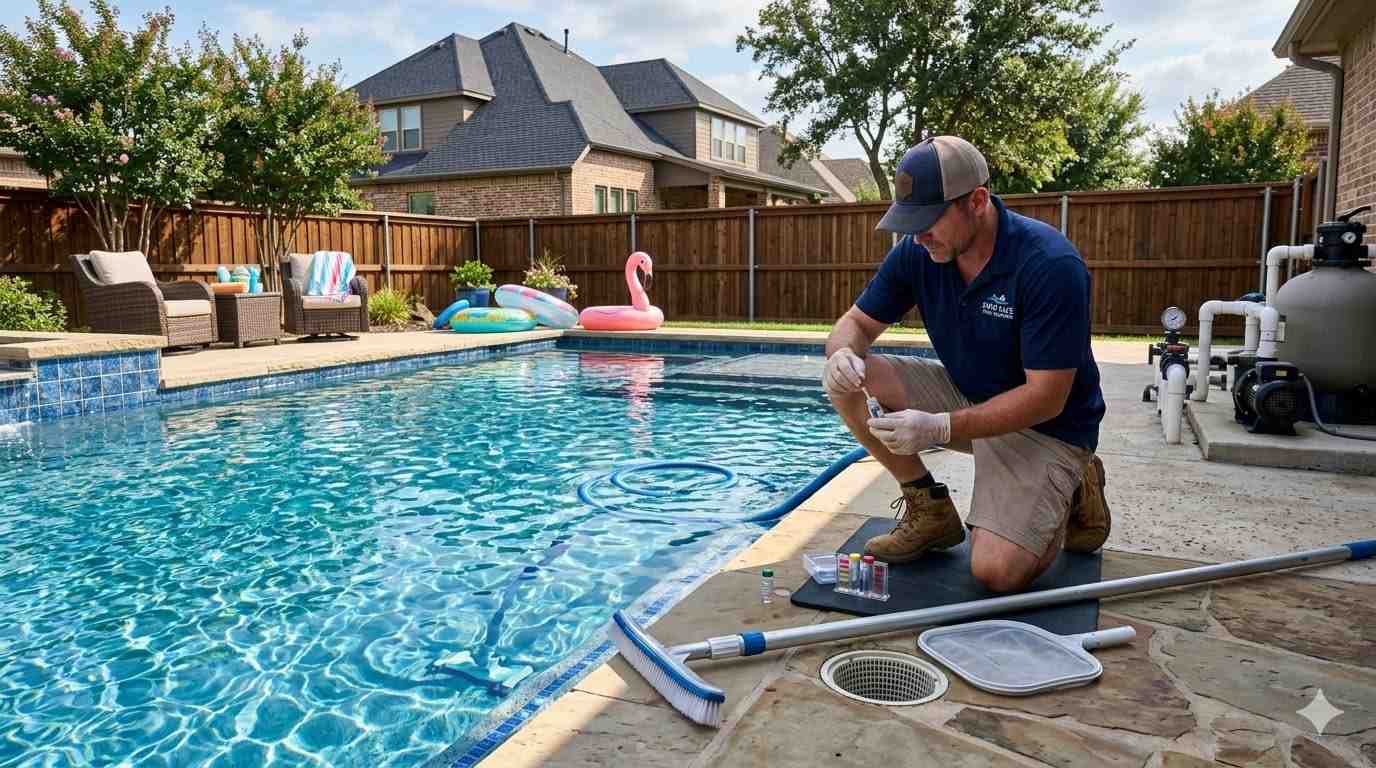
One of the first tasks in weekly pool maintenance services is removing leaves, insects, and floating debris. Skimming keeps the water looking clean and prevents debris from sinking and staining pool surfaces.
It also keeps skimmer baskets from becoming clogged, which can reduce water circulation.
Brushing pool walls and steps
Brushing pool walls removes algae spores before they spread. Many areas in pools have poor circulation, especially steps, corners, and behind ladders.
Routine brushing during pool maintenance services helps loosen dirt and algae so the filtration system can remove it.
Vacuuming the pool floor
Vacuuming removes sand, dirt, and debris that settle on the bottom. A clean pool floor improves water clarity and overall hygiene.
Water Chemistry Testing and Chemical Balancing
Chlorine level testing and adjustment
Chlorine is the primary sanitizer used in most pools. During pool maintenance services, technicians test chlorine levels and adjust them to keep water safe and algae-free.
pH testing and adjustment
The ideal pH range for swimming pools is 7.2 to 7.6. According to EPA water chemistry resources, maintaining this range prevents corrosion and scaling.
Total alkalinity balancing
Total alkalinity helps stabilize pH levels. Proper alkalinity prevents rapid chemical swings and helps maintain balanced water.
Calcium hardness monitoring
Hard water regions require regular calcium monitoring. High calcium combined with high pH can lead to scale buildup on tile and equipment.
Pool Equipment Inspection During Maintenance Visits

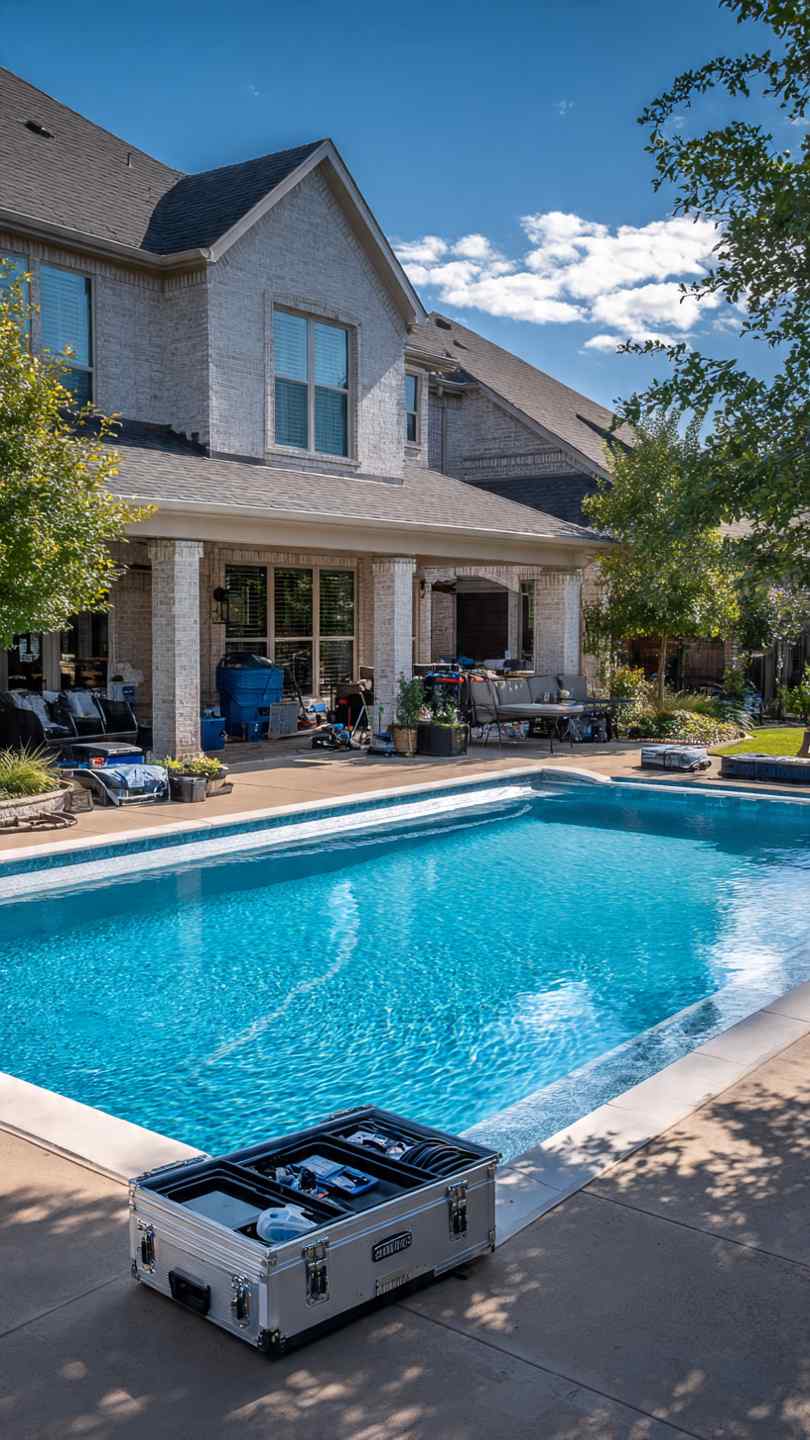

Pump and motor inspection
Technicians listen for unusual noises, check for leaks, and ensure the pump is operating efficiently. Early detection can prevent costly failures.
Filter system check
During pool maintenance services, technicians check filter pressure and overall performance. Dirty filters reduce circulation and lead to cloudy water.
Skimmer and pump basket cleaning
Removing debris from baskets helps maintain strong water flow and prevents strain on the pump.
Additional Tasks Often Included in Weekly Pool Service
Emptying skimmer and pump baskets
Clean baskets improve circulation and filtration efficiency.
Checking water level
Water levels that are too low prevent skimmers from working correctly, while levels that are too high reduce skimming efficiency.
Visual inspection of equipment
Technicians often check heaters, valves, plumbing connections, and automation systems during regular pool maintenance services.
Pool Maintenance Services That May Cost Extra
Filter cleaning or replacement
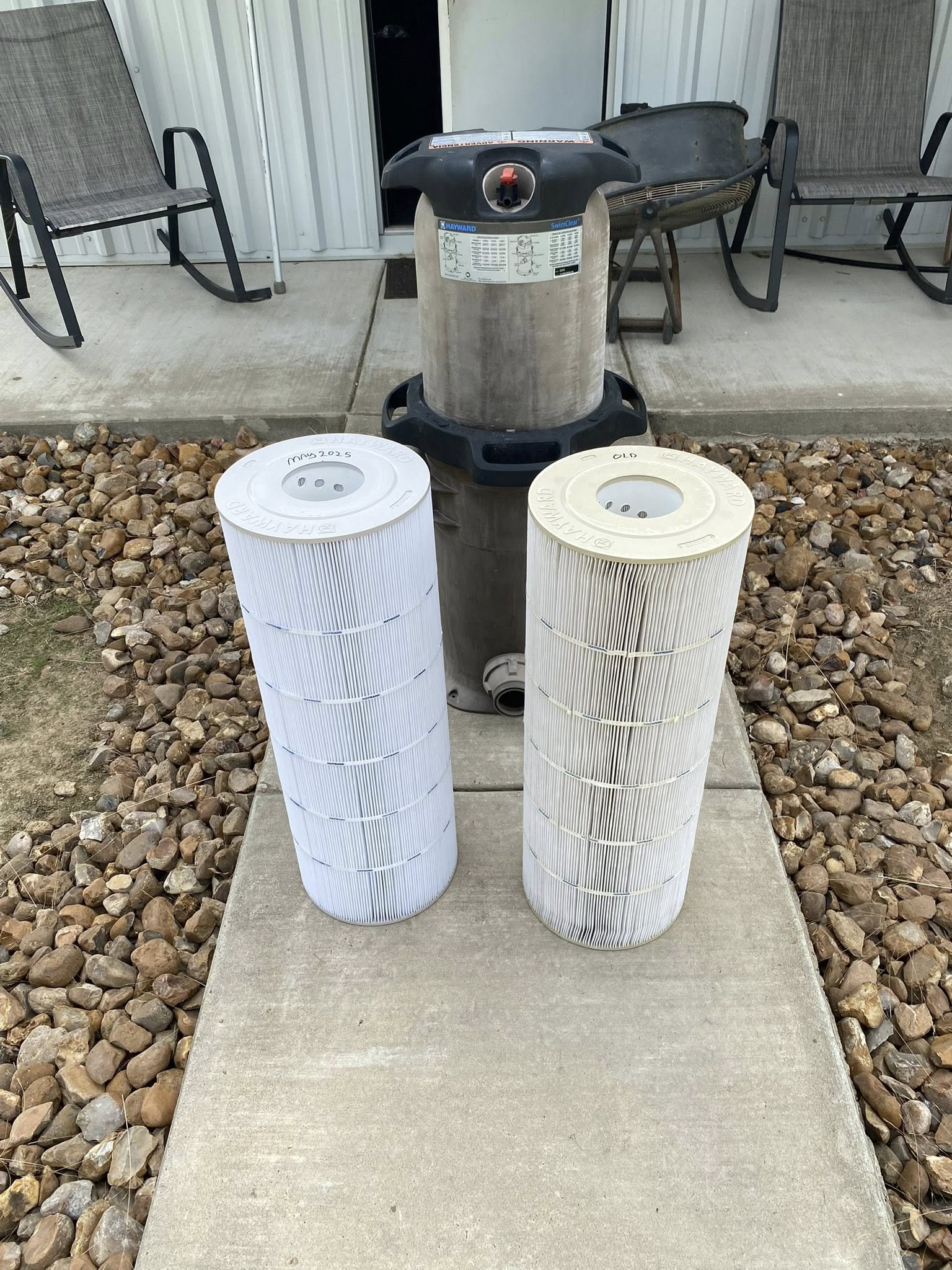
Cartridge, sand, or DE filters require deep cleaning periodically to maintain efficiency.
Green pool cleanup
Severe algae problems often require additional chemicals and specialized treatment.
Acid washing or stain removal
Heavy staining or calcium scale may require acid washing to restore surfaces.
Equipment repairs and replacements
Major repairs like pump motors or heater components are typically billed separately from standard pool maintenance services.
People Also Ask
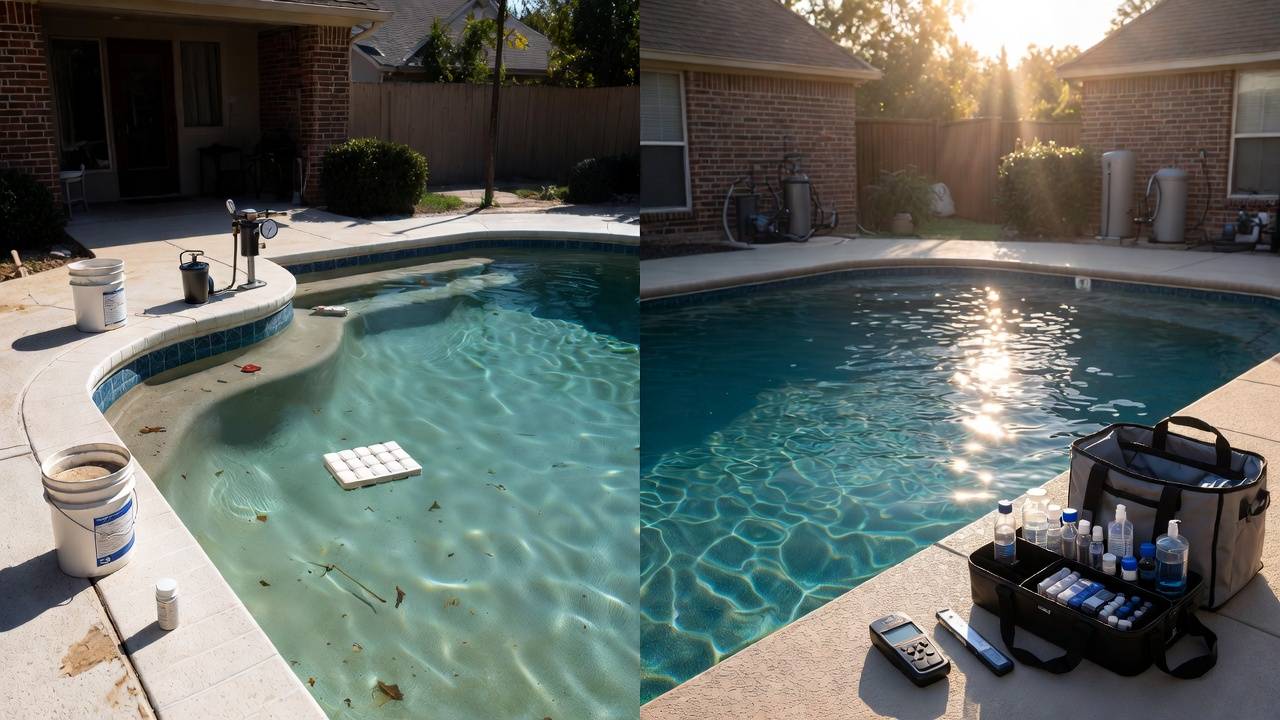
What does weekly pool service include?
Most pool maintenance services include skimming, brushing, vacuuming, chemical testing, and equipment inspection.
How often should a pool be professionally cleaned?
Weekly pool maintenance services are recommended for most residential pools.
Is pool chemical balancing included in maintenance service?
Yes, professional services typically include testing and adjusting chemicals during each visit.
Do pool maintenance companies vacuum the pool every week?
Many services vacuum weekly or as needed depending on debris levels.
How long does a pool service visit take?
Most weekly pool maintenance services take about 15–30 minutes, depending on pool size and condition.
Is professional pool maintenance worth it?
Yes. Regular maintenance prevents algae outbreaks, cloudy water, and costly equipment repairs.
PoolBurg Weekly Pool Maintenance — Complete Pool Care Included
PoolBurg provides reliable pool maintenance services that keep pools clean, balanced, and swim-ready throughout the year.
Our technicians handle cleaning, chemical balancing, and equipment inspections during every visit. With consistent pool maintenance services, pools stay clear, safe, and properly maintained.
Let PoolBurg handle the work — our weekly maintenance service keeps your pool clean, balanced, and ready to enjoy.