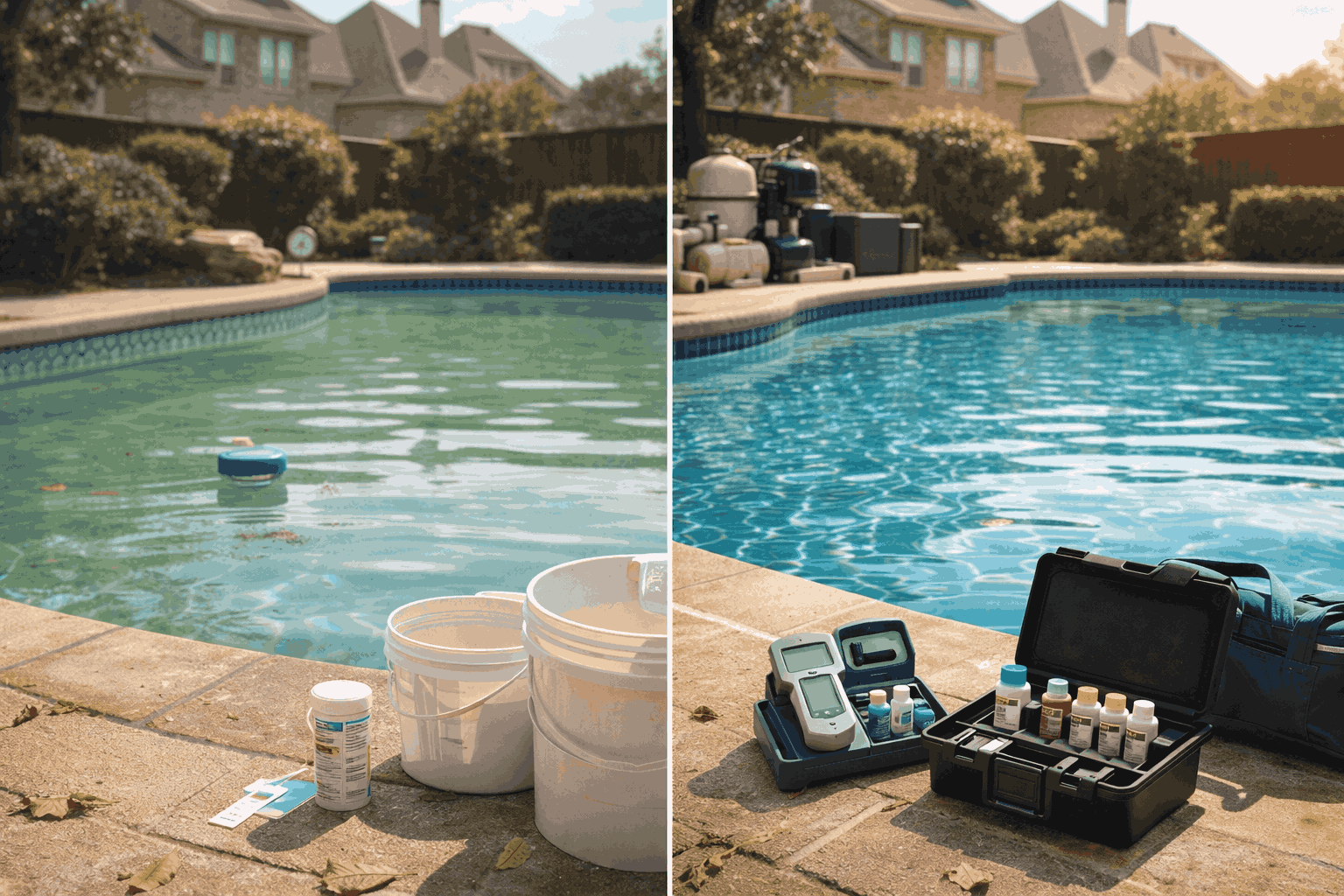
Cyanuric acid too high is one of the sneakiest problems a DFW pool can have. CYA — also called stabilizer or conditioner — protects your chlorine from the Texas sun. Without it, UV would burn off all your chlorine in 2 to 3 hours. With the right amount (30 to 50 ppm for chlorine pools, 70 to 80 ppm for salt water), chlorine lasts all day. But CYA accumulates over time and does not go away on its own.
It doesn’t evaporate, break down, or filter out. It only goes up. And when your pool CYA too high reaches problem levels, your chlorine stops working even though your test kit says it’s there. That’s called chlorine lock, and it’s more common in DFW pools than most owners realize.
Why Cyanuric Acid Gets Too High in DFW Pools

Your pool pump accounts for 70 to 85% of total pool energy consumption. It’s theThe number one cause is stabilized chlorine tablets — trichlor. Every tablet you drop in your skimmer or feeder adds CYA to the water along with chlorine. One tablet per week in a typical DFW pool adds roughly 3 to 5 ppm of CYA per month. After 12 to 24 months of exclusive tablet use, CYA can climb to 100, 150, even 200+ ppm. The CDC’s healthy swimming resources emphasize that maintaining proper CYA levels is essential for effective disinfection. This is the most common chemical mistake in DFW pools, and almost every pool we take over from another company has this exact problem.
Dichlor shock (granular stabilized chlorine) does the same thing — it adds CYA with every application. Using dichlor as your regular shock on top of trichlor tablets compounds the problem fast. And if a pool hasn’t been partially drained in 3 to 5 years, the CYA has been silently stacking with no way out. Our water testing guide explains how to measure CYA accurately.
What Happens When Cyanuric Acid Too High Causes Chlorine Lock
Here’s the science in plain terms. CYA bonds with chlorine, creating combined chlorine that sanitizes slowly. At low levels, that bonding is good — it shields chlorine from the sun. But when CYA is too high, so much chlorine gets locked up in those bonds that there’s not enough free chlorine available to actually kill bacteria and algae. Your test shows chlorine in the water, but it’s not doing its job. That’s chlorine lock. The Pool & Hot Tub Alliance recommends maintaining a chlorine-to-CYA ratio where free chlorine is at least 7.5% of CYA to ensure effective sanitation.
The symptoms are frustrating: algae keeps growing despite “normal” chlorine readings, water stays cloudy no matter how much you shock, and chlorine demand feels bottomless. The real danger? Water that tests fine but isn’t actually sanitized. You think it’s safe. It’s not. Our algae treatment guide and cloudy water guide cover the downstream problems that chlorine lock creates.
What CYA Level Is Too High?

For chlorine pools, above 50 ppm is getting elevated and above 80 ppm is problematic. For salt water pools, above 80 ppm is high and above 100 ppm is trouble. Either system above 100 ppm means chlorine effectiveness is severely compromised. Above 150 ppm, the pool is essentially unmanageable chemically and a drain is the only path forward. According to the Water Quality Association, water chemistry parameters that drift beyond recommended ranges create compounding problems that get harder to correct the longer they’re ignored.
How to Lower Cyanuric Acid — The Only Proven Method
If you’re searching how to lower cyanuric acid, here’s the reality: the only reliable fix is dilution. Drain 25 to 50% of your pool water and refill with fresh water. CYA drops proportionally — drain 50% and your CYA drops by roughly half. Professional drain and refill service runs $200 to $400 plus the water cost on your utility bill. Our drain and refill guide covers the full process and safety considerations for DFW pools.
Yes, CYA reducer products exist. Results are mixed at best and the industry consensus is that dilution remains the only proven and reliable method. We don’t recommend spending money on unproven chemical reducers when a partial drain solves it definitively.
After you’ve lowered CYA, the critical step is keeping it low. Stop using stabilized chlorine tablets as your primary sanitizer. Switch to liquid chlorine (sodium hypochlorite) — it adds zero CYA. A salt chlorine generator also produces chlorine without adding CYA. If you absolutely must use tablets, supplement heavily with liquid chlorine and reduce tablet usage. Test CYA monthly and plan a partial drain annually if it starts creeping back up. Our water chemistry guide covers the full balancing protocol.
People Also Ask

What causes high cyanuric acid in a pool?
Trichlor tablets are the number one cause. Every tablet adds CYA to the water, and it accumulates over months and years. Dichlor shock adds CYA too. Without periodic partial drains, levels just keep climbing.
How do I lower CYA without draining my pool?
There’s no reliable way. CYA reducer products exist but results are inconsistent. Dilution through partial draining is the only proven method. Drain 25 to 50%, refill, and retest.
Do chlorine tablets raise CYA?
Yes. Trichlor tablets add approximately 3 to 5 ppm of CYA per month in a typical pool. Over a year or two of exclusive tablet use, CYA can easily reach 100 to 200+ ppm.
What is chlorine lock and how do I fix it?
Chlorine lock happens when CYA is so high that it bonds with most of the chlorine, leaving too little free chlorine to sanitize. Your test reads chlorine present, but the water isn’t actually protected. The fix is lowering CYA through a partial drain and switching to liquid chlorine. Our chlorine shock guide explains proper shocking after a drain.
How often should I test CYA in my pool?
Monthly at minimum. If you use trichlor tablets, test every 2 weeks. CYA creeps up silently and by the time you notice symptoms, it’s usually well past ideal levels.
PoolBurg Manages CYA So You Don’t Have To
We use liquid chlorine as our primary sanitizer — zero CYA contribution. We test CYA at regular intervals, recommend proactive partial drains before levels become dangerous, and never let cyanuric acid too high become a silent problem in your pool. Schedule a water analysis with PoolBurg and we’ll tell you exactly where your CYA stands.