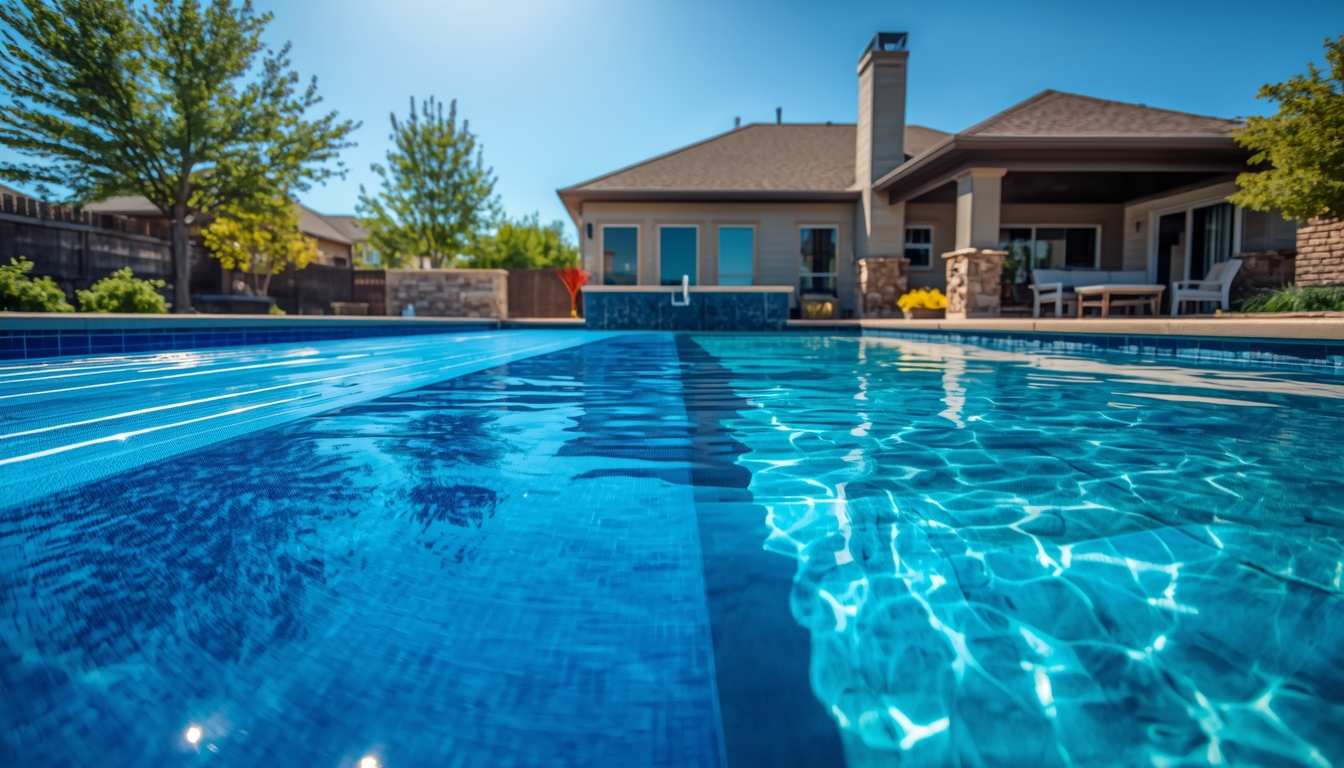
Pool circulation problems are behind more algae, cloudy water, and chemical headaches than most DFW homeowners realize. Your pool’s circulation system is supposed to move water through every corner of the pool so chemicals can do their job evenly. When that flow breaks down, you get pool dead spots — areas where water sits stagnant, chlorine never reaches, and algae sets up camp. In a Texas summer, poor pool circulation can turn a dead spot green in as little as 48 hours. Here’s how to spot the problem, what causes it, and how to fix it — some fixes are completely free.
Signs You Have Pool Circulation Problems

The biggest giveaway is algae that keeps growing in the same spot no matter how much you shock or brush. If you’re killing algae in one corner every week and it keeps coming back, that’s not a chemical problem — that’s a circulation problem. Other signs: one area of the pool stays cloudy while the rest is clear, noticeable temperature differences between sections, debris that always accumulates in the same spot, and uneven chlorine readings when you test from different locations.
Our algae treatment guide covers the chemical side, but if treatment keeps failing in one area, pool circulation problems are almost certainly the root cause. The CDC’s healthy swimming guidelines emphasize that adequate circulation is essential for effective disinfection across the entire pool volume.
What Causes Poor Pool Circulation in DFW
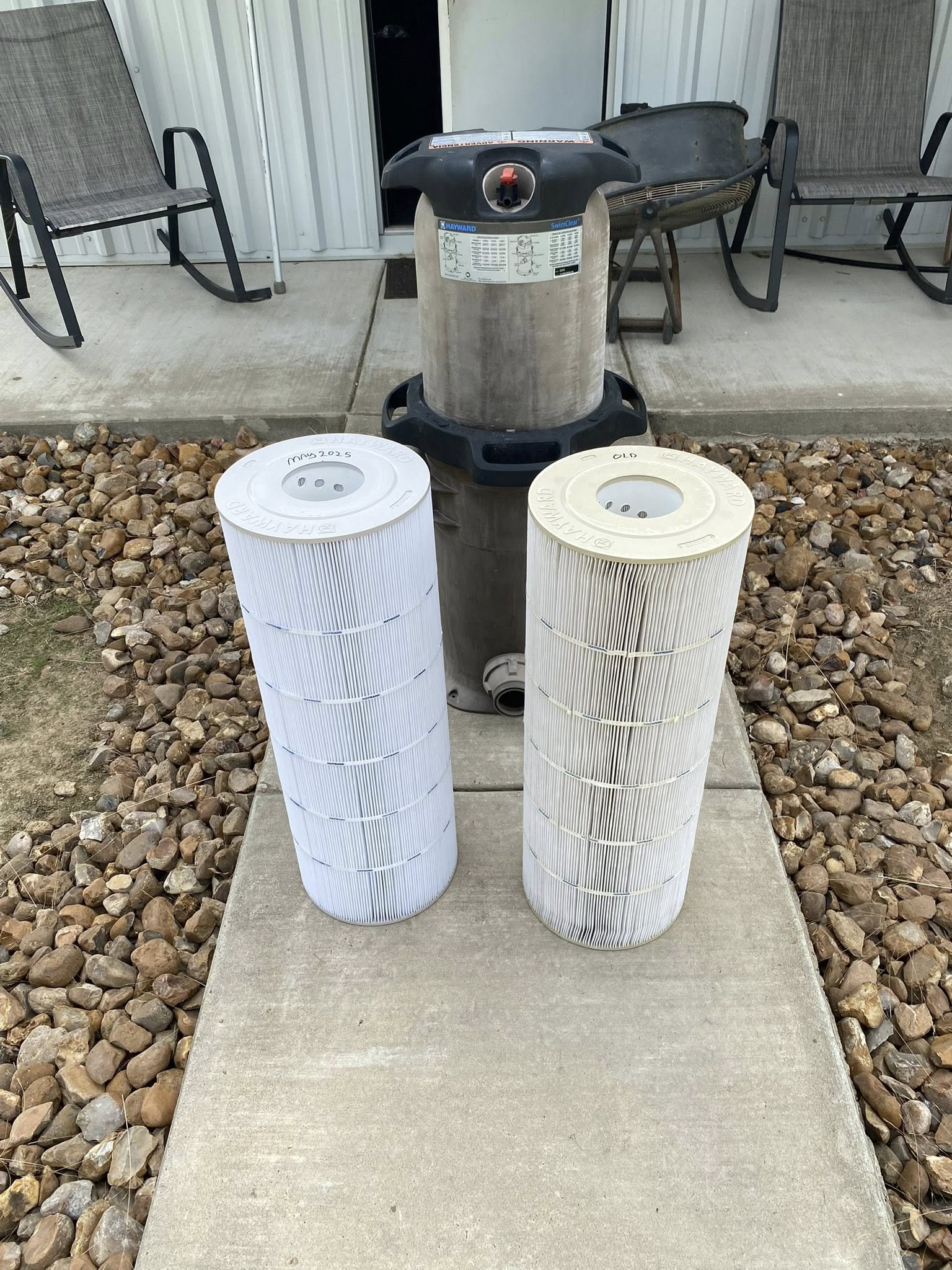
Undersized pump. This is shockingly common in DFW because many builders install the cheapest single-speed pump they can get away with. If the pump can’t turn over your pool’s full volume at least once every 8 to 10 hours, you’ve got areas that aren’t getting flow. A variable speed pump running at a lower speed for longer hours often solves this while cutting energy costs at the same time.
Return jets aimed wrong. This is the free fix most people miss. The eyeball fittings on your return jets are adjustable — they control the direction water shoots back into the pool. If they’re all pointed straight ahead or randomly angled, water circulates in some areas and completely bypasses others. Aim them in a consistent circular pattern, angled slightly downward, to push water around the entire pool and eliminate pool dead spots. It costs nothing and takes five minutes.
Too few returns for pool size. Some DFW pools, especially older builds, have only two return jets for a pool that really needs four or more. Limited return points mean limited water distribution no matter how the jets are aimed.
Obstructions. Steps, tanning ledges, benches, and even pool floats left in the water create shadowed areas where circulation can’t reach. These are the pool dead spots where algae loves to grow. Brushing these zones between service visits helps. The Pool & Hot Tub Alliance recommends paying special attention to areas behind steps and inside corners during routine pool maintenance.

Clogged or restricted plumbing. Over time, DFW’s hard water deposits calcium inside pipes, gradually narrowing the flow path. Tree roots can also intrude into underground plumbing. Both reduce flow volume and create poor pool circulation that gets worse over time. Our plumbing repair guide covers diagnosis and fixes for restricted lines.
Pump not running enough hours. In DFW summer heat, you need 1 to 2 full water turnovers per day. For a 15,000-gallon pool, that means 10 to 14 hours of pump run time depending on your flow rate. Cut that short and parts of the pool simply don’t get circulated. Our pump run time guide covers exactly how to calculate the right schedule. According to the U.S. Department of Energy, running a variable speed pump at lower RPM for longer hours achieves better circulation at dramatically lower energy cost than a single-speed pump running fewer hours at full blast.
How to Fix Pool Circulation Problems Without Major Renovation
Adjust your return jet eyeballs. Free. Aim them in a consistent circular pattern, slightly downward, so water moves around the pool and pushes debris toward the skimmer. This single change eliminates most pool dead spots in pools that have enough returns.
Increase pump run time. Also free. If you’re running 6 hours in DFW summer, bump it to 10 to 12. If energy cost is a concern, upgrade to a variable speed pump and run at lower speed for longer — same turnover, 50 to 75% less electricity.
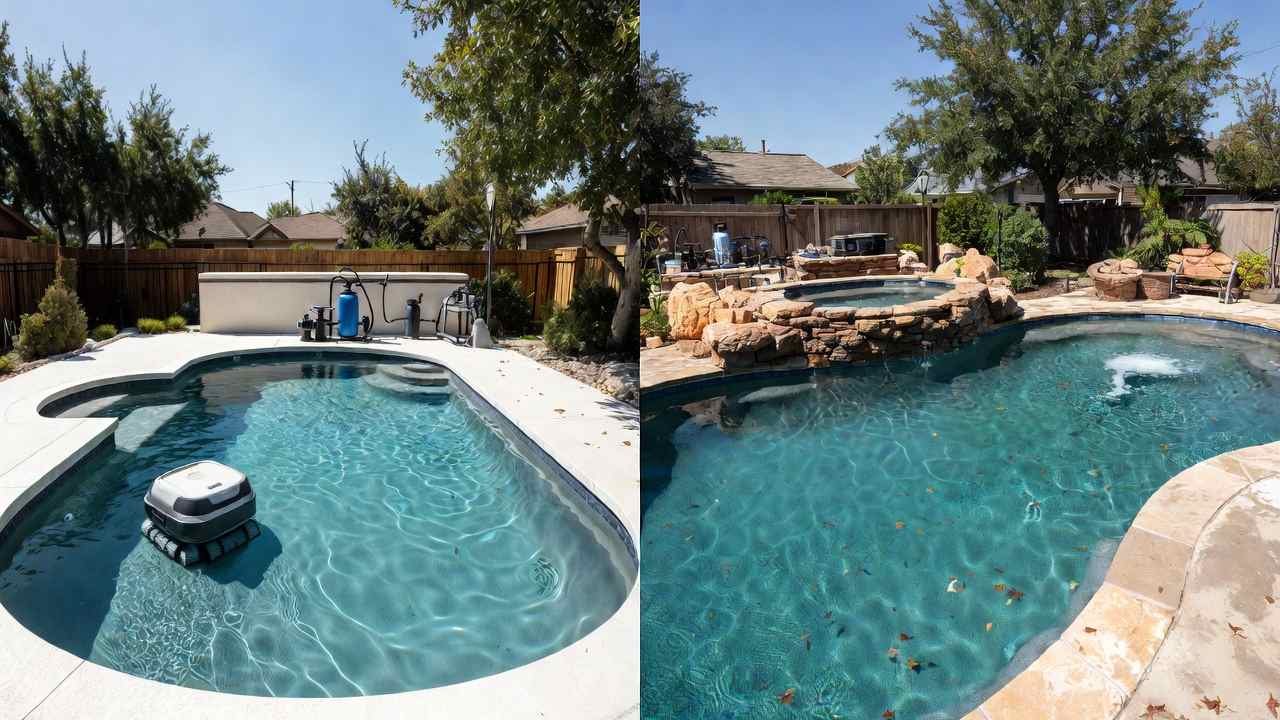
Use a robotic cleaner. A robotic pool cleaner supplements your main circulation by independently moving water around the pool floor and walls. It’s not a fix for poor pool circulation from the main system, but it helps cover dead zones.
Brush dead zones manually. Between service visits, brush the corners, behind steps, and along ledges where circulation doesn’t reach well. Brushing disrupts algae before it can establish itself.
Run your spa spillover intermittently. If you have a pool and spa combo with a spillover, running it periodically pushes additional water into the pool from a different angle, improving overall circulation. According to HomeAdvisor’s pool data, pools with active water features and proper jet alignment report significantly fewer algae problems than pools without.
People Also Ask
Why does algae keep growing in the same spot in my pool?
Almost always a circulation issue. That spot is a dead zone where water doesn’t flow and chlorine can’t reach effectively. Adjusting return jets and increasing run time usually fixes it. Our algae guide covers treatment once circulation is addressed.
How do I improve pool circulation?
Start free: aim return jets in a consistent circular pattern and increase pump run time. Next steps: upgrade to a variable speed pump for longer, more efficient runs. Add a robotic cleaner for supplemental movement. Brush dead zones between services.
What causes pool dead spots?
Misaimed return jets, too few returns for the pool size, obstructions like steps and ledges, undersized pumps, and insufficient run time. DFW’s hard water can also restrict plumbing flow over time.
How many hours should I run my pump for good circulation?
Enough to turn over the full pool volume 1 to 2 times per day. In DFW, that’s typically 10 to 14 hours during summer. A variable speed pump on a longer, lower-speed schedule achieves this more efficiently.
Should return jets point up or down?
Slightly downward and in a consistent rotational direction. This creates a circular flow pattern that pushes water across the bottom and toward the skimmer. Pointing jets straight across or upward wastes flow energy on the surface.
Persistent Algae in One Spot? It Might Be Circulation
Pool circulation problems are frustrating because you keep treating symptoms while the root cause goes undiagnosed. Contact PoolBurg and we’ll evaluate your flow, jet alignment, pump capacity, and run time — then fix the actual problem so your pool stays clear everywhere, not just where the water moves.