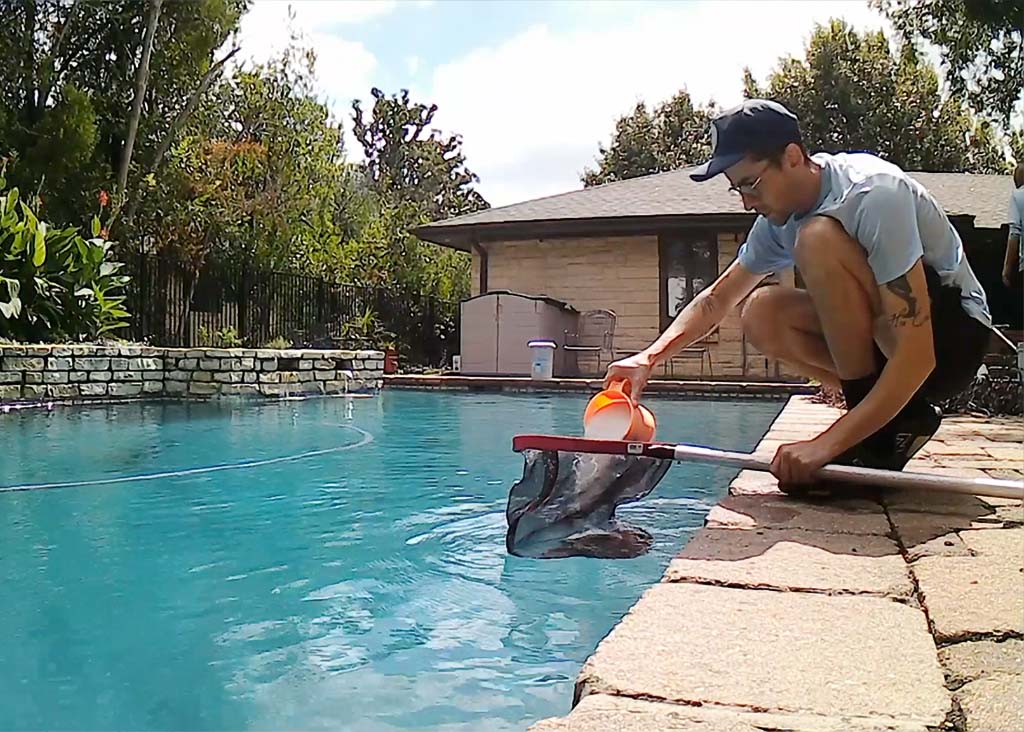
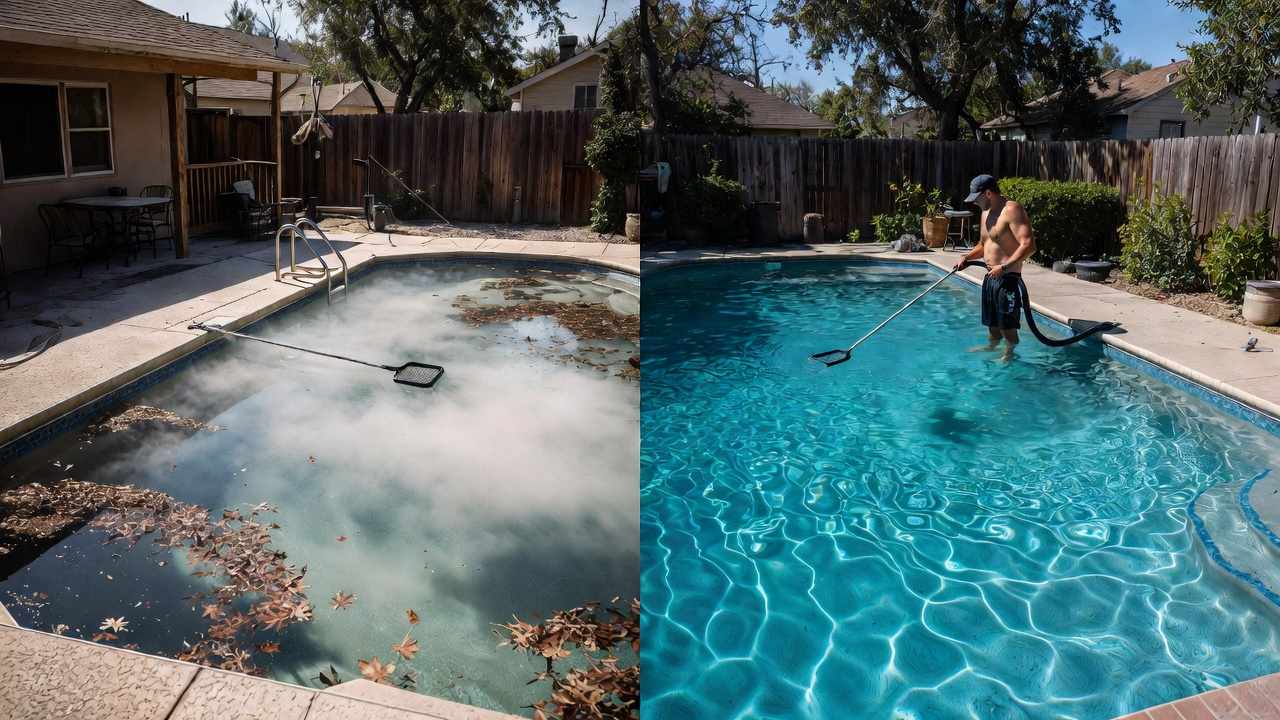
Cloudy pool water is the single most common complaint we hear from DFW pool owners, and it’s the one that drives people the craziest. You’re staring at your pool and it looks like somebody poured milk in it. The chemicals seem right — maybe — but the water just won’t clear up. If you’re asking “why is my pool cloudy?” right now, the answer is almost always one of seven things. The good news? Every single one is fixable. Let’s figure out which one you’re dealing with and get your water crystal clear again.
The 7 Most Common Causes of Cloudy Pool Water in DFW
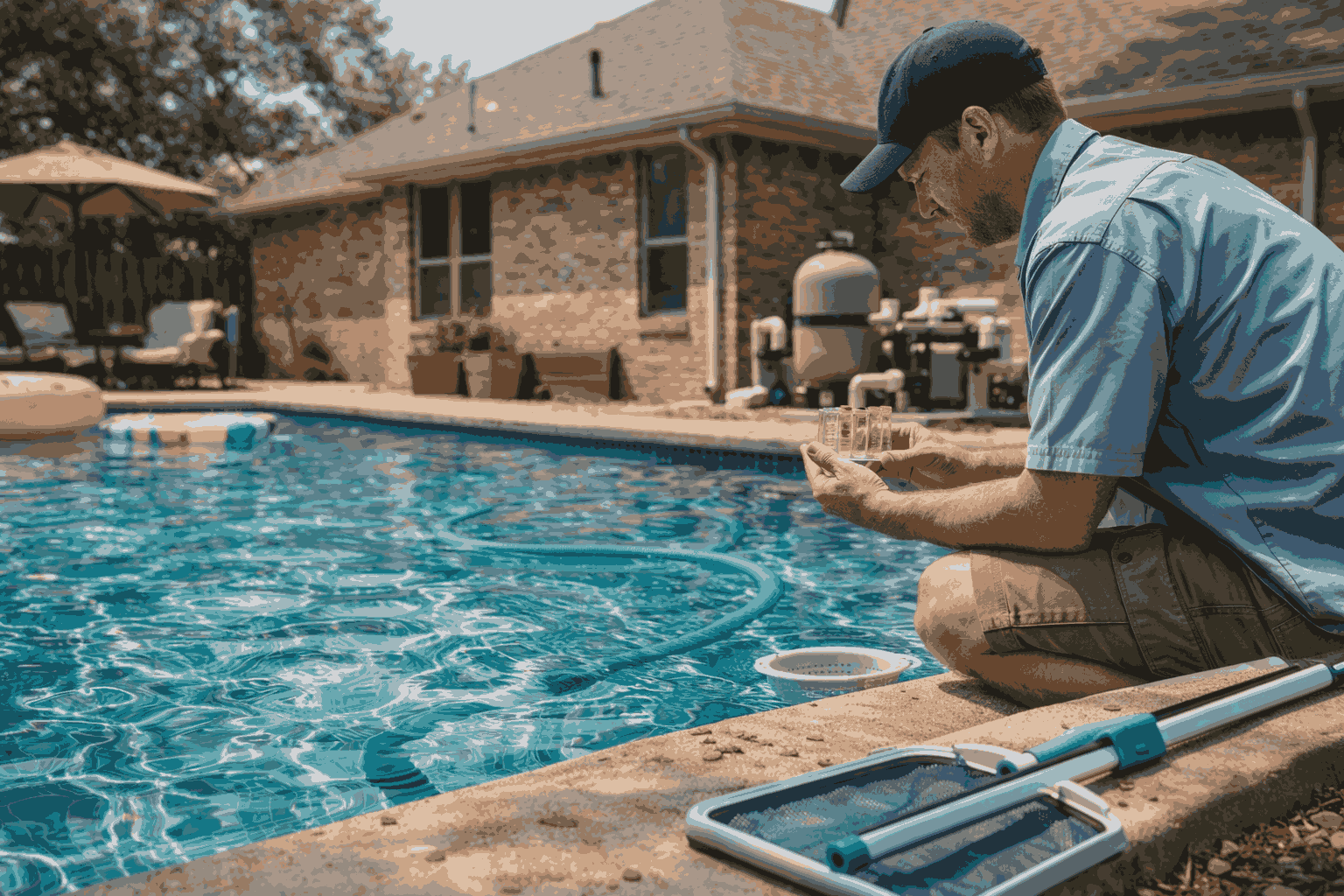
These pool water problems account for the vast majority of cloudy pool water cases we see across North Texas. Start at number one and work your way down — the fix is usually in the first three.
1. Your Filter Isn’t Doing Its Job
This is the most common cause of cloudy pool water in DFW and the one most people overlook. If your pump is only running 8 hours a day in a Texas summer, that’s not enough — you need 10 to 12 hours minimum when it’s above 90°F. Your filter media might also be the problem: a cartridge that hasn’t been cleaned in months, sand that hasn’t been replaced in five years, or DE grids that need recharging. And sometimes the filter is just undersized for your pool volume. The fix: clean or replace your filter media, bump your run time up to 12 hours, and verify your filter is sized correctly.
2. Chemical Imbalance — pH, Alkalinity, or Chlorine Off
When someone asks “why is my pool cloudy?” this is usually their first guess — and they’re often right. High pH above 7.8 makes chlorine sluggish and causes calcium to fall out of solution, creating that hazy look. Low chlorine means bacteria and organic particles are floating around unchecked. High alkalinity pushes pH up and creates persistent cloudiness. The fix: test everything, bring pH down to 7.2 to 7.4 first, then address chlorine. The CDC recommends maintaining free chlorine at 1 to 3 ppm for safe swimming — if you’re below that, your water is telling you.
3. High Calcium Hardness — DFW’s Biggest Pool Water Problem
This is the one that’s unique to North Texas. DFW tap water comes out of the faucet at 150 to 300-plus ppm calcium — before your pool even adds to it through evaporation and concentration. When calcium hardness climbs above 400 ppm, it starts precipitating out of the water and creates that milky, cloudy pool water that no amount of shocking will fix. It gets worse when pH is also high because that’s when calcium carbonate scale forms. The fix: lower your pH to 7.2, use a sequestering agent to bind the excess calcium, and if it’s extreme, a partial drain and refill is the only real reset.
4. Early Algae Bloom — The Cloud Before the Green
Here’s something that catches a lot of people off guard: cloudy pool water is often the first stage of an algae bloom. The green comes next. If you’re seeing cloudiness combined with low chlorine and summer temperatures, algae is almost certainly establishing itself in your water. Act fast — shock immediately with liquid chlorine, brush every surface to break up colonies, and run your filter 24/7 until the water clears. Waiting even a couple of days can turn a cloudy pool into a full green pool recovery situation.
5. High Total Dissolved Solids
Water gets old. Over the years, dissolved minerals, chemical byproducts, and other invisible stuff accumulates. When TDS passes 2,000 to 3,000 ppm, the water develops a persistent haze that chemistry alone can’t fix. This is one of those pool water problems that a standard test kit won’t catch — you need a professional TDS test. The fix: a partial or full drain and refill to dilute the dissolved solids with fresh water.
6. Recent Heavy Rain or Storm
North Texas thunderstorms wreck pool chemistry in a hurry. Rain dilutes your chlorine, introduces phosphates and organic contaminants from runoff, and overwhelms your filtration system with debris. A single major storm in spring can turn a perfectly balanced pool cloudy overnight. This is a very common cause of cloudy pool water in DFW from March through June. The fix: test immediately after any significant rain, shock the pool, and run the filter continuously for 24 to 48 hours.
7. High Bather Load After Heavy Pool Use
Twenty people in the pool for an afternoon birthday party will do a number on your water. Sunscreen, body oils, sweat, and organic matter overload the sanitizer and introduce particles that make the water hazy. If you’re wondering “why is my pool cloudy” the Monday after a big weekend gathering, this is almost certainly the answer. The fix: shock after any heavy-use event and run the filter extra hours to clear the load.
Cloudy Pool Water Quick Fix Guide — Step by Step
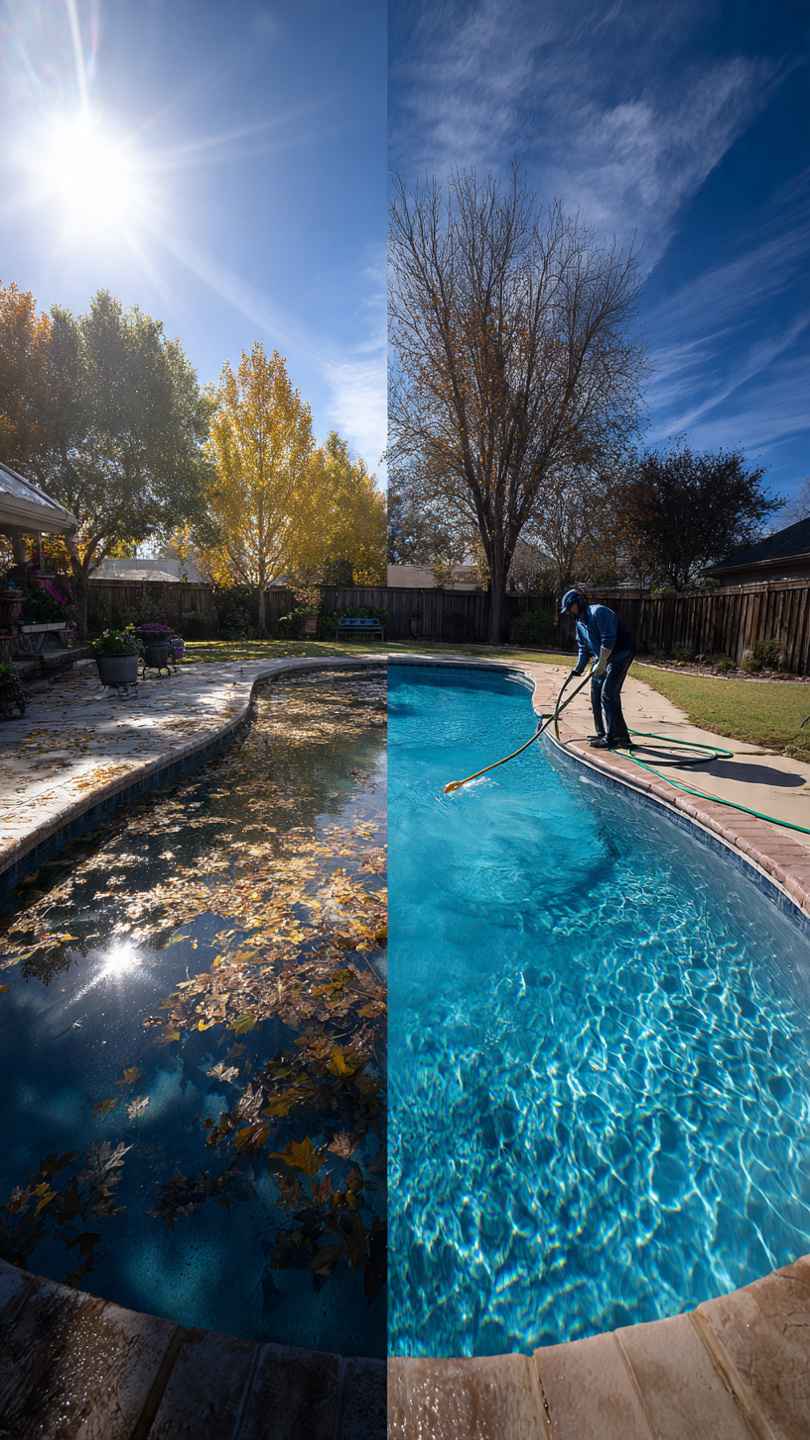

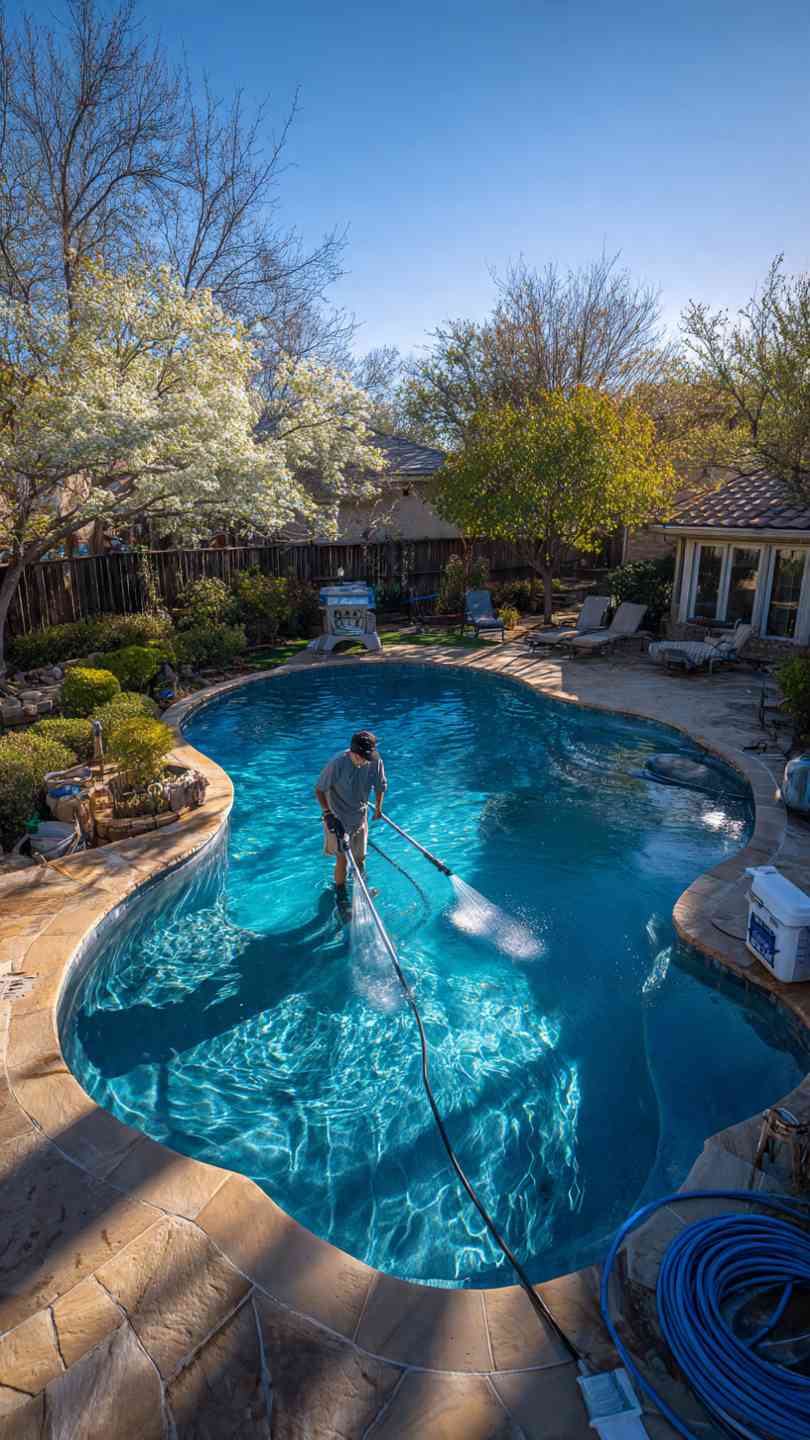
If you’re dealing with cloudy pool water right now and want to fix it yourself, follow these steps in order.
Step 1: Test your water immediately — chlorine, pH, alkalinity, and calcium hardness.
Step 2: Fix pH first. Bring it to 7.2 to 7.4 using muriatic acid. Everything else works better when pH is correct.
Step 3: Shock the pool with liquid chlorine — not granular, not tabs. Liquid works fastest.
Step 4: Run your filter 24/7 until the water clears. Don’t cut corners here.
Step 5: Clean your filter after 24 hours of continuous running — it’s going to be loaded.
Step 6: If the water is improving but not clearing completely, add a pool clarifier to help your filter grab the remaining fine particles.
Step 7: If it’s still cloudy after 48 hours of this process, call a professional. The cause is probably deeper than chemistry — filtration failure, plumbing issue, or something your test kit can’t detect.
When Cloudy Pool Water Means Something Bigger
Most cloudy pool water clears up within 24 to 48 hours with proper treatment. If yours doesn’t, something else is going on. Persistent cloudiness despite correct chemistry usually points to a filtration system failure — a cracked filter element, channeling in sand media, or a pump that’s not generating enough flow. Recurring cloudiness that comes back every few days could indicate a plumbing issue or circulation dead spots in your pool. And cloudiness with visible particles floating in the water might mean your pool surface is deteriorating and shedding plaster or pebble material. Any of these pool water problems require professional diagnosis — they’re not DIY fixes.
People Also Ask
Why is my pool cloudy even though chemicals are balanced?
If your chemistry looks fine, the problem is almost certainly filtration. Your filter may be dirty, undersized, or running too few hours. High calcium hardness — common in DFW — can also cause cloudy pool water that chemistry alone won’t fix.
Can you swim in a cloudy pool?
It’s not recommended. Cloudy pool water often means chlorine is low or ineffective, which creates conditions where bacteria and pathogens can thrive. Visibility is also reduced, creating a safety hazard — especially for children. The World Health Organization recommends clear water visibility to the bottom of the pool for safe swimming.
How long does it take to clear a cloudy pool?
With proper shocking, correct pH, and continuous filtration, most cloudy pools clear within 24 to 48 hours. If yours doesn’t clear in that window, the cause is likely deeper than basic chemistry and needs professional attention.
Does hard water cause cloudy pool water?
Absolutely — and it’s one of the most common causes in DFW specifically. When calcium hardness exceeds 400 ppm and pH is high, calcium precipitates out of solution and creates a milky haze. It’s one of the most frustrating pool water problems in North Texas.
Will pool clarifier fix cloudy water?
Clarifier helps your filter catch fine particles that are causing haze, but it only works if the underlying cause has been addressed first. Dumping clarifier into water with bad chemistry is like putting a bandaid on a broken pipe — fix the root cause, then use clarifier to finish the job.
Is cloudy pool water dangerous?
Potentially. Cloudiness usually indicates low or ineffective chlorine, which means the water may harbor bacteria, parasites, or other pathogens. It also reduces visibility, making it harder to see swimmers in distress. Don’t swim until the water is clear and chemistry is confirmed balanced.
PoolBurg Fixes Cloudy Pool Water Every Day Across DFW
At PoolBurg, diagnosing and fixing cloudy pool water is something we do every single day across 17 DFW cities. We test, diagnose, and treat — usually in a single visit. No guessing games, no dumping random chemicals and hoping for the best. If your pool has been cloudy and nothing you’ve tried is working, let us take a look.
Cloudy pool driving you crazy? Call PoolBurg — we’ll diagnose and fix it, usually in one visit.