
When homeowners start looking at pool shapes, the conversation usually begins with style. One person wants clean modern lines. Another wants something softer, natural, and resort-like. But the real decision behind a freeform vs geometric pool is bigger than “which one looks prettier?”
It affects how your backyard flows, how much patio space you keep, where furniture goes, how easy the pool is to cover, and even how the water feels when people are actually using it.
For DFW homeowners, especially in places like Frisco, Plano, McKinney, Allen, Prosper, and surrounding North Texas suburbs, backyard space can vary wildly. Some homes have wide open yards. Others have tight fence lines, easements, slopes, or outdoor kitchens already taking up prime space. That is why choosing the best pool shape for backyard layouts should start with function before style.
A pool should not feel like it was dropped into the yard. It should feel like the yard was always waiting for it.
What is a geometric pool?
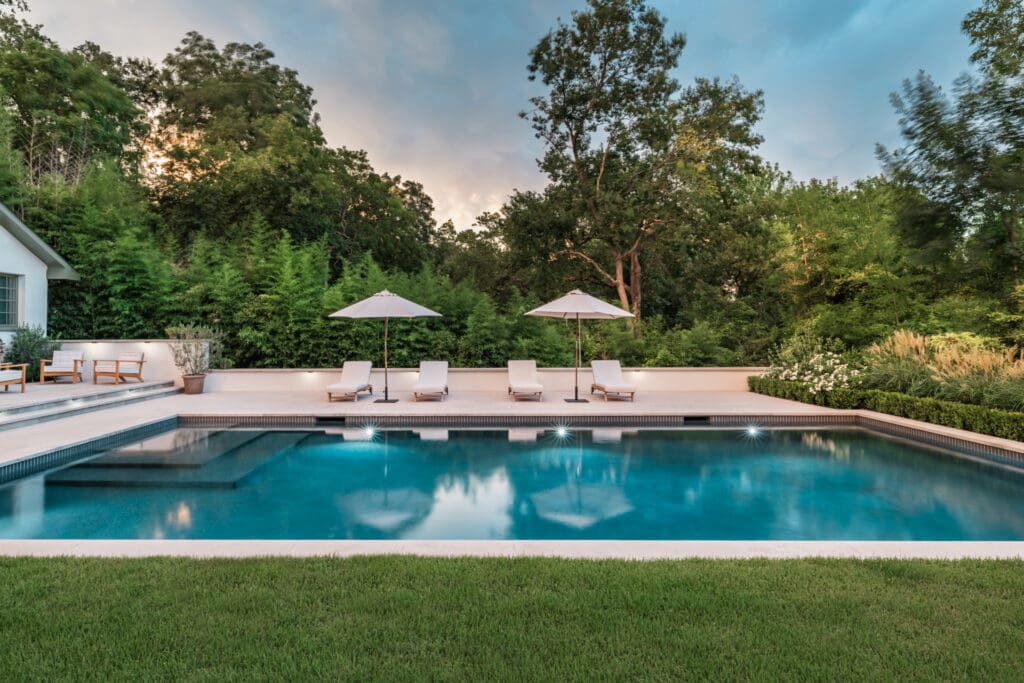
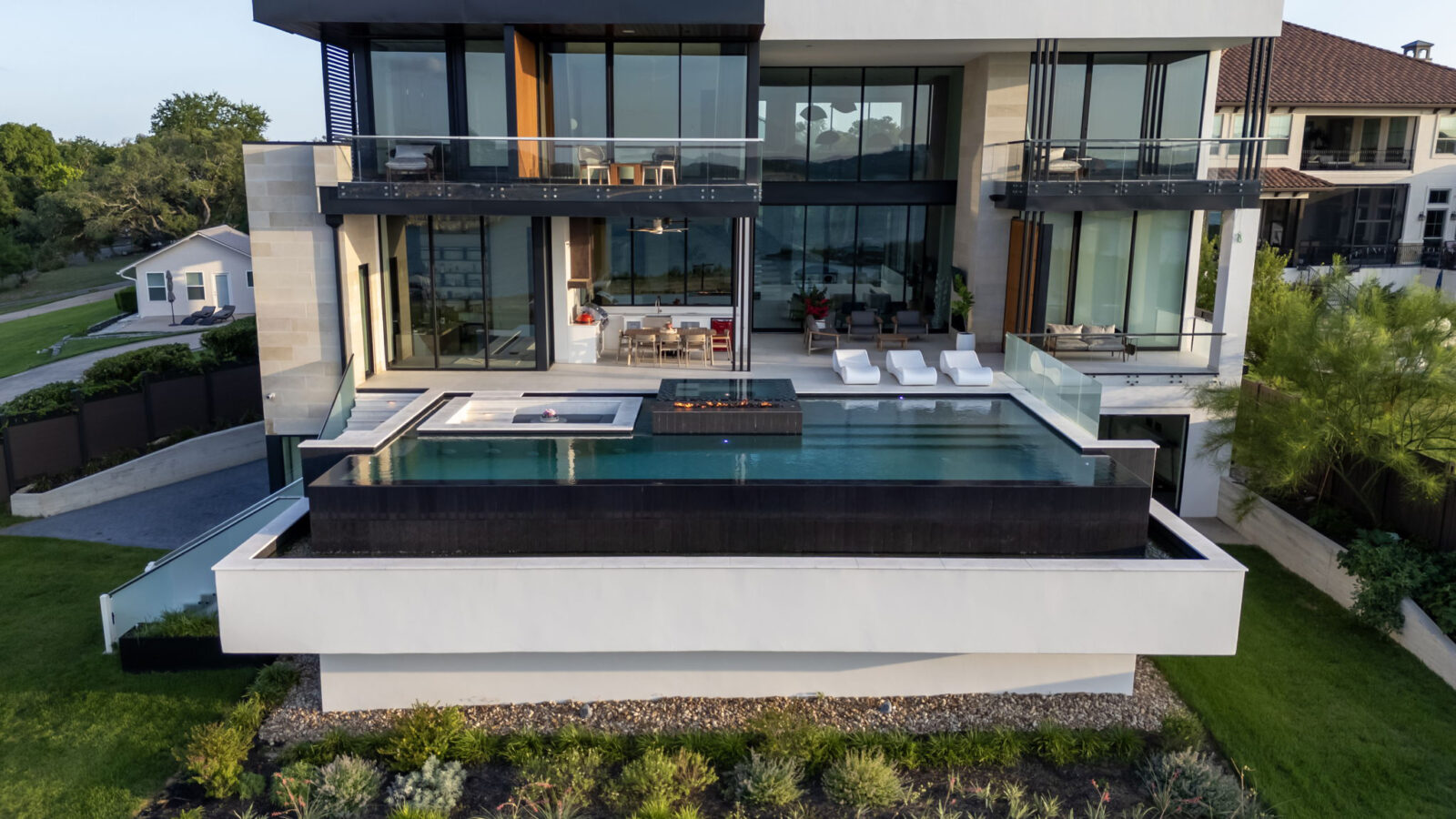
A geometric pool uses structured lines. Think rectangles, squares, L-shapes, straight edges, sharp corners, and clean symmetry. These pool design shapes are popular in modern homes because they match straight patios, rooflines, fences, and outdoor kitchens beautifully.
A geometric pool usually works well when you want:
- A sleek, modern backyard
- A pool that lines up with the house
- A clean tanning ledge or spa combo
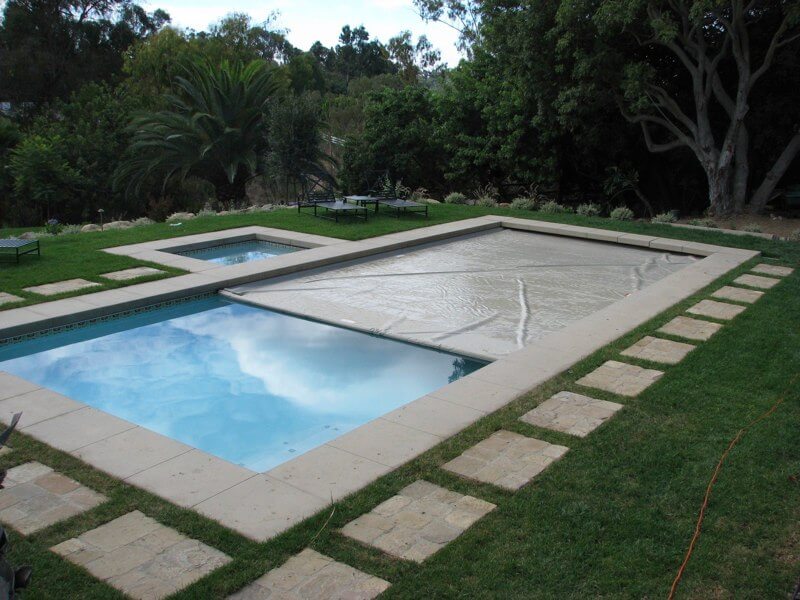
- Easier automatic cover options
- A more formal entertainment space
- Long swim lanes or fitness use
If your backyard already has a covered patio, pergola, outdoor kitchen, or square concrete deck, geometric pool shapes often feel natural. They create order. They make the space look intentional.
This is also why rectangular pools are so common in newer DFW neighborhoods. They fit neatly behind brick homes, pair well with turf or travertine decking, and leave predictable room for furniture.
What is a freeform pool?
A freeform pool has curves. It may look like a lagoon, kidney shape, soft oval, or natural pond-inspired design. These pool shape ideas are great for homeowners who want a more relaxed, vacation-style backyard.
A freeform pool usually works well when you want:
- A softer, natural look
- Curved landscaping around the water
- A tropical or resort-style feel
- Rock features or waterfalls
- A pool that avoids awkward yard angles
- A less formal entertainment area
If your yard has trees, curved beds, natural stone, or an organic landscape plan, a freeform pool can feel warmer and more inviting. It does not demand perfect symmetry. It gives the backyard a softer rhythm.
That said, a freeform vs geometric pool decision should still consider practical details. Curves can make some covers more complicated, and irregular shapes may require more thought when planning furniture, fencing, and cleaning access.
Which pool shape works better in a small backyard?
For smaller yards, the answer is usually geometric, but not always.
A rectangle, plunge pool, or narrow cocktail-style pool can make a compact backyard feel organized. Straight lines help preserve deck space, and the pool can sit parallel to the house or fence. If your goal is to maximize usable patio space, geometric pool design shapes often win.
But a freeform pool can also work in a tight yard if the space has odd angles. Sometimes a curved pool can dodge a utility easement, tree root zone, or setback better than a rigid rectangle.
So instead of asking, “What is the prettiest shape?” ask:
- Where will people sit?
- Where will the grill or kitchen go?
- Where does the sun hit hardest?
- How much walking room do we need?
- Can someone safely move around the entire pool?
- Will the shape make cleaning harder?
This is where a backyard layout review from a local pool professional helps. PoolBurg can help homeowners think through pool condition, equipment, maintenance concerns, and long-term usability through services like pool inspections and pool repair guidance.
Freeform vs geometric pool maintenance differences
The shape itself does not automatically make a pool “easy” or “hard” to maintain, but it can affect the little things.
A geometric pool may be easier for robotic cleaners to map because the walls and corners are predictable. It may also be easier to measure for covers. The U.S. Department of Energy notes that pool covers can reduce evaporation, heating cost, chemical use, and cleaning time, which makes cover compatibility worth thinking about during design.
A freeform pool may have more curves, coves, benches, or rock edges where debris can settle. That does not make it bad. It just means the design should include smart circulation, good return placement, and easy access for brushing and cleaning.
For homeowners comparing pool shape ideas, maintenance should be part of the conversation early, not after the pool is already built.
Safety should shape the design too
A beautiful pool still needs a safe layout. The CDC recommends four-sided fencing that fully encloses the pool, separates it from the house, and uses self-closing, self-latching gates.
That matters when choosing pool shapes because a design that looks amazing on paper can become awkward if it crowds the fence, blocks visibility, or leaves tight walking paths around the water.
A smart pool design leaves room for:
- Safe deck movement
- Clear sightlines from the house
- Proper fencing and gate swing
- Furniture that does not crowd the edge
- Equipment access
- Future repairs or upgrades
So which pool shape should you choose?
Choose a geometric pool if your home is modern, your yard is rectangular, you want a clean entertainment area, or you care about simple cover options.
Choose a freeform pool if your backyard has natural landscaping, curves, trees, stone features, or you want a softer resort-style feel.
The best answer is not always trendy. The best pool shape for backyard comfort is the one that matches how you actually live.
Do you host weekend cookouts? Do kids need shallow play space? Do you want quiet evening swims? Do you want a spa, tanning ledge, fire feature, outdoor kitchen, or shaded seating nearby?
That is the real heart of the freeform vs geometric pool decision.
Final thoughts
A pool shape is not just a drawing. It is the skeleton of your entire backyard.
The right shape makes the space feel bigger, cleaner, safer, and easier to enjoy. The wrong shape can make even an expensive pool feel awkward.
So before falling in love with one photo online, walk your yard. Look at the sun. Measure the patio. Picture where people will sit. Then choose the pool design shapes that fit your life, not just your Pinterest board.For help thinking through pool layout, maintenance concerns, or an existing pool before buying a home, visit PoolBurg or reach out through the contact page.