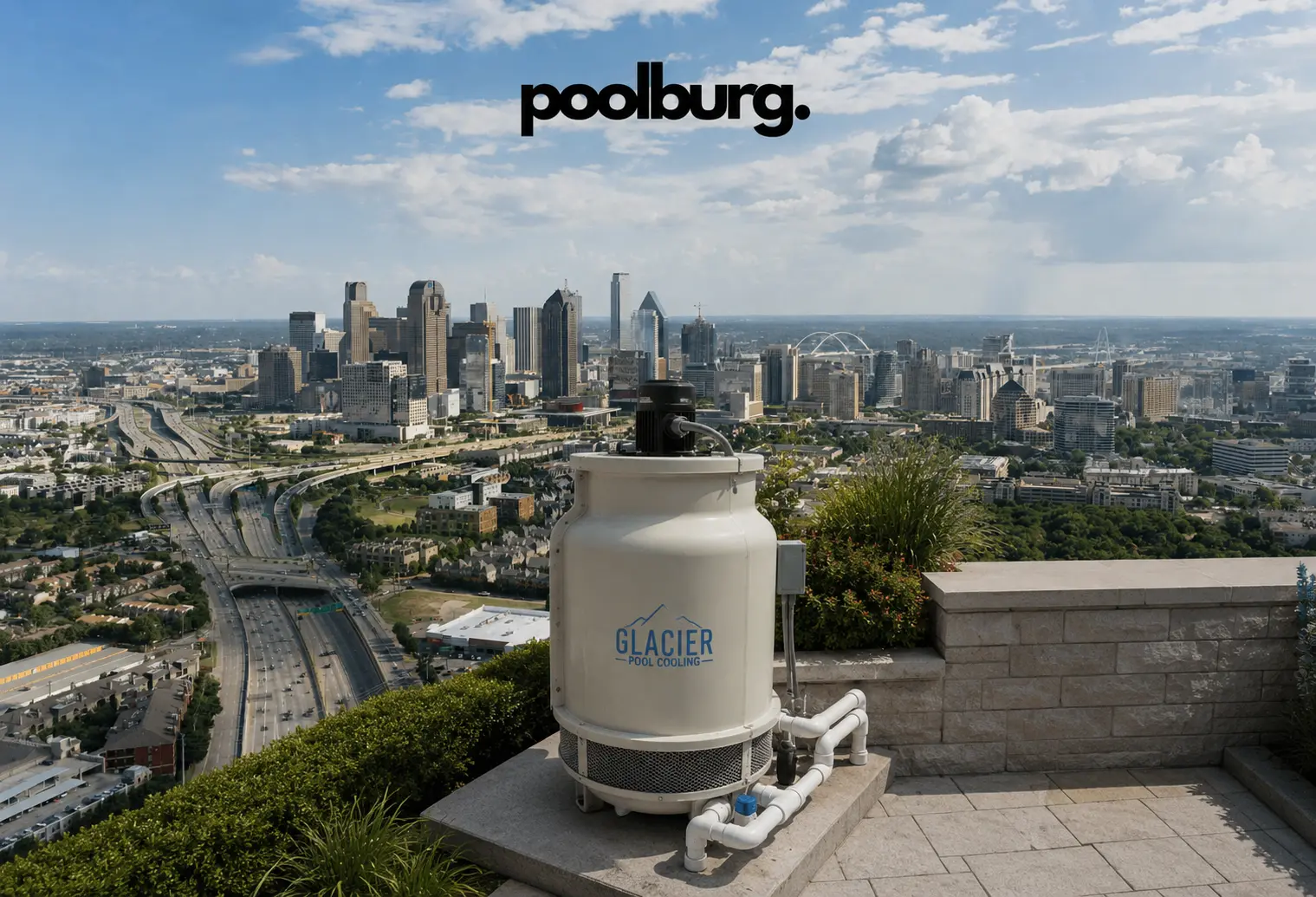
A Glacier pool chiller diverts water via a bypass through its evaporative cabinet before returning cooled water to the system. These units can rescue a North Texas pool that feels like bathwater, as long as the sizing, flow, and site layout are correctly configured. Professional installers avoid universal temperature promises because actual performance depends entirely on specific backyard conditions.
Why Texas Pools Sometimes Need Cooling
Full sun, a dark finish, shallow water, limited shade, and warm nights can turn a refreshing pool into bathwater. Pools across Frisco, Plano, McKinney, Allen, Prosper, Southlake, Grapevine, Keller, and Las Colinas may gain heat all day and release too little overnight. PoolBurg’s pool water temperature guide explains how the best target changes with pool use.
A Glacier pool cooler makes sense when overheating is frequent enough to justify dedicated equipment. Shade or a fountain may help a borderline case, but an exposed pool that stays hot for weeks needs a controlled way to cool swimming pool water.
How a Glacier Pool Chiller Works
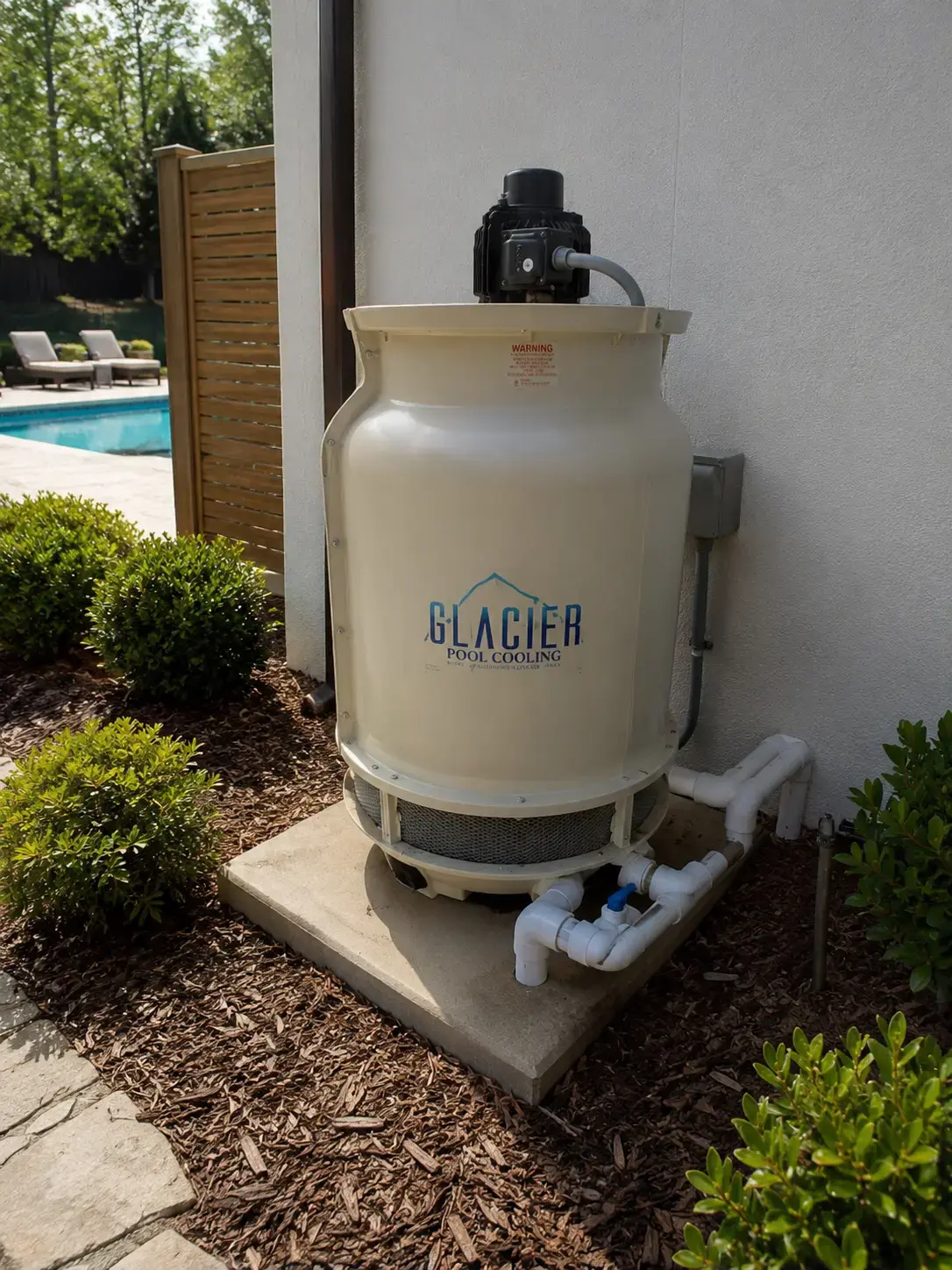
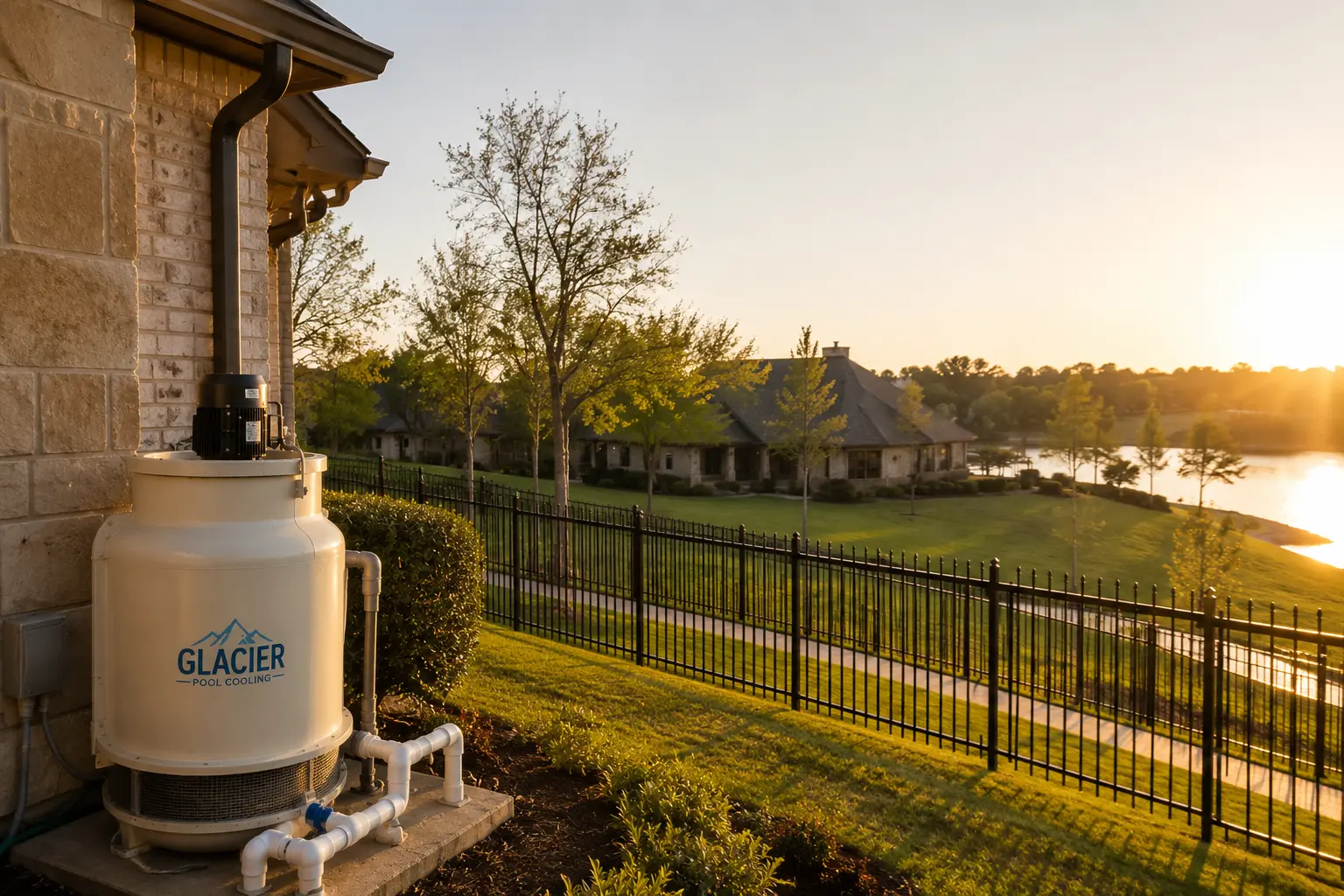
Filtered water is diverted through a bypass to the Glacier pool chiller. Rotating sprinkler pipes spread it while a fan moves ambient air through the unit. Some water evaporates and carries heat away; cooled water collects in the basin and returns to the pool system. Glacier’s official operations manual emphasizes correct plumbing, flow, ventilation, nighttime operation, and qualified installation.
The National Weather Service’s wet-bulb explanation notes that evaporation slows as air holds more moisture. Glacier says its equipment was developed around Houston and the Gulf Coast, so humidity does not automatically rule it out. Actual cooling still varies with humidity, nighttime weather, solar gain, and runtime. Glacier recommends overnight operation; daytime use may mainly offset incoming heat.
Glacier Pool Chiller vs Reversible Heat Pump
- Cooling method: Glacier uses airflow and evaporation; a reversible heat pump uses a compressor and refrigerant.
- Main purpose: Glacier provides cooling; the heat pump provides heating and cooling.
- Water use: Glacier loses some water through evaporation and mist; the heat pump keeps a closed water path.
- Site needs: Both require airflow and service clearance, while Glacier also needs drainage and mist-safe placement.
- Best fit: Glacier suits cooling-first owners; a reversible heat pump suits households that also value heating.
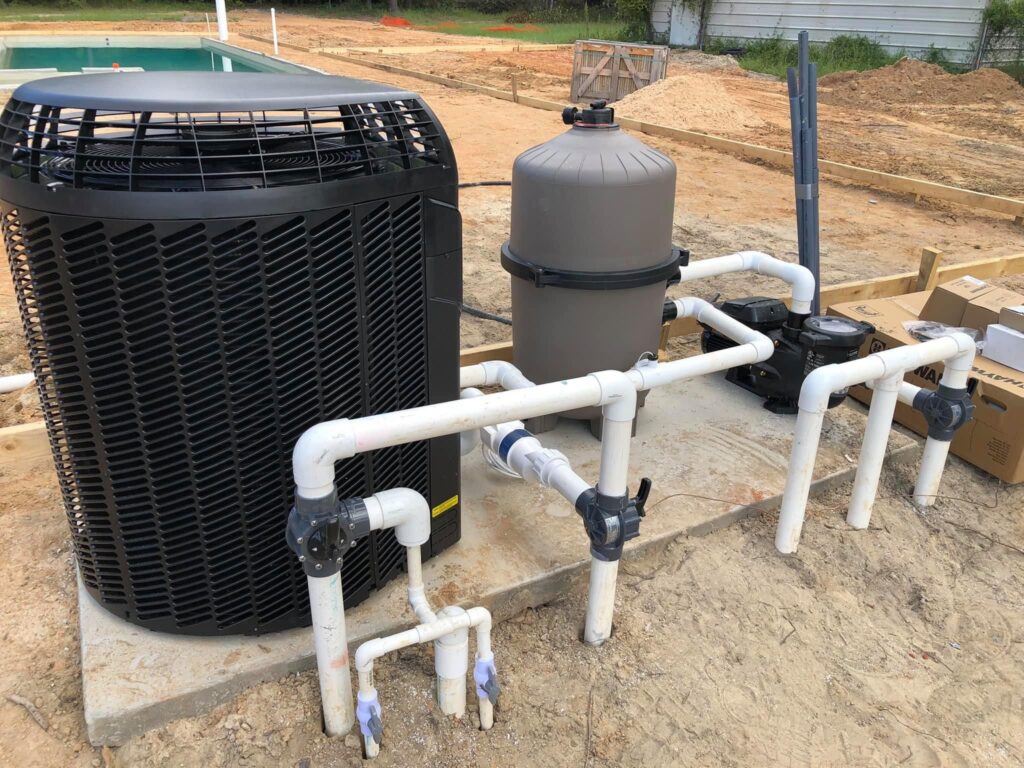
Pentair’s GulfStream specifications show the alternative: a compressor-driven unit that heats and cools. A Glacier pool chiller avoids that refrigeration circuit but cannot heat. Compare installation, pump runtime, top-off water, maintenance, and the value of heating—not one electricity estimate.
What Determines Cooling Performance?
Pool size is only the first number. Depth, finish, sun, wind, humidity, shade, nighttime air, flow, and runtime all matter. Glacier’s residential model specifications list the GPC25 below 20,000 gallons, GPC210 below 30,000, and GPC215 below 45,000, with model-specific flow and electrical needs. Glacier advises against oversizing because a larger cabinet does not guarantee more cooling.
Flow must turn the sprinkler pipes slowly without excessive splatter. A variable-speed pool pump may need a dedicated higher-speed chiller schedule even when filtration runs at low RPM. ENERGY STAR guidance supports matching speed to the task, which helps estimate the real operating cost of Glacier pool coolers.
Installation and Automation Questions
Before buying, confirm bypass routing, pad space, drainage, airflow, circuit capacity, service access, and automation compatibility. The Glacier pool chiller manual calls for open ventilation, at least 12 inches from mist-sensitive surfaces, and five feet overhead. Residential models use 110/115-volt power, with amperage varying by model. CPSC electrical-safety guidance stresses GFCI protection and inspection by someone qualified for pool and spa systems.
Automation can coordinate valves, cooling, and pump speed, but integration is panel-specific. PoolBurg’s smart pool automation service shows how temperature and equipment schedules can work together. Evaporation and mist can affect water level and sanitizer demand, so keep checking free chlorine and pH; the CDC recommends routine pool-water testing.
People Also Ask
How does a Glacier pool chiller work?
It exposes filtered water to moving air so evaporation carries heat away.
Do pool chillers work in Texas humidity?
Yes, but humidity, nighttime weather, sun, airflow, and runtime shape performance.
How many degrees can a Glacier pool chiller lower the water?
No universal number applies; pool and weather conditions control the result.
Should a Glacier pool chiller run at night?
Usually. Overnight operation avoids fighting direct solar heat gain.
Can Glacier integrate with pool automation?
Yes, with correctly configured relays, valves, controls, and pump speeds.
Does a pool chiller need refrigerant?
No. It uses fan-driven evaporation, not a refrigerant circuit.
What size Glacier cooler does my pool need?
Start with published gallon and flow ratings, then verify site conditions.
Is a Glacier pool chiller expensive to operate?
It depends on amperage, pump speed, runtime, rates, and replacement water.
Can a Glacier pool chiller work with a variable-speed pump?
Yes, when its cooling schedule provides the manufacturer-required flow.
Does a Glacier pool chiller require professional installation?
Professional installation helps align plumbing, electricity, automation, drainage, and warranty terms.
Is a Glacier Pool Chiller Right for Your Texas Pool?
The phrase pool chiller Glacier can make shoppers focus on the cabinet alone, but the surrounding installation determines the experience. PoolBurg can evaluate pool size, heat exposure, flow, pad layout, electrical capacity, water management, and automation before recommending a model. Review PoolBurg’s equipment services or contact PoolBurg for a North Texas assessment.