Knowing how to shock a pool sounds simple — dump in some chlorine, right? Not exactly. The product you use, the time of day you add it, your pH when you shock, and how you distribute it all determine whether your pool shock treatment actually works or mostly gets wasted. In DFW, there’s an extra wrinkle: our hard water means the most popular shock product at the hardware store is actually the worst choice for your pool. Here’s when to shock pool water, which product to use in North Texas, and the right way to do it every time.
When to Shock Pool Water in DFW

On a schedule: every 1 to 2 weeks in summer (May through September), every 2 to 4 weeks in spring and fall, and monthly in winter. DFW heat and UV consume chlorine faster than cooler climates, so you’ll shock more often than national guides suggest. The CDC’s healthy swimming guidelines recommend maintaining adequate free chlorine at all times, and regular shocking is how you reset when levels drift.
Beyond the schedule, knowing when to shock pool water based on events is just as important. After a pool party or heavy bather load. After a rainstorm — rain dilutes chlorine and introduces contaminants. After a power outage lasting 12+ hours. When water looks cloudy or dull. When you smell that strong “chlorine” smell at the pool — that’s actually chloramines, which means you need more chlorine, not less. After visible algae appears. After storms, dust events, or heavy pollen dumps during cedar or oak season.
One critical rule for how to shock a pool: always shock at dusk or after dark. UV destroys unstabilized chlorine fast — shocking during the day wastes 30 to 50% of your shock before it can work. Nighttime gives chlorine 8 to 10 uninterrupted hours. And never shock while people are swimming.
Which Pool Shock Treatment to Use in DFW
Liquid chlorine (sodium hypochlorite) — the best choice for DFW. Pool-grade at 10 to 12.5% concentration. It’s fast-acting, leaves no residue, doesn’t add CYA, doesn’t add calcium, and doesn’t cloud water. In a hard water market like DFW, those last two points matter enormously. Dosage: roughly 1 gallon per 10,000 gallons of pool water raises free chlorine by about 10 ppm. Double or triple for algae kill. Our water chemistry guide covers how CYA level affects your required shock dose.
Calcium hypochlorite (cal-hypo) — avoid in DFW. This is the granular shock most people grab at the hardware store. It’s powerful, but it adds calcium to your water with every use. In DFW where hard water is already the number one pool chemistry challenge, adding more calcium compounds the problem. The Water Quality Association confirms that managing calcium is critical in hard water regions. If you must use cal-hypo, pre-dissolve it in a bucket of water first — never throw granules directly into the pool.
Dichlor — use sparingly. Dissolves fast and works well, but adds CYA to the water with every application. Occasional use is fine. As your regular shock? You’ll end up with CYA too high and chlorine lock within a year or two.


Non-chlorine shock (MPS) — supplemental only. It’s an oxidizer, not a sanitizer. It breaks down organic waste and chloramines but doesn’t kill algae or bacteria. Useful as a mid-week boost between chlorine shocks, but never a substitute for actual pool shock treatment with chlorine. According to the Pool & Hot Tub Alliance, non-chlorine oxidizers work best as a complement to regular chlorine shocking, not a replacement.
How to Shock a Pool — Step by Step
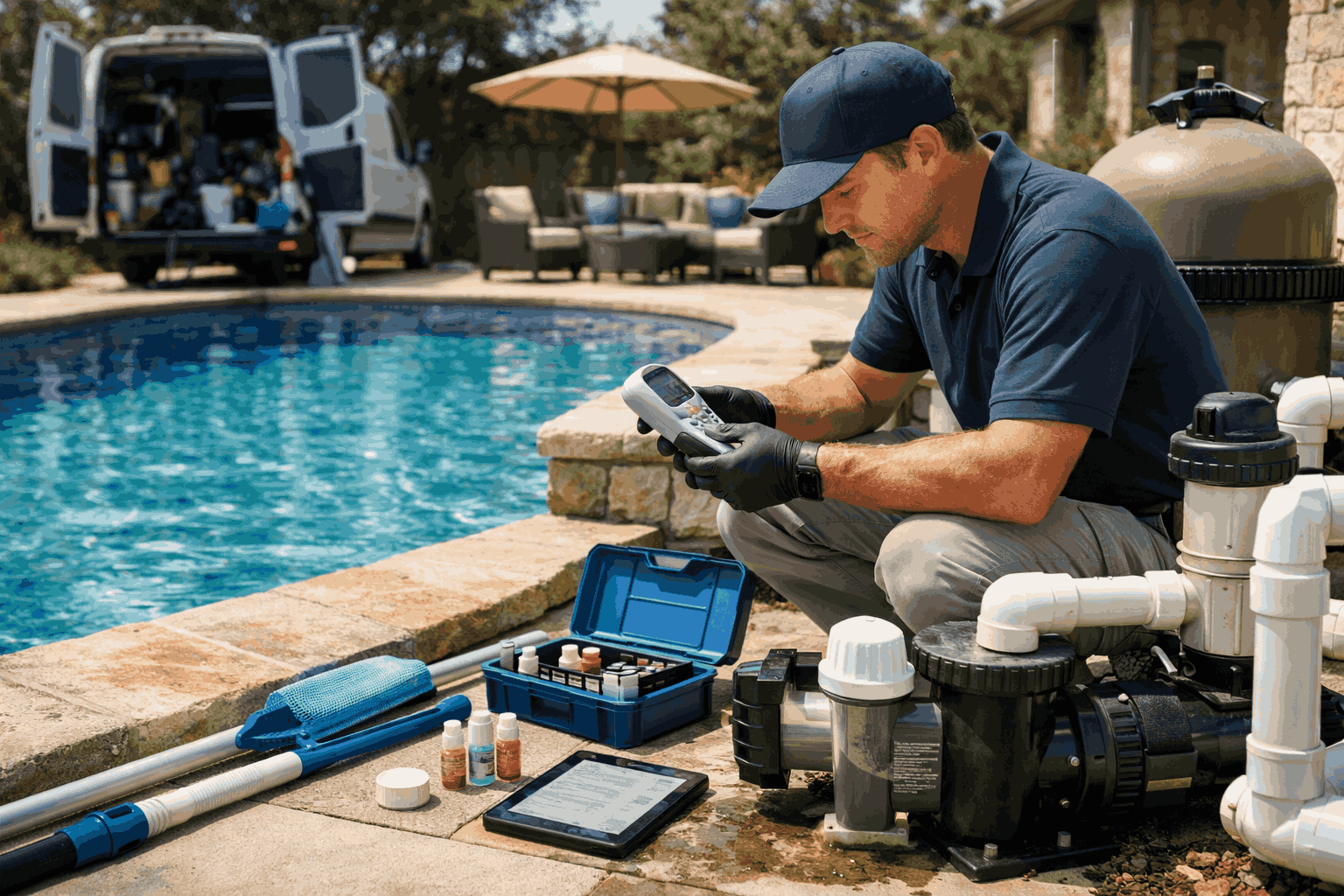
Test first. Know your current free chlorine, pH, and CYA before shocking. Adjust pH to 7.2 to 7.4 first — chlorine is most effective at lower pH. Our water test results guide explains why pH matters so much for shock effectiveness.
Calculate your dose. Target: raise free chlorine to 10 to 20 ppm for a routine shock, 30+ ppm for an algae kill. For liquid chlorine: 1 gallon per 10,000 gallons equals roughly a 10 ppm rise. A 20,000-gallon pool needs 2 gallons for routine shock, 4 to 6 gallons for algae treatment.
Wait for dusk. Shocking at night gives you maximum effectiveness. UV during the day destroys chlorine before it can do its job.
Turn the pump on. Run it continuously for at least 8 hours after shocking, ideally 24. Circulation distributes the shock evenly throughout the pool. Our pump run time guide covers post-shock circulation scheduling.
Pour the shock. Walk slowly around the pool’s perimeter, pouring liquid chlorine evenly as you go. Don’t dump it all in one spot and never pour shock directly onto pool surfaces — it can stain or bleach the finish.
Brush the pool. After adding shock, brush all walls, floor, and steps. This loosens algae and biofilm so the chlorine can reach it. Our algae guide covers why brushing is critical during pool shock treatment.
Wait before swimming. Test free chlorine before letting anyone back in. Safe to swim when FC drops below 5 ppm — typically 8 to 24 hours after shock. The Consumer Product Safety Commission recommends always testing before swimming after any chemical treatment.
Clean the filter the next day. Shock kills and oxidizes contaminants — your filter captures the dead debris. Clean it 12 to 24 hours after shocking for best results.

People Also Ask
How often should I shock my pool in Texas?
Every 1 to 2 weeks in summer, every 2 to 4 weeks in spring and fall, and monthly in winter. Also after parties, rainstorms, power outages, and anytime water quality drops.
Can I swim after shocking my pool?
Not immediately. Wait until free chlorine drops below 5 ppm, which usually takes 8 to 24 hours depending on the shock dose. Always test before swimming.
What’s the best pool shock for hard water?
Liquid chlorine (sodium hypochlorite). It adds zero calcium and zero CYA to the water, making it the ideal pool shock treatment for DFW’s hard water conditions. Avoid calcium hypochlorite — it adds calcium with every use.
Should I shock my pool during the day or at night?
Always at night. UV sunlight destroys unstabilized chlorine rapidly. Shocking at dusk gives the chlorine 8 to 10 hours of uninterrupted work before sunrise. Daytime shocking wastes 30 to 50% of the product.
Why does my pool still look cloudy after shocking?
Several possible reasons: the shock dose wasn’t enough, CYA is too high causing chlorine lock, pH was above 7.6 reducing shock effectiveness, or the filter needs cleaning to remove the dead contaminants the shock killed. Our cloudy water guide troubleshoots every cause.
Is liquid chlorine or granular shock better?
In DFW, liquid chlorine wins. Granular cal-hypo adds calcium to already-hard water. Granular dichlor adds CYA. Liquid chlorine adds neither. It’s the cleanest pool shock treatment for North Texas conditions. According to HomeAdvisor’s pool data, pools using liquid chlorine in hard water markets have lower long-term chemical costs.
PoolBurg Shocks With the Right Product Every Time
We use liquid chlorine as our standard — zero CYA, zero calcium, maximum effectiveness for DFW water. If you’re not sure how to shock a pool properly or when to shock pool water for your specific situation, contact PoolBurg. We test and shock as part of every service visit so you never have to guess.