Although hot tub heater repair frequently brings warmth back to a cold spa, the heating element itself isn’t always at fault. System safeguards may intentionally halt heating due to an air lock, a clogged filter, sensor malfunctions, control issues, or a failing circulation pump. Before replacing costly assemblies, a thorough diagnosis should evaluate the complete heating loop.
Standalone hot tubs commonly use an electric element, while an attached spa may share a gas or heat-pump pool heater. The parts differ, but the first hot tub heater repair question is the same: does the system have safe power, confirmed water flow, and a valid call for heat?
How a Hot Tub Heater Actually Works
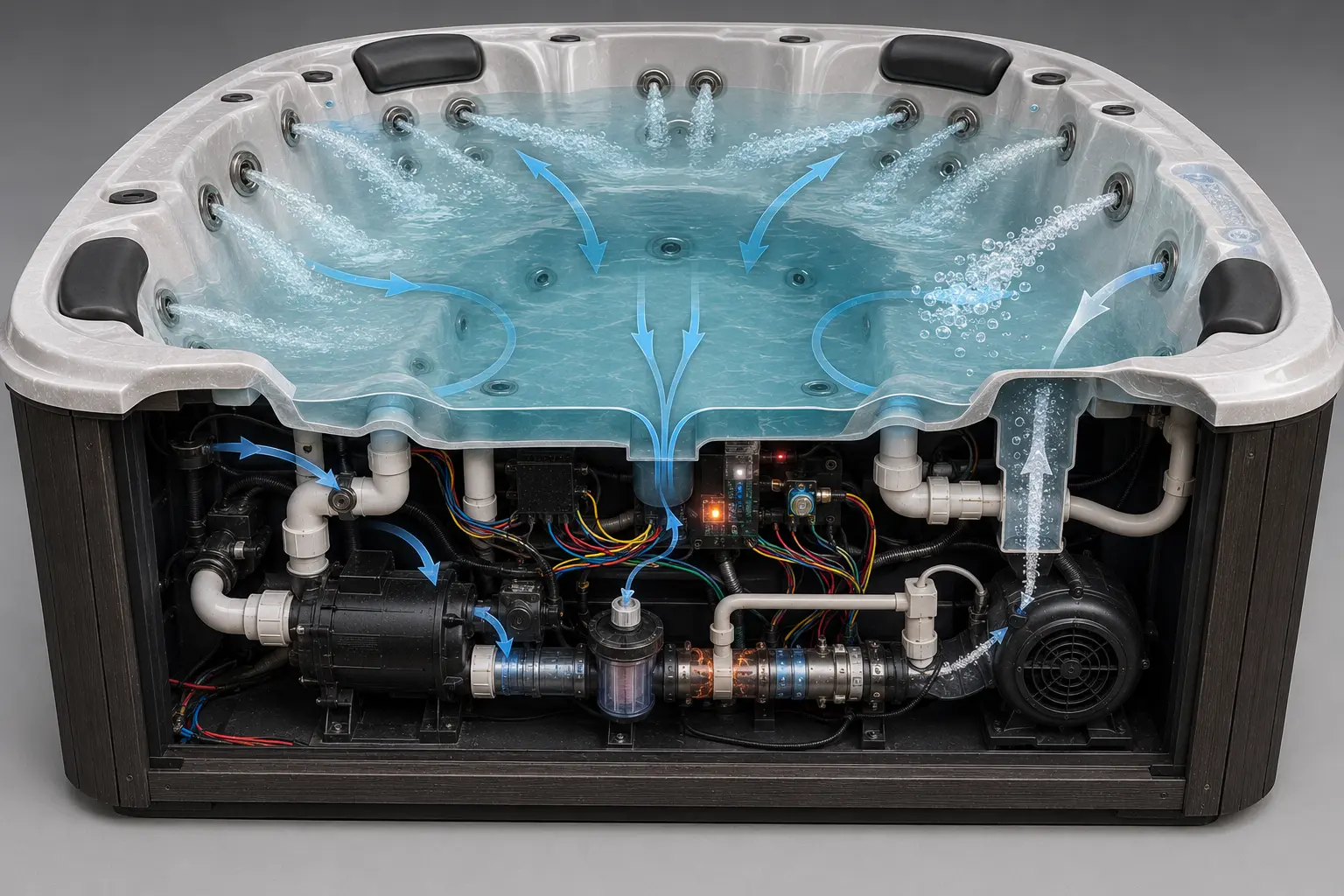
Water must move through the filter and heater before heat reaches the spa. A circulation or low-speed jet pump supplies that flow; the element warms the passing water; temperature sensors report conditions; and a flow or pressure safeguard blocks heating when circulation is unsafe. The control board coordinates the sequence.
Master Spas’ circulation-pump overview connects steady circulation with even heating and filtration. That is why professional hot tub heater repair starts with flow, not a parts order. PoolBurg’s hot tub circulation pump repair guide explains the pump side of that loop.
Signs Your Hot Tub Heater Has a Problem
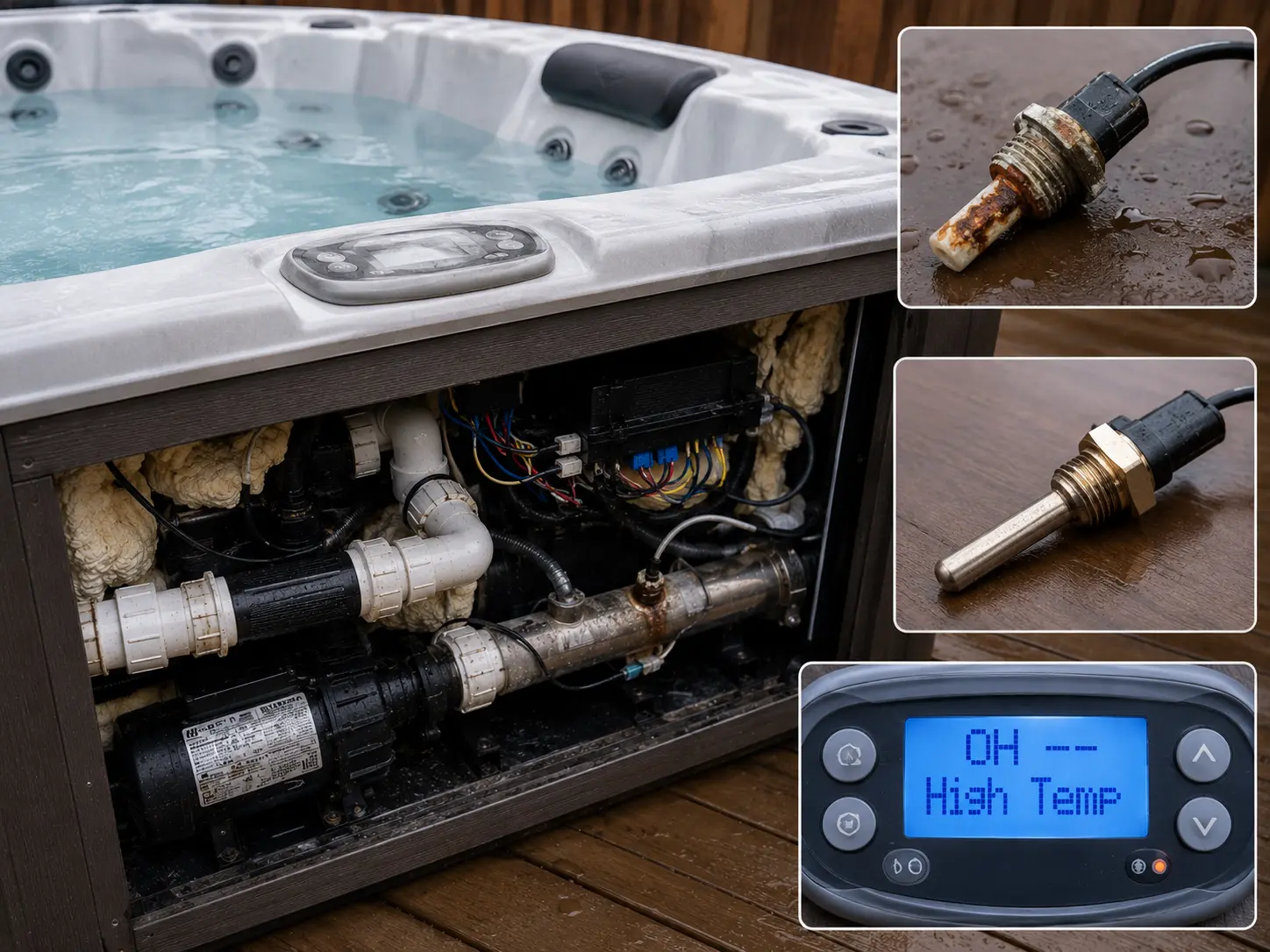
Common clues include cold water, an unusually slow temperature rise, early shutdowns, a flow or heater code, and repeated heat loss. A breaker or GFCI that trips when heating starts is more urgent. A hot tub heater not working may still show lights and run jets, so “the spa turns on” does not prove that the heating circuit is healthy.
Write down the displayed code, set temperature, actual temperature, and when the problem occurs. Hot Spring’s official troubleshooting guide shows how filter restrictions, high-limit trips, and temperature-sensor faults can produce different warnings. Always use the manual for the exact brand and model; the Hot Spring owner’s manual library is a good example of model-specific support.
Most Common Reasons a Hot Tub Stops Heating
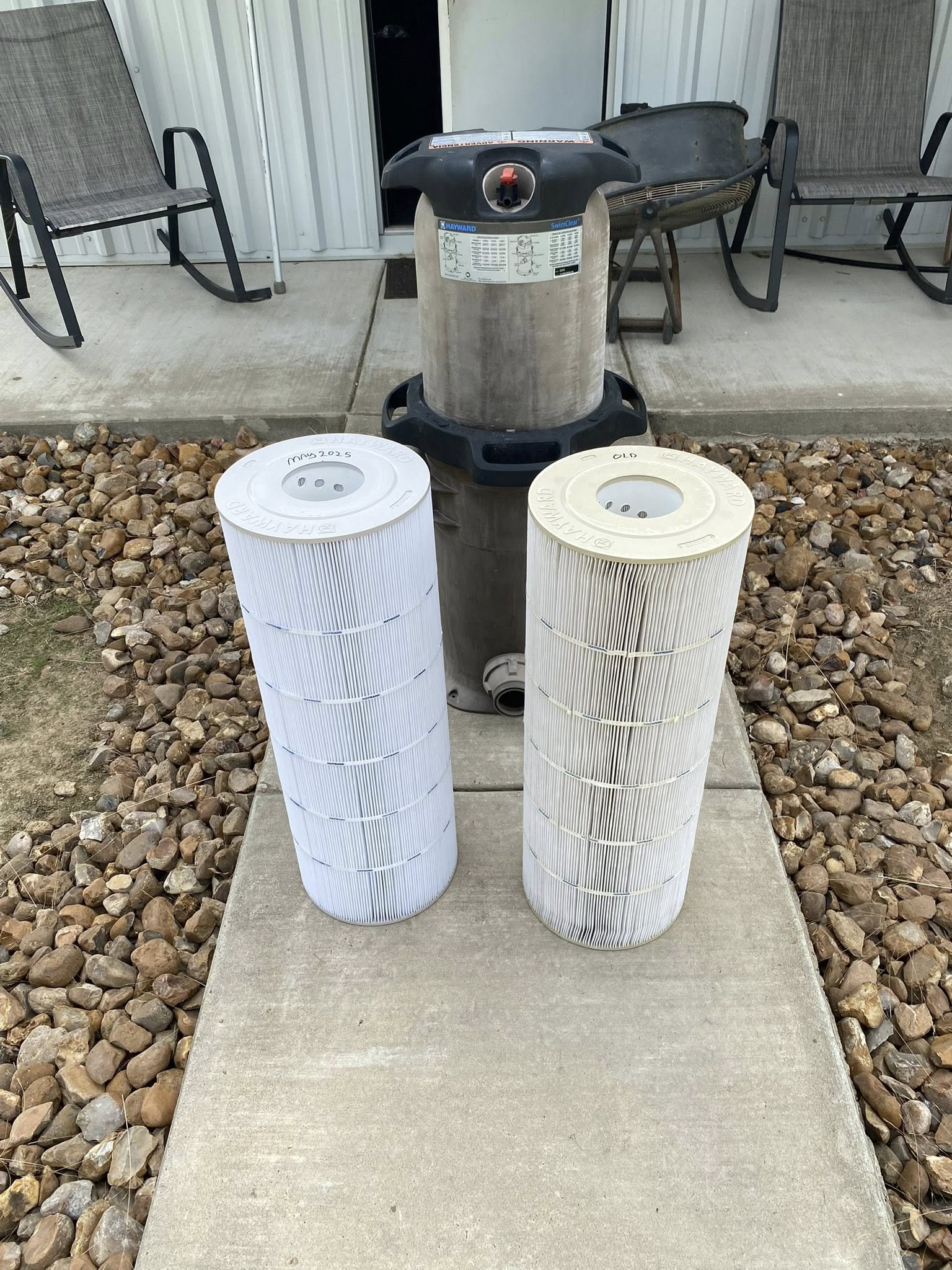
Start with simple restrictions. A clogged cartridge, low water, closed valve, blocked intake, or air lock can reduce flow enough to suspend heat. A worn impeller or weak circulation motor can do the same. Jacuzzi’s hot tub repair guide also identifies dirty filters and air locks as common circulation problems.
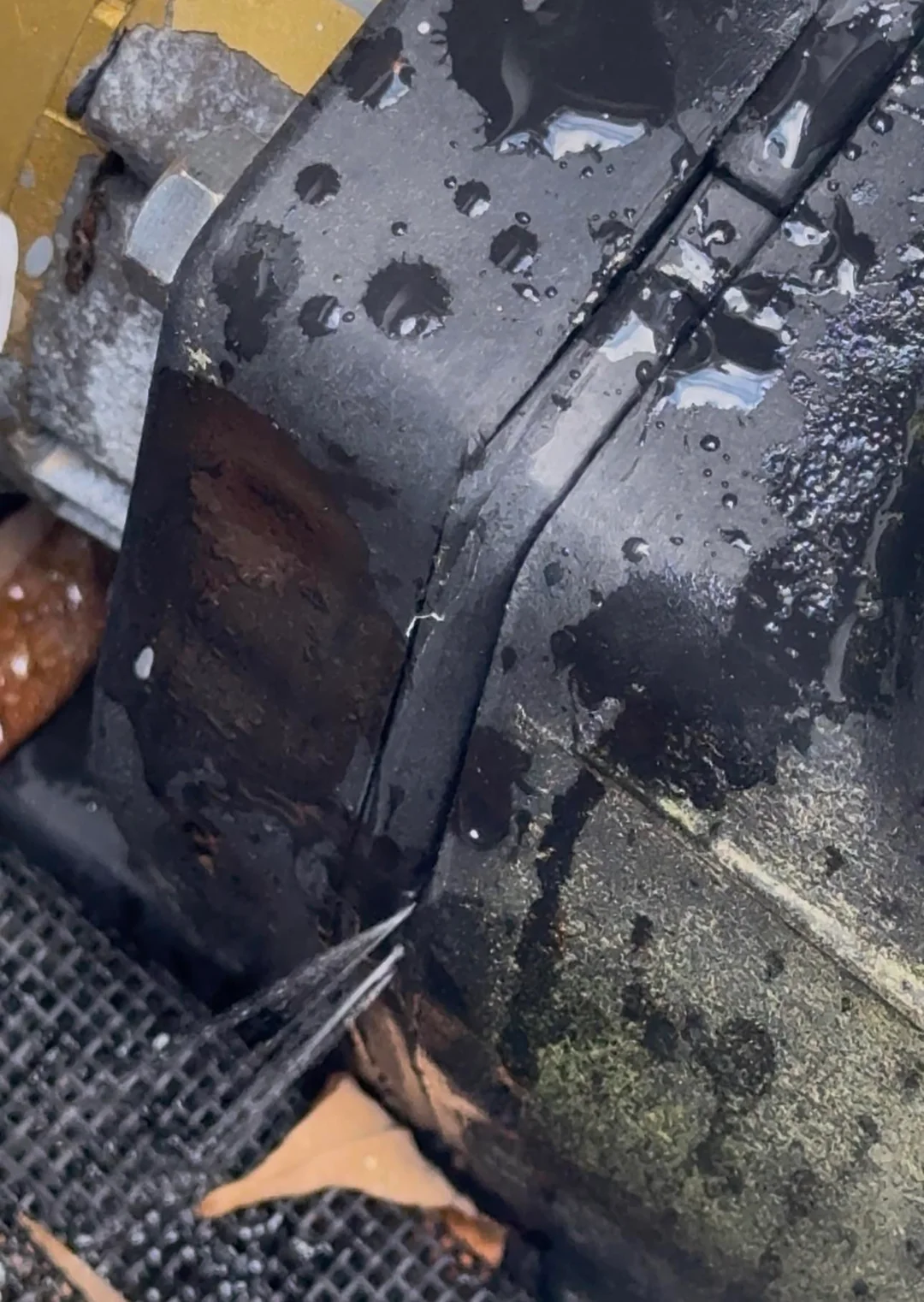
If flow is sound, hot tub heater repair may involve a failed element, temperature sensor, pressure or flow switch, relay, control board, damaged wiring, or power-supply fault. Scale and corrosion can shorten component life. The CDC’s hot tub water-testing guidance connects proper pH with both sanitation and equipment life. A hot tub not heating alongside cloudy water is therefore both a comfort and water-quality concern.
Heater Problem vs Circulation Problem
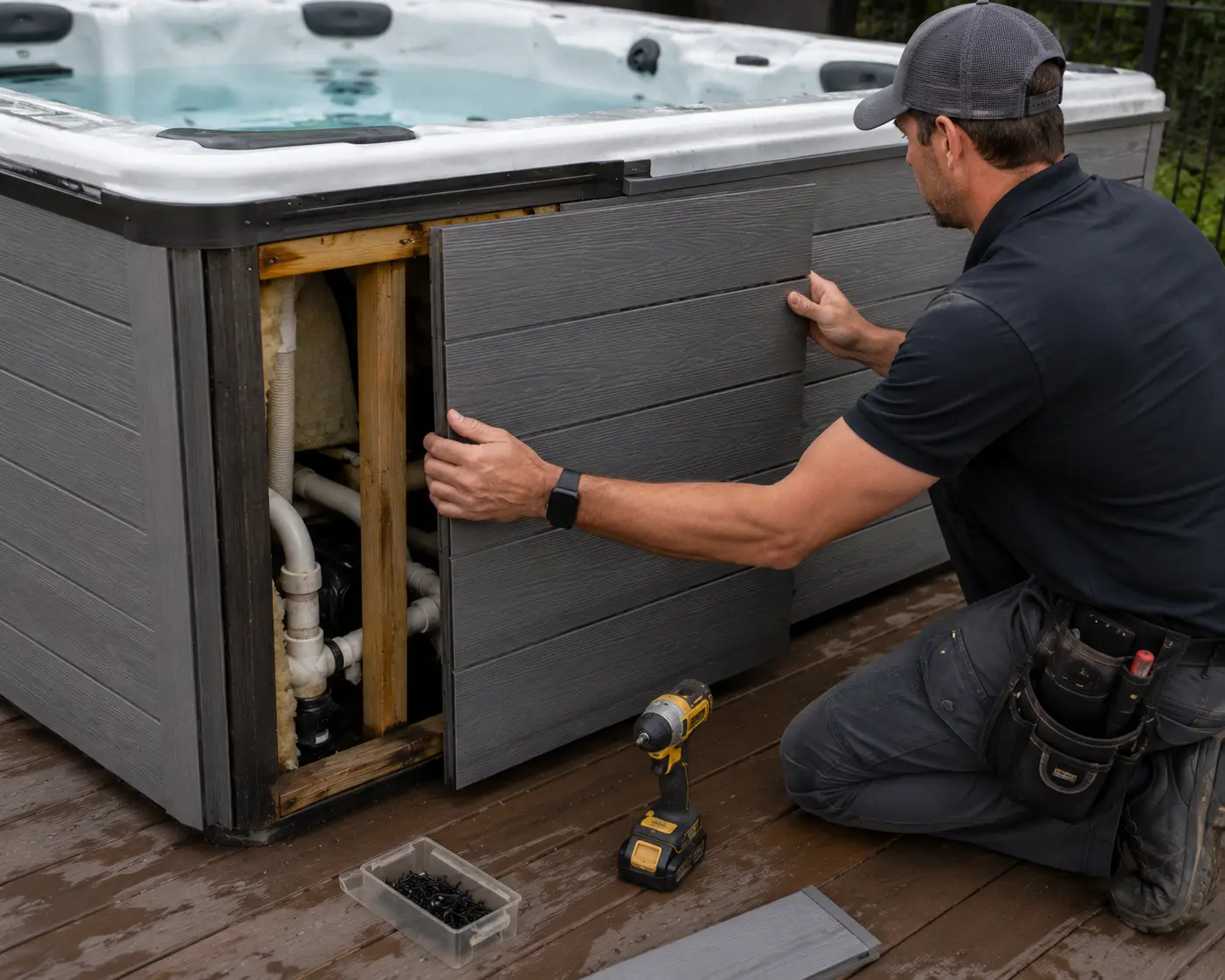
Low flow can make a healthy heater look bad. Before scheduling spa heater repair, a homeowner can safely confirm the water level, inspect the filter, verify visible valves are open, note the error code, and listen for circulation. Do not bypass a safety switch, open a live control pack, or keep resetting a tripping breaker.
The U.S. Consumer Product Safety Commission’s pool and spa electrical-safety guidance emphasizes GFCI protection and qualified electrical service. Shut the spa off and call a professional if you smell burning, see melted wiring, find water near electrical components, or the breaker trips again. PoolBurg can also trace flow faults through hot tub circulation problems and electronic faults through hot tub control panel repair.
Hot Tub Heater Repair or Complete Replacement?
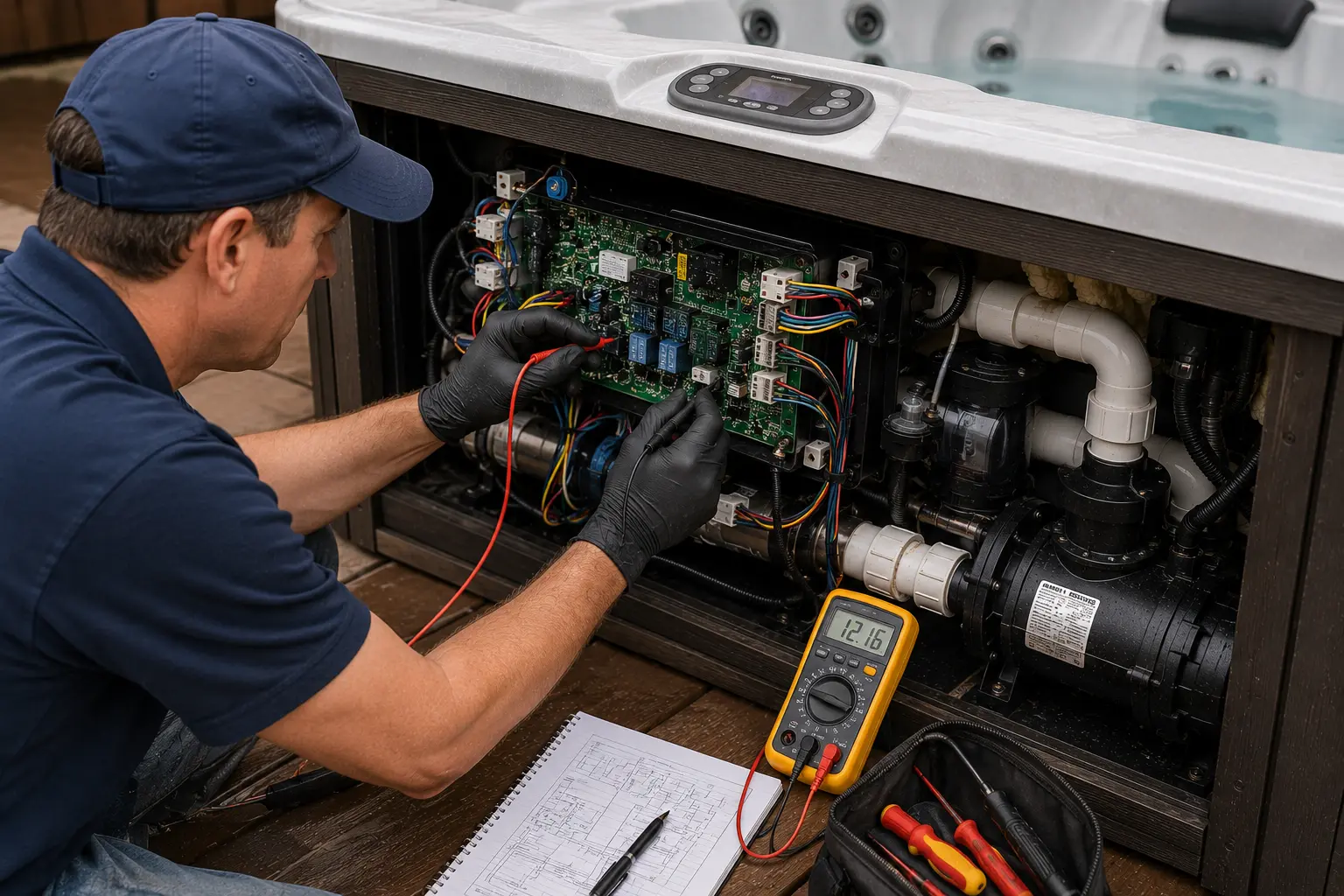
Targeted hot tub heater repair makes sense when testing isolates a serviceable element, sensor, switch, seal, relay, or wiring issue and the rest of the spa is sound. A spa heater element replacement should include electrical and insulation testing plus a search for the root cause, such as scale, low flow, or dry firing.
Replacement becomes more sensible when the heater tube is badly corroded, terminals are burned, parts are obsolete, several major components have failed, or the same electrical fault keeps returning. Ask for the error code, failed component, test results, part and labor breakdown, and warranty before approving a full assembly. For an older unit or a large quote, a second diagnosis can prevent guesswork. Jacuzzi’s heater repair cost guidance places many heater problems around $200 to $1,000, but access, brand, damage, and DFW labor can move the actual total.
People Also Ask
Why is my hot tub not heating?
Low flow, a dirty filter, air lock, weak pump, failed element, sensor fault, board problem, or power issue can all stop heat.
How do I know if my spa heater is bad?
A technician should confirm proper flow and power, then test the element, sensors, safety circuit, and controls before calling the heater bad.
Can a dirty filter stop a hot tub from heating?
Yes. Restricted flow can trigger protection that prevents the heater from energizing.
Can a hot tub heater element be replaced?
Often, yes. Compatibility, electrical condition, heater-tube integrity, and the cause of failure determine whether spa heater element replacement is worthwhile.
Why does my spa say flow when it will not heat?
The controller is not proving enough water movement, commonly because of a filter, air lock, pump, valve, blockage, or flow-sensor issue.
Is it worth repairing an older hot tub heater?
It can be when one available part solves the problem. Corrosion, repeated failures, obsolete controls, or multiple major faults favor replacement.
Can a circulation pump cause heater failure?
Yes. Poor circulation can lock out heating and may overwork or damage components if the underlying problem continues.
How much does hot tub heater repair cost?
Cost depends on diagnosis, part, access, brand, electrical work, and warranty. An itemized local quote is more useful than a single online average.
Get the Whole Heating Loop Tested
For homeowners in Frisco, Plano, McKinney, Allen, Prosper, Southlake, Grapevine, Keller, and Las Colinas, PoolBurg can test flow, the heater, sensors, controls, and circulation before recommending replacement. Schedule hot tub heater repair in Dallas and DFW or explore PoolBurg’s broader hot tub and spa repair service. A careful diagnosis is the fastest route from a cold spa to a repair that lasts.