
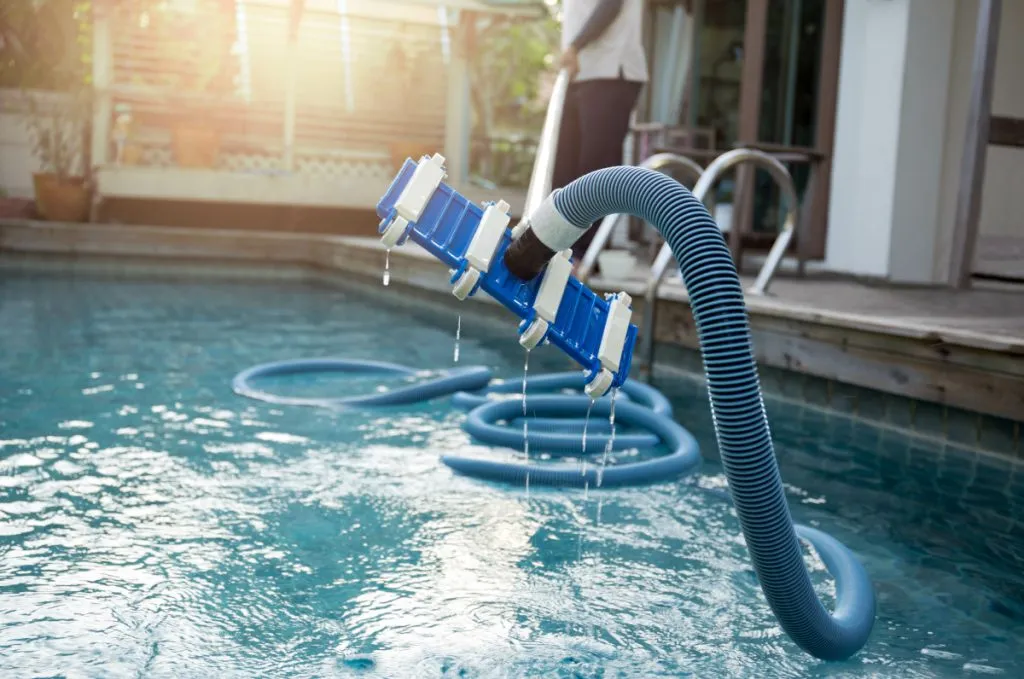
Knowing how to vacuum a pool properly makes the difference between a clean floor and just pushing debris around in circles. Your filter handles suspended particles in the water column, but everything that settles on the floor — pollen, dust, dead algae, sand, organic matter — needs to be vacuumed out. In DFW, that debris load is heavier than most places because of our aggressive pollen seasons, summer dust, and storm debris. This pool vacuuming guide covers how to vacuum pool manually, when to bypass the filter entirely, and which automatic options actually work for North Texas pools.
How to Vacuum a Pool Manually — Step by Step
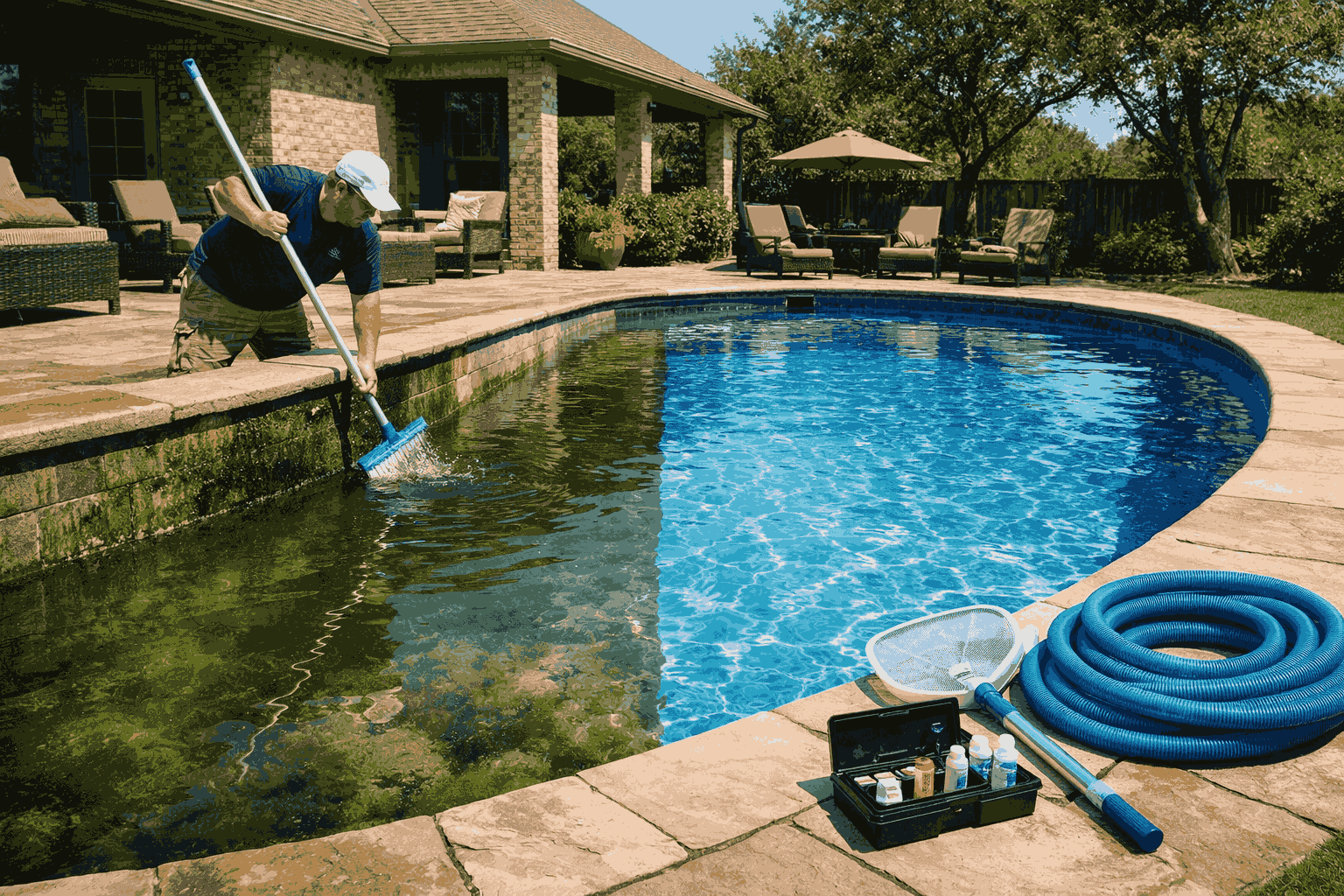
You need four things: a telescoping pole, a vacuum head, a vacuum hose long enough to reach every corner, and a skim plate (also called a vacuum plate) that fits over your skimmer basket. That’s it. Most of this equipment costs $50 to $100 total if you don’t already have it.
Step 1: Assemble. Attach the vacuum head to the telescoping pole. Connect one end of the vacuum hose to the fitting on the vacuum head.
Step 2: Prime the hose. This is the step most people skip, and it’s why they lose suction immediately. Hold the free end of the hose against a return jet and let water push through the entire length of the hose until no air bubbles come out the vacuum head end. A fully primed hose has zero air in it. The Pool & Hot Tub Alliance recommends always priming before connecting to the skimmer to prevent air locks in the suction line.
Step 3: Connect to the skimmer. With the hose primed, quickly place the skim plate over the skimmer basket opening and insert the free end of the hose into the plate. You should feel suction pull immediately. If you have multiple skimmers, close the valve on the one you’re not using to concentrate suction power.
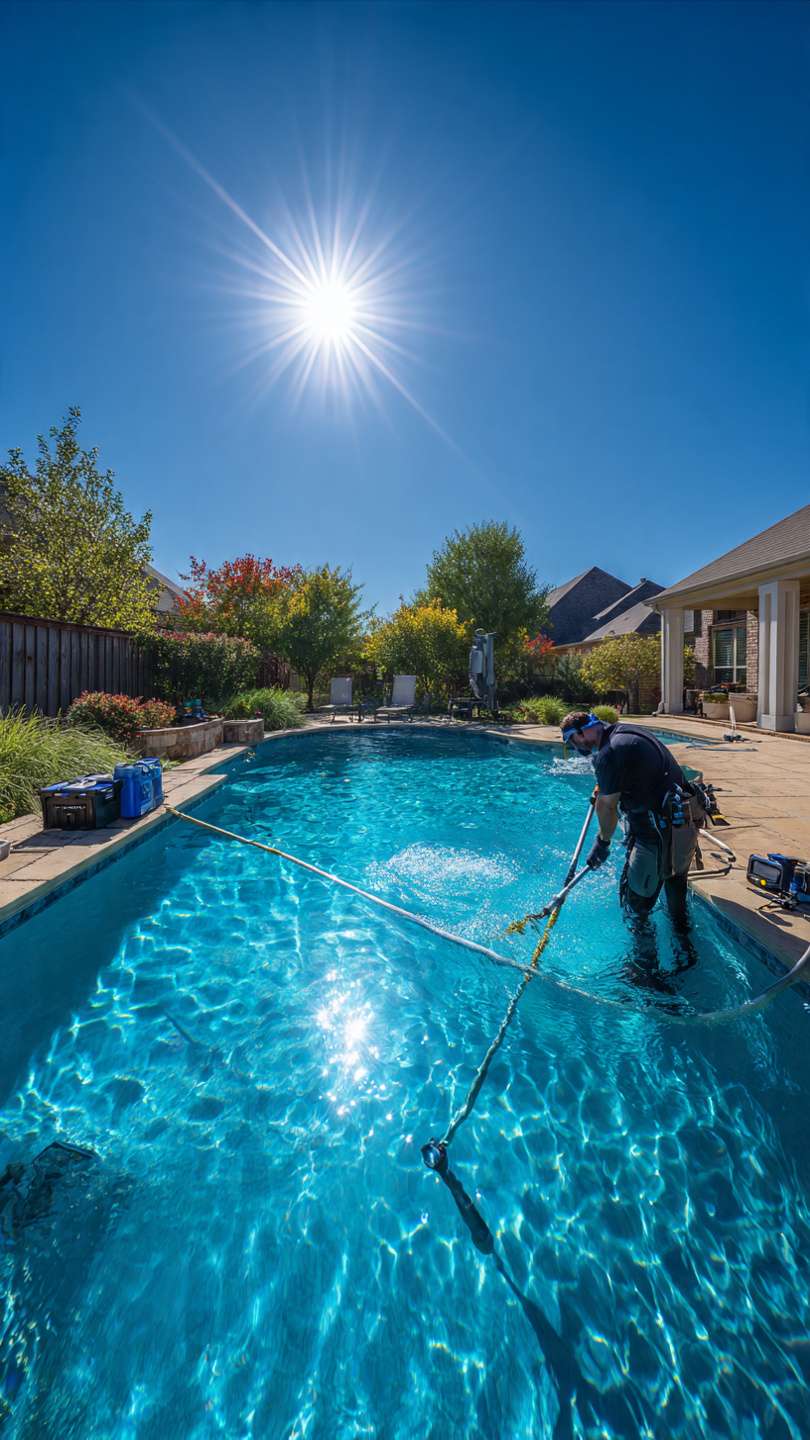
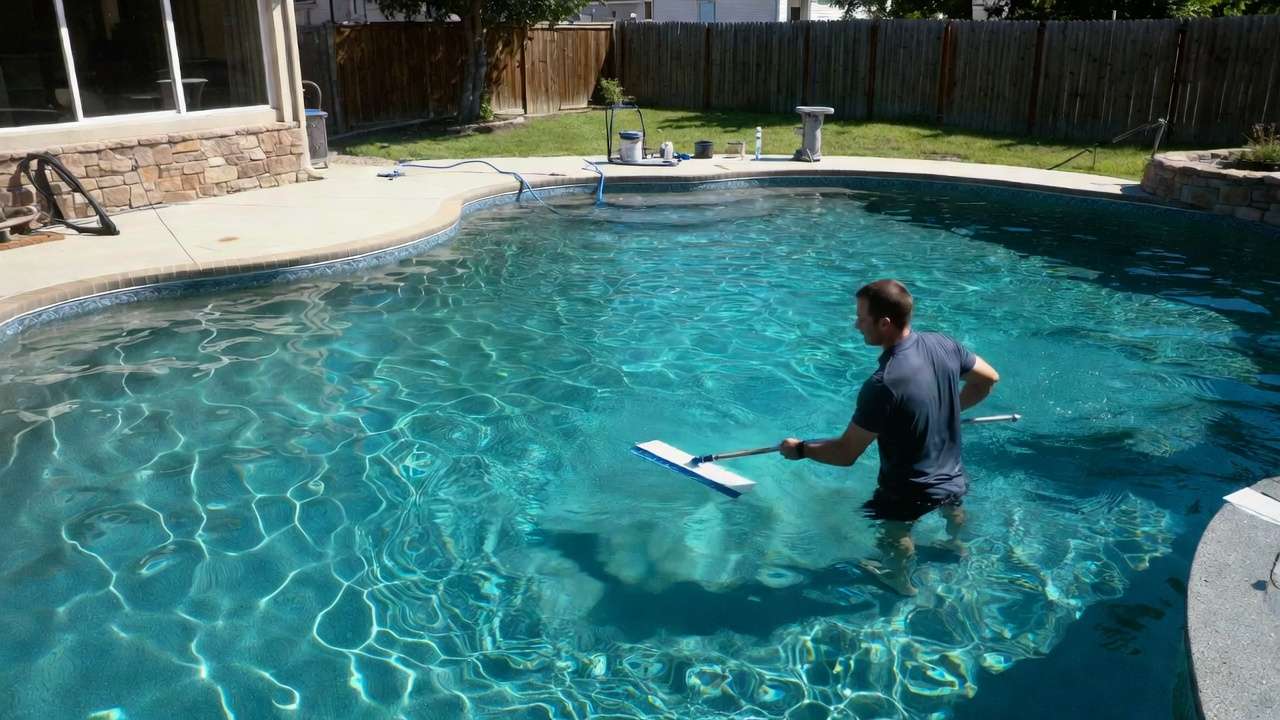
Step 4: Vacuum the floor. Move slowly in overlapping parallel lines, working from the shallow end toward the deep end. Slow is the key word — moving fast just stirs up debris and sends it back into the water column instead of into the hose. Overlap your lines so you don’t miss strips. Our circulation guide explains why debris tends to accumulate in dead spots and corners — those areas need extra attention when you vacuum pool manually.
Step 5: Monitor as you go. Check pump basket pressure periodically. If suction weakens, the pump basket or skimmer basket may be full. Stop, empty baskets, reprime, and continue. If filter pressure rises 8 to 10 PSI during vacuuming, the filter needs cleaning before you finish.Step 6: Clean up. Disconnect the hose, drain it completely, rinse the vacuum head, and replace the skimmer basket. Coil the hose out of the sun — UV degrades vacuum hoses over time just like it does everything else in DFW.

When and How to Vacuum to Waste
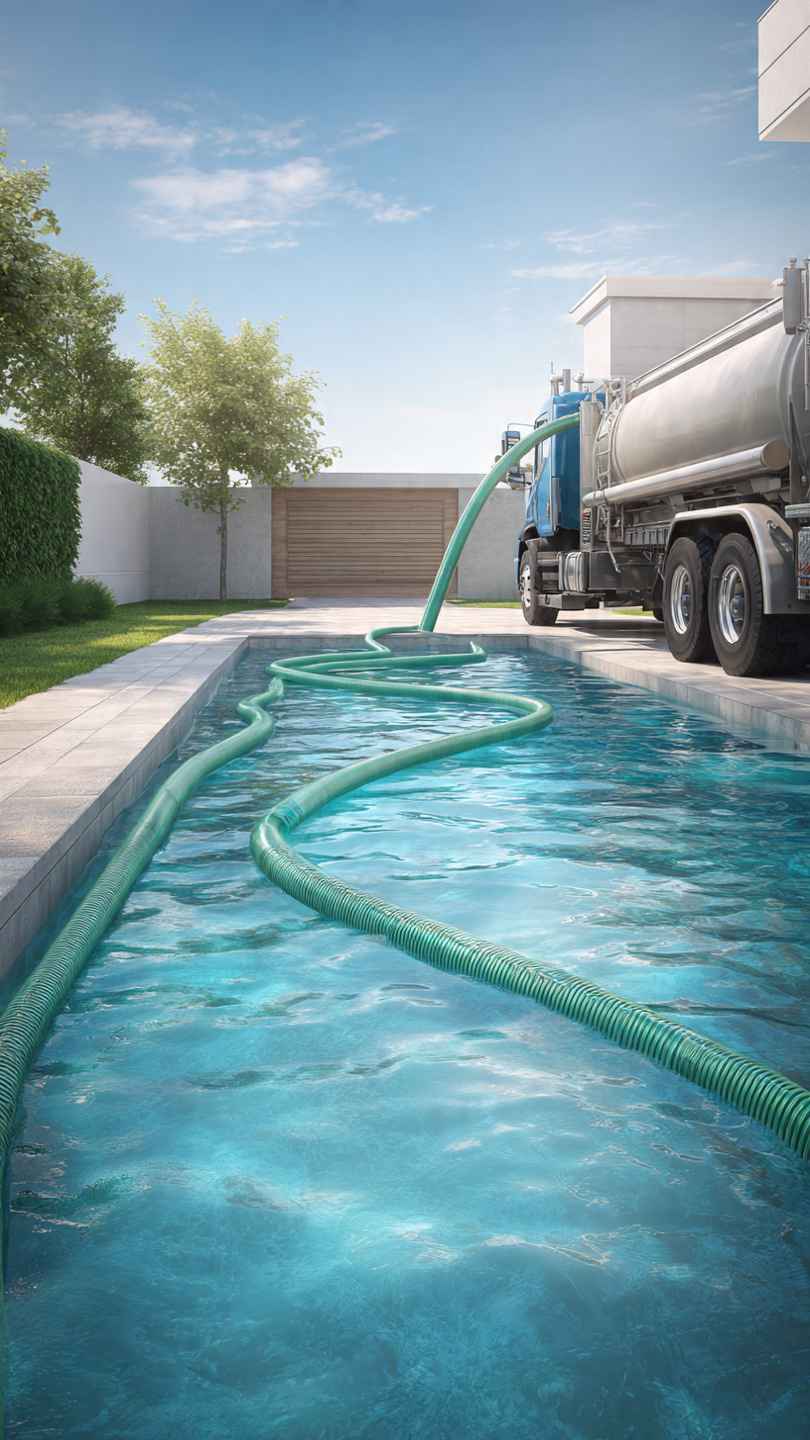
Vacuuming to waste means water goes directly out the waste line instead of returning to the pool through the filter. You’re bypassing filtration entirely and sending debris-loaded water straight to the drain. This is essential after an algae kill because dead algae is so fine it passes right through sand filters and clouds the water back up. It’s also the right move for heavy sediment, construction dust, or extremely heavy debris loads after storms.
Here’s how to vacuum a pool to waste. Set your multiport valve to “waste.” Deploy the backwash hose to your sanitary sewer cleanout — our pool draining guide covers proper discharge locations in DFW. Turn on the pump and vacuum normally. Here’s what most people forget: your water level drops as you vacuum because the water isn’t returning to the pool. Run a garden hose into the pool simultaneously to keep up. After you’re done, top off the pool, test and rebalance chemistry (you just removed treated water), and set the valve back to “filter.” According to the CDC, removing contaminated water through waste discharge is the most effective method for post-contamination pool recovery.
Automatic Pool Vacuuming Options
Robotic cleaners are the best automatic option for DFW pools — they’re self-contained with their own filtration and motor, and they do a great job on daily maintenance. Our robotic cleaner guide covers the top options. Suction-side cleaners use the pump’s suction and work well for light to moderate debris. Pressure-side cleaners use water pressure and handle large debris like the leaves that bury DFW pools every fall.
That said, no automatic cleaner fully replaces manual vacuuming. Corners, steps, tanning ledges, and tight areas behind ladders still need a human with a vacuum head. Automatic cleaners maintain between manual sessions — they don’t eliminate the need. According to HomeAdvisor’s pool data, pools using a combination of automatic daily cleaning and weekly manual vacuuming stay consistently cleaner than pools relying on either method alone.
DFW-Specific Vacuuming Tips
During pollen season from March through June, vacuum more frequently — pollen settles fast and feeds algae if it sits. Cedar pollen from December through February is extremely fine and may pass through sand filters, so consider vacuuming to waste during peak cedar weeks. After storms, do a manual vacuum or vacuum to waste before running your automatic cleaner — heavy debris can jam robotic cleaners. After any algae kill, always vacuum to waste. And for new plaster pools in the first 30 days, vacuum gently because soft curing plaster can be marked by aggressive vacuum head contact.
Our algae treatment guide covers the full recovery process including when to vacuum during treatment. The U.S. Department of Energy notes that regular vacuuming improves overall filtration efficiency by reducing the load on your filter media.
People Also Ask
How do I vacuum my pool manually?
Assemble pole, head, and hose. Prime the hose at a return jet until no air remains. Connect to the skimmer via a skim plate. Vacuum slowly in overlapping lines from shallow to deep. Monitor suction and empty baskets as needed.
What does vacuuming to waste mean?
It means sending water directly out the waste line instead of back through the filter and into the pool. Used after algae kills, heavy sediment, and contamination events where the debris is too fine for the filter to catch.
How often should I vacuum my pool in Texas?
Weekly at minimum during swimming season. Twice weekly during pollen season. After every storm. After any algae treatment. DFW’s debris load is heavier than most regions, so more frequent vacuuming keeps surfaces cleaner.
Why does my pool vacuum lose suction?
Most common causes: air in the hose (wasn’t primed properly), full pump or skimmer basket, dirty filter restricting flow, hose leak, or low water level exposing the skimmer. Reprime the hose and check baskets first — that solves it 90% of the time.
Should I vacuum or brush my pool first?
Brush first. Brushing loosens debris and algae from walls and surfaces, letting it settle to the floor. Then vacuum it up. Vacuuming first means you’re missing everything stuck to the walls that brushing would have knocked loose. Our maintenance tips page covers the optimal cleaning sequence.
Tired of Pushing a Vacuum Head Around?
PoolBurg manually vacuums your pool at every service visit — including corners, steps, and dead zones that automatic cleaners miss. Vacuum to waste when needed, no extra charge. How to vacuum a pool becomes someone else’s problem. Contact PoolBurg and let us handle the floor work.