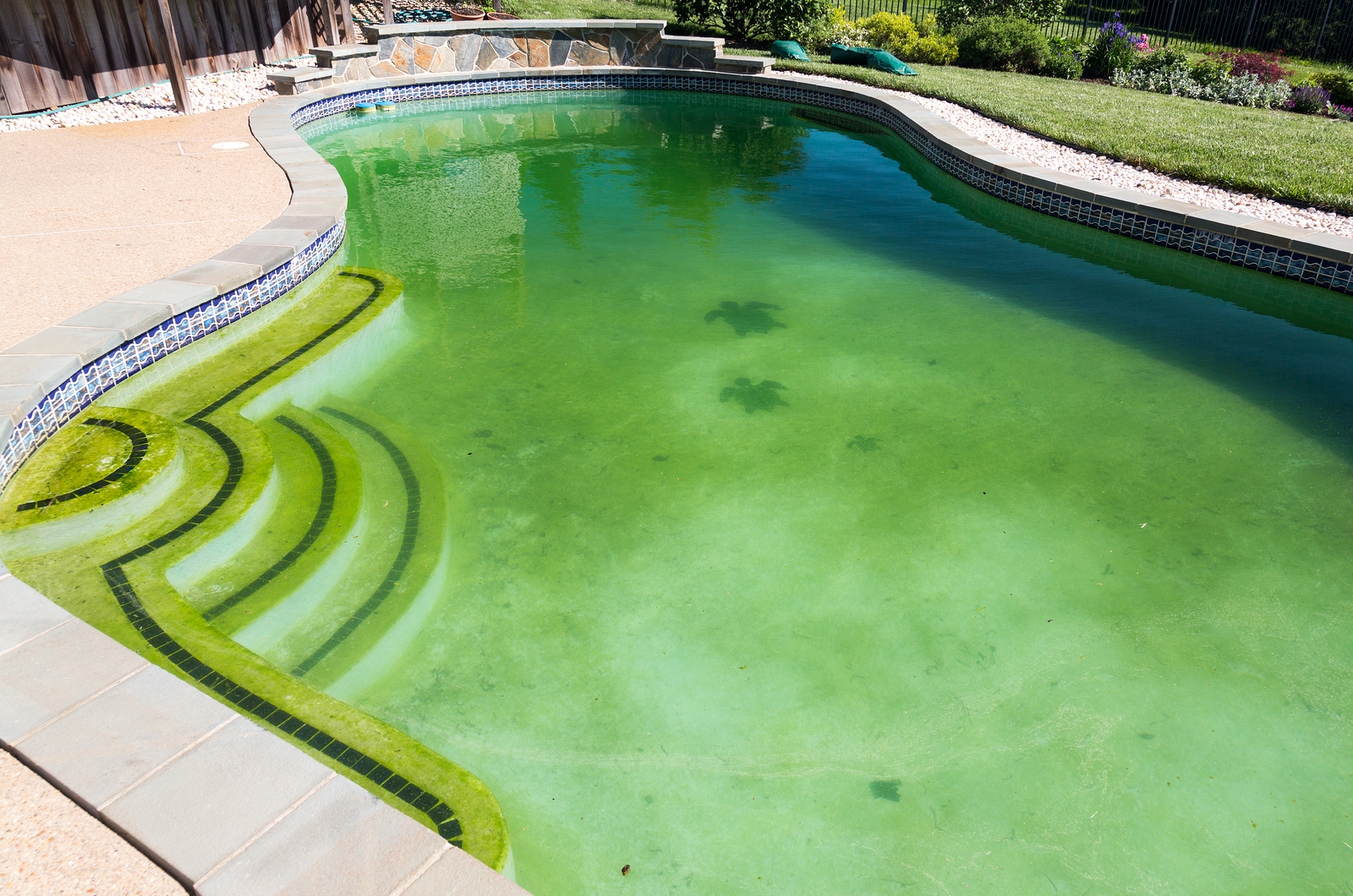
Phosphates in pool water are the reason a lot of DFW pool owners can’t figure out why their algae keeps coming back. You’ve got good chlorine levels, you’re shocking regularly, the filter is clean — and still, algae shows up in the same spots every couple of weeks. That’s because phosphates are naturally occurring nutrients that serve as a primary food source for algae. Even with perfect chlorine, high phosphates give algae the fuel to grow faster than sanitizer can kill it. And if you’re wondering what causes phosphates in pool water in DFW specifically, the answer is basically everything around your pool. Here’s what you need to know and how to remove phosphates from pool water before they become a chronic problem.
What Causes Phosphates in Pool Water in DFW?
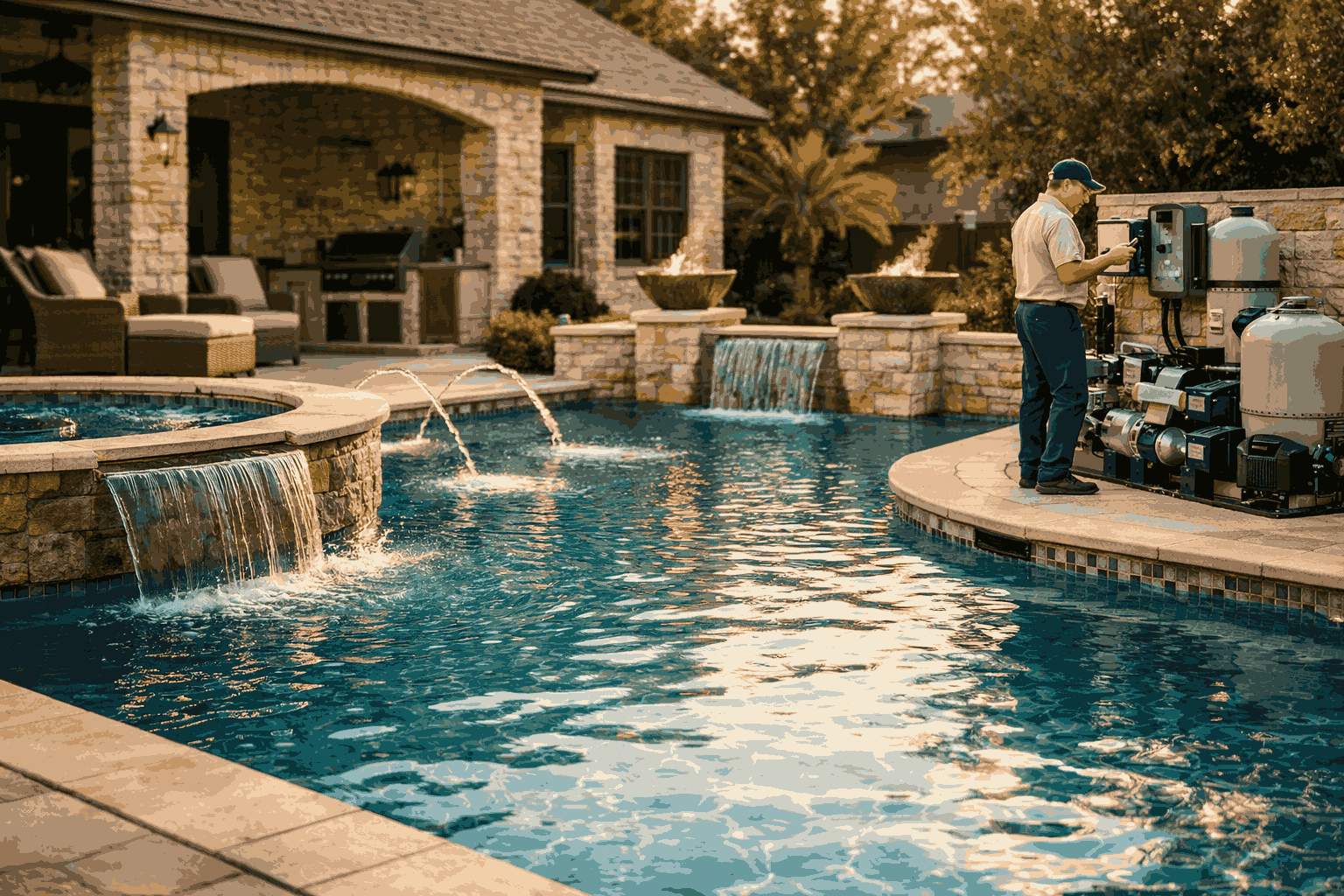
Phosphates are phosphorus compounds — key nutrients for all living organisms including algae. They enter your pool from everywhere. Lawn fertilizer runoff is one of the biggest contributors in DFW because our landscaped yards use heavy fertilizer and rain washes it straight into the pool. North Texas soil itself is rich in phosphorus from decades of agricultural use. Pollen is a massive source from March through June — every grain that decomposes in your water releases phosphates. Leaves and organic debris do the same thing as they break down. Even some DFW municipal water contains trace phosphates before it ever reaches your pool.
Sunscreen and body products add phosphate compounds with every swim. Rainwater carries phosphates from the atmosphere and surrounding surfaces. The Pool & Hot Tub Alliance identifies phosphate management as an increasingly important component of algae prevention, particularly in warm-climate markets with long growing seasons and heavy environmental loading — which describes DFW perfectly.
Our pools face above-average phosphate levels because of the longer outdoor season, heavy lawn care culture, open lot designs, and frequent rain events washing contaminants in.
What Phosphate Level Is Dangerous for Phosphates in Pool Water?
Below 100 parts per billion is generally manageable. Between 100 and 300 ppb, algae has some food but chlorine typically keeps up. Between 300 and 500 ppb, you should treat — algae has enough fuel to become persistent. Above 500 ppb is urgent because algae can outgrow chlorine’s ability to control it. Above 1,000 ppb is severe risk regardless of chlorine level. The reality in DFW? Many untreated pools test at 500 to 2,000+ ppb after pollen season and summer rains.
Our water testing guide covers how phosphate testing fits into a comprehensive chemistry panel. According to the CDC’s healthy swimming guidelines, maintaining water quality requires managing all factors that contribute to biological growth — not just sanitizer levels alone.
How to Test for Phosphates in Pool Water
Here’s the catch: standard test kits and test strips do not test for phosphates. You need a specific reagent test. Pool supply stores like Leslie’s and Pinch A Penny offer phosphate testing, and PoolBurg tests phosphates as part of our quarterly comprehensive water panel. Test timing matters — test after heavy rain, after pollen season, and quarterly at minimum. If algae keeps returning despite proper chlorine management, phosphates in pool water should be the first thing you investigate.
How to Remove Phosphates From Pool Water
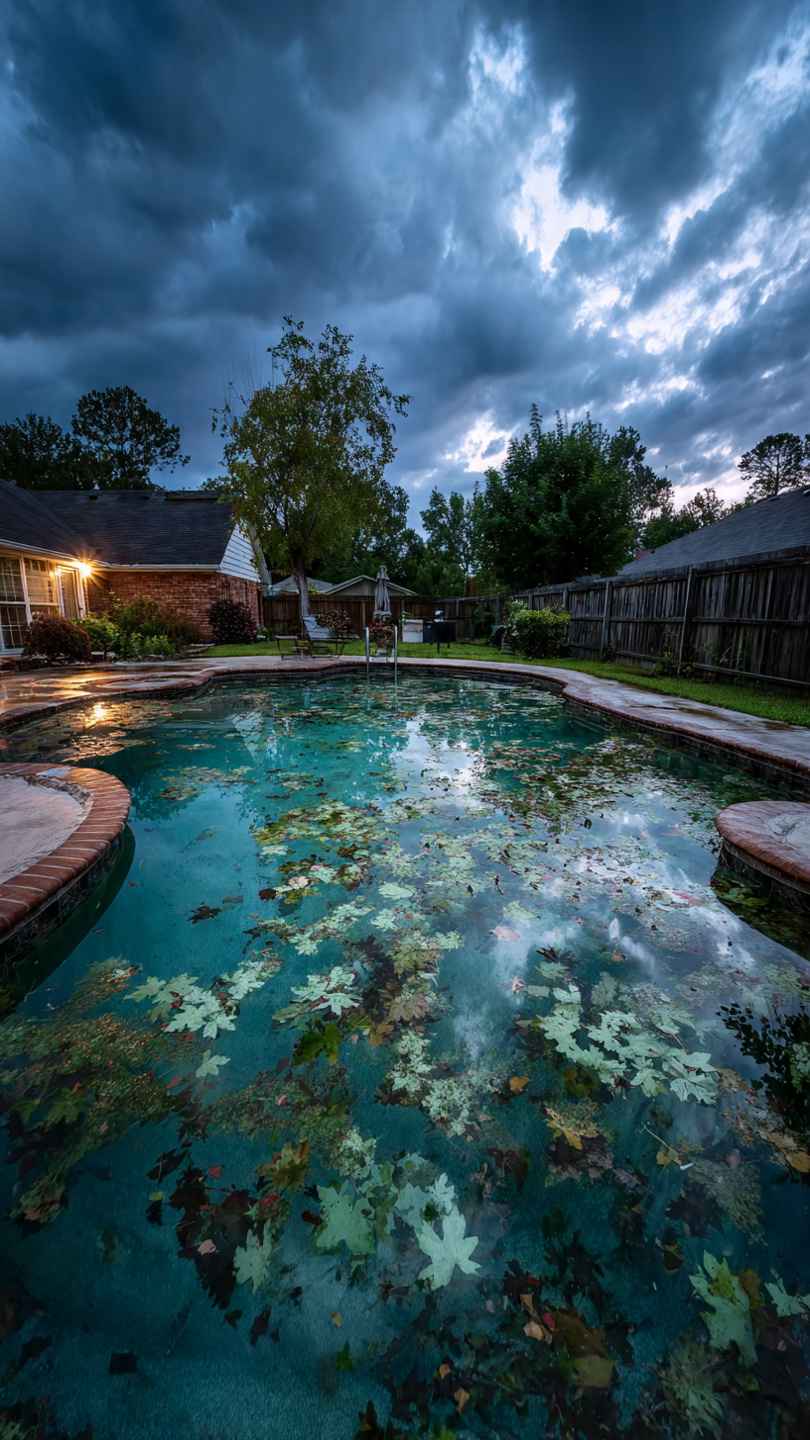
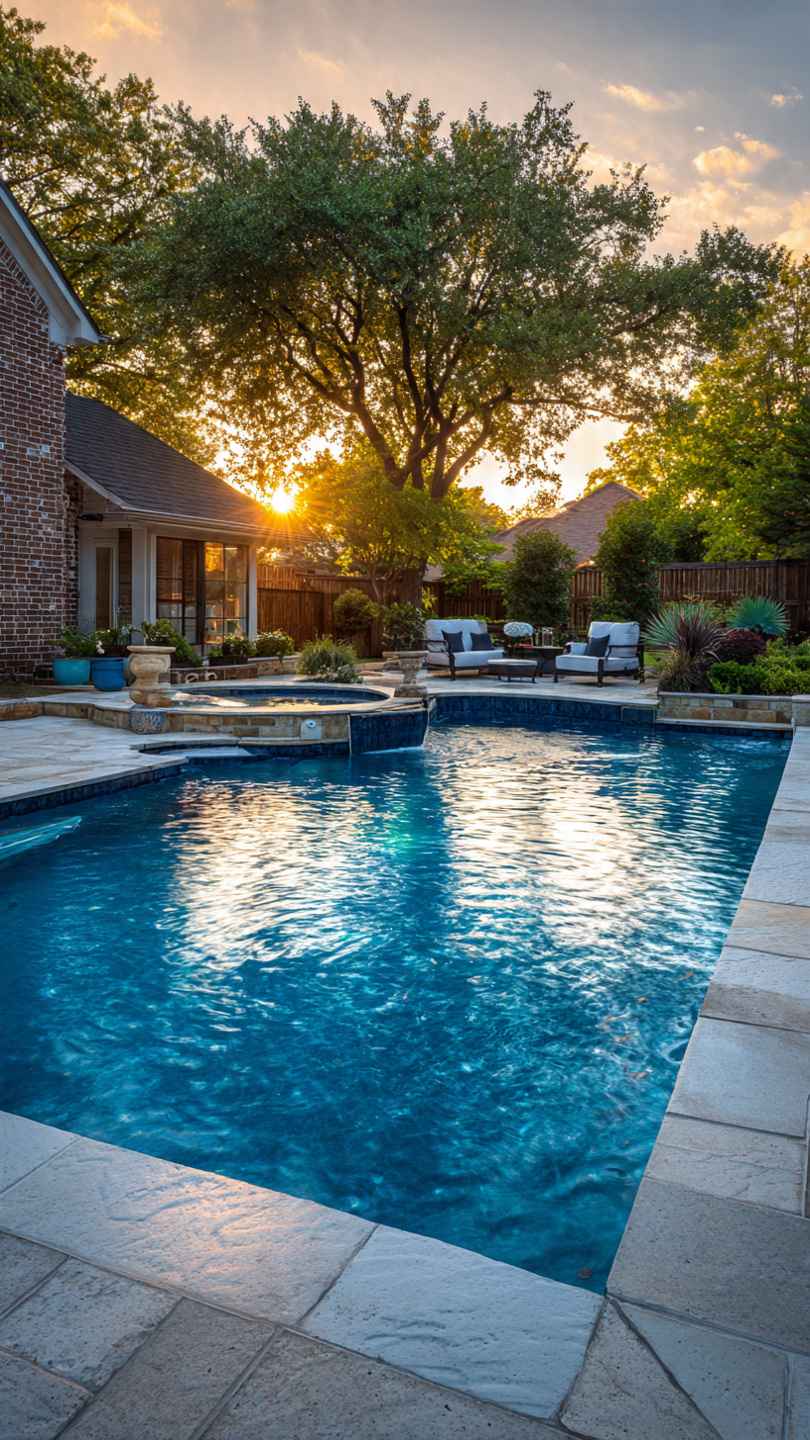
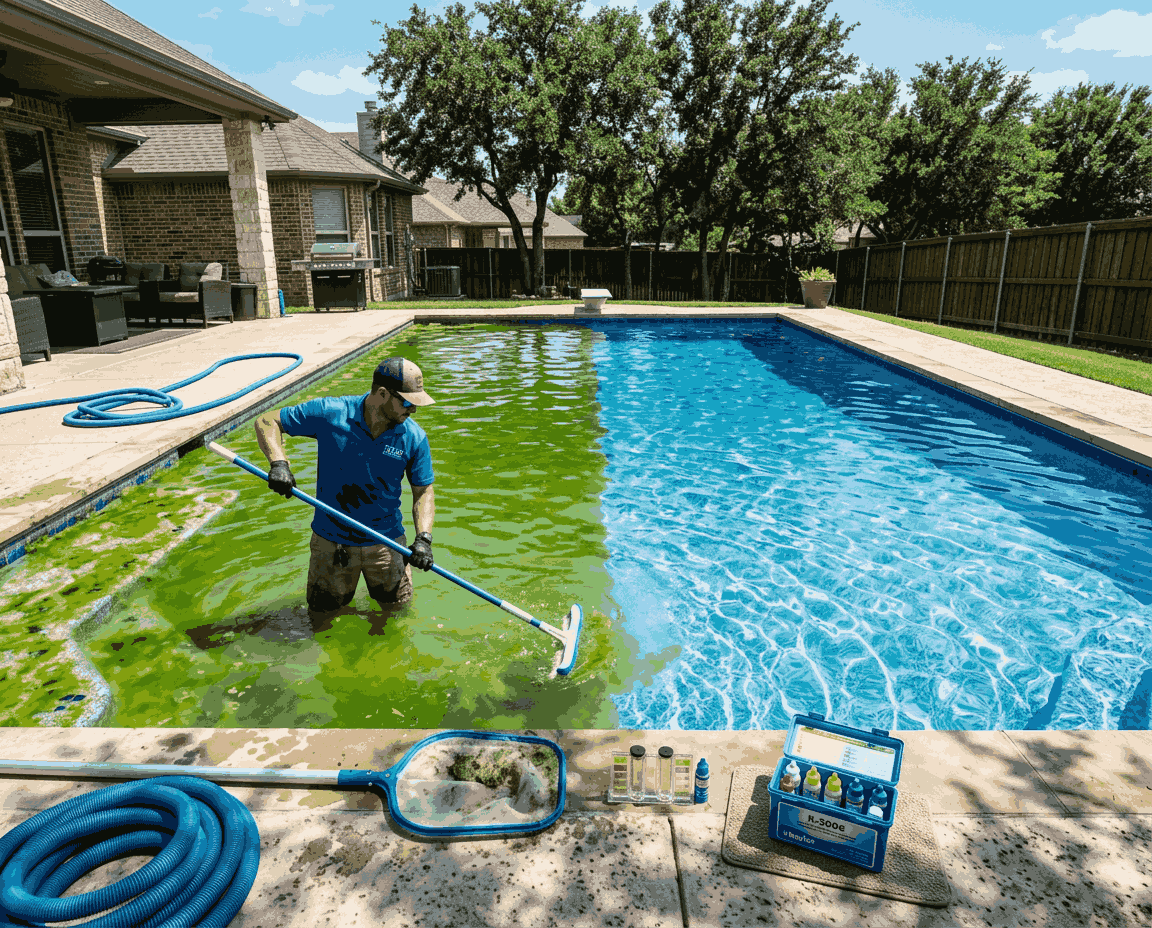
Lanthanum-based phosphate removers are the standard — products like PHOSfree, Natural Chemistry, and SeaKlear work by binding with phosphates, precipitating them out of solution, and letting your filter catch the result. Add the recommended dose, run the filter for 24 to 48 hours, and expect temporary cloudiness as the treatment works — that’s normal. Clean the filter after 24 hours because it’ll be loaded with the precipitated phosphates. Retest after 48 to 72 hours.
For light levels of 100 to 300 ppb, a standard dose handles it. For 300 to 500 ppb, increase to 1.5 times the recommended amount. Above 500 ppb, use the maximum dose and plan for a repeat treatment if levels don’t drop below 300 ppb on the first round. For prevention, skim debris promptly, brush regularly, apply a preventive phosphate remover every 1 to 3 months, maintain landscaping away from the pool edge, and reduce fertilizer application near the pool area.
Our algae treatment guide covers how phosphate management fits into the broader algae prevention strategy. According to HomeAdvisor’s pool data, preventive phosphate treatment costs significantly less than recovering from an algae bloom that was fueled by high phosphates.
The Phosphate Debate — Do They Really Matter?
Some pool professionals argue that with sufficient chlorine, phosphates don’t matter. In controlled conditions, that’s technically true. But here’s PoolBurg’s position for DFW: our extreme summer heat already makes chlorine management a battle. Adding high phosphates in pool water tips the balance toward algae during any chlorine lapse — a missed service visit, a power outage, a heavy rain event, or just a hot weekend with lots of swimmers. It’s cheaper and easier to remove phosphates proactively than to fight persistent algae outbreaks that resist normal treatment. Phosphate management is insurance.
In DFW’s conditions, it’s smart, cost-effective protection. Our water chemistry guide covers how phosphate management integrates with the rest of your chemistry protocol. The U.S. Department of Energy notes that reducing biological growth factors like phosphates also reduces the overall chemical demand on a pool — meaning less chlorine consumed and lower ongoing treatment costs.
People Also Ask
What causes high phosphates in a pool?
Lawn fertilizer runoff, decomposing pollen and leaves, soil and dirt entering the water, sunscreen and body products, rainwater, and sometimes municipal fill water. DFW pools face above-average loading because of our heavy pollen seasons and landscaped yards.
Do phosphates cause algae in pools?
Phosphates don’t cause algae directly — they feed it. High phosphates in pool water give algae a food source that helps it grow faster than chlorine can kill it. Removing the food source makes algae prevention dramatically easier.
How do I lower phosphates in my pool?
Use a lanthanum-based phosphate remover like PHOSfree or Natural Chemistry. Add the recommended dose, run the filter 24 to 48 hours, clean the filter after 24 hours, and retest. For high levels, repeat treatment may be needed. Preventive doses every 1 to 3 months keep levels from spiking.
How often should I test for phosphates?
Quarterly at minimum. Also test after heavy rain, after pollen season, and whenever algae returns despite proper chlorine levels. Standard test kits don’t include phosphates — you need a specific phosphate test from a pool store or professional service.
Does pollen increase phosphates in pools?
Yes, significantly. Decomposing pollen is one of the largest phosphate sources for DFW pools from March through June. Cedar pollen from December through February contributes too. Our pollen guide covers the full impact and how to manage it.
Algae Keeps Coming Back? It Might Be Phosphates
PoolBurg tests phosphates in pool water quarterly, applies preventive treatment, and removes phosphates when levels spike. If your algae problem won’t quit despite good chlorine, contact PoolBurg for a phosphate test and targeted treatment. We’ll find the food source and cut it off.