
Pollen in pool water is one of those DFW problems that people in other parts of the country don’t fully appreciate. North Texas has one of the most aggressive pollen seasons anywhere — and pool owners deal with not one but two major waves every year. That yellow-green film coating your water surface, the skimmer baskets overflowing overnight, the filter pressure climbing faster than you can keep up — that’s all pollen.
And if you don’t manage it properly, pollen in pool water leads straight to algae outbreaks, equipment strain, and chemistry chaos. Here’s your pollen season pool care survival plan for DFW.
DFW’s Pollen Calendar and What It Does to Your Pool
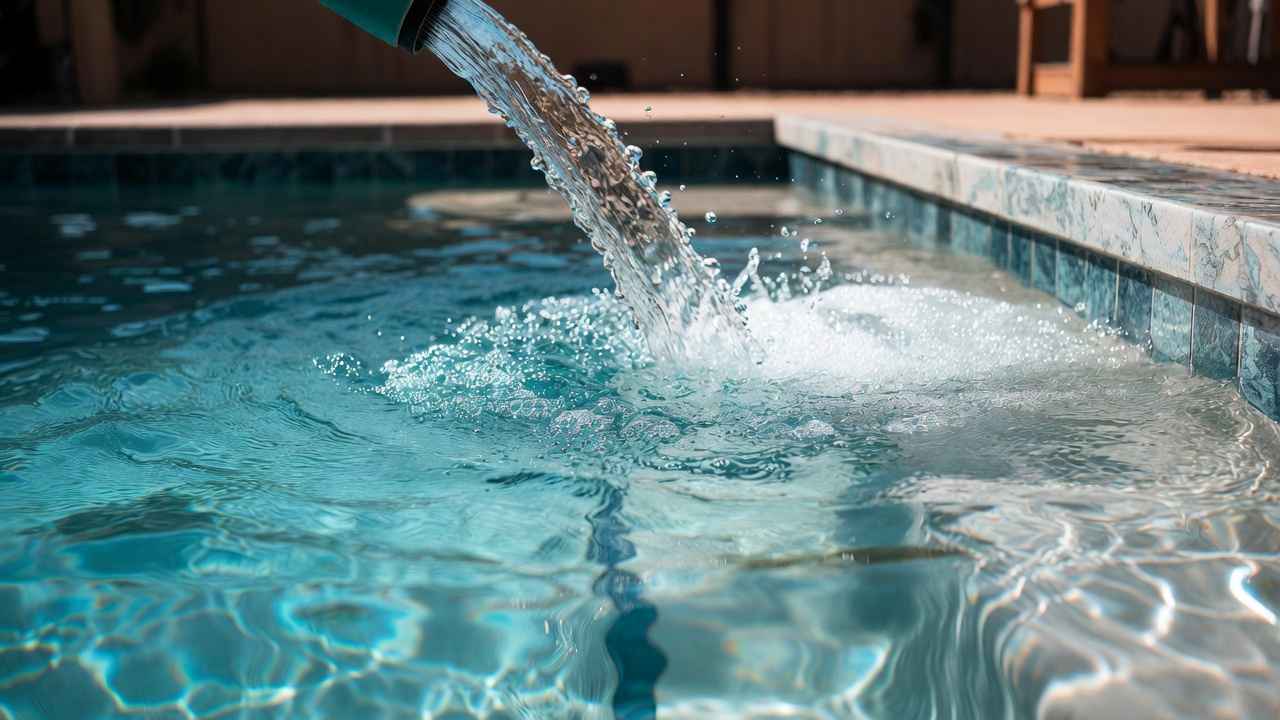
Cedar pollen pool DFW season hits December through February. The famous “cedar fever” comes from Ashe juniper trees west of the Metroplex, and the pollen clouds are massive. It creates a yellow film on the water surface and fills skimmer baskets overnight. Most people know cedar season for the allergies — but it’s destroying pool filters at the same time. Cities closest to the Cross Timbers ecosystem — Southlake, Grapevine, and Keller — get hit the hardest. The Texas Department of Agriculture tracks pollen seasons across the state, and DFW consistently ranks among the highest pollen-producing regions.
Then oak pollen rolls in March through May. Live oaks, post oaks, and red oaks dump green-yellow catkins that clog skimmers and coat the waterline. Neighborhoods with mature tree canopies across Plano, Garland, and Carrollton get buried. Grass pollen follows from April through June — Bermuda and other lawn grasses release pollen that’s less visible but still impacts pool chemistry by introducing phosphates. According to the Asthma and Allergy Foundation of America, the DFW metro regularly ranks among the worst cities in the country for spring allergies — and what’s bad for sinuses is equally bad for pool water.
What Pollen in Pool Water Actually Does
Pollen clogs skimmer baskets and pump baskets in hours, not days. It overwhelms filters so pressure rises rapidly. It introduces massive phosphate loads — and phosphates are direct algae food. It creates organic demand on chlorine because pollen is organic matter that consumes sanitizer. That yellow-green surface film means the skimmer can’t keep up. And the pollen oils create a sticky ring at the waterline that becomes permanent staining if you don’t clean it regularly. Our algae treatment guide covers what happens when pollen-driven phosphates feed an algae bloom. The Pool & Hot Tub Alliance identifies organic debris loading from pollen as a leading cause of seasonal algae problems in warm-climate pools.
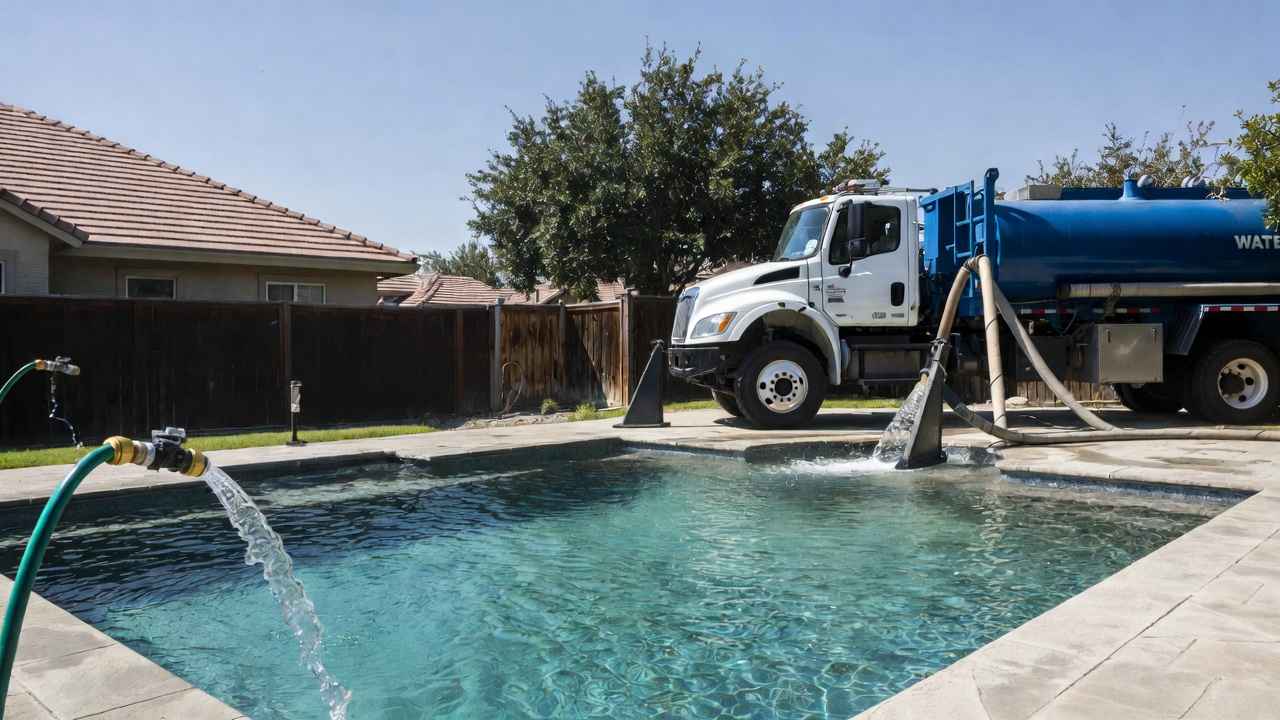


Pollen Season Pool Care Protocol for DFW
Skim and empty baskets daily. During peak pollen in pool season, even with professional service, daily surface skimming helps. Skimmer baskets will fill up overnight — empty them every morning. Check the pump basket every other day.
Increase pump run time. Add 2 to 3 extra hours during peak pollen weeks. More filtration time means more pollen captured. If you have a variable speed pump, add a medium-speed cycle specifically for extra surface skimming action. Our pump run time guide covers seasonal schedule adjustments.
Clean the filter more frequently. Backwash sand filters every 3 to 5 days instead of weekly. Rinse cartridge filters every 5 to 7 days instead of bi-weekly. Your filter is working overtime during pollen season — help it out.
Boost chlorine and treat phosphates. Maintain free chlorine at the high end of your range — 3 to 4 ppm. Consider a mid-week shock during the worst pollen weeks because the organic load eats chlorine fast. Apply a phosphate remover at the beginning and middle of pollen season. Pollen is one of the single largest phosphate sources for DFW pools. Our shock treatment guide has the dosing details.
Clean the waterline weekly. Pollen oils create a sticky ring. Use a tile or surface cleaner and a brush. If you let it sit, it becomes a permanent stain. A surface leaf net ($50 to $150) over the pool is also surprisingly effective at catching pollen before it sinks — just remove and clean it daily.
Equipment Strain to Watch For During Pollen in Pool Season
Filter pressure rising faster than normal means it’s time to clean more frequently. Pump basket overflowing with debris means you need to empty more often. Pump losing prime could mean clogged baskets restricting flow. Chemical demand spiking means pollen is consuming your chlorine faster than you’re adding it. Cloudy water despite treatment usually means the filter is overwhelmed — consider running the pump continuously until conditions improve. According to the U.S. Department of Energy, maintaining clean filters and proper pump scheduling during high-debris periods keeps your system running efficiently instead of straining against restrictions.
People Also Ask
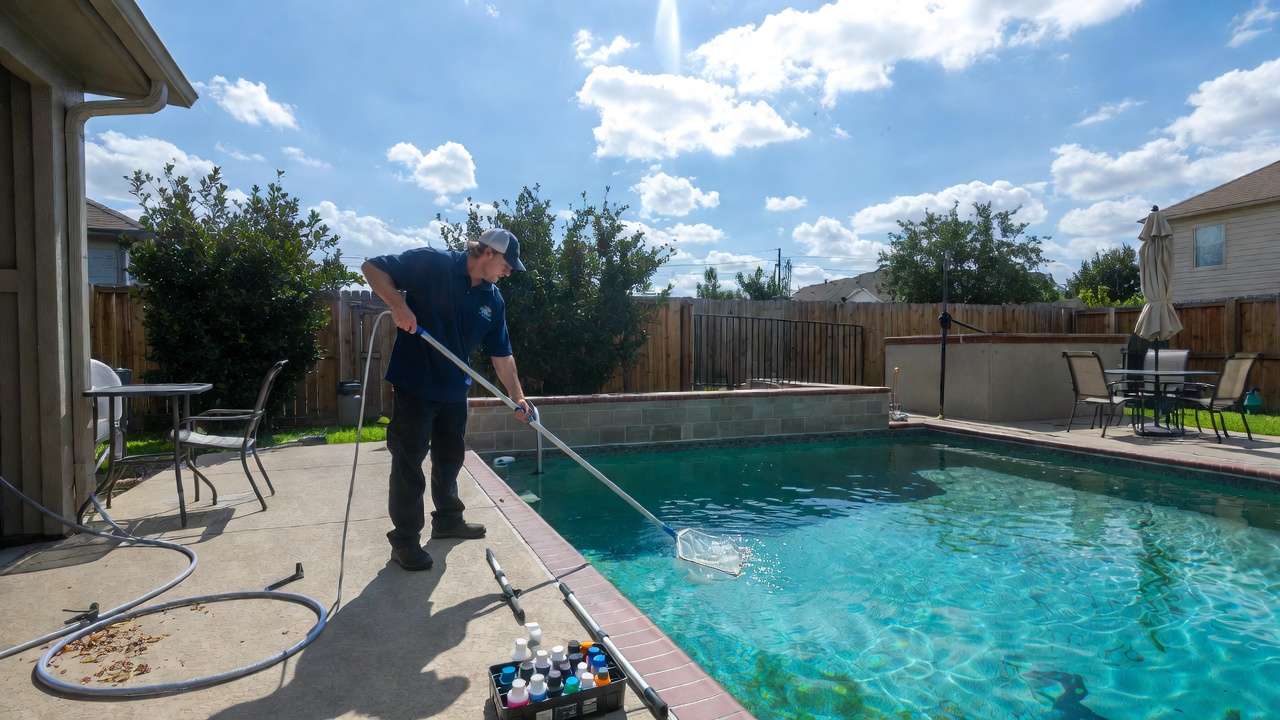
How do I get pollen out of my pool?
Skim the surface frequently, empty baskets daily, increase pump run time, and clean the filter more often. A surface leaf net catches pollen before it sinks. Chemical treatment alone won’t remove pollen — mechanical filtration is the primary solution.
Does pollen cause algae in pools?
Yes, indirectly. Pollen introduces phosphates, which are a primary food source for algae. It also creates organic chlorine demand, reducing the sanitizer available to prevent algae growth. Managing phosphates during pollen season is critical.
Does cedar pollen pool DFW damage cause real problems?
Absolutely. Cedar pollen clogs filters, spikes phosphates, overwhelms skimmers, and creates waterline staining. Western DFW cities near the Cross Timbers get the worst of it from December through February.
Should I increase pool maintenance during pollen season?
Yes. More skimming, more basket cleaning, more filter maintenance, higher chlorine levels, and phosphate treatment. Pollen season pool care in DFW requires stepping up every aspect of maintenance to keep water clear. Our maintenance tips page covers seasonal adjustments.
Can pollen damage my pool filter?
Pollen itself doesn’t damage the filter media, but the rapid pressure buildup from heavy pollen loading strains the system. If you don’t clean the filter frequently enough during pollen season, the pump works harder, efficiency drops, and filter media wears out faster.
PoolBurg Adjusts for Every DFW Pollen Season
We proactively increase cleaning frequency, chemical attention, and filter maintenance during DFW’s brutal pollen weeks. If pollen in pool water has you overwhelmed, contact PoolBurg and let us handle the heavy lifting so your pool stays clear through every season.