If you walked out to your backyard in DFW this morning and thought your pool had turned into a giant bowl of split pea soup, you aren’t alone. This April 2026, we are seeing one of the most aggressive oak pollen seasons in North Texas history. Between the 36.1% spike in regular gas prices and diesel sitting at $5.11 due to the ongoing Iran war disruptions, your pool is already an expensive “unpaid roommate.”
When you add a heavy layer of pollen in pool water, that roommate starts eating your grocery budget too. The “unvarnished truth” is that spring pool problems Texas homeowners face are often won or lost based on how you handle this yellow dust before it sinks.
DFW Pollen Season Is a Pool Maintenance Nightmare — Here’s How to Win
North Texas is unique because we don’t just have a “pollen season”; we have a year-round botanical siege. Dealing with pollen in pool water is a multi-front war. Right now, the yellow-green film on your surface is more than just an eyesore—it is a concentrated load of organic matter that is actively neutralizing your expensive chlorine. Without a strict game plan, that pollen in pool dust will clog your skimmers, spike your phosphates, and lead to an algae bloom that costs $500 to clean up.
DFW’s Pollen Calendar and How It Affects Your Pool
To beat spring pool problems Texas throws at you, you have to know which tree is attacking your water.
Cedar/Juniper Pollen (December–February)
Known for the dreaded “cedar fever,” the cedar pollen pool DFW season hits earlier than most people expect. Massive clouds from Ashe juniper trees west of the Metroplex fill skimmer baskets overnight. Cities like Keller and Southlake get hit the hardest. Because this happens in winter when many homeowners reduce pump run times, the fine cedar dust often settles and stains the plaster before you even realize it’s there.
Oak Pollen (March–May)
This is the current “Big One.” Mature neighborhoods in Plano and Garland are currently being buried by green-yellow catkins. This pollen in pool debris is heavy, oily, and sinks fast. If you don’t remove these clusters daily, they release tannins that turn your water a tea-colored brown.
Grass and Fall Pollen (April–November)
As oak fades, Bermuda grass takes over. While grass pollen is less visible, it is a primary driver of pool phosphate spikes. Later in the year, ragweed keeps the pressure on, ensuring there is almost never a true “off-season” for pollen in pool management in DFW.

What Pollen Does to Your Pool
When you see pollen in pool water, your filtration system is under maximum stress.
- Clogs Baskets in Hours: During a heavy oak drop, your skimmer baskets can go from empty to overflowing in six hours.
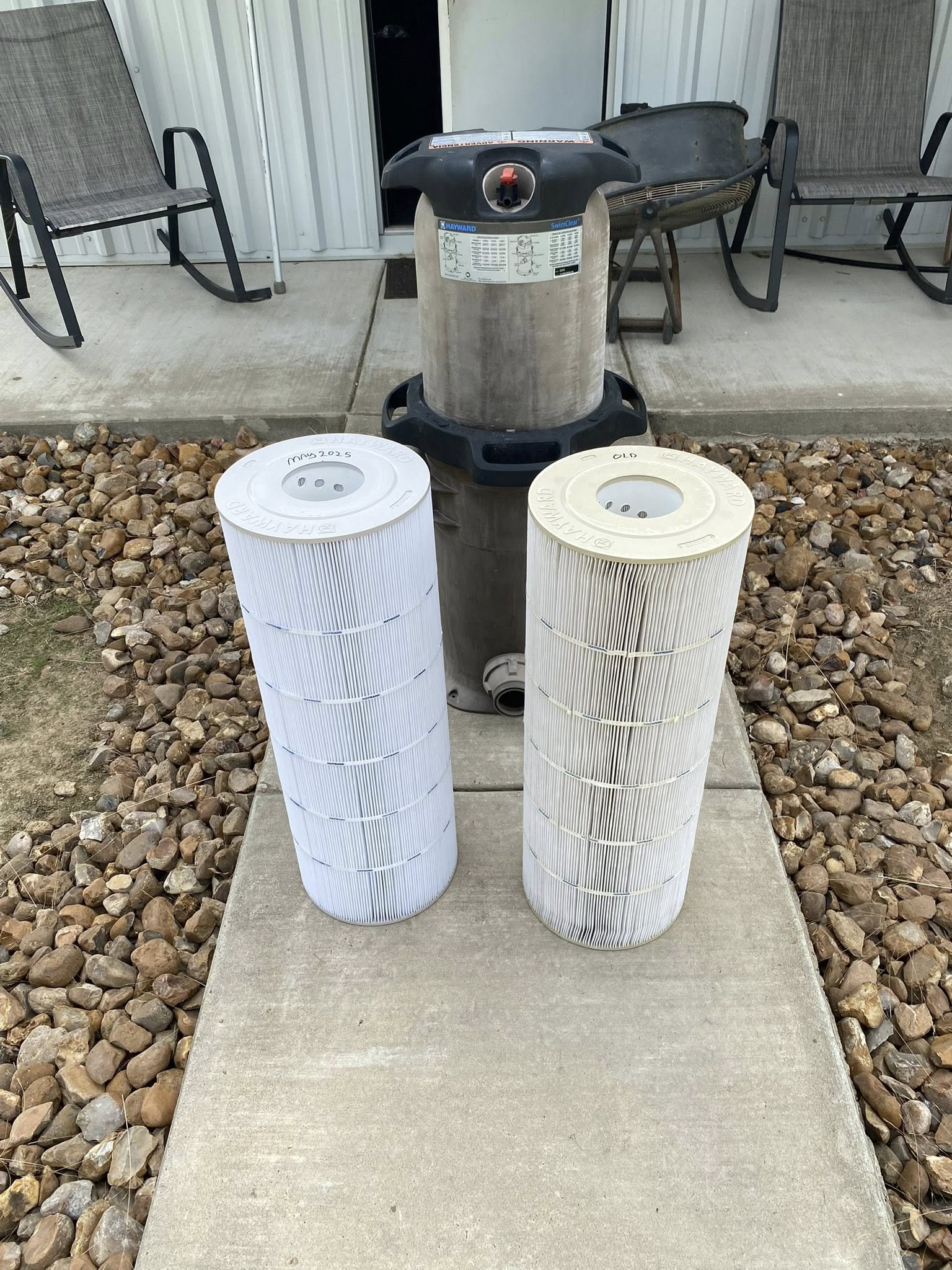
- Overwhelms Filters: Filter pressure rises rapidly. If your gauge shows an 8–10 PSI increase, your filter is “full” and needs a deep clean.
- Introduces Phosphates: Pollen is basically “algae food.” High phosphate levels make it impossible for chlorine to keep the water clear.
- Waterline Staining: The oils in the pollen create a sticky “scum line” that can become permanent if not brushed weekly.
Pollen Season Pool Maintenance Protocol for DFW
To survive the current onslaught of pollen in pool dust, you need to step up your routine.
- Daily Skimming: Even with a professional service, you should manually skim the surface every morning. Removing the pollen in pool film before it sinks saves your filter.
- Increase Pump Run Time: Add 2–3 extra hours to your schedule this month. According to Energy.gov efficiency standards, more circulation is the only way to catch fine organic debris.
- Clean the Waterline: Use a tile brush once a week to break up the oily ring.
- Apply Phosphate Remover: Since pollen is the #1 source of phosphates in North Texas, using a preventative dose now is cheap insurance.
- Use a Leaf Net: A simple surface net can catch up to 90% of oak catkins before they ever enter the water.
Pollen Season Equipment Strain — What to Watch For
Our 2026 data shows that spring pool problems Texas homeowners ignore turn into $1,000 equipment repairs by July. Watch your filter pressure gauge religiously. If the pressure stays high, your pump has to work harder, which can lead to a burned-out motor. If you notice your chemical demand is “insatiable,” it’s likely because the pollen in pool load is consuming your sanitizer faster than you can add it.

People Also Ask
How do I get pollen out of my pool?
A fine-mesh skimmer net and increased filtration are the only ways. Chemicals won’t “dissolve” pollen; it must be physically removed.
Does pollen cause algae?
Indirectly, yes. It provides the nutrients (phosphates) and consumes the chlorine needed to kill algae.
Does cedar pollen affect pools in DFW?
Absolutely. Cedar pollen pool DFW surges in winter can saturate filters and cause “ghost” cloudiness that appears the moment the water warms up.
Drowning in pollen?
PoolBurg adjusts our service intensity for every North Texas season. We know exactly how to handle the massive pollen in pool spikes in Frisco and Plano. At PoolBurg, we are the “guardians of your hydraulic health,” ensuring your water stays “safe and blue” no matter what the trees are doing. According to the NTMWD, our local water is already a challenge—don’t let the pollen win.