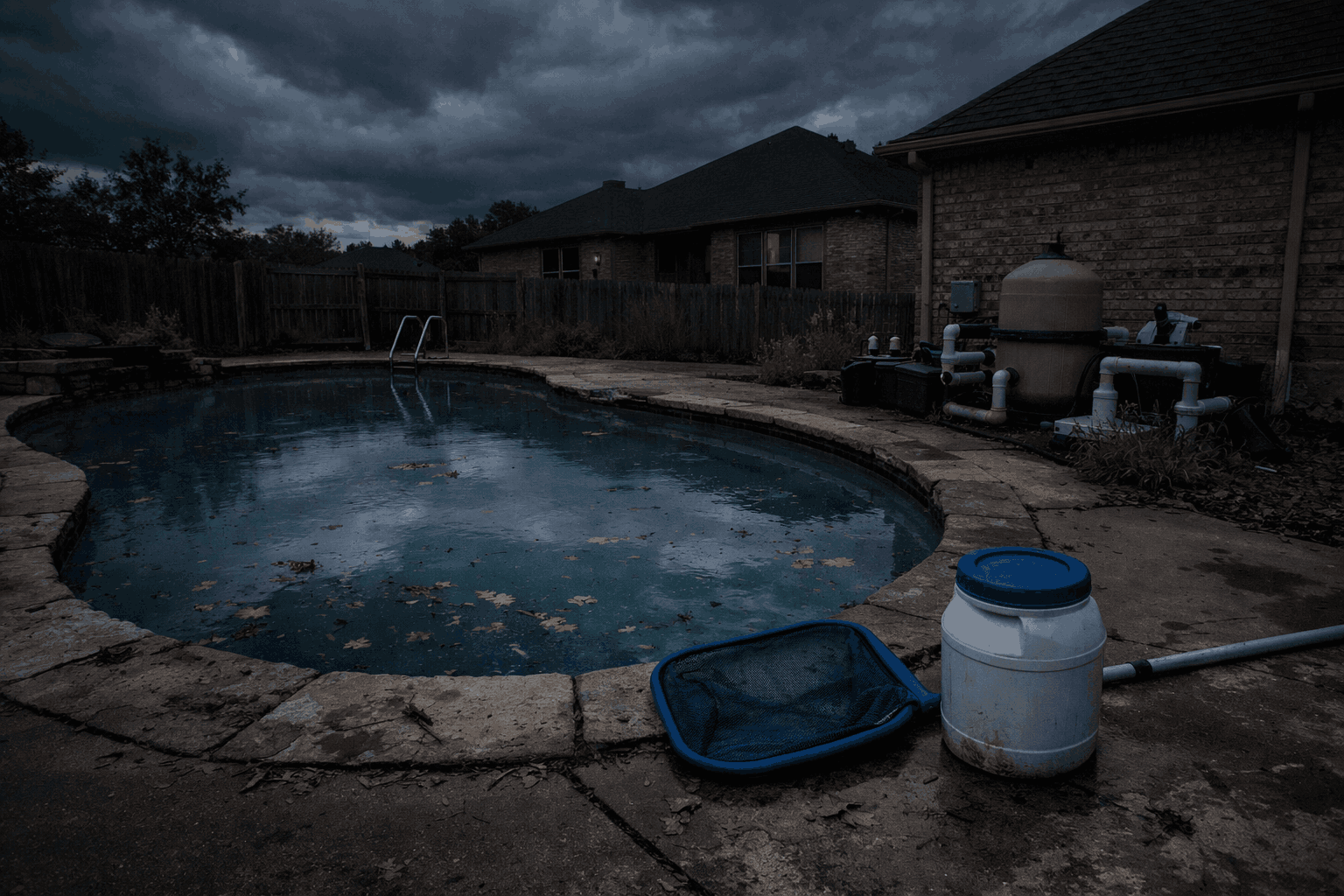
Your pool after power outage is on a timer. The moment power drops, your pump stops, your salt system stops producing chlorine, and your filter stops cleaning. DFW deals with outages from summer storms, ice events, grid strain during heatwaves, and the kind of multi-day disasters we all remember from Winter Storm Uri. A few hours is no big deal. But once you cross the 24-hour mark, your pool starts sliding. Knowing what to do with pool after power outage situations — both during and after — is the difference between a quick recovery and an expensive mess.
What Happens to Your Pool After Power Outage Hour by Hour
0 to 6 hours: minimal impact. Chemistry holds, water stays clear. In summer, chlorine is still being consumed by UV and heat but it’s not being replenished. No immediate concern.
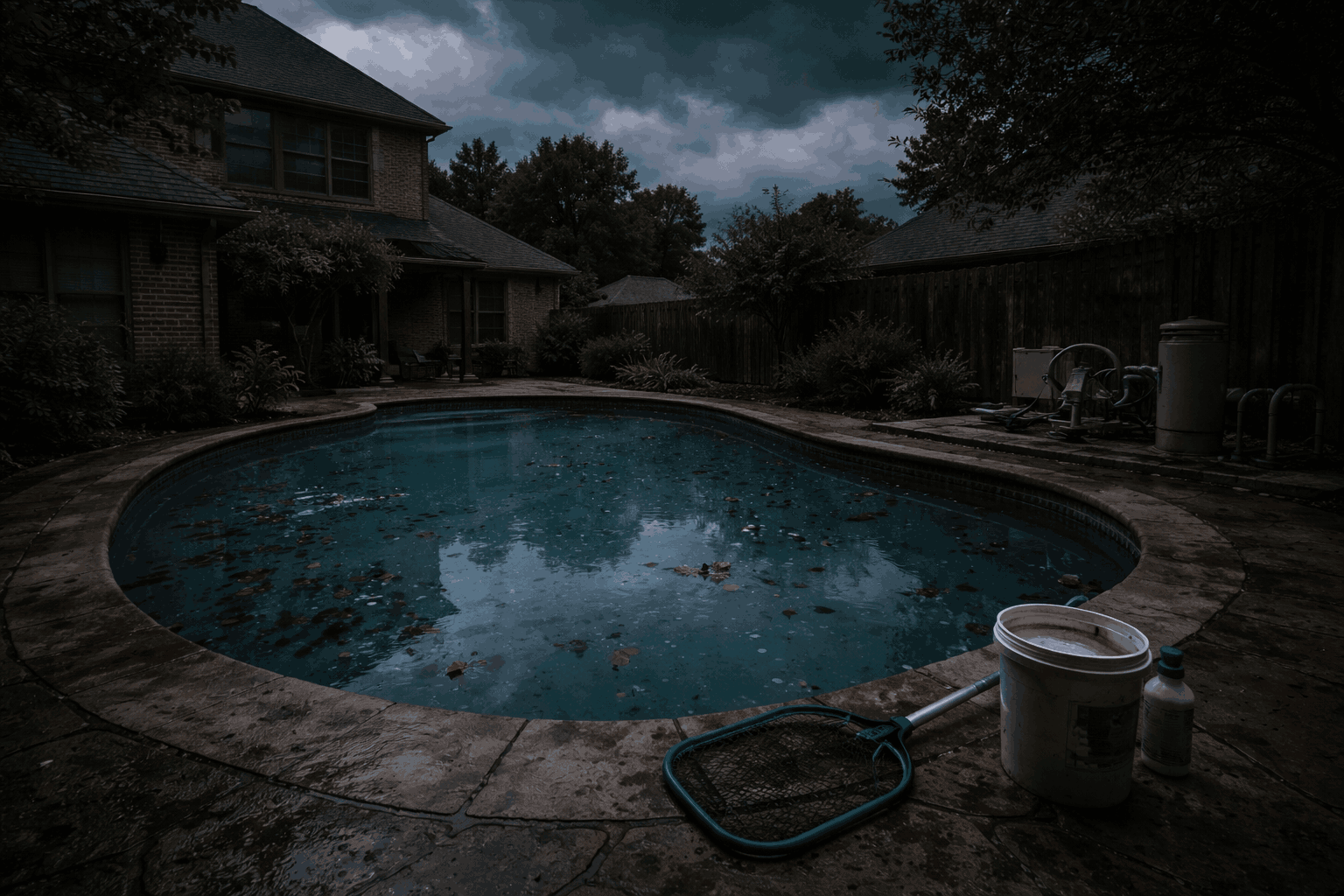
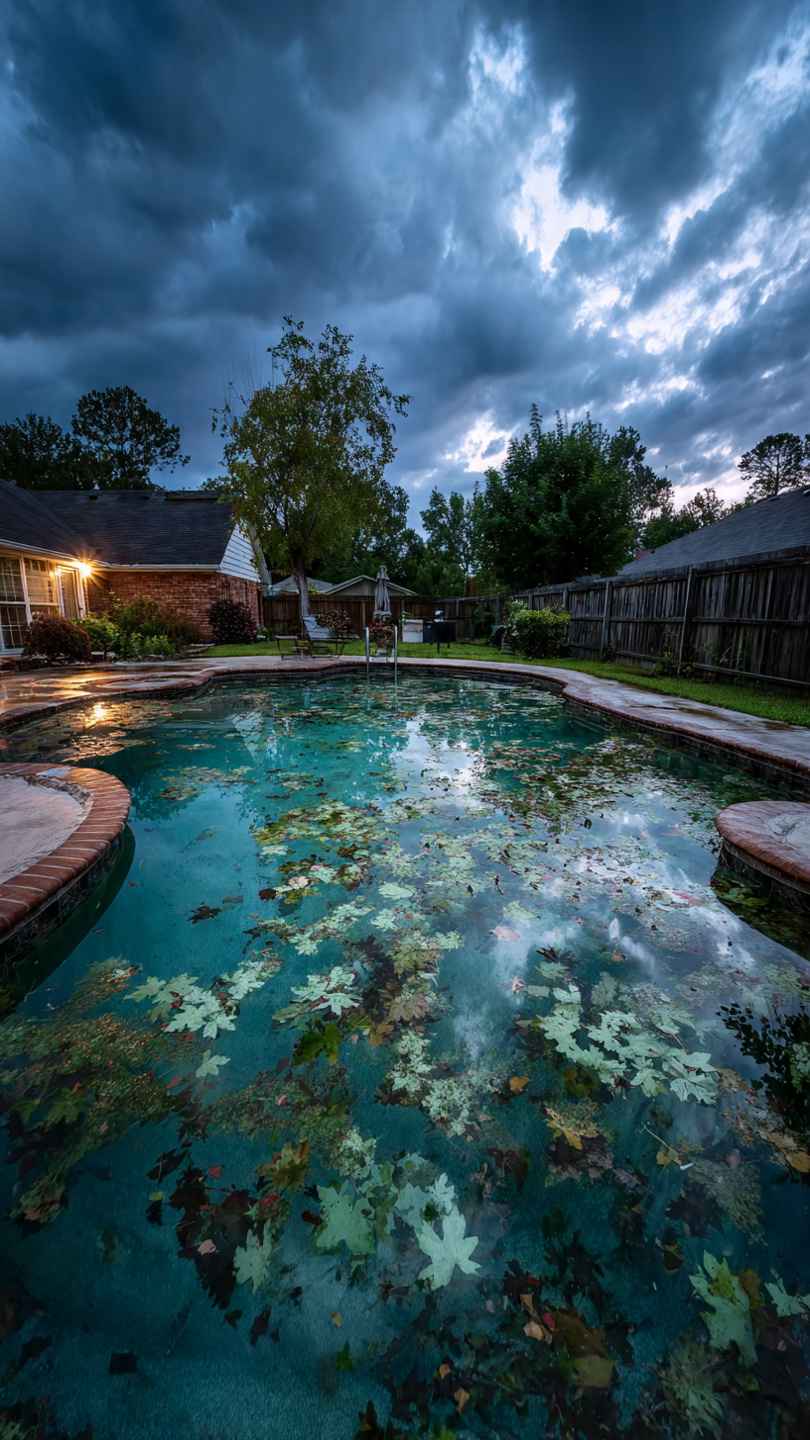
6 to 24 hours: chemistry starts drifting. Chlorine drops without the salt system or chemical feeder running. No filtration means particles are settling and surface debris is piling up. In 100°F+ DFW summer heat, chemistry shifts noticeably in this window.
24 to 48 hours: visible water quality decline. Water may start clouding. Algae spores in warm, unchlorinated water begin establishing. Stagnant water sits in equipment and plumbing. The CDC warns that pools without adequate sanitizer levels become potential health hazards, especially in warm conditions.
48 to 72+ hours: your pool can turn green. In a DFW summer, this is almost guaranteed without circulation and chlorine. Mosquito risk increases with stagnant water. Equipment sitting without flow can develop seal dryness issues. Our algae treatment guide covers recovery once you’re already green.
Extended outage during a freeze: this is the emergency scenario. Water in equipment will freeze if the pump isn’t running. Cracked pump housings, burst pipes, damaged heaters — the National Weather Service issues freeze warnings regularly for DFW. Our freeze protection guide and winterization guide cover the full emergency protocol.
What to Do During a Pool Pump Power Outage
Short outage (back within hours): do nothing. Your pool is fine. When power returns, verify the pump restarts automatically through your timer or automation. Check that the salt system is producing if you have one.
Extended outage (12+ hours in summer): manually add liquid chlorine to the pool — no pump needed, just pour it in and brush to distribute. One gallon of liquid chlorine per 10,000 gallons of pool water is a rough daily dose. Skim surface debris by hand. If you have a generator, prioritize the pool pump. Our shock treatment guide has precise dosing if you want to be exact.
Extended outage during a freeze: immediately drain the pump, filter, and heater by opening all drain plugs. Add pool antifreeze to plumbing lines if you have it. Cover exposed equipment with blankets or insulation. Every minute counts when temperatures are below freezing and the pump isn’t running.
Multi-day outage (3+ days): add chlorine manually every day. Skim and brush by hand. Keep skimmer and pump baskets clear so the pump can prime immediately when power returns. If the pool turns green, don’t panic — professional green pool recovery is available once power is back.

What to Do When Power Returns to Your Pool After Power Outage
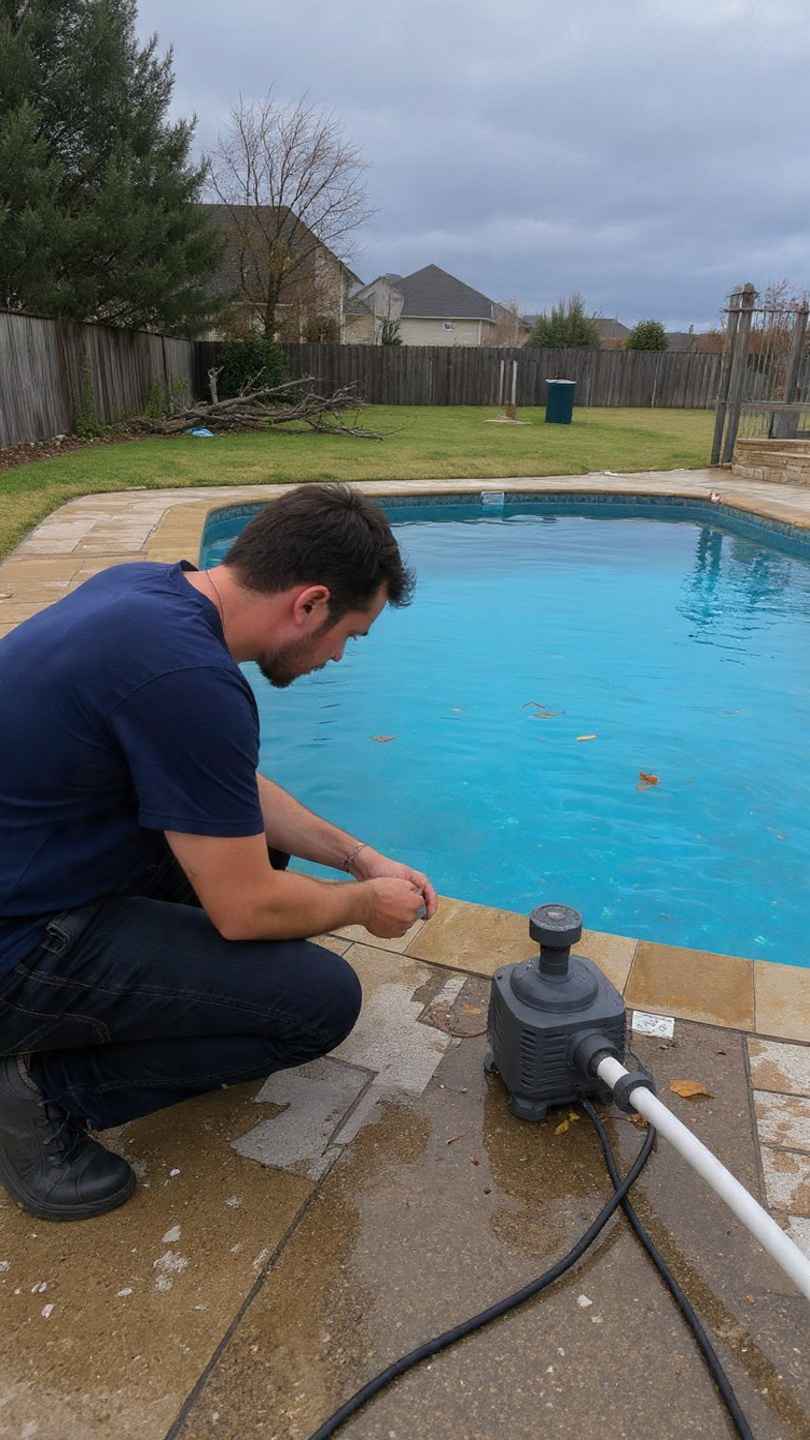
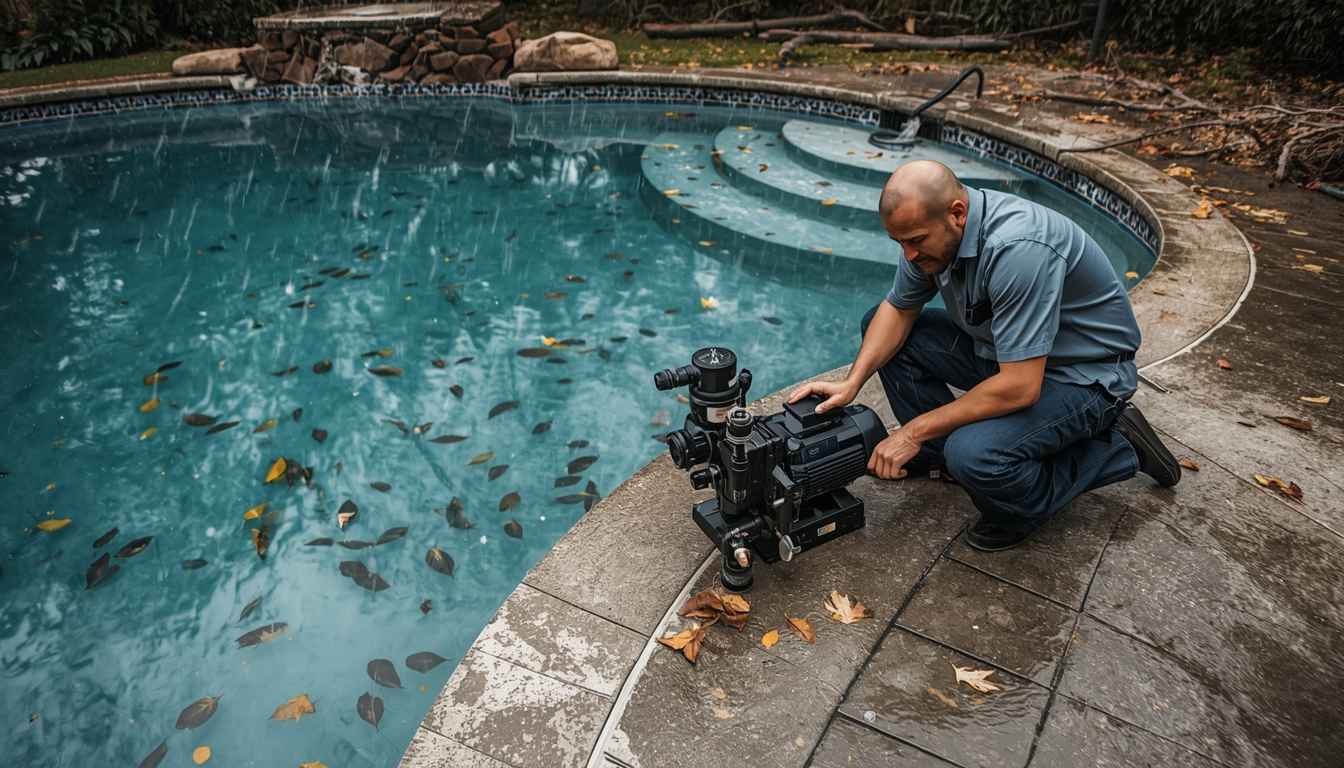
Verify the pump starts and runs normally. Listen for unusual sounds and check for leaks — especially after a freeze. Confirm the pump primes and water flows. Check the heater, salt system, and automation schedules — a pool pump power outage often resets timers and programming. The Pool & Hot Tub Alliance recommends a full equipment check after any extended power interruption.
Test water chemistry immediately. Chlorine will almost certainly be low — shock the pool. pH may have drifted. Salt level may need checking if heavy rain accompanied the storm. Run the pump continuously for 24 to 48 hours to restore full circulation and filtration. Clean the filter after 24 hours of continuous running — it’ll be loaded. Retest chemistry after 48 hours and make final adjustments. Our water testing guide covers every target range.
Generator Options for DFW Pool Owners
A pool pump draws 1,000 to 2,500 watts depending on the type. A portable generator ($400 to $1,500) in the 3,500 to 5,000 watt range can run most pool pumps. Keep fuel on hand — DFW gas stations sell out fast during storms. A whole-home standby generator ($5,000 to $15,000+ installed) runs on natural gas and automatically powers everything including pool equipment. Battery backup systems like Tesla Powerwall or Generac PWRcell ($10,000 to $20,000 installed) can power the pump for limited hours.
According to HomeAdvisor’s data, homeowners with backup power report significantly less pool damage during extended outage events. Our electrical repair guide covers safe generator connections for pool equipment. The U.S. Department of Energy notes that variable speed pumps draw far less wattage, making them easier to run on generators and battery backups.
People Also Ask
What should I do with my pool during a power outage?
For short outages, nothing. For 12+ hours in summer, add liquid chlorine manually and skim by hand. During a freeze outage, drain equipment immediately to prevent cracking. Keep baskets clear so the pump can prime when power returns.
How long can a pool go without a pump running?
In DFW summer, 24 to 48 hours before water quality visibly declines. A pool can turn green in 48 to 72 hours without circulation and chlorine. In cooler months, you have 3 to 5 days. During a freeze, equipment damage can happen in hours.
Will my pool turn green during a power outage?
In summer, yes — within 48 to 72 hours without circulation or chlorine. Adding liquid chlorine manually during the outage is the best prevention. In cooler months, you have more time before algae becomes a problem.
Can I run my pool pump on a generator?
Yes. Most pool pumps need 1,000 to 2,500 watts. A 3,500 to 5,000 watt portable generator handles most pumps. Variable speed pumps at low RPM draw much less, making them easier to run on smaller generators or battery backups.
Should I add chlorine during a power outage?
Yes, if the outage lasts more than 12 hours in summer. Pour liquid chlorine directly into the pool and brush to distribute. Roughly one gallon per 10,000 gallons daily keeps the water sanitized until the pump is back online.
Just Got Through a Power Outage? Call PoolBurg
Your pool after power outage needs a proper checkup — equipment inspection, chemistry recovery, and filter cleaning. Contact PoolBurg for post-outage recovery service and we’ll get your pool back to normal fast. Don’t wait for the water to tell you something’s wrong.