Pool deck repair is something nearly every DFW pool owner deals with at some point, and most of them are convinced their contractor did something wrong. Here’s the thing — in most cases, the construction was fine. It’s the dirt underneath that’s the problem. North Texas sits on expansive clay soil that swells when it rains and shrinks when it dries, and that constant push-and-pull creates enormous stress on rigid concrete.
Pool deck cracks, separation from the pool edge, and sections that lift or sink are all symptoms of the same underlying cause. If you’re staring at cracks around your pool right now, you’re not alone — and this guide covers everything from diagnosis to pool coping repair to full replacement options and costs.
Why Pool Deck Cracks Happen in North Texas — It’s the Soil
DFW’s expansive clay soil is the root cause of most pool deck cracks in the metroplex. When it rains, the clay absorbs water and swells — pushing your deck upward. During summer drought, the clay loses moisture and contracts — pulling support out from under the concrete and letting sections sink. This cycle repeats every single year, and each round makes existing cracks worse while creating new ones. The Texas A&M AgriLife Extension has documented how North Texas clay creates some of the most challenging foundation and hardscape conditions in the country. Your pool deck is no exception.
Common Pool Deck Problems That Require Pool Deck Repair in DFW
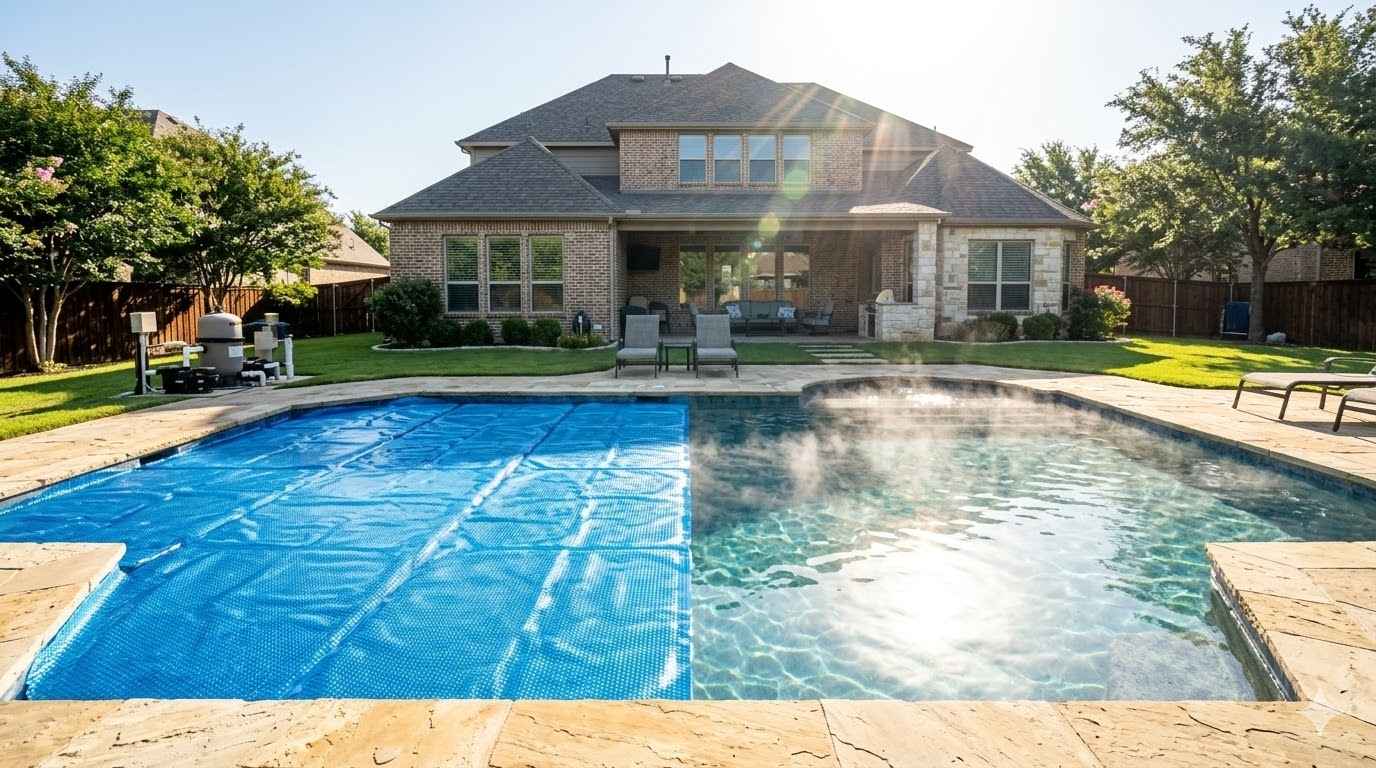
Hairline Surface Cracks
These are cosmetic, not structural — and they show up in virtually every concrete pool deck over time. They’re caused by normal concrete curing and minor surface stress. While they don’t threaten the deck’s integrity, they should be sealed to prevent water from getting in and accelerating deterioration. Simple pool deck repair with a quality concrete sealer handles these.
Structural Pool Deck Cracks — Wider Than a Quarter Inch
When pool deck cracks exceed a quarter inch in width, you’re looking at soil movement underneath. These aren’t just cosmetic — they indicate the deck is shifting, and the crack will continue to widen if the underlying soil issue isn’t addressed. A professional assessment determines whether the movement is ongoing or has stabilized.
Deck Separation From Pool Coping
That gap between your pool deck and the pool edge is one of the most common pool deck repair issues in DFW. Water intrudes through the gap, erodes the soil underneath the deck, and accelerates further separation. This is extremely common in DFW pools over ten years old and needs to be sealed with proper mastic or deck-o-seal to prevent undermining the deck support.
Deck Lifting or Heaving
One section of deck rising above the adjacent section creates a tripping hazard that’s both dangerous and ugly. It’s caused by clay soil swelling underneath — usually after extended wet periods or heavy rain. This type of movement is common in spring after North Texas storm seasons.
Deck Sinking or Settling
The opposite problem — sections dropping below grade, creating puddles, drainage issues, and an uneven walking surface. Settling happens when drought conditions cause the clay to shrink and lose volume underneath the concrete. It’s one of the most common reasons for pool deck repair calls during and after DFW’s hot, dry summers.
Surface Deterioration
Spalling, scaling, and roughness from UV exposure and chemical splash are surface-level issues that make the deck look worn and feel uncomfortable underfoot. Texas sun accelerates surface degradation faster than cooler climates, especially on decks that weren’t sealed after installation.
Pool Coping Repair Problems in North Texas
Coping Separation From the Pool Beam
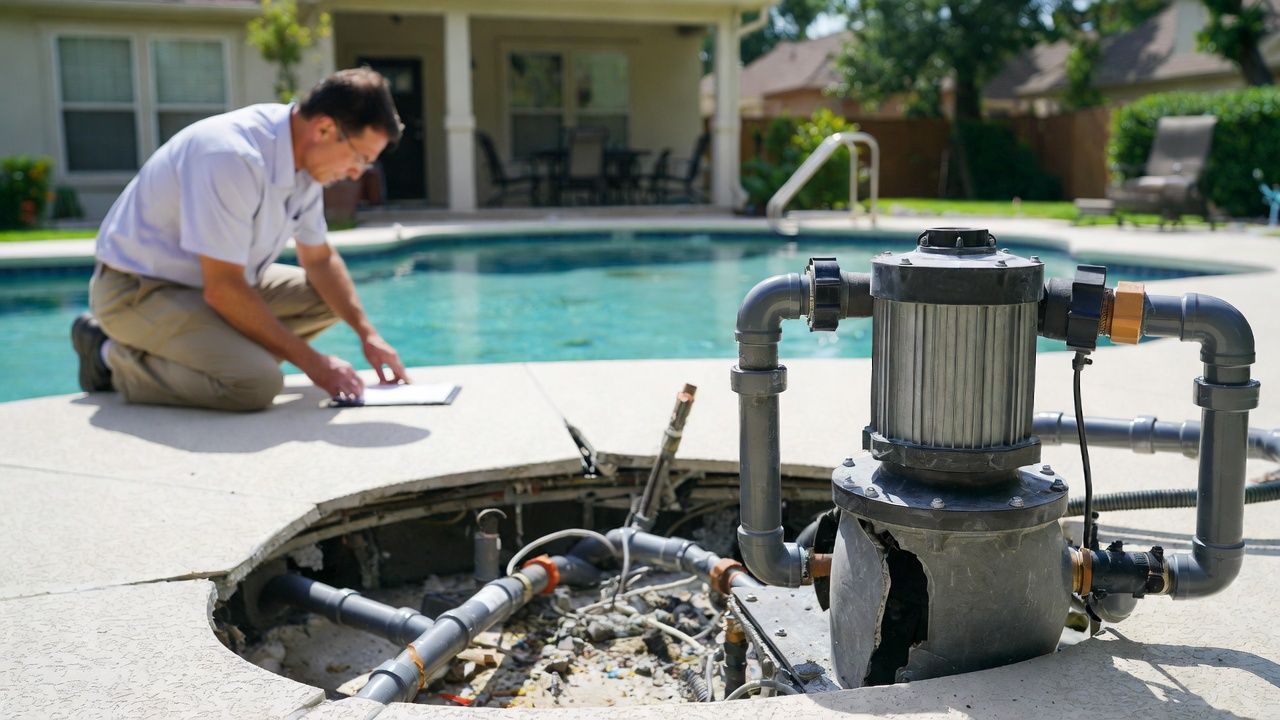
When coping stones or poured coping pulls away from the pool structure, water gets behind it and begins eroding the bond beam. This is a serious issue that accelerates over time if not addressed. Pool coping repair for separation involves removing the affected section, preparing the surface, and resetting the coping with proper adhesive and waterproofing.
Cracked or Broken Coping Stones
Soil movement, heavy impact, and freeze damage can all crack or break individual coping stones. The good news: individual stones can usually be replaced without redoing the entire coping run. Your pool coping repair tech matches the replacement stone to your existing material as closely as possible.
Coping Material Options for Replacement
If you’re replacing coping, here are your options in the DFW market. Poured concrete is the cheapest to repair and is original on many DFW pools — functional but limited aesthetically. Natural stone like travertine and limestone is popular in DFW renovations and looks beautiful but costs more. Precast concrete coping is the mid-range option with many styles available. And brick coping gives a classic look that’s common in traditional DFW homes. Check our pool resurfacing page for more on renovation options.
Pool Deck Repair and Pool Coping Repair Costs in DFW
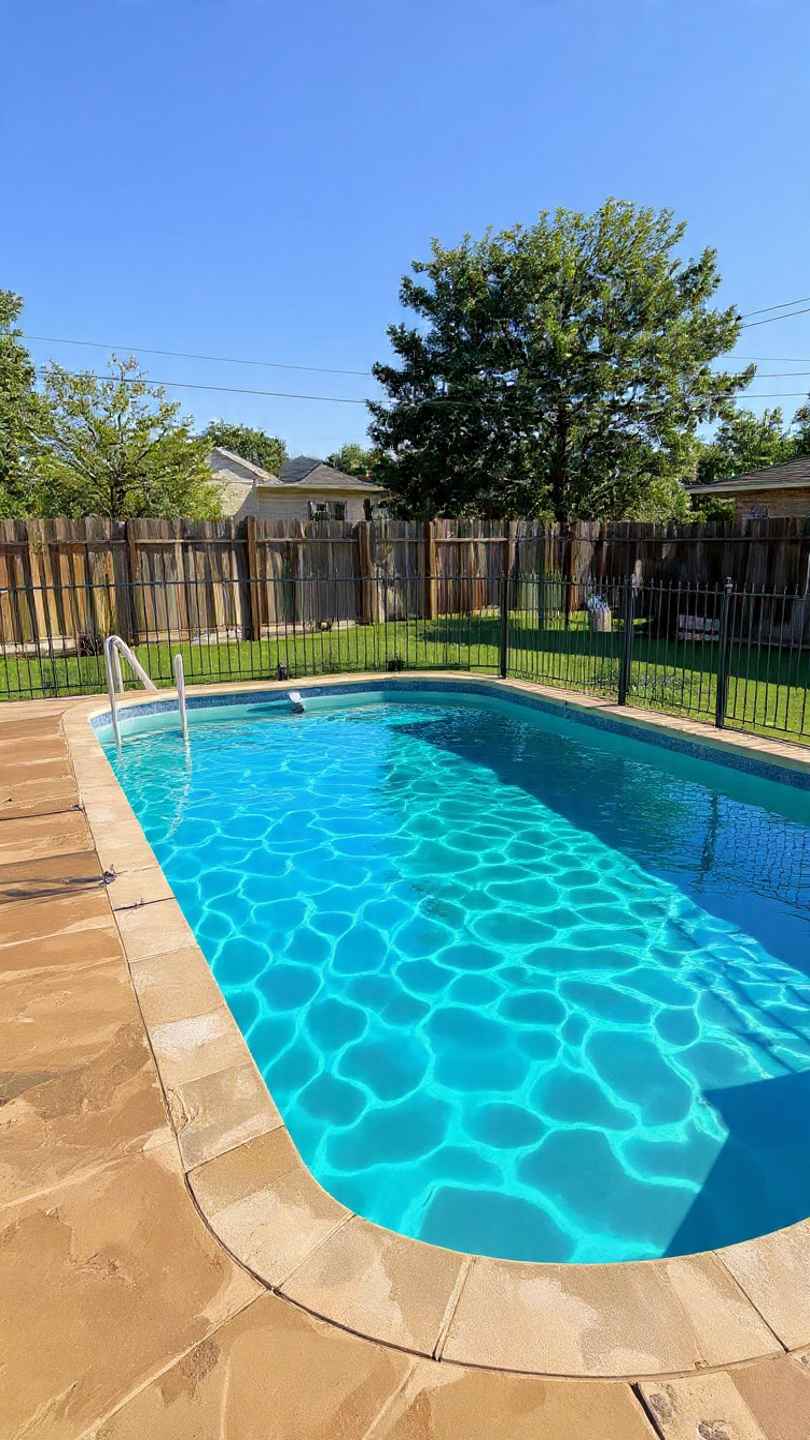
Here’s what pool deck repair and pool coping repair actually costs in the DFW market. Crack sealing and patching runs $200 to $800 depending on the number and severity of cracks. Deck leveling through mudjacking or polyurethane foam injection costs $500 to $2,000 — the International Association of Certified Home Inspectors recommends addressing settling early before it causes cascading damage. Individual coping stone replacement runs $300 to $1,000 per section.
Full coping replacement around the entire pool costs $2,000 to $8,000. Deck resurfacing with an overlay runs $3,000 to $10,000. Full deck replacement is the big one at $8,000 to $25,000 or more. And expansion joint repair or replacement runs $200 to $600.
Preventing Pool Deck Cracks and Damage in North Texas
You can’t stop DFW’s clay soil from moving, but you can minimize the damage it causes to your pool deck. Maintain consistent soil moisture around the pool during drought by running soaker hoses — the Foundation Performance Association recommends consistent watering to prevent extreme soil shrinkage. Ensure proper deck drainage so water flows away from the pool and house, not ponding against the deck. Seal cracks early before water penetration makes them worse.
Repair expansion joints before they fail completely — these joints are designed to absorb movement, but they deteriorate over time. And consider root barriers if large trees are near your pool deck, since aggressive root systems in North Texas actively push concrete around.
People Also Ask
Why is my pool deck cracking?
In DFW, pool deck cracks are almost always caused by expansive clay soil movement underneath the concrete. Summer drought shrinks the soil and lets sections settle. Rain swells the soil and pushes sections up. This annual cycle creates and widens cracks over time.
How much does pool deck repair cost in DFW?
Pool deck repair ranges from $200 for simple crack sealing to $25,000 or more for full deck replacement. Most homeowners spend $500 to $2,000 on leveling, crack repair, and expansion joint work. The scope depends entirely on the type and extent of damage.
Can cracked pool coping be repaired?
Yes. Individual cracked or broken coping stones can typically be replaced without redoing the entire coping. Pool coping repair for a single section costs $300 to $1,000. Full coping replacement runs $2,000 to $8,000 if the entire perimeter needs attention.
Is pool deck cracking normal in North Texas?
Extremely normal. DFW’s expansive clay soil makes pool deck cracks nearly unavoidable over time. It’s not necessarily a construction defect — it’s a geological reality. The key is addressing cracks early before they lead to structural issues.
Should I mudjack or replace my sinking pool deck?
If the concrete itself is in good condition and only the grade has shifted, mudjacking or polyurethane foam injection is the cost-effective fix at $500 to $2,000. If the concrete is severely cracked, spalling, or deteriorated beyond cosmetic repair, replacement makes more sense long-term.
Does soil movement affect my pool structure too?
It can. The same clay soil movement that cracks decks can stress pool shells, plumbing, and beam structures. If you’re seeing significant deck movement, it’s worth having your pool plumbing and shell inspected as well to catch any related issues early.
PoolBurg Spots Pool Deck and Coping Problems Before They Get Worse
At PoolBurg, our technicians are on your pool deck every single week during regular service visits. We flag pool deck cracks, coping separation, expansion joint failures, and other developing issues so you can address them early — before a $200 seal job turns into a $5,000 pool deck repair. We don’t do the concrete work ourselves, but we’ll tell you exactly what needs attention and help you prioritize. That early warning is worth more than most homeowners realize across our entire DFW service area.
Noticed cracks or gaps around your pool? Ask PoolBurg for a pool deck assessment during your next service visit.