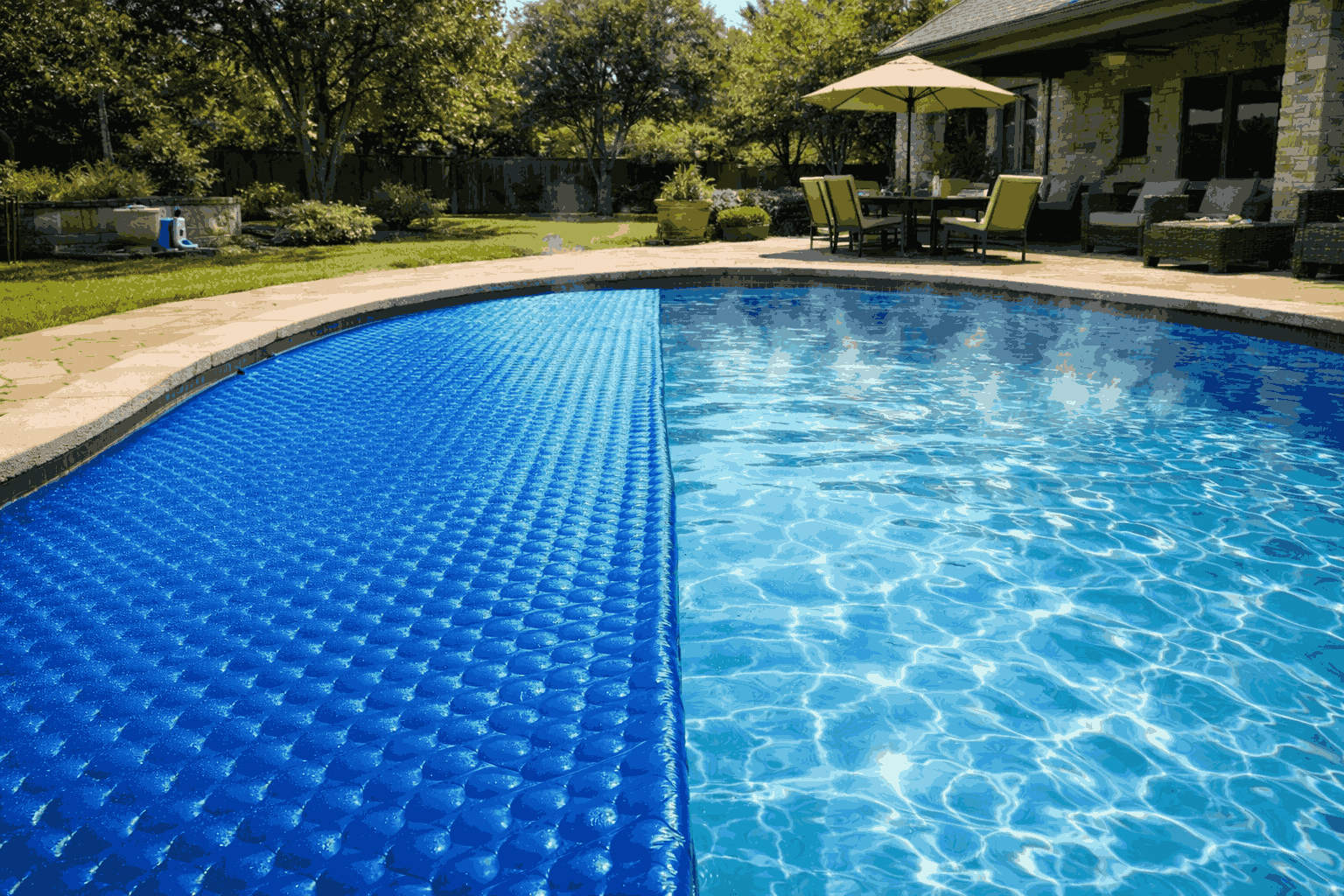
A pool cover is probably the last thing on most DFW pool owners’ minds. “Covers are for up north,” people say. “We don’t need one in Texas.” That’s one of the most expensive misconceptions in pool ownership. The truth? A pool cover saves the average North Texas homeowner $500 to $1,500 per year in water, chemicals, and energy costs. It cuts cleaning time, reduces debris, and can even prevent algae.
Most DFW pools benefit from some type of cover, and once you see the actual pool cover benefits broken down in dollars, the question isn’t whether you can afford one — it’s whether you can afford not to have one.
Do You Need a Pool Cover in North Texas?
Not every pool absolutely needs a pool cover — but most DFW pools benefit from one significantly. If you’re topping off your pool every week, spending a fortune on chemicals, running the heater longer than you’d like in spring and fall, or fighting debris every single day, a cover addresses all of those problems at once. The Department of Energy specifically recommends pool covers as the single most effective way to reduce pool energy consumption, water loss, and chemical use. In a market like DFW with extreme heat, high evaporation, and heavy pollen and leaf seasons, the savings are amplified.
Pool Cover Types and How They Work
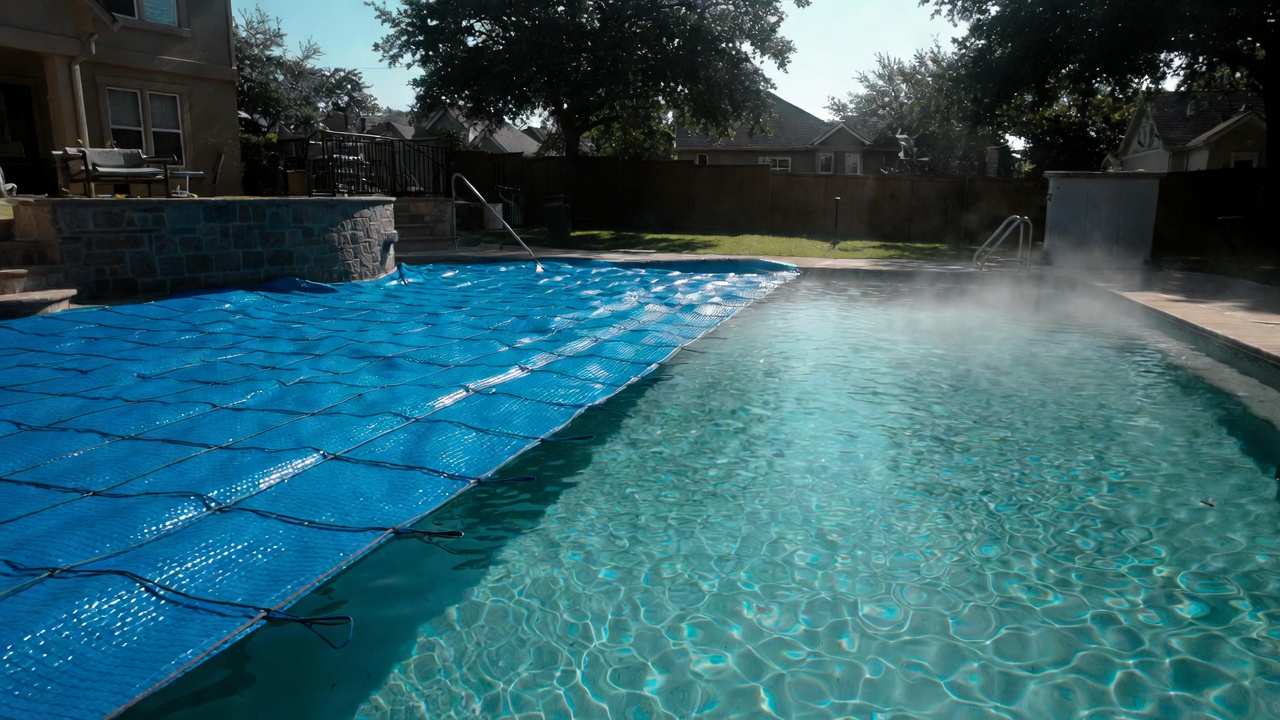
Solar Covers — The Budget-Friendly Pool Cover
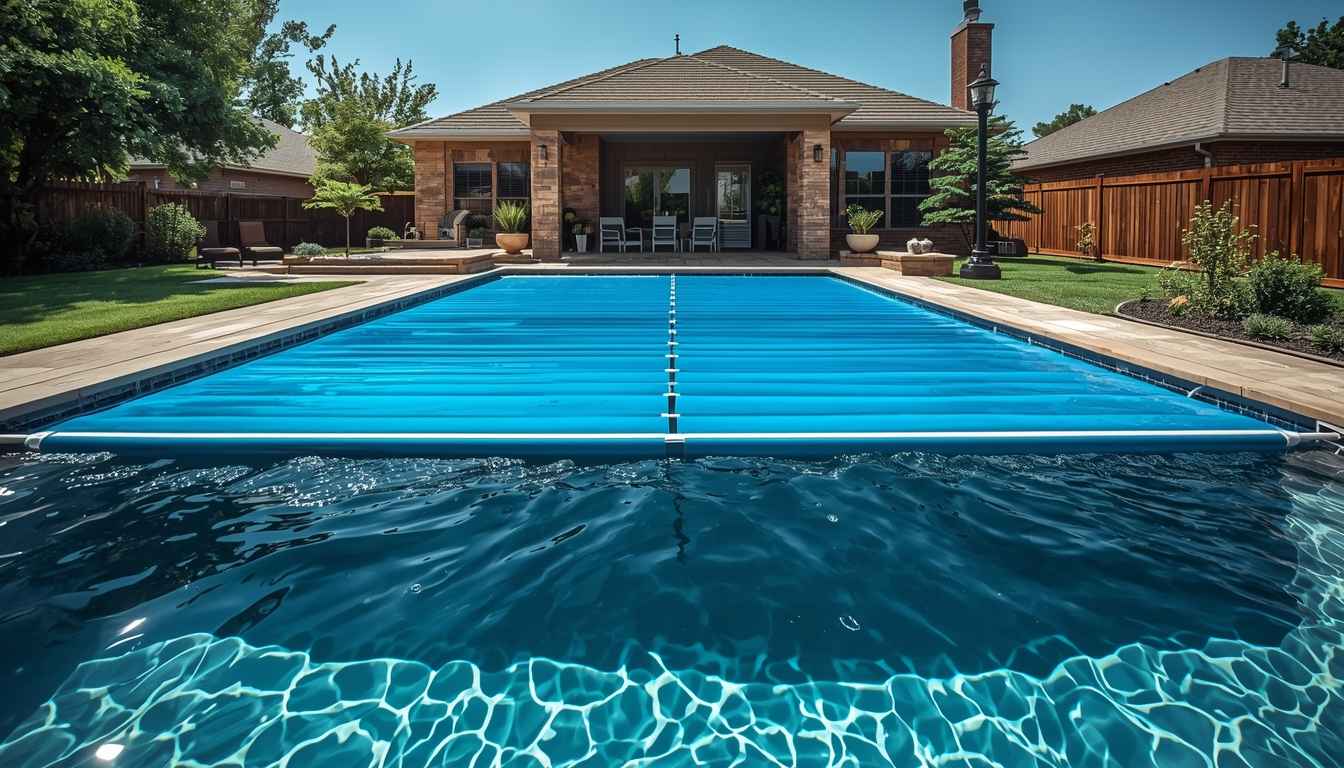
A solar pool cover is basically a giant sheet of bubble wrap that floats on the water surface. Sounds simple, and it is — but the results are impressive. It retains heat (extending your swim season into October and November without cranking the heater), reduces evaporation by 70 to 90 percent, and slows chlorine loss from UV exposure. Cost: $50 to $200, and you can install it yourself. Best pool cover for Texas homeowners who want immediate savings on a budget.
The downside: you have to remove it manually for swimming, it doesn’t stop debris well, and Texas UV degrades the plastic within one to two seasons.
Mesh Safety Covers — The Family Pool Cover
Mesh safety covers are woven fabric stretched across your pool, anchored to the deck with brass anchors and springs. They keep out leaves and large debris while letting rainwater drain through. More importantly, they’re a pool safety barrier that supports the weight of a child or pet — critical for families. Cost: $1,500 to $4,000 installed, custom-fit to your pool shape. Best for DFW during fall and winter when the pool isn’t in use. Small debris and dust will still pass through the mesh, but leaves, branches, and animals stay out.
Solid Safety Covers — Maximum Protection
Solid vinyl or laminate covers block absolutely everything — debris, sunlight, and evaporation — while also serving as a safety barrier. This is the pool cover that provides the most complete protection during extended off-season coverage from December through March. Cost: $2,000 to $6,000 installed. The tradeoff: you’ll need a cover pump to remove rainwater that accumulates on top, and they’re heavier to manage than mesh.
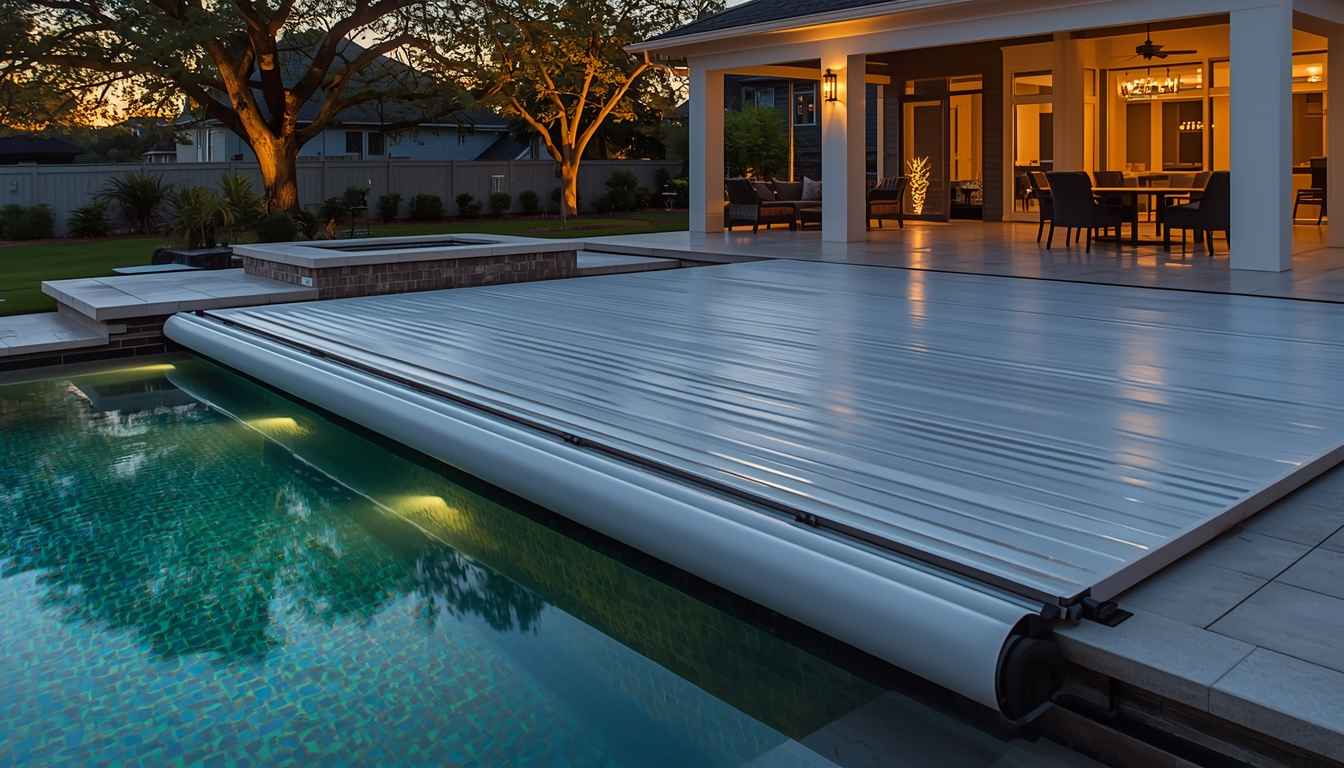
Automatic Retractable Covers — The Premium Pool Cover
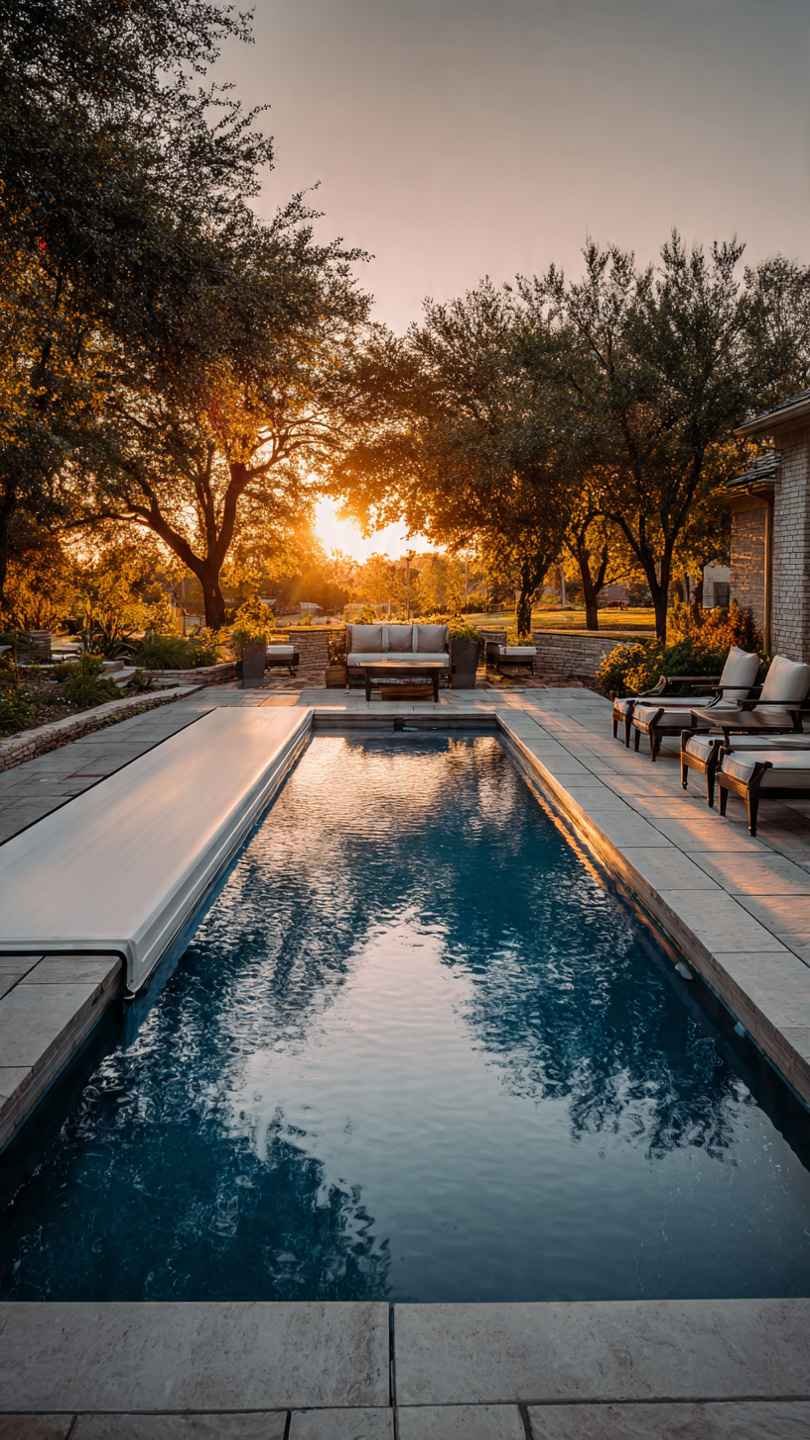
Motorized solid covers that roll on tracks built into your pool coping — open and close with the push of a button. This is the ultimate in convenience and daily usability. When closed, it’s a safety barrier, evaporation blocker, and debris shield all in one. Cost: $10,000 to $25,000 built into new construction, $12,000 to $30,000 for retrofit. Best pool cover for Texas premium homes in Southlake, Frisco, and Prosper where convenience and safety justify the investment. The track system and motor do require periodic maintenance.
Leaf Nets — The Seasonal Pool Cover
Leaf nets are lightweight mesh that sit over the pool — or over a solar cover — to catch leaves and large debris. Cost: $50 to $150. This is the DFW-specific pool cover solution for fall season under pecan, oak, and Bradford pear trees from October through December. They don’t reduce evaporation or chemical loss, but they keep your skimmer baskets from overflowing every 24 hours during peak leaf drop.
Pool Cover Benefits Specific to North Texas
Water Savings — DFW Pools Lose 1 to 2 Inches Per Week
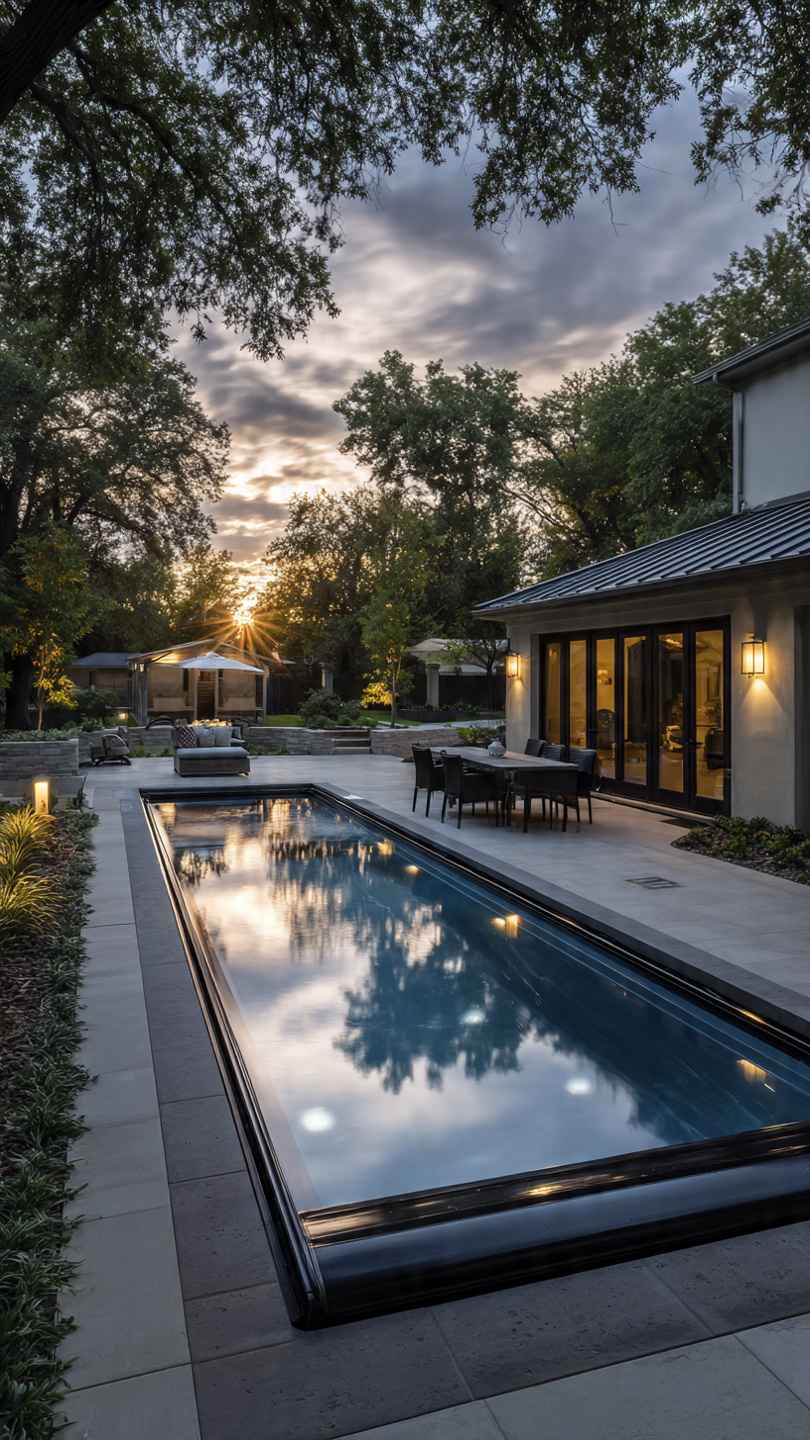
Evaporation in DFW summer heat is relentless. A typical pool loses 1 to 2 inches of water per week — that’s thousands of gallons per season. According to the Texas Water Development Board, water conservation is increasingly critical in North Texas, and DFW faces periodic water restrictions. A solar pool cover reduces evaporation by 70 to 90 percent — saving thousands of gallons annually and keeping you compliant during restriction periods.
Chemical Savings — Evaporation Takes Your Chlorine With It
When water evaporates, it carries dissolved chlorine away with it. A pool cover reduces chlorine consumption by 30 to 50 percent simply by keeping the water in the pool where the chlorine can actually work. Annual savings: $150 to $400 in chemicals. That’s one of the pool cover benefits that surprises people the most.
Energy Savings — Covered Pools Retain Heat
Heat escapes primarily through the water surface. A covered pool retains heat dramatically better than an uncovered one, reducing heater run time by 50 to 70 percent. This is most significant in spring and fall when you’re trying to bridge the gap between cool air temps and comfortable water temps. Savings: $200 to $800 per year depending on your heater type and usage patterns.
Debris Reduction — Less Cleaning, Less Filter Strain
DFW pollen season from March through May, fall leaf drop from October through December, and random summer storm debris all get dramatically reduced with a pool cover. Less debris means less skimming, less filter cleaning, and longer filter media life. Your pool stays cleaner between service visits and your equipment works less hard.
Algae Prevention — Block the Sunlight, Starve the Algae
Solid and automatic covers virtually eliminate algae growth when the pool is covered. Algae needs sunlight for photosynthesis — no light means no growth. This is one of the most powerful pool cover benefits for DFW homeowners who battle algae seven to eight months per year.
Which Pool Cover Is Right for Your DFW Pool?
Here’s our honest breakdown of the pool cover types and who they’re best for.
Budget pick: Solar cover at $50 to $200 — best bang for the buck with immediate water and chemical savings.
Safety pick: Mesh safety cover at $1,500 to $4,000 — families with young kids and pets who need a barrier.
Maximum protection: Solid safety cover at $2,000 to $6,000 — winter-only coverage with full debris and algae prevention.
Premium convenience: Automatic cover at $10,000 to $25,000 — daily use, ultimate convenience and safety in one package.
Our recommendation for most DFW homeowners? A solar pool cover for daily water and chemical savings plus a leaf net for fall season. Total investment under $300, and the savings start immediately.
People Also Ask
Do I need a pool cover in Texas?
You don’t legally need one, but the financial case is strong. A pool cover saves $500 to $1,500 per year in water, chemicals, and energy for the average DFW pool. Most homeowners who try one wonder why they waited.
What type of pool cover is best for Texas heat?
A solar cover is the best pool cover for Texas daily use — it handles evaporation and chemical loss at a fraction of the cost of other options. For premium homes, an automatic retractable cover offers the best combination of convenience, safety, and protection.
How much water does a pool cover save in DFW?
A solar cover reduces evaporation by 70 to 90 percent. For a DFW pool losing 1 to 2 inches per week in summer, that’s thousands of gallons saved per season. The pool cover benefits compound — less water loss also means less chemical dilution and less fill water calcium entering the pool.
Are automatic pool covers worth the cost?
For homeowners who will actually use them daily, yes. The convenience factor means an automatic pool cover gets used consistently, which maximizes savings. A cheaper cover that sits in the garage because it’s inconvenient saves nothing. The Consumer Product Safety Commission also recognizes automatic covers as an effective safety layer.
Can a pool cover prevent algae?
Solid and automatic covers block sunlight, which starves algae of the energy it needs to grow. A solar cover reduces UV penetration but doesn’t eliminate it entirely. For maximum algae prevention, a solid or automatic pool cover combined with proper chemical maintenance is extremely effective.
Do pool covers work in 100-degree heat?
Absolutely. The hotter it is, the more evaporation a pool cover prevents. In DFW’s 100-plus-degree summers, evaporation is at its worst — which is exactly when a cover delivers its biggest savings. The cover’s effectiveness actually increases with temperature.
PoolBurg’s Pool Cover Advice — Honest and Unbiased
At PoolBurg, we don’t sell pool covers — so our advice comes with zero sales agenda. We’ll tell you honestly whether a pool cover makes financial sense for your specific pool, which type fits your situation, and what the realistic savings look like. We see the difference covers make every week across our DFW service area — the pools with covers are cleaner, use fewer chemicals, and cost less to maintain. That’s not a sales pitch. It’s just what we see.
Want to cut your pool costs? Ask PoolBurg which cover option makes sense for your pool.